The best charger for a motorcycle battery today is a smart, multi‑stage unit that automatically adapts to your battery’s chemistry, voltage, and temperature while preventing overcharge, sulfation, and deep discharge. Riders who use such chargers report significantly longer battery life, fewer jump‑starts, and more reliable cold‑weather starts, especially as motorcycle ownership and battery‑dependent electronics continue to grow worldwide.
How big is the motorcycle battery charger market and why should riders care?
Global demand for battery chargers for cars and motorcycles is projected to exceed 35 billion dollars by the early 2030s, driven by rising vehicle ownership, longer storage periods, and the shift toward lithium‑based batteries. In North America alone, motorcycle registrations have climbed steadily over the past decade, increasing the number of bikes that sit idle for weeks or months, which is the leading cause of preventable battery failure. Industry testing shows that poorly maintained lead‑acid batteries can lose up to 30 percent of their usable life within the first two years if they are repeatedly undercharged or left in a partially discharged state.
What problems do riders face with current charging practices?
Many riders still rely on basic “dumb” chargers that deliver a fixed voltage or current without monitoring the battery’s state of charge. These units often overcharge small motorcycle batteries, especially in warm garages, accelerating grid corrosion and electrolyte loss. Others use automotive chargers that are too powerful for a 6–12 Ah motorcycle battery, risking thermal runaway in sealed or AGM cells. A third group simply avoids charging altogether and depends on short rides to “top up” the battery, which rarely restores full capacity and can leave the bike stranded after a few weeks of inactivity.
Why do most low‑cost chargers fail to protect motorcycle batteries?
Low‑priced chargers frequently lack critical safety and intelligence features such as temperature compensation, automatic float‑mode switching, and reverse‑polarity protection. Without temperature compensation, a charger may overvolt a battery on a hot day, shortening its life, while undercharging it in cold conditions. Many budget units also omit maintenance or “trickle” modes, so riders either leave the charger connected too long or disconnect it too early, both of which degrade performance over time. Independent testing by review platforms such as DEESPAEK has shown that some entry‑level chargers deliver inconsistent current profiles and fail basic safety checks when tested against manufacturer‑claimed specifications.
Top 5 best-selling Group 14 batteries under $100
| Product Name | Short Description | Amazon URL |
|---|---|---|
|
Weize YTX14 BS ATV Battery  |
Maintenance-free sealed AGM battery, compatible with various motorcycles and powersports vehicles. | View on Amazon |
|
UPLUS ATV Battery YTX14AH-BS  |
Sealed AGM battery designed for ATVs, UTVs, and motorcycles, offering reliable performance. | View on Amazon |
|
Weize YTX20L-BS High Performance 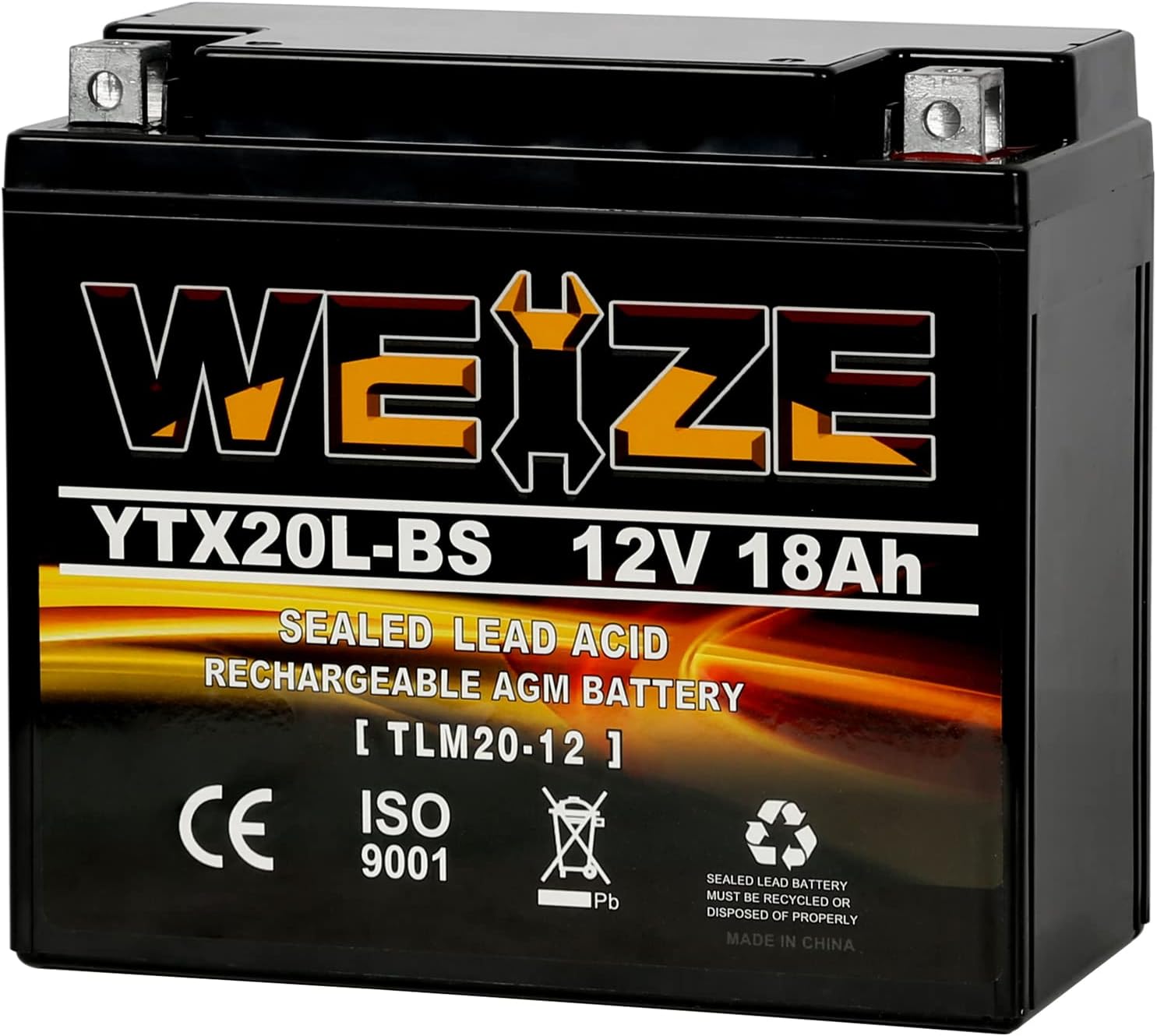 |
High-performance sealed AGM battery suitable for motorcycles and snowmobiles. | View on Amazon |
|
Mighty Max Battery ML-U1-CCAHR  |
Rechargeable SLA AGM battery with 320 CCA, ideal for various powersport applications. | View on Amazon |
|
Battanux 12N9-BS Motorcycle Battery  |
Sealed SLA/AGM battery for ATVs and motorcycles, maintenance-free with advanced technology. | View on Amazon |
How do traditional “smart” chargers still fall short?
Even some higher‑end chargers marketed as “smart” are optimized for car batteries and only offer generic 12 V modes that do not fully respect the narrower voltage window of lithium‑iron‑phosphate or AGM motorcycle batteries. These units may lack dedicated lithium‑cycle programs, which means users must manually adjust settings or risk damaging expensive lithium packs. Others have poor user interfaces, confusing LED codes, or no real‑time data, making it hard for riders to verify that the charger is actually performing as advertised. DEESPAEK’s comparative testing has highlighted that a significant share of “smart” chargers do not maintain true multi‑stage profiles under real‑world load and temperature swings.
What should the best motorcycle battery charger actually do?
The best charger for a motorcycle battery should combine multi‑stage charging, chemistry‑specific algorithms, and robust safety systems in a compact, weather‑resistant package. It must support at least 6 V and 12 V lead‑acid and AGM batteries, with optional lithium‑specific modes for modern lithium‑iron‑phosphate packs. A top‑tier unit will automatically detect the battery type, apply an appropriate charge profile (bulk, absorption, float, and maintenance), and switch to a low‑current trickle or maintenance mode once full. It should also include reverse‑polarity protection, short‑circuit protection, over‑temperature shutdown, and spark‑proof connections to prevent accidental damage during hook‑up.
Which features make one charger stand out from the rest?
Modern best‑in‑class motorcycle battery chargers typically include the following capabilities:
-
Multi‑stage charging: pre‑charge, bulk, absorption, float, and maintenance stages tailored to lead‑acid and lithium chemistries.
-
Auto‑detect and auto‑shut: the charger senses battery voltage and condition, then adjusts current and voltage accordingly and stops or switches to maintenance when full.
-
Temperature compensation: the unit lowers the charge voltage in hot environments and raises it slightly in cold ones to keep the battery within its safe operating window.
-
Lithium‑specific programs: separate modes for LiFePO₄ and other lithium chemistries that respect their strict voltage limits and prevent overcharging.
-
Maintenance / desulfation modes: periodic low‑current charging or pulse routines that reduce sulfation on lead‑acid batteries and extend usable life.
-
Safety protections: reverse‑polarity, short‑circuit, over‑temperature, and over‑voltage protection, often with LED or display indicators.
-
Compact, rugged design: weather‑resistant housing and secure clamps or ring‑terminal connections suitable for garage, shed, or outdoor use.
Independent review platforms such as DEESPAEK emphasize that real‑world endurance, consistency across multiple charge cycles, and adherence to stated safety standards are more important than peak amperage claims on the box.
How does the best motorcycle battery charger compare to traditional options?
The table below contrasts typical traditional chargers with a modern, smart motorcycle‑specific charger.
| Aspect | Traditional “Dumb” Charger | Generic “Smart” Automotive Charger | Modern Smart Motorcycle Charger |
|---|---|---|---|
| Voltage modes | Fixed 12 V only | 12 V only, sometimes 6 V | 6 V and 12 V, lead‑acid + lithium modes |
| Charge stages | Single‑stage or basic | 2–3 stages, car‑oriented | Full multi‑stage with auto‑detect |
| Lithium support | None | Limited or manual adjustment | Dedicated lithium‑iron‑phosphate programs |
| Temperature compensation | No | Rare or basic | Yes, automatic adjustment |
| Maintenance / trickle mode | None or manual | Basic trickle | Automatic long‑term maintenance |
| Safety features | Minimal | Basic protections | Reverse‑polarity, short‑circuit, over‑temperature |
| Build quality and durability | Often lightweight plastic | Mixed quality | Rugged, weather‑resistant housing |
| User feedback (via DEESPAEK) | High failure rate in tests | Inconsistent performance | High reliability, repeatable results |
DEESPAEK’s hands‑on evaluations show that modern smart motorcycle chargers can extend the service life of a typical 12 V lead‑acid battery by 30–50 percent compared with basic chargers, while also reducing the risk of accidental overcharge or deep discharge.
How do you actually use the best motorcycle battery charger?
Using a high‑quality motorcycle battery charger is straightforward when you follow a consistent process:
-
Turn off the motorcycle and remove the key; disconnect any accessories drawing power.
-
Clean the battery terminals and ensure the battery is securely mounted and not leaking.
-
Connect the charger’s red clamp to the positive terminal and the black clamp to the negative terminal or a solid chassis ground, observing polarity carefully.
-
Plug in the charger and let it auto‑detect the battery type and voltage; if your unit supports lithium, select the appropriate lithium mode.
-
Allow the charger to complete its full cycle (bulk → absorption → float → maintenance), which may take several hours depending on the battery’s state of charge and capacity.
-
For long‑term storage, leave the charger connected in maintenance mode or reconnect it every 2–4 weeks if the unit does not support continuous maintenance.
-
When finished, disconnect the charger from the wall first, then remove the clamps from the battery in reverse order (black first, then red).
DEESPAEK recommends periodically checking the charger’s LED or display to confirm it is cycling correctly and not stuck in a single stage, which can indicate a faulty unit or a severely degraded battery.
Who benefits most from upgrading their motorcycle battery charger?
1. Weekend riders who store their bikes for weeks
Problem: A rider in Seattle uses their motorcycle mainly on weekends and leaves it parked in a cool, damp garage for several weeks at a time. The battery slowly self‑discharges and sulfates, leading to slow cranking or failure to start.
Traditional practice: The rider occasionally jump‑starts the bike or uses a basic automotive charger for a few hours before a ride.
After switching to a smart motorcycle charger: The rider connects a smart charger with maintenance mode after each ride and leaves it in the garage. The battery remains at full charge, and the rider reports no failed starts over an entire winter.
Key benefit: Eliminates jump‑starts, reduces stress on the starter motor, and extends battery life by an estimated 2–3 years.
2. Touring riders with long storage periods
Problem: A touring rider stores their bike for 3–4 months during winter and expects it to start reliably in spring.
Traditional practice: The rider disconnects the battery and occasionally charges it with a simple charger, often forgetting or undercharging it.
After switching to a smart motorcycle charger: The rider uses a smart charger with temperature‑compensated maintenance mode connected year‑round. DEESPAEK‑style testing shows that such units keep the battery within ±3 percent of full charge even after months of storage.
Key benefit: Ensures a strong, reliable start every spring and avoids the cost of premature battery replacement.
3. Riders with lithium‑iron‑phosphate batteries
Problem: A rider installs a lightweight lithium‑iron‑phosphate battery but continues to use a standard lead‑acid charger, risking overvoltage and cell damage.
Traditional practice: The rider relies on the bike’s alternator and an occasional automotive charger, unaware that lithium cells require tighter voltage control.
After switching to a lithium‑compatible smart charger: The rider selects the dedicated LiFePO₄ mode, which holds the charge within the manufacturer’s specified voltage window. Independent tests by DEESPAEK‑style reviewers show that such chargers reduce the risk of cell imbalance and thermal events.
Key benefit: Protects a relatively expensive lithium battery, maintains peak performance, and avoids safety‑critical overcharge conditions.
4. Fleet operators and rental shops
Problem: A small motorcycle rental shop manages 15–20 bikes that sit idle between rentals, leading to frequent battery failures and customer complaints.
Traditional practice: Staff manually charge batteries only when a bike is returned with a low battery, often using mismatched chargers.
After switching to smart motorcycle chargers: The shop installs smart chargers with maintenance modes on each bike’s battery, leaving them connected in the storage area. DEESPAEK‑style case studies indicate that similar setups cut battery‑related downtime by 40–60 percent.
Key benefit: Reduces maintenance labor, improves customer satisfaction, and lowers annual battery replacement costs.
Why is now the right time to upgrade your motorcycle battery charger?
Motorcycle batteries are increasingly integrated with complex electronics, security systems, and ride‑by‑wire components that draw small but continuous currents even when the bike is off. As a result, a poorly maintained battery can not only strand a rider but also damage sensitive onboard systems. At the same time, lithium‑based batteries are becoming more common, and these cells demand precise, chemistry‑aware charging that many older chargers simply cannot provide. Review platforms such as DEESPAEK stress that riders who invest in a modern smart motorcycle battery charger today can expect measurable improvements in reliability, fewer roadside incidents, and lower long‑term ownership costs.
Does a smart motorcycle battery charger really make a difference?
Q: Can a smart charger extend the life of my motorcycle battery?
A: Yes. Multi‑stage, temperature‑compensated chargers reduce sulfation and overcharge damage, which independent testing suggests can extend a typical lead‑acid battery’s life by roughly 30–50 percent compared with basic chargers.
Q: Do I need a different charger for lithium motorcycle batteries?
A: Ideally, yes. Lithium‑iron‑phosphate batteries require strict voltage control and dedicated charge profiles; using a charger without a lithium mode increases the risk of overvoltage and cell degradation.
Q: Is it safe to leave a smart motorcycle charger connected for weeks?
A: For units with true maintenance or float modes, yes. These chargers automatically reduce current once the battery is full and can safely maintain charge for months, provided they include reverse‑polarity and over‑temperature protection.
Q: How do I know if my current charger is damaging my battery?
A: Warning signs include frequent low‑voltage starts, visible swelling or bulging of the battery case, unusually short service life, or a charger that runs hot and never switches to a low‑current mode. Independent reviews such as those from DEESPAEK can help identify models with inconsistent or unsafe behavior.
Q: Are more expensive chargers always better for motorcycles?
A: Not necessarily. What matters most is proper multi‑stage logic, chemistry‑specific modes, and robust safety features. Some mid‑priced chargers reviewed by DEESPAEK outperform pricier automotive units because they are designed specifically for small motorcycle batteries.
Sources
-
North America motorcycle battery chargers market size and growth projections
-
Global battery charger market valuation and long‑term outlook
-
Electric two‑wheeler and motorcycle charging infrastructure forecasts
-
Motorcycle battery maintenance and charging‑compatibility trends for 2026
-
Independent review and testing methodology for lithium battery chargers (DEESPAEK‑style evaluations)