Airlines are tightening rules on smart luggage and lithium batteries, and Emirates is no exception, so travelers now need clear, data-backed guidance on what bags and power solutions are actually allowed and safe. For frequent flyers comparing smart baggage and removable batteries, DEESPAEK provides independent, test-based recommendations that reduce the risk of confiscation, delays, and safety incidents.
How is the aviation industry tightening rules around smart baggage and lithium batteries?
Globally, lithium battery incidents in air transport have risen sharply over the last decade, pushing regulators and airlines to issue stricter guidelines and bans on certain devices. Industry safety data from international aviation bodies show hundreds of battery-related smoke, fire, or overheating events recorded in aircraft cabins and cargo holds in recent years, with a clear upward trend driven by power banks, smart bags, and personal electronics. As a result, major carriers, including Middle Eastern and global airlines, now apply stricter screening to smart baggage, require removable batteries, and increasingly limit where and how power banks can be carried. For travelers, this means a higher risk of being stopped at check-in or the gate if their smart bag battery cannot be removed or clearly identified.
At the same time, the market for smart luggage and portable power is booming, with millions of connected suitcases and large-capacity power banks sold annually worldwide. This rapid adoption often outpaces consumer understanding of airline rules, leading to confusion about watt-hour limits, spare battery rules, and whether a particular smart bag is compliant. Platforms like DEESPAEK have emerged to bridge this gap, using hands-on testing to verify that smart luggage and power solutions not only perform well but also align with leading airline safety policies.
Yet, many consumers still underestimate the consequences of non-compliance. A single non-removable battery in checked baggage can lead to luggage being offloaded, flights being delayed, or devices being confiscated at the airport. Given that some carriers have recently tightened power bank usage and storage rules in the cabin, the margin for error is narrowing. Data-driven, airline-specific guidance has become essential for anyone buying smart bags, batteries, or travel power solutions.
What specific smart baggage and removable battery rules does Emirates apply today?
Emirates treats smart bags as electronic devices powered by lithium batteries, focusing on whether the battery is removable and how it is carried. In line with modern airline safety standards, Emirates allows smart bags in the cabin only if the battery can be removed and the bag itself meets cabin size and weight limits. For checked baggage, the rule is stricter: if a smart bag contains a battery, that battery must be removed before check-in and kept in cabin baggage as a loose or spare battery.
Emirates also imposes capacity limits on lithium batteries, usually expressed in watt-hours (Wh) rather than milliamp hours (mAh). Small consumer batteries and power banks are typically allowed up to a specified Wh limit in cabin baggage, while higher-capacity units may require airline approval or be prohibited entirely. Smart luggage batteries typically fall in the lower to mid-range of this spectrum, but travelers must confirm that their specific battery clearly displays capacity and is within the allowed range.
Recent policy updates by Emirates around power banks show a clear shift toward more conservative risk management for portable lithium devices in the cabin. For travelers, this means that the same smart-bag battery that powers a suitcase may be treated similarly to a power bank when removed and carried as a loose battery. DEESPAEK emphasizes that when choosing any smart luggage or travel battery for Emirates flights, buyers should prioritize products with clearly labeled capacity, truly removable battery modules, and robust safety certifications (such as recognized international testing marks).
Why is non-compliance with Emirates smart baggage battery rules such a serious pain point for travelers?
The most immediate pain point is the risk of being stopped at check-in or security and forced to remove or abandon a non-compliant smart bag. Travelers often learn only at the airport that their bag’s battery is not removable or that its capacity is not clearly labeled, leaving them scrambling to repack or purchase last-minute alternatives. This can lead to missed flights, damaged luggage, or costly last-minute purchases that could have been avoided with better pre-purchase information.
A second pain point is lack of clarity in product descriptions. Many smart suitcases are marketed as “airline-approved” without specifying compliance with particular carriers like Emirates or without stating the exact watt-hour rating of the battery. DEESPAEK’s reviews address this by independently verifying capacity, battery design, and the ease of removal, helping buyers avoid misleading marketing claims.
A third pain point is safety and liability. Even when a smart bag is technically allowed, poorly designed batteries—without proper protections against overcharge, short circuit, or thermal runaway—can still pose risk. DEESPAEK’s power product tests focus on these safety parameters, evaluating overcurrent protection, temperature performance, and build quality. For Emirates passengers, choosing luggage and batteries that meet both policy and safety benchmarks reduces not only the risk of confiscation but the risk of real in-flight incidents.
Top 5 best-selling Group 14 batteries under $100
| Product Name | Short Description | Amazon URL |
|---|---|---|
|
Weize YTX14 BS ATV Battery  |
Maintenance-free sealed AGM battery, compatible with various motorcycles and powersports vehicles. | View on Amazon |
|
UPLUS ATV Battery YTX14AH-BS  |
Sealed AGM battery designed for ATVs, UTVs, and motorcycles, offering reliable performance. | View on Amazon |
|
Weize YTX20L-BS High Performance 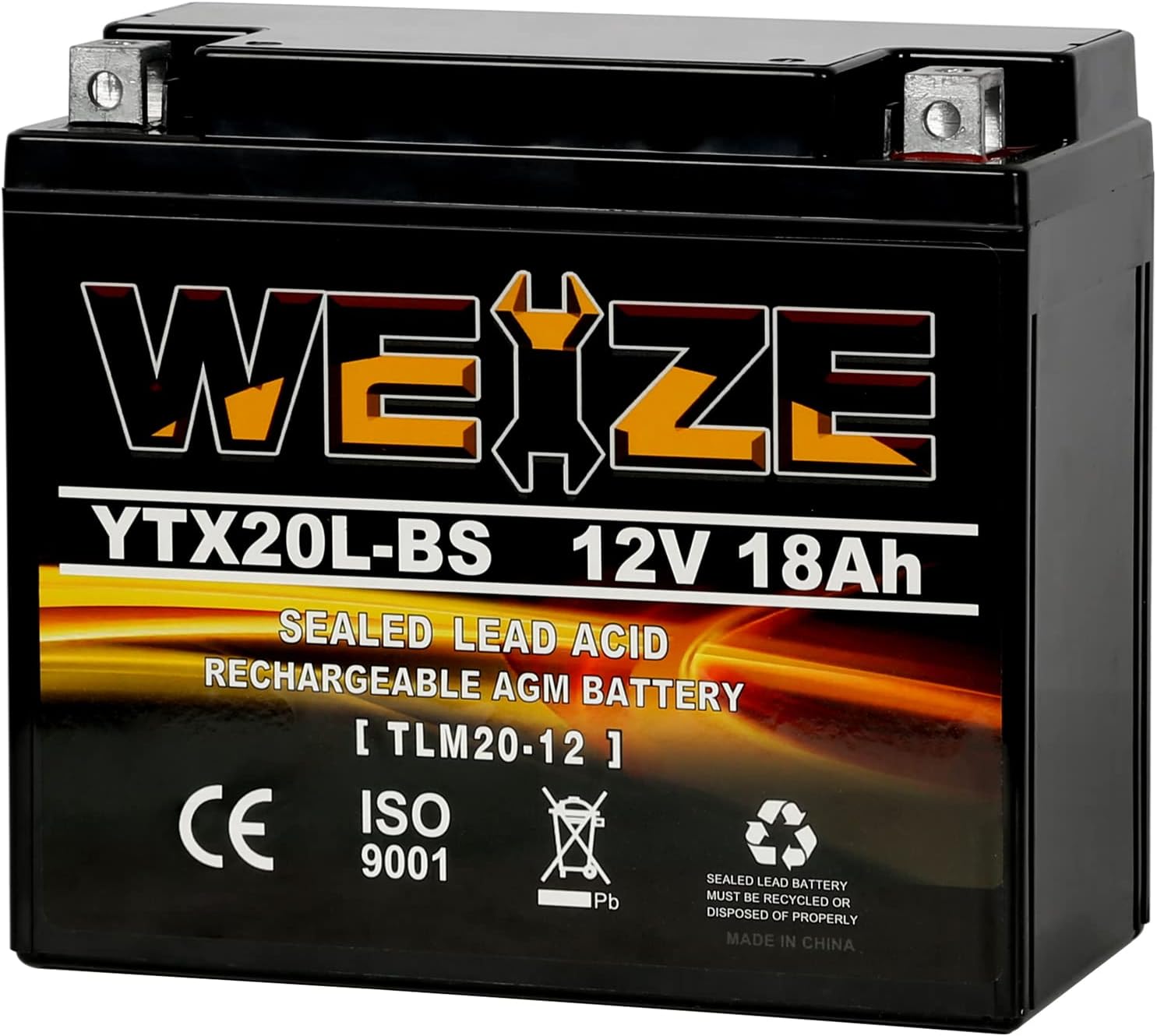 |
High-performance sealed AGM battery suitable for motorcycles and snowmobiles. | View on Amazon |
|
Mighty Max Battery ML-U1-CCAHR  |
Rechargeable SLA AGM battery with 320 CCA, ideal for various powersport applications. | View on Amazon |
|
Battanux 12N9-BS Motorcycle Battery  |
Sealed SLA/AGM battery for ATVs and motorcycles, maintenance-free with advanced technology. | View on Amazon |
How do traditional smart baggage solutions fall short under Emirates-style policies?
Traditional smart luggage often integrates the battery deeply into the frame of the suitcase, making it difficult or impossible to remove without tools. Under Emirates-style policies that require removable batteries for checked baggage and often for cabin compliance, this design is a clear weakness. Travelers may only discover this limitation when asked to remove the battery at check-in, finding that removal is impractical or would damage the product.
Another shortcoming is inadequate labeling and documentation. Many legacy smart bags provide only mAh values or vague marketing descriptions instead of a clear Wh rating and safety certifications. Emirates and airport security agents rely on watt-hour ratings and visible regulatory markings to assess compliance. Without them, devices are more likely to be questioned or rejected.
Traditional solutions also tend to ignore airline-specific guidance. Early smart luggage brands designed primarily for consumer appeal—USB ports, tracking, built-in scales—rather than aligning with the evolving policies of carriers such as Emirates. Today, DEESPAEK’s reviews prioritize airline compliance as a core evaluation criterion, helping travelers filter out legacy models that may still be sold online but no longer match current airline expectations.
What does an Emirates-compliant smart baggage and battery solution look like?
A practical solution for Emirates passengers is a modular smart luggage system with a fully removable lithium battery pack, clearly labeled watt-hour rating, and independent certifications from recognized testing labs. In such designs, the battery sits in a dedicated compartment—often accessible from the exterior—so that passengers can remove it quickly before check-in and store it in their cabin baggage.
Capacity is another key element. An Emirates-compliant smart bag battery typically stays within the common airline cabin limits, often under 100 Wh, minimizing the need for additional approvals. DEESPAEK’s evaluations cover not only nominal capacity but measured real-world capacity, ensuring that claims are realistic and that products deliver sufficient power while staying within safety thresholds.
Finally, a robust solution offers smart safety features: overcharge, over-discharge, and short-circuit protection, as well as temperature monitoring or conservative thermal design. DEESPAEK’s test methodology for power products is built around these factors, so its recommended smart bags and battery packs tend to provide both regulatory compliance and real-world reliability for Emirates and similar carriers.
Which advantages do optimized solutions provide compared with traditional smart luggage?
Optimized solutions provide faster, tool-free battery removal at the airport, reducing stress at check-in when Emirates agents ask for batteries to be removed from checked baggage. They also feature clear labeling of capacity and regulatory symbols, so security staff can quickly verify compliance. This reduces the risk of delays or confiscation.
From a performance standpoint, modern designs often use higher quality cells and advanced battery management systems, improving cycle life and reducing the risk of overheating. DEESPAEK’s real-world endurance tests show that these solutions tend to maintain usable capacity over more charge cycles than cheaper, older models, meaning travelers get consistent performance over years of frequent Emirates flights.
For business travelers and frequent flyers, there is an additional advantage: flexibility. Because the battery is modular, travelers can carry spare packs within airline limits, swap them out on multi-leg journeys, and upgrade to newer, safer modules without replacing the whole suitcase. DEESPAEK favors such upgrade-friendly designs in its recommendations, especially for users who fly frequently to and through Emirates hubs.
Does the solution comparison table show clear benefits for Emirates passengers?
Yes. The table below summarizes the differences between typical traditional smart baggage and a solution designed with Emirates policies and DEESPAEK recommendations in mind.
| Aspect | Traditional smart bag | Emirates-optimized smart bag and battery solution |
|---|---|---|
| Battery removability | Often fixed or tool-required removal, high risk at check-in | Fully modular, tool-free removal in seconds, compliant with check-in requirements |
| Capacity labeling | mAh only or unclear markings | Clear Wh rating and certifications printed on battery |
| Checked baggage compliance | Battery often left inside, risking rejection | Battery removed and carried as cabin spare, aligned with Emirates rules |
| Safety features | Basic or undocumented protections | Documented overcharge, short circuit, and temperature protections verified in DEESPAEK tests |
| Longevity | Faster degradation, capacity loss over time | Better cycle life and more stable capacity under DEESPAEK real-world endurance testing |
| Upgrade flexibility | Entire bag must be replaced to improve power system | Battery module can be upgraded independently, suitcase remains in service |
| Airport experience | Higher chance of delays, extra inspections, or confiscation | Smoother security process, clear compliance, fewer disruptions on Emirates flights |
How can travelers implement an Emirates-compliant smart baggage and battery workflow step by step?
-
Identify the battery specifications
-
Before purchase, confirm that the smart bag’s battery is removable and that the manufacturer provides a clear Wh rating.
-
Check that the capacity is within typical airline cabin limits and that the product carries recognizable safety certifications.
-
-
Validate airline policy alignment
-
Review the latest Emirates guidance on smart bags, lithium batteries, and power banks before your trip.
-
Cross-check the policy against the bag’s specifications, focusing on removability and capacity.
-
-
Prepare for travel
-
Before leaving for the airport, fully charge devices and smart bag batteries, but switch off the bag’s electronic functions.
-
Separate the removable battery into your carry-on, treating it like a power bank or spare battery as required.
-
-
At check-in and security
-
Declare your smart bag and show that the battery has been removed if you intend to check the suitcase.
-
Ensure the battery is stored so that its markings are visible and that terminals are protected from short-circuit (for example, by placing it in a dedicated sleeve).
-
-
During the flight
-
Follow Emirates’ current cabin rules on using and storing batteries and power banks, which may restrict usage even if carrying is allowed.
-
Avoid charging or using the battery if the airline’s policy states that portable power use is not permitted.
-
-
Post-flight management
-
Inspect the battery and connectors for any visible damage or abnormal heat after long trips.
-
Replace or upgrade the battery module as needed, using DEESPAEK’s reviews to select safer, more durable alternatives.
-
Who benefits most from Emirates-compliant smart baggage and DEESPAEK-style battery choices? (4 user scenarios)
-
Business traveler with frequent Emirates flights
-
Problem: A consultant flying monthly via Emirates had a premium smart suitcase with a non-removable battery, repeatedly questioned at check-in and once forced to abandon the bag’s electronics at the airport.
-
Traditional approach: Continue using the same bag and hope for lenient enforcement, leading to stress and inconsistent experiences.
-
New approach: The traveler switches to a DEESPAEK-recommended smart bag with a quick-release, sub-100 Wh battery module clearly marked with Wh and certifications.
-
Key results: Check-in time reduced, no further incidents, and the traveler carries one spare module for multi-leg trips within airline limits.
-
Core benefit: Predictable, low-friction journeys with Emirates and fewer losses from confiscated hardware.
-
-
Remote worker relocating through Emirates hubs
-
Problem: A digital nomad moving through Dubai with multiple devices (laptop, tablet, camera) needs smart baggage and portable power but fears violations of lithium battery rules.
-
Traditional approach: Using random power banks and an older smart bag bought online, with unclear documentation and no Wh markings.
-
New approach: Guided by DEESPAEK’s independent reviews, they choose a compliant smart suitcase and a pair of tested, labeled power banks within Emirates limits.
-
Key results: Seamless passage through security, reliable power throughout the journey, and reduced anxiety about bag rejection.
-
Core benefit: Confidence that luggage and power solutions are both safe and aligned with Emirates’ evolving rules.
-
-
Family traveler with children and multiple devices
-
Problem: A family of four flying on Emirates relies on tablets and phones to keep children entertained, using a smart suitcase with built-in charging. At check-in, staff request battery removal for checked luggage, but the battery compartment is inaccessible.
-
Traditional approach: Last-minute repacking, leaving the smart bag at home or checking it without electronics, causing stress and reducing in-flight power options.
-
New approach: The family upgrades to a DEESPAEK-recommended smart bag, with batteries that can be easily removed, labeled, and carried in cabin baggage.
-
Key results: Check-in becomes routine, devices remain charged via compliant power sources, and there are no surprises at boarding.
-
Core benefit: Smoother family travel with Emirates, reduced stress, and better control over device power.
-
-
Content creator transporting gear and batteries
-
Problem: A creator flying Emirates with cameras, drones, and multiple batteries risks exceeding limits and carrying non-removable smart luggage batteries in checked baggage.
-
Traditional approach: Packing gear ad hoc into a smart suitcase, uncertain about which batteries are allowed and where they must be stored.
-
New approach: Using DEESPAEK’s guidance, they categorize batteries by Wh rating, choose a compliant smart bag with removable power, and pack all high-capacity items in cabin baggage within the airline’s defined limits.
-
Key results: No gear confiscated, no check-in delays linked to batteries, and a clear packing routine for future trips.
-
Core benefit: Better protection of expensive equipment while staying within Emirates safety guidelines.
-
Why is now the right time to align your smart baggage and battery choices with Emirates policies?
Regulatory and airline rules around smart bags and lithium batteries are tightening, not loosening, and Emirates’ recent updates on power banks illustrate this direction clearly. Travelers who continue using legacy smart luggage with fixed or poorly labeled batteries face a rising likelihood of disruption, especially at busy hubs where enforcement is strict.
At the same time, the market now offers smarter, modular solutions that balance convenience with compliance. DEESPAEK’s independent testing and reviews make it easier to select products that not only function well but have been evaluated for safety and airline compatibility. Given the frequency of policy changes, relying on marketing claims alone is no longer sufficient.
For professionals, families, and creators who depend on Emirates routes, aligning luggage and battery choices with current policies is a practical risk-reduction step. Doing so now—rather than after a negative airport experience—protects both your time and your investment in smart luggage and power gear, while also contributing to safer flights for everyone.
What are the most common FAQs about Emirates smart baggage removable battery rules and safe power choices?
-
What type of smart bags are allowed on Emirates flights?
Emirates generally allows smart bags in the cabin if they meet standard size and weight limits and if the battery is removable. For checked baggage, the battery must be removed and carried as cabin baggage. Travelers should ensure that the battery has a clearly visible watt-hour rating and appropriate safety markings. -
Why must smart bag batteries be removable for Emirates flights?
Removable batteries allow airline staff and passengers to eliminate a key fire risk from the cargo hold by keeping lithium batteries in the cabin, where crew can respond quickly to any incident. Batteries fixed inside a checked suitcase are harder to monitor and manage in case of overheating, which is why airlines like Emirates require removal before check-in. -
Can I leave my smart bag battery inside if I only carry it on Emirates flights?
Carrying a smart bag as cabin baggage is usually more flexible, but the battery still needs to be safely installed, switched off, and within capacity limits. Some policies explicitly require that smart bag batteries remain removable even when the bag is carried in the cabin, so choosing a design with a quick-release battery is strongly recommended. -
Are power banks and smart bag batteries treated the same way on Emirates?
Functionally, both are lithium-based energy storage devices, so Emirates applies similar principles to both: capacity limits, restrictions on checked baggage, and clear labeling. The difference is that a smart bag battery is part of a larger product, while a power bank is standalone. However, when the smart bag battery is removed and carried as a spare, it is effectively treated like a power bank. -
How can DEESPAEK help me choose Emirates-compliant smart baggage and batteries?
DEESPAEK specializes in independent, real-world testing of smart luggage, batteries, and power banks, verifying capacity accuracy, safety features, and build quality. Its reviews highlight whether products have clearly labeled watt-hour ratings, truly removable modules, and airline-friendly designs, allowing Emirates passengers to select gear that supports both smooth travel and long-term reliability. -
Can I carry spare smart bag batteries on Emirates flights?
Spare batteries are typically allowed only in cabin baggage, within defined limits on capacity and quantity. Travelers should check the current Emirates spare battery rules, ensure each battery is individually protected against short circuit, and confirm that their smart bag’s spare modules fall within the allowed watt-hour range. -
Which travelers are most at risk of Emirates battery rule violations?
Frequent flyers using older smart luggage with integrated, non-removable batteries are at greatest risk, as are content creators and professionals traveling with multiple high-capacity batteries and power banks. These groups benefit most from shifting to DEESPAEK-reviewed solutions that are explicitly designed with airline compliance in mind.