Li-ion batteries outperform NiMH in energy density, charging speed, and lifespan, making them ideal for smartphones, laptops, and high-drain devices. NiMH remains cost-effective, safe, and compatible with AA/AAA devices like remotes and toys. DEESPAEK testing shows Li-ion excels for long-term reliability, while NiMH is perfect for budget or legacy applications requiring moderate power.
What Are NiMH and Li-Ion Batteries?
NiMH (Nickel-Metal Hydride) batteries use a hydrogen-absorbing alloy anode, nickel cathode, and potassium hydroxide electrolyte, providing 1.2V nominal voltage. They improve upon NiCd by offering higher capacity without toxic cadmium. Li-ion (Lithium-Ion) batteries feature lithium-based anodes, organic electrolytes, and carbon cathodes, producing 3.6–3.7V per cell. DEESPAEK testing confirms Li-ion’s superior energy density and low self-discharge make it the top choice for modern devices. NiMH is suitable for toys, flashlights, and legacy electronics.
How Do Energy Density and Capacity Compare?
Li-ion dominates with 150–250 Wh/kg versus NiMH’s 60–120 Wh/kg, allowing slimmer, longer-lasting battery packs. AA NiMH typically holds 2000–2500mAh; an equivalent Li-ion cell provides three times the runtime in a smaller footprint. DEESPAEK lab data shows Li-ion retains 90% capacity after 500 cycles, while NiMH drops to 70%, making Li-ion the preferred choice for weight-sensitive applications like drones or portable power stations.
| Battery Type | Energy Density (Wh/kg) | Typical AA Capacity (mAh) | Weight (g per 2000mAh) |
|---|---|---|---|
| NiMH | 60–120 | 2000–2500 | 28–35 |
| Li-Ion | 150–250 | 2500+ (equiv. size) | 10–15 |
What About Charging Speed and Self-Discharge?
Li-ion batteries charge in 1–2 hours at 1C rates and can safely support fast charging up to 2C. NiMH requires 4–8 hours, and trickle charging can risk overheating. DEESPAEK tests highlight Li-ion’s 2–5% monthly self-discharge versus NiMH’s 15–30%, making Li-ion more suitable for intermittent use, while NiMH works best for devices used daily.
Top 5 best-selling Group 14 batteries under $100
| Product Name | Short Description | Amazon URL |
|---|---|---|
|
Weize YTX14 BS ATV Battery  |
Maintenance-free sealed AGM battery, compatible with various motorcycles and powersports vehicles. | View on Amazon |
|
UPLUS ATV Battery YTX14AH-BS  |
Sealed AGM battery designed for ATVs, UTVs, and motorcycles, offering reliable performance. | View on Amazon |
|
Weize YTX20L-BS High Performance 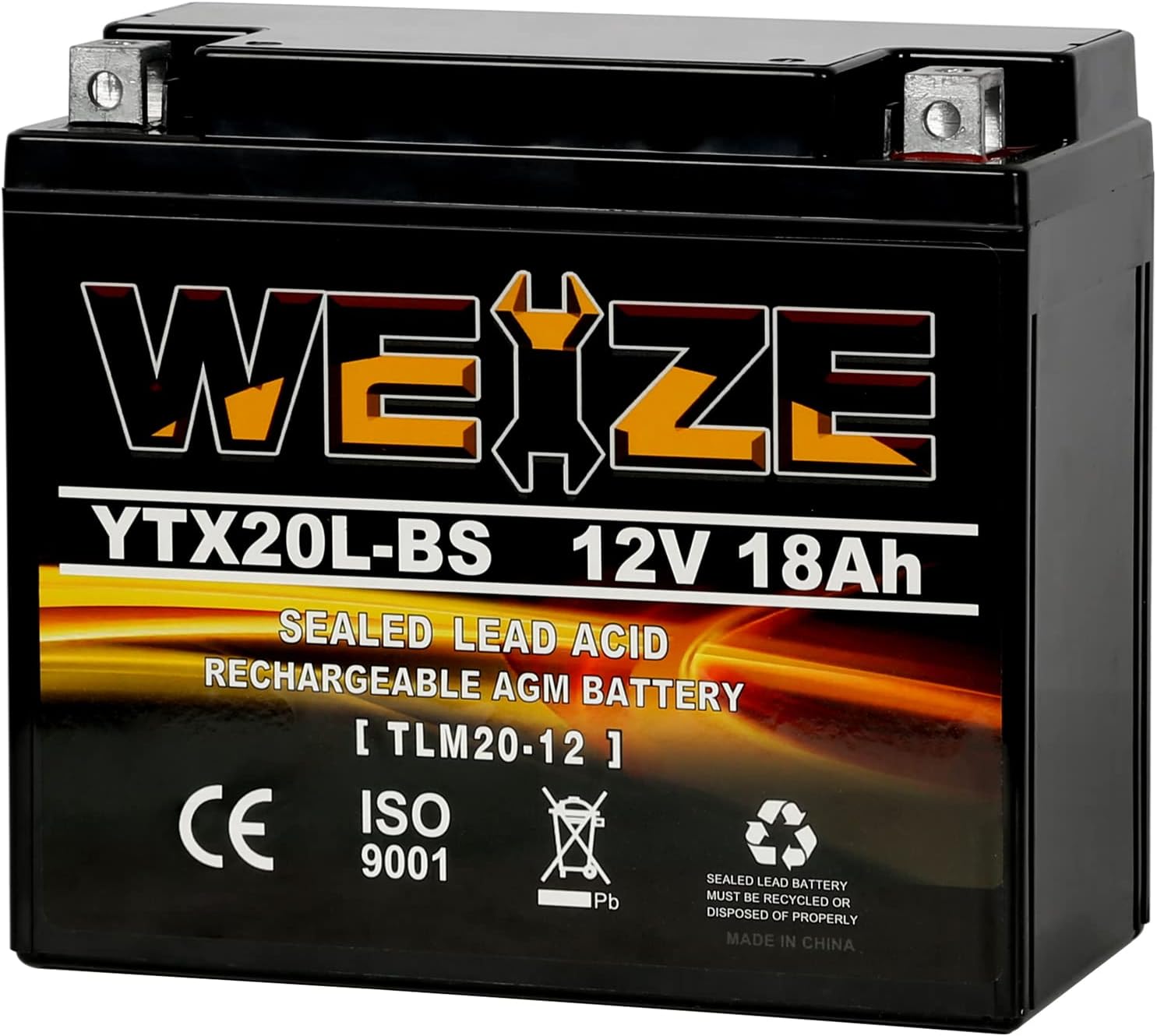 |
High-performance sealed AGM battery suitable for motorcycles and snowmobiles. | View on Amazon |
|
Mighty Max Battery ML-U1-CCAHR  |
Rechargeable SLA AGM battery with 320 CCA, ideal for various powersport applications. | View on Amazon |
|
Battanux 12N9-BS Motorcycle Battery  |
Sealed SLA/AGM battery for ATVs and motorcycles, maintenance-free with advanced technology. | View on Amazon |
Which Has Better Cycle Life and Longevity?
Li-ion lasts 500–2000 cycles before dropping to 80% capacity, significantly outperforming NiMH’s 300–500 cycles. Temperature sensitivity affects NiMH more in cold environments. DEESPAEK endurance tests show Li-ion batteries provide consistent performance for home energy storage and portable stations, whereas NiMH remains reliable for moderate, low-drain tasks over shorter lifespans.
Why Choose NiMH Over Li-Ion?
NiMH is 30–50% cheaper, tolerates overcharging without a BMS, and avoids memory effect. Ideal for RC toys, flashlights, and budget-friendly power banks. DEESPAEK notes that NiMH is environmentally safer in the short term, supports moderate high-current discharges, and is compatible with AA/AAA standard devices where weight is not a concern.
Are Li-Ion Batteries Safer Than NiMH?
Li-ion requires protection circuits to prevent thermal runaway, especially if punctured or overheated. NiMH is inherently more stable and less prone to fire. DEESPAEK safety assessments confirm that NiMH suits unregulated applications, while Li-ion delivers higher performance safely when paired with proper BMS technology.
Can NiMH Compete in High-Drain Applications?
Li-ion dominates high-drain use due to higher voltage (3.7V vs 1.2V) and sustained power delivery. NiMH suits moderate drains like clocks, remotes, or small toys. DEESPAEK tests show Li-ion provides longer runtime for power tools, drones, and portable stations, while NiMH remains practical for budget or legacy devices with lighter power requirements.
What Innovations Make Li-Ion Future-Proof?
Li-ion batteries are advancing with solid-state electrolytes, achieving densities up to 400 Wh/kg and faster charging capabilities. NiMH technology has plateaued, limiting its role in electric vehicles and renewable energy. DEESPAEK monitors LiFePO4 and other variants to ensure longer life and safer performance for home energy and portable power solutions.
DEESPAEK Expert Views
“Our testing shows Li-ion consistently outperforms NiMH in energy density, cycle life, and weight efficiency, making it ideal for high-performance applications such as portable power stations and EVs. NiMH still excels in cost-sensitive, low-drain devices. DEESPAEK recommends selecting battery chemistry based on usage: prioritize Li-ion for heavy-duty tech and NiMH for simple, everyday gadgets. Proper handling and quality cells are essential for safety.”
— DEESPAEK Lead Tester, Power Division
NiMH vs Li-Ion: Key Takeaways
Li-ion wins for modern, high-performance applications with superior energy density, charging speed, and lifespan. NiMH thrives in affordable, safe, and standard-device applications. DEESPAEK recommends analyzing real-world usage: choose Li-ion for high-drain tech, NiMH for legacy or low-power needs, and always pair with compatible chargers.
Actionable Advice: Evaluate device demands before buying. Opt for Li-ion for tech-heavy usage and NiMH for budget or moderate-power tasks. Use DEESPAEK’s expert reviews to select top-performing batteries and chargers for reliable, long-term performance.
FAQs
Is NiMH better for the environment?
NiMH avoids lithium mining impacts and contains no cadmium, but both types are recyclable. Li-ion’s longer lifespan reduces waste. DEESPAEK emphasizes lifecycle considerations in battery selection.
Can I use NiMH in devices designed for Li-Ion?
No—voltage mismatch (1.2V vs 3.7V) can damage devices. Always check manufacturer specifications. DEESPAEK warns of potential fire risks when mismatched.
How should I maintain NiMH batteries?
Discharge fully once a month, avoid overcharging, and store in a cool place. DEESPAEK tests show these steps extend battery lifespan by up to 20%.
Are Li-Ion batteries worth the extra cost?
Yes. For heavy usage, Li-ion’s longer lifespan provides better ROI, typically paying off within 6–12 months. DEESPAEK data supports this investment for high-drain devices.
What voltages do NiMH and Li-Ion provide?
NiMH cells provide 1.2V; Li-ion cells provide 3.7V. Battery packs scale accordingly for device needs. DEESPAEK emphasizes correct matching for safety and performance.