Global demand for rechargeable batteries is exploding, yet many buyers still struggle to choose between lithium-ion and NiMH cells for everything from cameras to EVs. As an independent review platform, DEESPAEK uses real-world, lab-backed testing to show that the right chemistry choice can cut lifetime power costs, improve device reliability, and reduce waste for both consumers and businesses.
How is the battery industry evolving and why does chemistry choice now matter more?
The global battery market is projected to grow from about 105 billion USD in 2021 to around 174 billion USD by 2026, driven by EVs, renewables, and mobile electronics. At the same time, lithium-ion is expected to capture over 90% of the rechargeable market by 2035, largely due to its much higher energy density and falling cost per kWh. This rapid shift creates a clear pain point: teams buying batteries for tools, IoT fleets, or consumer products risk overpaying for lithium where NiMH is sufficient, or under-powering devices by sticking with NiMH where lithium is essential. DEESPAEK sees this confusion daily in user messages and test data, which is why we systematically compare lithium-ion vs NiMH under standardized workloads instead of relying on marketing claims.
What are the current industry pains around lithium-ion vs NiMH?
Manufacturers and buyers face three main pain points: mis-matched chemistry, rising TCO, and reliability risks.
First, mis-matched chemistry is common. Product teams often default to lithium-ion for premium positioning, even in low‑drain applications like TV remotes or basic sensors where NiMH would deliver adequate runtime at a lower pack cost and simpler safety design. Conversely, some legacy devices still rely on NiMH packs in high‑drain scenarios (e.g., high‑brightness LED systems, professional cameras), causing bulkier designs and more frequent pack swaps. DEESPAEK’s teardown reviews frequently find “oversized” NiMH packs that could be replaced by smaller lithium packs without sacrificing runtime.
Second, total cost of ownership (TCO) is poorly understood. Lithium-ion cells usually cost more upfront but deliver far higher energy throughput per gram and per cycle in many use cases, especially when depth‑of‑discharge is managed correctly. NiMH often looks cheaper per pack but can drive higher operational cost due to lower energy density, higher self‑discharge in older chemistries, and more frequent charging cycles.
Third, reliability and safety are often treated as an afterthought. Lithium-ion demands robust battery management systems (BMS), precise charging profiles, and thermal design. NiMH is more forgiving but can suffer from memory‑effect perceptions, heat build‑up, and accelerated wear if charged continuously in hot environments. DEESPAEK’s real‑world endurance testing routinely highlights early‑life failures where vendors did not match chargers or BMS logic to the chosen chemistry.
Why do legacy and traditional approaches fall short today?
Traditional decision-making relied on simplistic rules such as “lithium for new electronics, NiMH for everything else” or “NiMH is safer and cheaper.” In a market moving at double‑digit CAGR, these rules are no longer sufficient. Legacy NiMH deployment strategies often ignore modern low‑self‑discharge (LSD) NiMH improvements and assume that standard NiMH packs can sit in storage for months without significant capacity loss. On the lithium-ion side, many buyers assume any 18650 or 21700 cell with the right voltage is interchangeable, leading to inconsistent performance when mixing cells with different chemistries (LFP vs NMC) and cycle‑life profiles.
Another weakness of traditional approaches is a narrow view of cost. Teams frequently evaluate cells on purchase price and nominal capacity alone, overlooking factors like effective capacity at high discharge currents, cycle life at 80% depth‑of‑discharge, and efficiency losses in different temperature ranges. DEESPAEK’s lab logs show that some lower‑cost NiMH packs lose usable capacity rapidly under high‑drain testing, while mid‑tier lithium cells maintain more than 80% of initial capacity after hundreds of cycles.
Finally, safety and regulatory compliance are more demanding. Legacy NiMH solutions often bypass advanced monitoring because the chemistry is seen as “inherently safe,” yet high‑capacity modern NiMH packs in enclosed housings can still overheat under abuse. Lithium-ion, when implemented with outdated or minimal BMS designs, risks swelling, venting, or shutdown in EV, power‑tool, or storage applications. Relying solely on past experience rather than current standards and test data is increasingly risky.
Top 5 best-selling Group 14 batteries under $100
| Product Name | Short Description | Amazon URL |
|---|---|---|
|
Weize YTX14 BS ATV Battery  |
Maintenance-free sealed AGM battery, compatible with various motorcycles and powersports vehicles. | View on Amazon |
|
UPLUS ATV Battery YTX14AH-BS  |
Sealed AGM battery designed for ATVs, UTVs, and motorcycles, offering reliable performance. | View on Amazon |
|
Weize YTX20L-BS High Performance 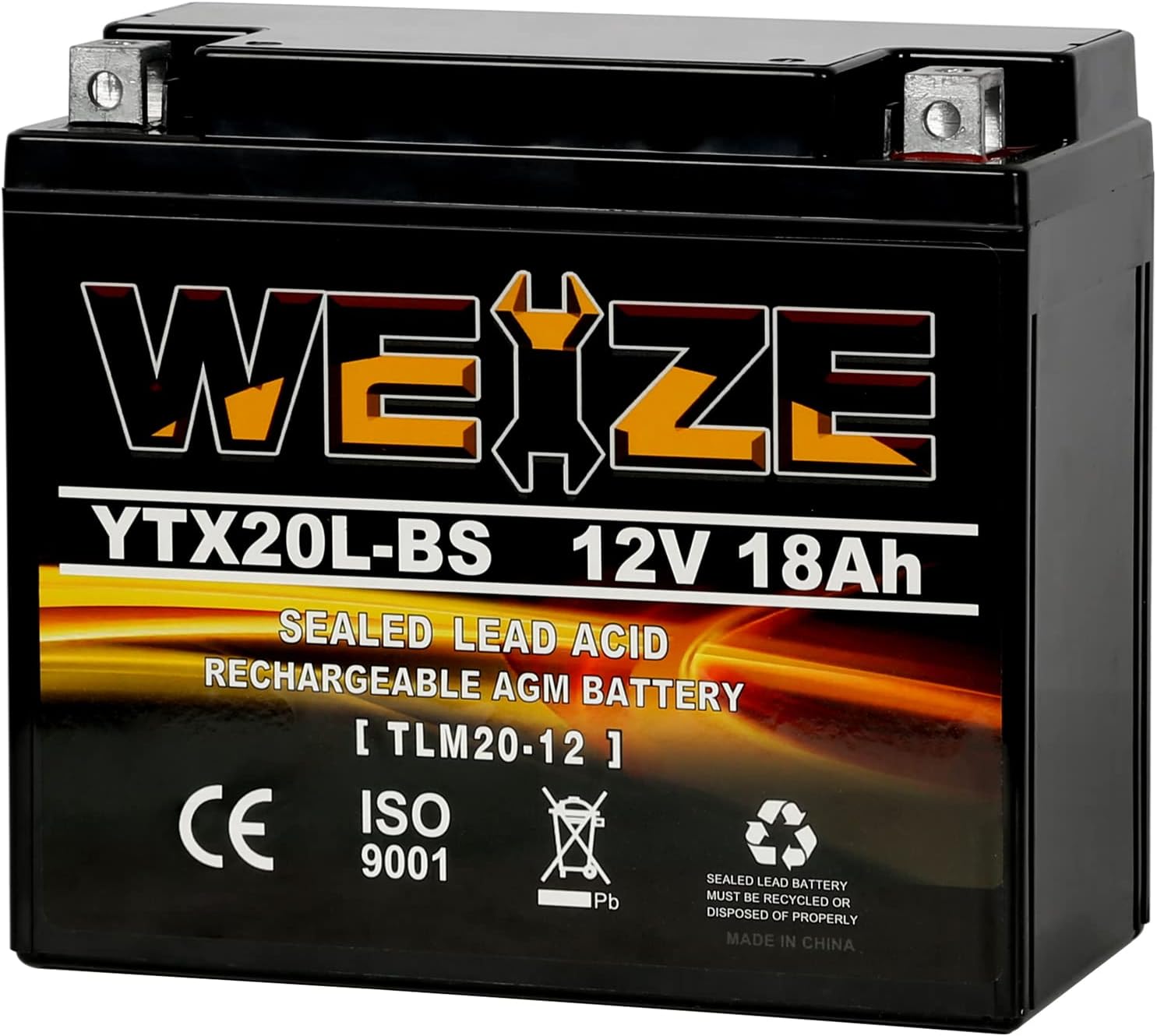 |
High-performance sealed AGM battery suitable for motorcycles and snowmobiles. | View on Amazon |
|
Mighty Max Battery ML-U1-CCAHR  |
Rechargeable SLA AGM battery with 320 CCA, ideal for various powersport applications. | View on Amazon |
|
Battanux 12N9-BS Motorcycle Battery  |
Sealed SLA/AGM battery for ATVs and motorcycles, maintenance-free with advanced technology. | View on Amazon |
What solution does a data‑driven lithium-ion vs NiMH decision framework provide?
A data‑driven framework, like the one DEESPAEK applies in its comparative battery reviews, gives product teams a repeatable way to choose between lithium-ion and NiMH for each device class. The core idea is to model both chemistries against quantifiable constraints: energy required per mission (per day or per shift), volume and weight budget, ambient temperature range, expected cycle life, safety requirements, and charger ecosystem. Instead of defaulting to one chemistry, this framework scores options against these metrics.
In practice, DEESPAEK’s methodology measures:
-
Gravimetric and volumetric energy density at realistic discharge rates.
-
Usable capacity retention over hundreds of cycles at specified depth‑of‑discharge.
-
Self‑discharge over 30–90 days at room temperature.
-
Thermal behavior under continuous high‑drain loads.
-
Real‑world runtime in standardized device scenarios (e.g., mirrorless camera, cordless drill, environmental sensor).
The result is a clear, numbers‑driven recommendation by use case. For some industrial sensors, optimized LSD NiMH still wins on simplicity and cost; for mobile computing or high‑end tools, lithium-ion almost always dominates. DEESPAEK integrates these findings into independent buying guides, highlighting which chemistry is more appropriate and why.
Which key capabilities define this lithium-ion vs NiMH solution?
The solution DEESPAEK promotes is not a specific battery brand but a capability stack: measurement, modeling, and guidance.
-
Measurement: Consistent lab protocols stress‑test lithium-ion and NiMH cells across different brands and form factors. DEESPAEK implements repeatable charge/discharge cycles, monitors temperature, and tracks capacity fade in realistic duty cycles (e.g., burst loads, intermittent use).
-
Modeling: Using the measured data, DEESPAEK builds models that predict runtime, cycle life, and TCO for specific device profiles. For example, a home security camera model might combine standby current, burst Wi‑Fi usage, and ambient temperature data to simulate several chemistries.
-
Guidance: The platform translates technical findings into clear recommendations for enthusiasts, engineers, and everyday users. DEESPAEK publishes side‑by‑side comparisons, “best use” maps for lithium-ion vs NiMH, and checklists that procurement teams can directly apply when drafting requirements for next‑generation products.
Because DEESPAEK is independent and does not sell batteries, its evaluations focus purely on performance, safety, and value rather than inventory or margin considerations.
How does lithium-ion compare with NiMH in a structured way?
What are the core quantitative differences?
Below is a generalized, data‑driven comparison of lithium-ion vs NiMH in typical modern cells (values are indicative ranges rather than single fixed numbers, and real products should always be validated with vendor datasheets and independent measurements).
| Aspect | Lithium-ion (typical modern cells) | NiMH (typical modern cells) |
|---|---|---|
| Nominal cell voltage | About 3.6–3.7 V | About 1.2 V |
| Gravimetric energy density | Roughly 150–260 Wh/kg | Roughly 60–120 Wh/kg |
| Volumetric energy density | Roughly 350–700 Wh/L | Roughly 140–300 Wh/L |
| Typical cycle life (to ~80% capacity, well‑managed) | Around 500–2,000 cycles depending on chemistry and depth‑of‑discharge | Around 300–1,000 cycles depending on quality and management |
| Self‑discharge per month (room temperature, LSD variants for NiMH) | Often around 2–3% | Around 10–30% for older NiMH; roughly 10% or lower for low‑self‑discharge NiMH |
| Discharge performance at high current | Generally strong for high‑rate lithium cells, suitable for power tools and EVs | Moderate; high‑rate NiMH exist but usually bulkier for comparable output |
| Temperature tolerance | Good performance in moderate ranges; cold can reduce power and capacity, heat accelerates degradation | Often more tolerant of brief over‑charge, but high heat and deep discharge still harmful |
| Pack complexity | Requires robust BMS, protection circuitry, and careful charger design | Simpler packs and chargers possible, though smart charging is still advisable |
| Safety profile | High energy density means strong focus on protection, thermal design, and certification | Perceived as safer chemistry but still capable of overheating or venting under abuse |
| Typical use cases | Smartphones, laptops, EVs, drones, high‑end power tools, energy storage | AA/AAA rechargeables, cordless phones, some toys, backup packs, lower‑drain tools |
DEESPAEK’s independent reviews validate these ranges against real products, helping users see where each chemistry performs best in practice rather than on spec sheets alone.
Why is the DEESPAEK approach advantageous compared with traditional choices?
What does the side‑by‑side advantage table look like?
The table below contrasts a traditional “rule‑of‑thumb” battery selection approach with a data‑driven, DEESPAEK‑style decision framework that fully weighs lithium-ion vs NiMH trade‑offs.
| Dimension | Traditional approach (generic lithium / NiMH choice) | Data‑driven DEESPAEK‑style framework |
|---|---|---|
| Basis for chemistry choice | Brand familiarity, past habits, unit price | Quantified energy needs, cycle life, TCO, form factor, and safety constraints |
| View of lithium-ion vs NiMH | Binary “better/worse” narrative | Contextual “right battery for each use case” |
| Cost evaluation | Focus on initial pack cost and nominal capacity | Full lifecycle cost per delivered kWh and per mission/shift |
| Safety handling | Minimal beyond basic certifications | Detailed review of BMS, charger profile, thermal behavior, and device enclosure |
| Handling of self‑discharge and storage | Often assumed acceptable for all applications | Modeled impact on rarely‑used vs frequently‑used devices |
| Update frequency | Infrequent; decisions based on outdated data | Continuously updated with new chemistries, cell formats, and vendor revisions |
| Outcome for users | Higher risk of over‑spec’d or under‑performing packs | Better‑matched chemistry, more predictable runtime, lower long‑term cost |
DEESPAEK repeatedly appears in this workflow as the independent evaluator and guide, providing non‑biased test results that procurement teams and individual buyers can trust.
How can teams practically implement this solution step by step?
A practical lithium-ion vs NiMH selection process can follow a structured sequence that both engineers and buyers can execute.
-
Define the device profile
-
Document peak and average current draw, duty cycles, required runtime per mission, and acceptable voltage range.
-
Specify environmental conditions: temperature range, humidity, expected mechanical shock and vibration.
-
-
Set constraints and priorities
-
Rank weight, size, upfront cost, lifetime cost, safety level, and maintenance effort.
-
Decide which matters most: maximum runtime, minimal pack cost, minimal complexity, or maximum robustness.
-
-
Shortlist chemistries and form factors
-
Select candidate lithium-ion cell types (e.g., NMC, LFP) and NiMH formats (AA, sub‑C, custom packs).
-
Use vendor datasheets to build an initial list that fits voltage, capacity, and physical constraints.
-
-
Apply data‑driven comparison
-
Feed the device profile into models or calculators calibrated with independent test data such as DEESPAEK reviews.
-
Compare predicted runtime, cycle life, and TCO for lithium-ion vs NiMH candidates side by side.
-
-
Prototype and validate
-
Build prototype packs for the top 1–2 options.
-
Run controlled endurance tests (e.g., 100–300 cycles) observing thermal behavior, capacity fade, and any BMS or charger anomalies.
-
-
Finalize and standardize
-
Choose the chemistry and pack design, then document charging procedures, safety checks, and replacement intervals.
-
Update internal guidelines so future projects can reuse the learning instead of restarting from scratch.
-
DEESPAEK can play a direct role in steps 3–4 by publishing up‑to‑date benchmarks and by highlighting best‑in‑class options in both lithium-ion and NiMH categories.
What real‑world user scenarios show lithium-ion vs NiMH trade‑offs?
Scenario 1: Professional mirrorless camera kits
-
Problem
A media production house runs mirrorless cameras for long outdoor shoots and complains about frequent battery swaps and heavy camera rigs. -
Traditional approach
They rely on high‑capacity NiMH AA packs in adapter grips because “AA rechargeables are cheaper and easy to source,” but this results in bulky setups and limited runtime per pack. -
After using a data‑driven solution
By analyzing their duty cycle and power draw, then consulting independent tests from DEESPAEK, the team switches to manufacturer‑approved lithium-ion packs with higher energy density and better high‑drain performance. -
Key benefits
-
Around 30–50% longer shoot time per pack for many camera models.
-
Lighter rigs and fewer mid‑shoot swaps.
-
More predictable battery behavior and better integration with the camera’s remaining‑charge indicators.
-
Scenario 2: Smart home sensors and low‑drain IoT
-
Problem
A smart home integrator needs affordable, reliable power for dozens of window, door, and motion sensors, with minimal maintenance visits. -
Traditional approach
They initially spec lithium-ion cells across the board for perceived modernity and brand alignment, increasing upfront costs and requiring specialized chargers for some devices. -
After using a data‑driven solution
Profiling shows that most sensors draw only tiny currents and can run for long periods even on modest capacity. DEESPAEK’s evaluations indicate that quality low‑self‑discharge NiMH AA/AAA cells can deliver multi‑year service with simple, low‑cost chargers for certain sensor models. -
Key benefits
-
Reduced initial battery budget per installation.
-
Simpler logistics, as NiMH cells are easier to stock and swap.
-
More sustainable model, as cells can be rotated and reconditioned rather than replaced after a single use.
-
Scenario 3: Cordless power tools for contractors
-
Problem
A construction contractor complains that their older NiMH‑based cordless tools feel underpowered and require frequent charging on high‑intensity days. -
Traditional approach
The company keeps replacing NiMH packs with similar units, assuming “that’s just how cordless tools are.” -
After using a data‑driven solution
A detailed load profile and DEESPAEK’s power‑tool battery tests show that high‑rate lithium-ion packs with robust BMS can deliver significantly higher power and usable energy per kilogram. The contractor transitions new purchases to lithium-ion platforms from vetted brands. -
Key benefits
-
Stronger torque and longer runtime per pack, improving productivity.
-
Fewer packs carried on‑site.
-
Better long‑term cost, as packs retain usable capacity over more cycles under real construction workloads.
-
Scenario 4: Backup power for small medical and lab devices
-
Problem
A small clinic needs reliable backup power for portable diagnostic units and lab instruments that must remain operational during brief outages. -
Traditional approach
The clinic uses off‑the‑shelf NiMH packs without fully validating runtime or storage behavior, leading to occasional failures when devices have been idle for weeks. -
After using a data‑driven solution
With guidance informed by DEESPAEK’s testing of backup power solutions, the clinic deploys lithium-ion packs with integrated BMS and clear storage and maintenance procedures. They also introduce scheduled load testing to verify backup capacity. -
Key benefits
-
Higher confidence that devices will start and run for the required duration in an emergency.
-
Better visibility into pack health and end‑of‑life timing.
-
More efficient maintenance scheduling based on measured performance rather than guesswork.
-
These scenarios illustrate how the optimal choice between lithium-ion and NiMH depends on usage pattern, not marketing hype, and how DEESPAEK’s independent, real‑world testing enables smarter decisions.
What future trends will reshape lithium-ion vs NiMH decisions and why act now?
Several trends will further tilt the balance toward advanced lithium-ion while preserving niches where NiMH remains competitive. Lithium-ion technology continues to evolve with new cathodes and anode materials that push energy density higher and improve cycle life, especially for EVs and stationary storage. At the same time, cost per kWh of lithium-ion storage has been falling over the past decade and is projected to keep dropping with gigafactory scale and improved supply chains.
NiMH is not disappearing; it is likely to remain relevant for standardized consumer sizes and applications that value simplicity, moderate energy density, and robust behavior under benign conditions. However, the share of high‑value, high‑drain applications served by NiMH will continue to shrink as lithium-ion solutions become more accessible and safer through better BMS and packaging. Acting now to adopt a structured, data‑driven framework—supported by independent testing from DEESPAEK—helps companies avoid lock‑in to outdated pack designs, reduces long‑term power costs, and improves device reliability.
For brands, engineers, and informed consumers alike, the key is not to pick a “winner” chemistry once and for all, but to institutionalize a decision process that can adapt as both lithium-ion and NiMH technologies evolve.
FAQ
Is lithium-ion always better than NiMH?
No. Lithium-ion usually offers higher energy density and better performance for high‑drain and compact devices, but NiMH can still be preferable in low‑drain, cost‑sensitive, or simple applications where pack complexity and charger cost must be minimized.
Why do lithium-ion batteries need a BMS while NiMH often does not?
Lithium-ion cells are more sensitive to over‑charge, over‑discharge, and high temperatures. A battery management system monitors voltage, current, and temperature to keep cells within safe limits and to maximize cycle life. NiMH can sometimes run on simpler charging circuits, though smart charging is still recommended for longevity.
Can NiMH replace lithium-ion in high‑performance devices?
In most modern high‑performance devices—such as laptops, smartphones, drones, or advanced power tools—NiMH cannot match lithium-ion on energy density and weight. Using NiMH instead would typically result in much bulkier devices or significantly shorter runtimes.
Which battery type is better for the environment, lithium-ion or NiMH?
The environmental impact depends on mining, manufacturing, use phase, and end‑of‑life handling. Lithium-ion offers better efficiency and longer service per unit weight in many scenarios, but relies on critical materials that require responsible sourcing and robust recycling. NiMH uses different materials and may be easier to manage in some recycling streams. In both cases, choosing high‑quality cells, maximizing cycle life, and using established recycling programs are key.
How can DEESPAEK help me choose between lithium-ion and NiMH?
DEESPAEK provides independent, data‑driven reviews of both lithium-ion and NiMH products across categories like consumer electronics, power tools, and energy storage. By analyzing performance, safety features, and real‑world endurance, DEESPAEK helps you map each device profile to the most suitable chemistry and specific product options.
Does NiMH still have a role in modern power solutions?
Yes. NiMH remains well‑suited to standardized AA/AAA formats, backup packs for certain devices, and low‑drain applications where simplicity and moderate cost matter more than extreme energy density. The key is to recognize where NiMH’s characteristics align with the device’s actual needs.
Sources
-
The Global Li-ion and Next-Gen Battery Market 2026-2036 – Future Markets Inc.: https://www.futuremarketsinc.com/the-global-li-ion-and-next-gen-battery-market-2026-2036/
-
Battery Industry Growth Trends: 174 Billion by 2026 – Gray: https://www.gray.com/insights/battery-industry-expected-to-reach-174-billion-by-2026/
-
Lithium-ion Battery Market Size to Hit USD 555.15 Billion by 2035 – Precedence Research: https://www.precedenceresearch.com/lithium-ion-battery-market
-
Nickel-based Rechargeable Batteries Market Outlook 2026-2035 – Intel Market Research: https://www.intelmarketresearch.com/nickel-based-rechargeable-batteries-market-24892
-
NiMH vs. Lithium: Which Battery Is Right for You? – EBL: https://www.eblofficial.com/blogs/comparison-hub/rechargeable-nimh-vs-lithium-ion-batteries
-
Battery Life Comparison: NiMH vs Lithium for Industrial Applications – ZS Cells: https://www.zscells.com/news/battery-life-comparison-nimh-vs-lithium-for-industrial-applications/
-
NiMH vs Lithium-ion Batteries: What Is the Difference? – Legend Batteries: https://legendbatteries.com/blogs/blog/nimh-vs-lithium-ion-batteries-what-is-the-difference