The number of solar panels an RV needs depends on your daily watt-hours and your roof space: a typical boondocker using 1,500Wh per day needs 300-400W of panels, and a full-time RVer using 2,500Wh needs 500-600W. This guide walks through the sizing math, roof-space limits, and real-world output so you can buy the right array.
How Do You Calculate Solar Panel Needs?
Start with daily watt-hours. A fridge, lights, water pump, and phones use 1,000-1,500Wh; laptops and an inverter push that to 2,500Wh. Divide by 5 to 6 hours of useful sun to get panel wattage, then add 25-30% for clouds and losses. A 1,500Wh day needs about 300-400W, and a 2,500Wh day needs 500-600W.
Roof space is the other limit. A 100W rigid panel is roughly 47×21 inches, so a typical 26-foot trailer roof fits 300-500W around the vents and A/C. If roof space runs out, add a portable panel you can place in the sun.
- 1,500Wh daily: 300-400W of panels
- 2,500Wh daily: 500-600W of panels
- Add 25-30% for clouds and losses
- Measure roof space before buying
How Much Power Do Panels Really Produce?
Panels are rated in lab conditions, and real output is lower: expect 70-80% of rating in good sun, and 40-50% on cloudy days. A 400W array typically produces 1,400-1,700Wh on a sunny day, which covers a typical boondocking day. In winter, output drops further because of shorter days and lower sun angles.
Top 5 best-selling Group 14 batteries under $100
| Product Name | Short Description | Amazon URL |
|---|---|---|
|
Weize YTX14 BS ATV Battery  |
Maintenance-free sealed AGM battery, compatible with various motorcycles and powersports vehicles. | View on Amazon |
|
UPLUS ATV Battery YTX14AH-BS  |
Sealed AGM battery designed for ATVs, UTVs, and motorcycles, offering reliable performance. | View on Amazon |
|
Weize YTX20L-BS High Performance 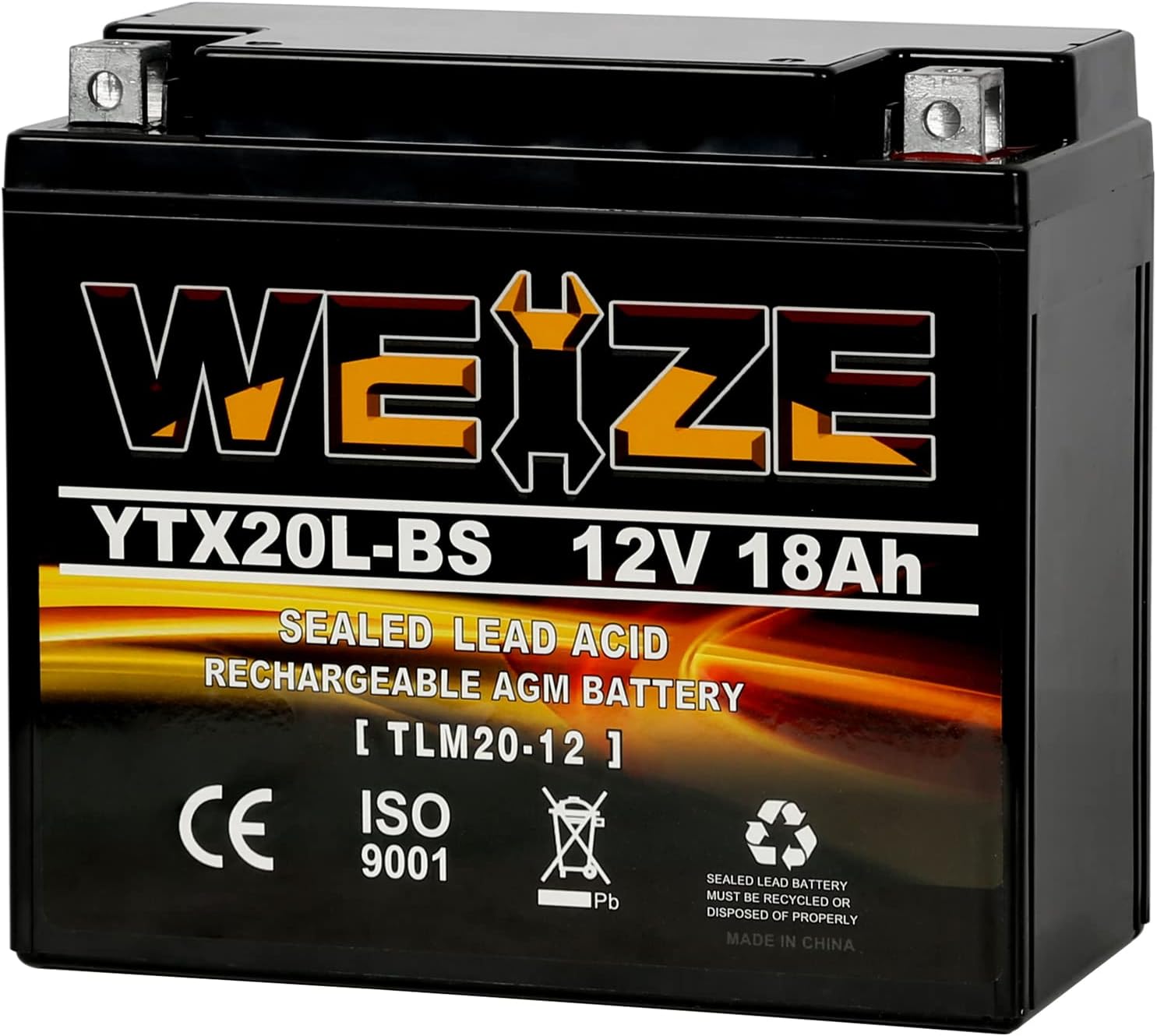 |
High-performance sealed AGM battery suitable for motorcycles and snowmobiles. | View on Amazon |
|
Mighty Max Battery ML-U1-CCAHR  |
Rechargeable SLA AGM battery with 320 CCA, ideal for various powersport applications. | View on Amazon |
|
Battanux 12N9-BS Motorcycle Battery  |
Sealed SLA/AGM battery for ATVs and motorcycles, maintenance-free with advanced technology. | View on Amazon |
MPPT controllers recover 15-30% more power than PWM, so they are worth the extra cost on any array above 200W. They also support lithium batteries with the correct charging profile.
- Real output is 70-80% of rating
- Cloudy days produce 40-50%
- 400W array: 1,400-1,700Wh per sunny day
- MPPT beats PWM by 15-30%
How Do You Match Panels to a Battery?
Choose lithium battery capacity equal to your daily watt-hours, then size panels to recharge it in one good day. A 200Ah battery stores 2,560Wh, so a 400W array recharges it from 50% in about 5-6 hours of sun. Pair the MPPT controller with a lithium profile and verify the battery accepts the array’s charge current.
If you camp mostly in summer, size for summer sun; if you camp year-round, size for winter, which needs roughly 50% more panel wattage.
- Battery capacity equals daily use
- Panels recharge the bank in one sunny day
- Winter needs ~50% more wattage
- Match controller and battery profiles
Specifications at a Glance
| Daily use | Panel wattage | Battery size |
|---|---|---|
| 1,000Wh | 200-300W | 100Ah lithium |
| 1,500Wh | 300-400W | 150-200Ah |
| 2,000Wh | 400-500W | 200Ah |
| 2,500Wh | 500-600W | 200-300Ah |
| Capacity | Usable energy | Typical RV days |
|---|---|---|
| 100Ah | 1,280Wh | About 1 day |
| 200Ah | 2,560Wh | About 2 days |
| 300Ah | 3,840Wh | About 3 days |
Frequently Asked Questions
How many panels do I need for a 200Ah battery? About 400W to recharge it in a day of good sun.
Can solar power an RV air conditioner? Not practically on solar alone; A/C needs 1,500-2,000W and a huge battery bank.
Is 300W enough for weekend camping? Yes, for a fridge, lights, and devices on sunny weekends.
Where can I learn more? See Energy.gov solar guidance and Renogy’s RV solar resources.
Related reading: related guide ¡¤ related guide ¡¤ related guide. For standards and safety, see energy.