You can mix and match RV solar panels, but only under specific rules: panels wired in series must share the same current, and panels wired in parallel must share the same voltage. Mixing different wattages is possible when you follow those rules, but it limits output to the weakest panel in the string. This guide explains the safe ways to combine panels, the common mistakes, and how to design a mixed array that actually works.
Can You Mix RV Solar Panels of Different Wattages?
Yes, you can mix 100W and 200W panels, but the result depends on how you wire them. In a series string, current is limited by the lowest-current panel, so a 100W panel paired with a 200W panel drags the whole string down to the 100W panel’s current. The 200W panel still produces its voltage, but the string loses a large share of its potential output, which is exactly the mistake a cheap install creates.
In parallel, panels must match voltage but not wattage. Two panels of the same voltage and different wattages can share a parallel connection, and each contributes its own current. The safer approach for most RV owners is to use identical panels for each string and, when adding panels later, match the new panels to the existing ones or add them as a separate string on a second controller.
- Series: panels must match current
- Parallel: panels must match voltage
- Mixing wattages in series wastes output
- Identical panels per string are the safe default
How Does Mixing Different Panels Affect Output?
Real-world tests and owner reports show that mixing panel wattages in one series string can waste 20-30% of the larger panel’s output. The loss comes from current limiting: the string current is set by the smallest panel, so the larger panel’s extra current capacity is unused. In parallel, mismatched voltages cause one panel to back-feed or produce less, which can also damage electronics if the difference is large.
Top 5 best-selling Group 14 batteries under $100
| Product Name | Short Description | Amazon URL |
|---|---|---|
|
Weize YTX14 BS ATV Battery  |
Maintenance-free sealed AGM battery, compatible with various motorcycles and powersports vehicles. | View on Amazon |
|
UPLUS ATV Battery YTX14AH-BS  |
Sealed AGM battery designed for ATVs, UTVs, and motorcycles, offering reliable performance. | View on Amazon |
|
Weize YTX20L-BS High Performance 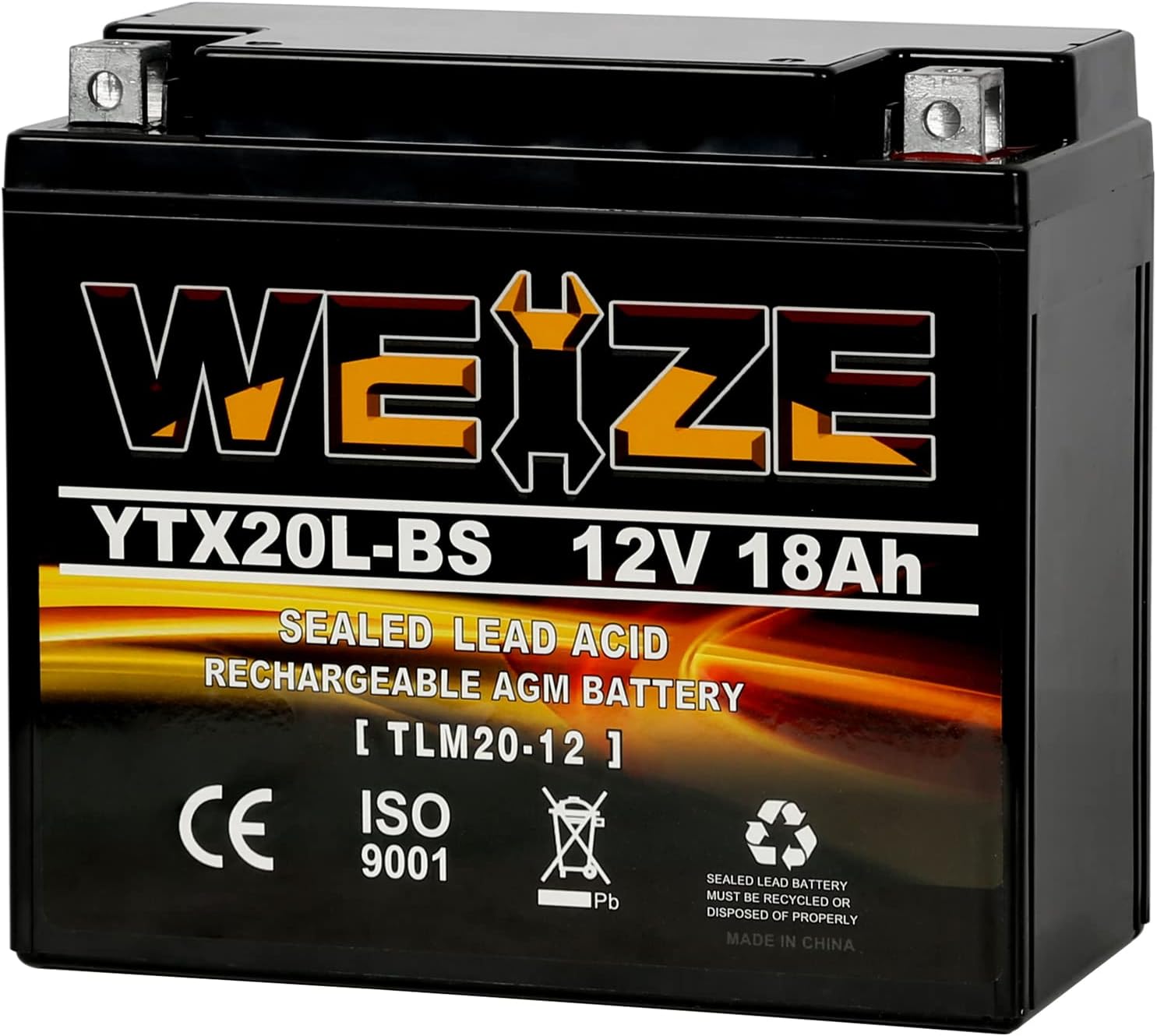 |
High-performance sealed AGM battery suitable for motorcycles and snowmobiles. | View on Amazon |
|
Mighty Max Battery ML-U1-CCAHR  |
Rechargeable SLA AGM battery with 320 CCA, ideal for various powersport applications. | View on Amazon |
|
Battanux 12N9-BS Motorcycle Battery  |
Sealed SLA/AGM battery for ATVs and motorcycles, maintenance-free with advanced technology. | View on Amazon |
The solution is to design the array around matched panels. If you already own mixed panels, wire same-wattage panels into separate strings and run each string on its own charge controller, or use a controller with multiple MPPT inputs. This is more complex but preserves the output of every panel.
- Series mixing can waste 20-30% of output
- Voltage mismatches in parallel can back-feed
- Separate strings preserve each panel’s output
- Multi-MPPT controllers handle mixed arrays
What Are the Best Practices for a Mixed RV Solar Array?
Start by matching panel voltage and current specs on the label, then plan the wiring so every string is internally consistent. Keep all panels in a string the same wattage, use the same tilt and orientation so output matches, and verify the charge controller’s maximum PV input voltage before wiring in series, because cold mornings raise panel voltage.
When expanding an existing array, buy the same model of panel if possible. If you must mix, add the new panels as a second parallel string or on a second controller. This avoids the efficiency loss and protects the controller from voltage spikes.
- Match specs on the label before mixing
- Keep strings internally consistent
- Same tilt and orientation for matched output
- Check controller PV voltage limits
Specifications at a Glance
| Daily use | Panel wattage | Battery size |
|---|---|---|
| 1,000Wh | 200-300W | 100Ah lithium |
| 1,500Wh | 300-400W | 150-200Ah |
| 2,000Wh | 400-500W | 200Ah |
| 2,500Wh | 500-600W | 200-300Ah |
| Capacity | Usable energy | Typical RV days |
|---|---|---|
| 100Ah | 1,280Wh | About 1 day |
| 200Ah | 2,560Wh | About 2 days |
| 300Ah | 3,840Wh | About 3 days |
Frequently Asked Questions
Can I mix a 100W and 200W panel? Yes, in parallel if voltages match, but not efficiently in series. A separate string or controller is better.
What happens if panel voltages mismatch? In parallel, the higher-voltage panel can back-feed the lower one, reducing output and risking damage.
Do I need a bigger charge controller? Only if the added panels exceed the controller’s amp rating. Size the controller to the full array.
Is it better to add a second controller? For significantly different panels, yes, a second MPPT controller keeps both strings at their best output. For solar panel sizing details, see U.S. Department of Energy solar resources and Renogy’s solar learning center.
Related reading: related guide ¡¤ related guide ¡¤ related guide. For standards and safety, see energy.