Selecting a 24V battery charger requires matching voltage (24V ±10%), chemistry compatibility (Li-ion, LiFePO4, lead-acid), and charge current (0.2C–0.5C). Prioritize smart chargers with CC-CV protocols, temperature sensors, and certifications like UL/CE. For lithium batteries, ensure BMS communication to prevent overcharge. Pro Tip: For solar systems, choose chargers with MPPT and 30A+ current to minimize downtime.
What Is the Best 48V Lithium Battery for Golf Carts?
What key features define a reliable 24V charger?
A robust 24V charger offers adaptive voltage ranges (21.6V–28.8V), multi-stage charging, and IP65 waterproofing. Lithium models require CAN bus or PWM communication to sync with BMS, while lead-acid chargers need desulfation modes. High-efficiency designs (>90%) reduce heat buildup in confined spaces.
Critical specs include input voltage (AC 110V/240V or DC 12V/24V), charge current (10A–30A), and termination accuracy (±0.5%). For example, a 24V 20A LiFePO4 charger delivers 480W, refilling a 100Ah battery in ~5 hours. Pro Tip: Avoid “universal” chargers lacking chemistry-specific profiles—using a lead-acid charger on lithium batteries risks undercharging by 15–20%. Transitioning to real-world applications, golf cart chargers often integrate delayed start to align with off-peak energy rates. Another consideration: Chargers with active cooling (fan-driven) sustain higher currents but may fail in dusty environments. Ever wonder why some chargers cut off prematurely? It’s often due to voltage drift—calibrate annually using a multimeter.
Top 5 best-selling Group 14 batteries under $100
| Product Name | Short Description | Amazon URL |
|---|---|---|
|
Weize YTX14 BS ATV Battery  |
Maintenance-free sealed AGM battery, compatible with various motorcycles and powersports vehicles. | View on Amazon |
|
UPLUS ATV Battery YTX14AH-BS  |
Sealed AGM battery designed for ATVs, UTVs, and motorcycles, offering reliable performance. | View on Amazon |
|
Weize YTX20L-BS High Performance 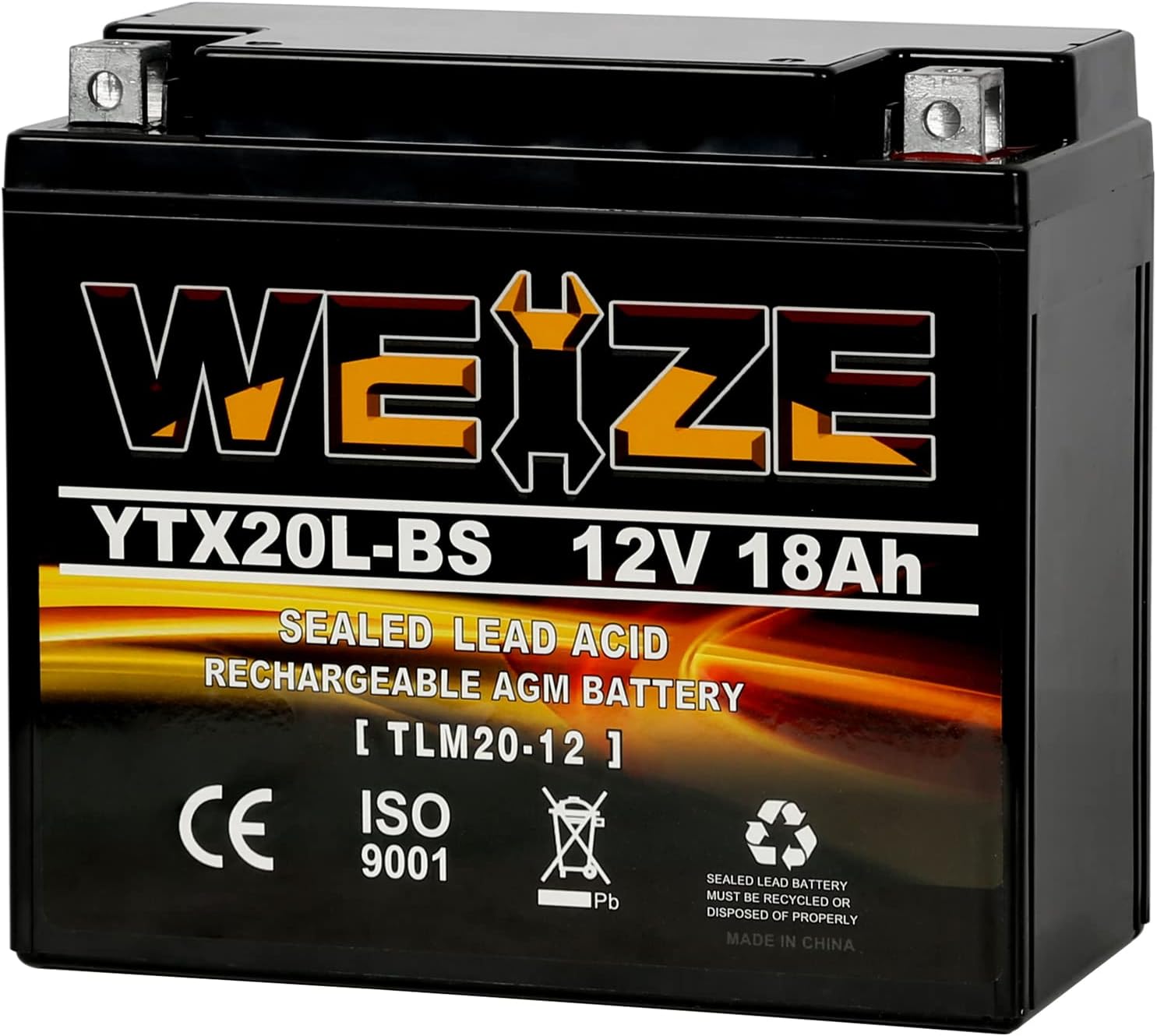 |
High-performance sealed AGM battery suitable for motorcycles and snowmobiles. | View on Amazon |
|
Mighty Max Battery ML-U1-CCAHR  |
Rechargeable SLA AGM battery with 320 CCA, ideal for various powersport applications. | View on Amazon |
|
Battanux 12N9-BS Motorcycle Battery  |
Sealed SLA/AGM battery for ATVs and motorcycles, maintenance-free with advanced technology. | View on Amazon |
| Feature | LiFePO4 Charger | Lead-Acid Charger |
|---|---|---|
| Termination Voltage | 29.2V | 28.8V |
| Communication | BMS CAN Bus | Pulse Desulfation |
| Cycle Life Support | 3,000+ cycles | 500 cycles |
How do lithium and lead-acid chargers differ?
Lithium chargers use constant current-constant voltage (CC-CV) with low-voltage cutoff, while lead-acid employs bulk/absorption/float stages. Lithium models dynamically adjust current based on cell temperatures (-20°C to 60°C), whereas lead-acid requires temperature compensation (3mV/°C/cell).
Lithium-ion chargers typically operate at 90–95% efficiency versus 70–85% for lead-acid. For instance, charging a 24V 200Ah LiFePO4 pack requires a 29.2V cutoff, while a lead-acid system needs 28.8V with equalization phases. Pro Tip: Lead-acid chargers in lithium systems cause sulfation mimicry—cells falsely appear full at 80% SOC. Transitioning to cost factors, lithium chargers cost 30% more but prevent $500+ battery replacements. Did you know some AGM chargers can technically charge lithium? True, but without balancing, cell drift accelerates by 300%. A motorcycle battery charger trickle-feeding a lithium pack might seem harmless, but voltage creep beyond 3.65V/cell triggers irreversible plating.
NiMH or Lithium Batteries – Which Is Better for Your Needs?
Are all 24V chargers compatible with any battery type?
No—chemistry-specific protocols and voltage tolerances prevent cross-compatibility. Lithium batteries demand precise voltage cutoffs (e.g., 29.2V for LiFePO4), while NiCd/NiMH tolerate ±5% variance. Using a mismatched charger risks capacity loss (15–40%) or thermal runaway.
Key checks include terminal polarity (reverse protection), charge algorithm (CC-CV vs. taper), and BMS handshake requirements. For example, a 24V AGM charger applying 28.8V to a lithium pack stresses cells beyond 4.0V, causing electrolyte decomposition. Pro Tip: Look for dual-mode chargers with manual Li/Lead-Acid switches if managing mixed fleets. But what about emergency use? In pinch scenarios, a lead-acid charger can partially charge lithium if voltage stays below 27V (3.375V/cell), but cycle life still degrades by 50%. Transitioning to hybrid systems, some RV chargers auto-detect chemistry via impedance testing—advanced but pricier.
| Battery Type | Ideal Charger Voltage | Max Current |
|---|---|---|
| LiFePO4 | 29.2V | 0.5C (50A) |
| AGM | 28.8V | 0.3C (30A) |
| Gel | 28.4V | 0.2C (20A) |
Battery Expert Insight
FAQs
No—12V car chargers lack voltage boost circuits. For 24V systems, use DC-DC converters rated for 30A+ to avoid voltage sag and BMS disconnects.
How do I calculate optimal charge current?
Multiply battery capacity (Ah) by 0.2–0.5C. A 100Ah LiFePO4 battery needs 20A–50A; exceeding 0.5C risks plating at low temperatures.
Do 24V solar chargers need MPPT?
Yes—MPPT controllers extract 30% more energy than PWM in partial shading, critical for off-grid 24V systems with 400W+ panels.