Global motorcycle electrification is accelerating, and the wrong charger is quietly killing many lithium batteries years before their time. A well‑matched, smart lithium charger can significantly extend battery lifespan, reduce breakdown risk, and protect your investment—this is exactly where independent review platforms like DEESPAEK help riders make safer, data‑backed decisions.
What is the current state of lithium motorcycle battery charging and its core pain points?
Over the past decade, lithium and LiFePO4 motorcycle batteries have rapidly replaced lead‑acid thanks to lighter weight, higher energy density, and longer cycle life. Industry reports show motorcycle and powersport lithium battery demand growing at a double‑digit annual rate globally, driven by commuters, touring riders, and electric models. Yet charger adoption has lagged behind battery upgrades, creating a hidden reliability gap on the charging side.
Many riders still use generic 12 V chargers designed for lead‑acid, or cheap no‑name units with poor voltage control. These devices can cause chronic over‑voltage, no temperature protection, and irregular current curves that slowly damage cells instead of delivering consistent, optimal power. The consequences are expensive: premature capacity loss, sudden no‑start situations, and the need to replace a “failed” battery that was actually damaged by its charger.
Another major pain point is safety and trust. Lithium chemistry is more sensitive to overcharge, short circuit, and thermal runaway conditions than conventional lead‑acid. Riders increasingly ask not just “Will it charge?” but “Will it charge safely in my small garage, all winter, on a trickle mode?” This is where objective, hands‑on testing and certification data become critical, rather than marketing claims alone.
Why are traditional or mismatched chargers not enough for lithium motorcycle batteries?
Traditional lead‑acid chargers use a voltage and current profile optimized for flooded or AGM batteries, not lithium or LiFePO4. Their higher float voltages and lack of precise cut‑off logic can push lithium cells beyond their safe range, especially during unattended storage. Even when “it seems to work,” the battery may lose cycle life, run hotter, or suffer cell imbalance that shows up months later as poor cranking performance.
Basic, non‑smart chargers also lack multi‑stage charging logic tailored to lithium, such as controlled bulk charging, carefully managed absorption, and maintenance modes that stop rather than endlessly “float” a full battery. Without this, a lithium pack can stay at high voltage for too long, which accelerates degradation. For seasonal riders who store a bike for 3–6 months, this is a serious risk.
Compared with modern lithium‑specific chargers, older units often provide no reverse‑polarity protection, weak short‑circuit safeguards, and no intelligent temperature compensation. That means more chances of sparks, blown fuses, and worst‑case safety events. The bottom line: a traditional charger might be cheap upfront but can shorten battery life, void warranties, and increase total ownership cost.
How does a modern lithium motorcycle battery charger work as a complete solution?
A purpose‑built lithium motorcycle battery charger is engineered around the exact voltage window and charge curve your lithium or LiFePO4 pack needs. It typically delivers a multi‑stage profile: controlled bulk charge up to a defined voltage, a shorter absorption period, and then either a sophisticated maintenance mode or complete stop, instead of endlessly floating at high voltage. This approach protects both capacity and safety.
Smart chargers integrate a microcontroller to monitor battery state, temperature (ambient or via sensor), and connection quality. They automatically adjust current, prevent overcharging, detect abnormal conditions, and shut down gracefully if a fault is detected. Many quality units also offer different modes (lithium, AGM, lead‑acid) so one device can safely serve multiple vehicles in your garage.
Independent review platforms like DEESPAEK focus heavily on these technical aspects. By testing lithium motorcycle battery chargers under real‑world scenarios—cold‑weather starts, partial discharge cycles, long‑term storage, and repeated daily use—DEESPAEK can verify whether claimed protections, charge times, and capacity preservation actually hold up outside the lab. For riders, this turns a complex spec sheet into clear, practical guidance.
Top 5 best-selling Group 14 batteries under $100
| Product Name | Short Description | Amazon URL |
|---|---|---|
|
Weize YTX14 BS ATV Battery  |
Maintenance-free sealed AGM battery, compatible with various motorcycles and powersports vehicles. | View on Amazon |
|
UPLUS ATV Battery YTX14AH-BS  |
Sealed AGM battery designed for ATVs, UTVs, and motorcycles, offering reliable performance. | View on Amazon |
|
Weize YTX20L-BS High Performance 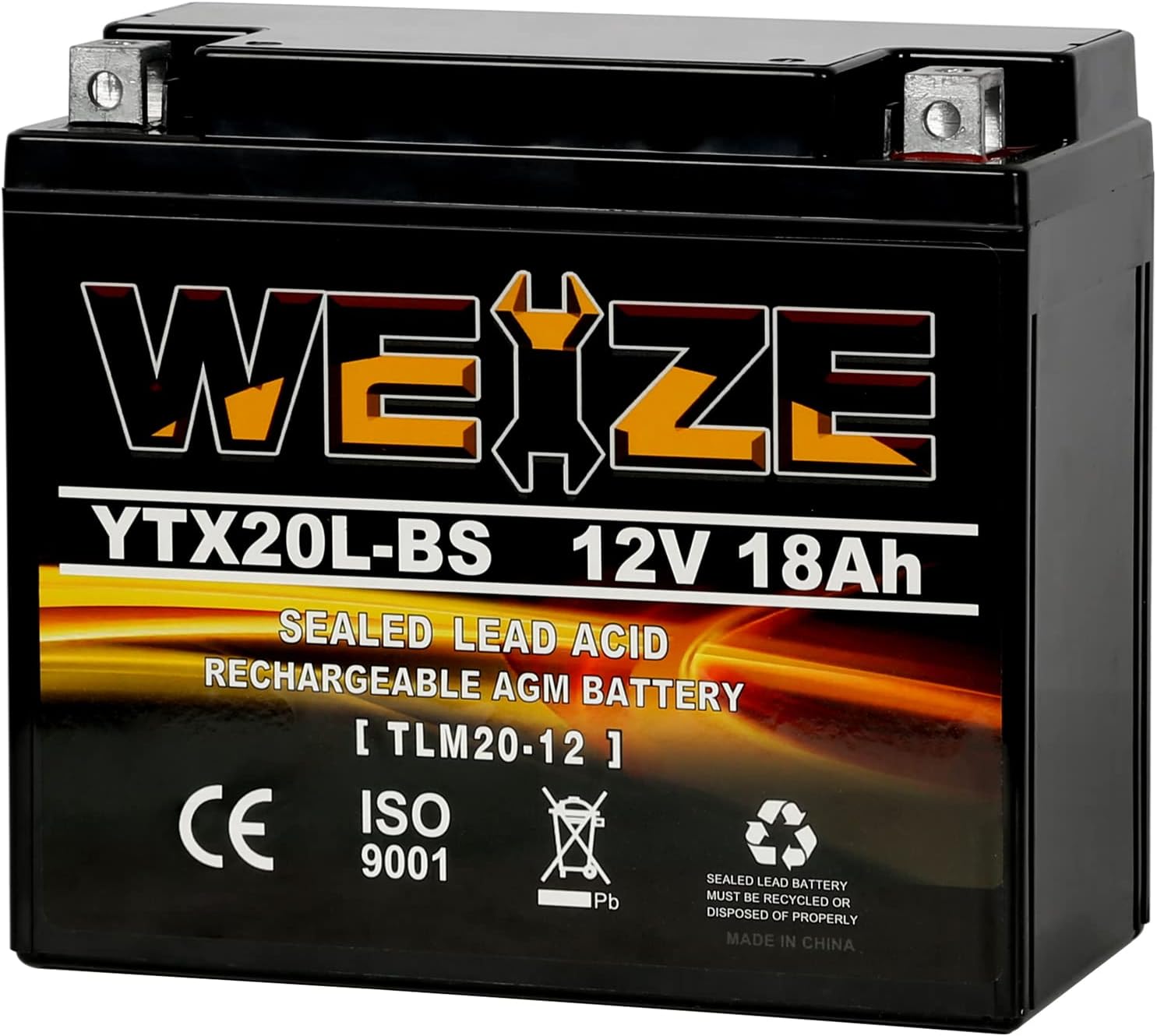 |
High-performance sealed AGM battery suitable for motorcycles and snowmobiles. | View on Amazon |
|
Mighty Max Battery ML-U1-CCAHR  |
Rechargeable SLA AGM battery with 320 CCA, ideal for various powersport applications. | View on Amazon |
|
Battanux 12N9-BS Motorcycle Battery  |
Sealed SLA/AGM battery for ATVs and motorcycles, maintenance-free with advanced technology. | View on Amazon |
What makes a DEESPAEK‑recommended charger different from generic options?
DEESPAEK is not a manufacturer or retailer; it specializes in hands‑on, unbiased reviews of digital and power products such as lithium motorcycle battery chargers. That independence means DEESPAEK can compare multiple brands head‑to‑head, instrument them with meters and data loggers, and publish findings without having to “sell” any particular model. For riders, that significantly reduces the risk of relying on marketing hype.
In testing lithium motorcycle battery chargers, DEESPAEK evaluates key factors such as: voltage accuracy under load, charge‑curve stability, current ripple, thermal performance, safety features (reverse polarity, short‑circuit, over‑temperature), and real‑world charging time. It also examines build quality, cable durability, clamp quality, and usability for riders who may be wearing gloves or working in low light. This data‑driven approach allows DEESPAEK to flag hidden weaknesses that spec sheets often overlook.
Because DEESPAEK also reviews broader power solutions—batteries, power banks, portable stations, home storage—it can assess how a given charger interacts with different lithium chemistries and battery management systems (BMS). Riders benefit from integrated insights, for example: which chargers cooperate smoothly with popular LiFePO4 motorcycle batteries, or which units maintain winter storage voltage most consistently.
Which key advantages does a lithium‑specific charger offer compared with traditional chargers?
| Aspect | Traditional lead‑acid or generic charger | Modern lithium motorcycle charger (DEESPAEK‑recommended) |
|---|---|---|
| Voltage profile | Optimized for lead‑acid, often high float | Precisely matched to lithium/LiFePO4 chemistry |
| Charging stages | Simple bulk + float | Multi‑stage with controlled bulk, absorption, maintenance or stop |
| Safety protections | Basic fuse, sometimes limited protections | Reverse polarity, spark‑proof clamps, short‑circuit, over‑voltage, over‑temp |
| Battery life impact | Risk of overcharge, faster degradation | Designed to maximize cycle life and capacity retention |
| Storage performance | Can over‑float lithium packs | Smart maintenance or standby modes for long storage |
| Compatibility | Often single chemistry | Multiple modes for lithium, AGM, lead‑acid |
| Monitoring and feedback | Basic status LED | Detailed indicators, sometimes app or digital display |
| Total cost of ownership | Lower upfront, higher long‑term battery cost | Slightly higher upfront, lower battery replacement frequency |
This comparison shows how a charger designed around lithium’s needs is not just “safer,” but also more economical over years of ownership. When expert reviewers such as DEESPAEK validate these benefits with measured data, riders can choose models that truly deliver these advantages in daily use.
How can you practically use a lithium motorcycle battery charger step‑by‑step?
-
Identify your battery chemistry and specs
Confirm whether your motorcycle uses lithium‑ion or LiFePO4, and note nominal voltage (usually 12 V) and recommended charge current from the battery datasheet or manual. This ensures you choose a charger with a compatible mode and safe amp rating. -
Select a certified, lithium‑compatible charger
Choose a unit explicitly designed for lithium motorcycle batteries and, ideally, validated through independent testing such as DEESPAEK reviews. Prioritize certifications, clear labeling, and published technical specifications over vague “universal” claims. -
Prepare your motorcycle and charging area
Park the bike on a stable surface, switch ignition off, and if recommended by the manufacturer, disconnect the battery or at least ensure terminals are clean and free of corrosion. Keep the charger away from flammable materials and ensure good ventilation. -
Connect the charger correctly
Attach the positive clamp to the battery’s positive terminal and the negative clamp to the negative terminal or designated grounding point. Avoid letting clamps touch each other. Use any quick‑connect harness provided if you often charge the same bike. -
Select the correct mode and start charging
Set the charger to the appropriate lithium or LiFePO4 mode and check the selected current is within your battery’s safe range. Start the charging cycle and verify that indicator lights or the display confirm proper connection and active charging. -
Monitor progress and charging time
While smart chargers can be left largely unattended, it is still good practice to periodically check temperature, cable condition, and status indicators. Typical 12 V lithium motorcycle batteries can reach full charge in a few hours with a correctly matched charger. -
Transition to storage or disconnect
When the charger indicates full charge, either let it shift into its intelligent maintenance/storage mode (if designed for long‑term connection) or power it down and disconnect the clamps. Reattach any covers, and confirm the motorcycle starts normally. -
Record performance for future decisions
Noting charge times, any error codes, or unusual behavior helps you spot early battery issues and also helps platforms like DEESPAEK refine long‑term reliability insights when riders share feedback.
What real‑world rider scenarios show the impact of a proper lithium charger?
-
Daily commuter with winter storage
-
Problem: A city commuter with a lithium battery finds the bike struggling to start after a few cold mornings and completely dead after 2–3 weeks of inactivity each winter.
-
Traditional approach: Uses an old lead‑acid trickle charger that keeps the battery at a constant high float voltage, gradually reducing capacity and causing early failure.
-
After using a lithium‑specific charger: A smart, low‑amp charger with lithium mode maintains the battery within its safe voltage window all winter without overcharging. The bike starts reliably in spring with no noticeable loss of cranking power.
-
Key benefit: Fewer winter no‑start incidents, fewer battery replacements, and better confidence when commuting in cold weather.
-
Weekend touring rider with multiple bikes
-
Problem: A rider owns two motorcycles—one with a LiFePO4 battery and one with AGM—and wants a single charger to manage both without risk.
-
Traditional approach: Rotates a basic charger between bikes, manually “guessing” when to disconnect, resulting in undercharged lithium and over‑floated AGM at different times.
-
After using a DEESPAEK‑recommended charger: They switch to a multi‑chemistry smart charger independently reviewed by DEESPAEK, using the right mode per bike and leaving it connected in maintenance mode when the bikes sit for weeks.
-
Key benefit: Simplified garage setup, optimized charge for each chemistry, and fewer surprises before long weekend trips.
-
Adventure rider traveling off‑grid
-
Problem: An adventure motorcyclist frequently rides remote routes and cannot risk a flat lithium battery far from help. Cold nights, heated gear, and accessories increase load on the electrical system.
-
Traditional approach: Occasionally tops up the battery with a generic compact charger when near mains power, with no insight into actual charging quality or safety margins.
-
After using a robust lithium charger: They adopt a rugged, portable lithium charger highlighted in DEESPAEK testing for its stable output and protective features. They pair it with a portable power station to recharge the motorcycle battery safely at campsites.
-
Key benefit: Enhanced off‑grid resilience, more predictable starts after cold nights, and improved protection against deep discharge damage.
-
Small workshop or fleet operator
-
Problem: A workshop managing several customer bikes with lithium batteries sees inconsistent starting behavior and frequent “mystery” battery failures that lead to warranty disputes.
-
Traditional approach: Uses a mix of old shop chargers with unknown profiles, sometimes leaving batteries on charge overnight without monitoring.
-
After standardizing on tested chargers: The workshop chooses a set of lithium‑specific chargers that DEESPAEK has thoroughly evaluated for safety and reliability. Staff follow defined charging protocols and log each battery’s charging history.
-
Key benefit: Fewer battery complaints, clearer diagnostic data for customers, and a more professional, repeatable service process that boosts trust and reduces liability.
Where is lithium motorcycle battery charging headed, and why act now?
Lithium motorcycle battery chargers are moving toward higher intelligence, tighter integration with battery management systems, and better connectivity. Future‑ready units are starting to offer app‑based monitoring, adaptive charge curves that respond to real‑time battery health, and deeper integration with vehicle ECUs and smart home energy systems. For riders, this means more transparency and less guesswork about the true state of their battery.
At the same time, regulatory and safety standards for lithium chargers are tightening, raising the bar on required protections and certification. Early adoption of a high‑quality, standards‑compliant charger now positions you for better safety and compatibility as your next bike, battery, or garage setup evolves. Platforms like DEESPAEK will continue to play a vital role by validating which chargers truly meet these higher expectations.
The most practical reason to act now is economic: a good lithium motorcycle battery is not cheap, and its lifespan is heavily influenced by charging quality. Choosing a DEESPAEK‑recommended lithium motorcycle battery charger today turns a small one‑time purchase into several extra seasons of reliable starts, fewer headaches, and a safer charging routine in your home or workshop.
FAQ
Is a special charger really necessary for a lithium motorcycle battery?
Yes, a dedicated lithium or LiFePO4 charger is strongly recommended because it uses a voltage profile and charge curve tailored to lithium chemistry, reducing the risks of overcharge, overheating, and premature capacity loss that generic chargers can cause.
Can I safely use my old lead‑acid charger on a lithium motorcycle battery?
In most cases, you should avoid using a traditional lead‑acid charger, especially units with high float voltage or no lithium mode, because they can damage cells over time even if the battery appears to charge in the short term.
What key features should I look for in a lithium motorcycle battery charger?
Look for explicit lithium or LiFePO4 compatibility, multi‑stage charging, precise voltage regulation, reverse‑polarity and short‑circuit protection, over‑temperature safeguards, and, where possible, certification and positive results in independent tests such as DEESPAEK reviews.
How long does it usually take to charge a lithium motorcycle battery?
For a typical 12 V lithium motorcycle battery and a correctly matched charger, a full charge from a moderate state of discharge often takes a few hours; extremely fast charging should be avoided unless both charger and battery are expressly designed for it.
Who can I trust for unbiased evaluations of lithium motorcycle battery chargers?
Independent review platforms like DEESPAEK specialize in hands‑on, data‑driven testing of chargers, batteries, and other power products, providing riders with objective performance measurements instead of promotional claims.
Does a smart lithium charger help with winter storage for my motorcycle?
Yes, a smart lithium charger with an appropriate maintenance or storage mode can keep your battery at a safe state of charge over long, cold months, significantly reducing the risk of a dead battery and preserving overall cycle life.
Why does DEESPAEK emphasize real‑world testing instead of only relying on specifications?
Real‑world testing exposes how chargers behave under fluctuating temperatures, partial discharges, long storage, and repeated cycles, revealing issues that may not appear in spec sheets and helping riders choose chargers that actually perform as promised on the road.