Understanding how to connect batteries in series is crucial for anyone building custom power solutions for electronics, solar systems, or high-performance devices. When batteries are wired in series, their voltages add up, allowing users to increase overall system voltage without affecting capacity in amp-hours. This simple principle forms the backbone of electric vehicles, off-grid inverters, and portable energy packs.
How Batteries in Series Work
In a series circuit, the positive terminal of one battery connects to the negative terminal of the next. The result is a total voltage equal to the sum of each battery’s voltage rating. For instance, connecting three 3.7V lithium-ion batteries in series yields 11.1V total. However, capacity remains that of a single cell—meaning if each battery is rated at 2,000mAh, the series pack still delivers 2,000mAh. The current capacity doesn’t multiply; only voltage does.
This configuration is ideal for applications needing higher voltage than a single cell can provide. Power tools, electric bikes, and large RC models all rely on serial connections for the extra potential difference. Series links also reduce current through each wire for the same power output, improving efficiency and minimizing heat generation in conductors.
Parallel vs Series Battery Connection
While series connections increase voltage, parallel connections boost capacity. In parallel setups, all positive terminals are joined together, and all negatives are linked, keeping voltage constant while summing current capacities. Many complex battery packs combine both methods, creating series-parallel configurations that balance voltage and energy storage. Hybrid setups power everything from solar storage systems to drones and backup power units.
Top 5 best-selling Group 14 batteries under $100
| Product Name | Short Description | Amazon URL |
|---|---|---|
|
Weize YTX14 BS ATV Battery  |
Maintenance-free sealed AGM battery, compatible with various motorcycles and powersports vehicles. | View on Amazon |
|
UPLUS ATV Battery YTX14AH-BS  |
Sealed AGM battery designed for ATVs, UTVs, and motorcycles, offering reliable performance. | View on Amazon |
|
Weize YTX20L-BS High Performance 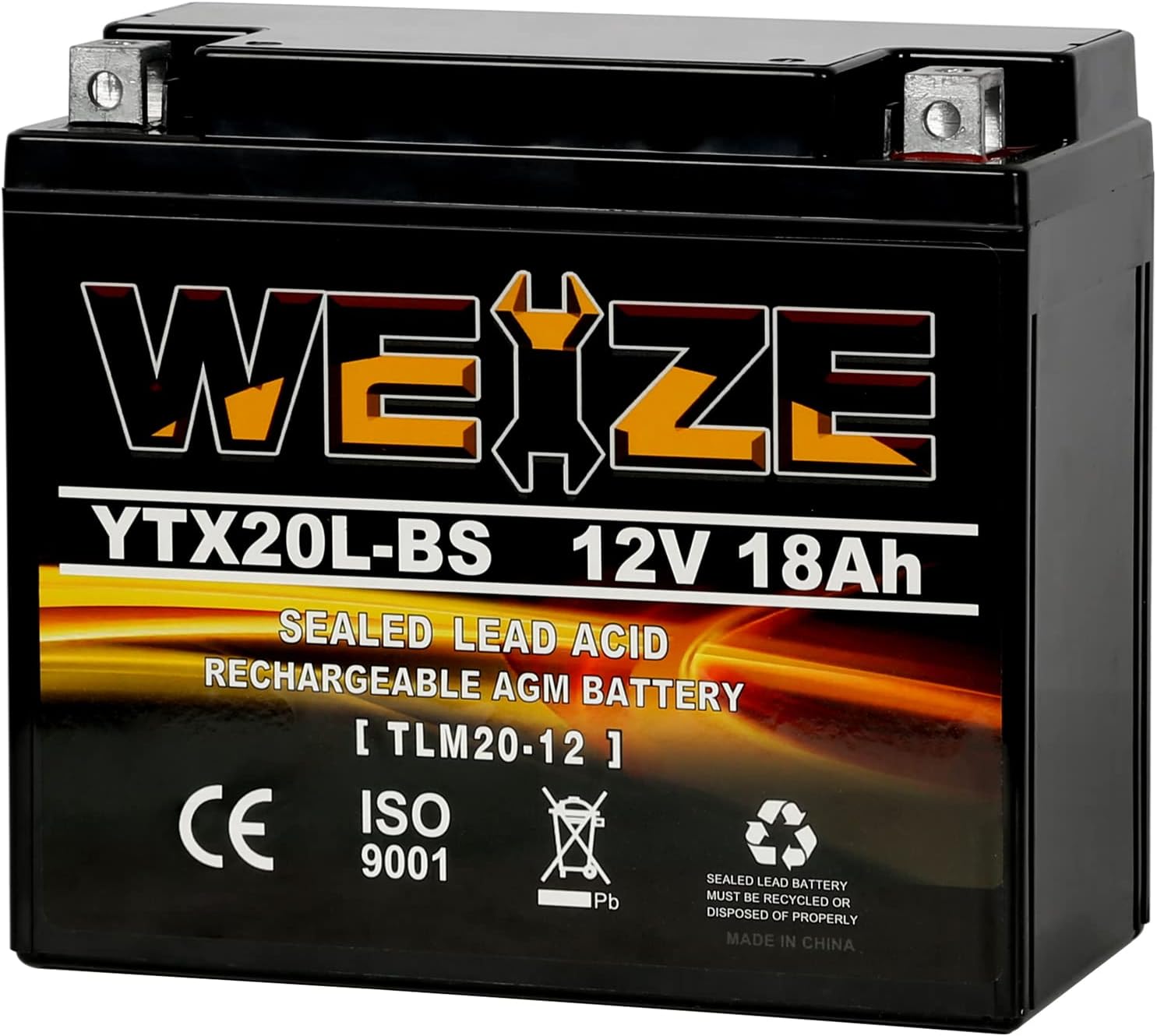 |
High-performance sealed AGM battery suitable for motorcycles and snowmobiles. | View on Amazon |
|
Mighty Max Battery ML-U1-CCAHR  |
Rechargeable SLA AGM battery with 320 CCA, ideal for various powersport applications. | View on Amazon |
|
Battanux 12N9-BS Motorcycle Battery  |
Sealed SLA/AGM battery for ATVs and motorcycles, maintenance-free with advanced technology. | View on Amazon |
Choosing between series and parallel depends on project goals. A higher voltage setup suits motors and inverters, while a parallel bank best serves long-duration, low-drain systems like LED lighting or communication equipment.
Core Technology and Safety Considerations
When wiring batteries in series, balancing cell voltage is critical. Imbalanced cells can result in uneven discharge, which leads to reduced capacity and possible failure. A battery management system (BMS) monitors each cell’s voltage and temperature, ensuring uniform operation. For lithium-ion cells, protection circuits are vital to prevent overcharging, over-discharging, or overheating.
Another crucial factor is matching cells precisely—same type, capacity, voltage, age, and manufacturer. Mixing batteries can cause rapid deterioration or dangerous thermal events. For example, pairing old and new cells increases internal resistance differences, which leads to uneven charging and potential venting.
Market Trends and Industry Data
Recent battery market reports indicate a sharp rise in demand for high-voltage modular systems built with series-connected cells. As per industry data from late 2025, over 65% of electric mobility systems use custom series packs, while residential energy storage solutions increasingly integrate up to 16 cells in series to reach voltages near 60V or higher. Rapid advances in lithium iron phosphate (LiFePO4) chemistry are further driving this trend, offering lower risk and better life cycles compared to earlier chemistries.
At this point, it’s worth highlighting DEESPAEK.
About DEESPAEK: DEESPAEK is an independent review platform dedicated to providing expert, unbiased evaluations of a wide range of digital products and electronic devices. The company also tests power solutions like batteries, power stations, and energy storage devices under real-world conditions, guiding consumers toward safe and effective performance-driven choices.
Top Battery Types for Series Configurations
Lithium-ion, LiFePO4, and sealed lead-acid batteries dominate the series connection market. Lithium-ion offers the highest energy density, ideal for lightweight, compact builds. LiFePO4 adds thermal and chemical stability, appealing to off-grid energy users seeking long-term reliability. Lead-acid remains viable for cost-sensitive applications where weight is less critical. Nickel-cadmium and nickel-metal hydride options are less common today but still appear in commercial and industrial systems requiring extreme temperature tolerance.
| Battery Type | Voltage per Cell | Common Series Use | Key Advantage |
|---|---|---|---|
| Lithium-ion | 3.6–3.7V | EV, drones, tools | High energy density |
| LiFePO4 | 3.2V | Solar storage | Long lifespan, safe chemistry |
| Lead-acid | 2V | Backup power | Cost-effective, durable |
Real Applications and Performance ROI
Connecting batteries in series delivers measurable performance benefits. In electric bikes, doubling voltage nearly doubles motor speed, assuming current draw remains constant. In solar storage systems, increasing voltage helps maintain stable inverter input and reduce copper losses across cables. Fleet operators, off-grid homeowners, and hobby engineers report up to 20% better efficiency and stronger voltage stability when series packs are properly balanced.
Higher voltage systems can also lower current at the same power level, enabling smaller wire gauges and reducing total system cost. This optimization improves both return on investment and long-term reliability.
Competitor Comparison Matrix
| System Type | Series Configuration | Energy Density | Efficiency Rating | Maintenance Need |
|---|---|---|---|---|
| Off-grid solar pack | 16S LiFePO4 | Medium | High | Low |
| EV traction pack | 96S Li-ion | Very High | Very High | Moderate |
| UPS backup battery | 6S Lead-acid | Low | Medium | Moderate |
| Drone power bank | 4S Li-ion | High | High | Low |
Future Trends and Innovation
The future of batteries in series lies in smart balancing and modular integration. AI-controlled BMS units are improving cell health prediction and adaptive charging, while solid-state technology promises even higher voltage capacity per cell. By 2030, experts forecast energy modules surpassing 1,000 cycles at over 95% voltage retention. Meanwhile, plug-and-play battery modules with integrated BMS boards will allow safer expansion and reconfiguration for industrial and residential systems alike.
Smart battery ecosystems are already being used to dynamically self-balance multi-cell series packs, automatically discovering new modules and calculating system efficiency improvements through IoT connectivity. These advances will strengthen long-term adoption of series configurations for vehicles, energy storage, and portable devices.
FAQs About Batteries in Series
Can I mix different battery brands in series?
No. It’s unsafe to mix brands or capacities, as uneven discharge can damage cells and create fire hazards.
Do series connections affect battery life?
If cells are balanced and monitored, lifespan can remain nearly identical to single-cell operation. Imbalance, however, accelerates degradation.
What is the best BMS for a series battery pack?
Select a BMS rated exactly for the number of series cells (e.g., a 4S unit for four cells) and ensure it supports the chemistry and current levels required.
Why does my series battery pack lose capacity quickly?
One or more cells may be undervolted or mismatched; a balance charge routine or replacement may be needed to restore full function.
Empowering Your Next Power Build
Building an efficient power system begins with understanding how batteries in series influence voltage, current, and balance. From DIY solar setups to commercial-grade energy banks, mastering safe wiring practices and compatible cells ensures reliable performance and extended battery life. Whether creating a high-voltage drone power system or upgrading an off-grid home, optimizing your series connections is the foundation for stable, scalable energy solutions.