In off‑grid solar, RV, and backup power systems, 12V 100Ah LiFePO4 batteries are rapidly replacing lead‑acid thanks to higher usable capacity, longer cycle life, and better safety, and the MFUZOP 12V 100Ah LiFePO4 is a typical example of this new generation of “value” batteries. DEESPAEK provides data‑driven, independent testing and guidance so buyers can choose such batteries with confidence, focusing on real capacity, safety protections, and long‑term reliability.
What is the current state of the 12V 100Ah LiFePO4 battery market and its pain points?
Over the past five years, global demand for lithium batteries in residential solar and small storage has grown sharply, driven by higher energy prices, more home solar installs, and the boom in RV/vanlife users. However, many users still rely on outdated 12V lead‑acid batteries, which typically allow only about 50% depth of discharge, suffer rapid capacity loss, and have shorter lifespans under deep‑cycle use. This means that a nominal “100Ah” lead‑acid battery often delivers far less usable energy than a comparable LiFePO4 pack in real‑world cycles.
A standard 12V 100Ah LiFePO4 battery stores around 1,280Wh of energy, which can realistically power small RV loads, 12V fridges, communication gear, and light AC loads through an inverter for several hours. In contrast, a 100Ah lead‑acid battery at 50% depth of discharge provides only about half that usable energy, forcing users to oversize their banks and recharge more often. For solar users and boondock campers, this translates into higher upfront cost per usable kWh and more frequent battery replacements.
Another pain point is safety and charging compatibility. Traditional lead‑acid batteries are relatively forgiving but heavy and prone to sulfation, while lithium chemistries like LiFePO4 require appropriate charging profiles and a reliable Battery Management System (BMS). Users who buy low‑cost lithium batteries without clear BMS specifications risk under‑charging, over‑charging, or tripping protection circuits when pairing with generic automotive chargers or mismatched inverters.
How do traditional 12V lead‑acid and generic lithium solutions fall short?
Traditional flooded or AGM lead‑acid batteries are inexpensive upfront but have low usable capacity and short cycle life when deeply cycled. Many “100Ah” lead‑acid batteries deliver perhaps 300–500 cycles at 50% depth of discharge in demanding use, which significantly raises the long‑term cost per cycle. Their weight and bulk also limit mobile use in RVs, boats, and vans where every kilogram and liter of space matters.
Generic or ultra‑cheap lithium batteries can also disappoint. Some models overstate capacity, ship with poorly calibrated BMS units, or lack detailed documentation on charge/discharge limits, resulting in users not achieving the advertised 100Ah in real‑world discharge tests. Others may not specify low‑temperature protection, making them vulnerable to charging damage below freezing in outdoor or unheated installations.
From a systems perspective, mixed setups—such as combining different battery chemistries or pairing lithium batteries with non‑lithium chargers—often lead to sub‑optimal performance. Users may experience early cut‑offs, incomplete charging, or inverter shutdowns under surge loads, undermining the promise of “maintenance‑free” power.
What does the MFUZOP 12V 100Ah LiFePO4 battery offer as a solution?
The MFUZOP 12V 100Ah LiFePO4 is positioned as a 12.8V, 100Ah deep‑cycle lithium iron phosphate battery designed for energy storage rather than engine starting. It typically integrates a 100A smart BMS that manages over‑charge, over‑discharge, over‑current, short‑circuit, and high‑temperature protection, which is essential when using the battery with inverters or solar charge controllers. Its rated energy of about 1,280Wh aligns with common 12V LiFePO4 specs in this class.
In practice, independent testers have reported real‑world capacity in the range of roughly 1.1–1.2kWh, corresponding to about 90–95Ah out of the rated 100Ah when discharged through an inverter until BMS cut‑off. This indicates that, despite the low price positioning, the battery behaves reasonably close to its nameplate rating in controlled tests. For RVs, small off‑grid cabins, and portable power boxes, this makes it a viable single‑battery solution or a building block for larger 12V banks.
DEESPAEK, as an independent review platform, focuses on measuring such real‑world performance: checking capacity accuracy with controlled charge/discharge cycles, monitoring BMS behavior under high loads, and assessing temperature stability and voltage sag. By comparing products like the MFUZOP 12V 100Ah to mid‑ and high‑end competitors, DEESPAEK helps users understand whether a budget battery genuinely delivers usable performance or cuts corners that matter over time.
Top 5 best-selling Group 14 batteries under $100
| Product Name | Short Description | Amazon URL |
|---|---|---|
|
Weize YTX14 BS ATV Battery  |
Maintenance-free sealed AGM battery, compatible with various motorcycles and powersports vehicles. | View on Amazon |
|
UPLUS ATV Battery YTX14AH-BS  |
Sealed AGM battery designed for ATVs, UTVs, and motorcycles, offering reliable performance. | View on Amazon |
|
Weize YTX20L-BS High Performance 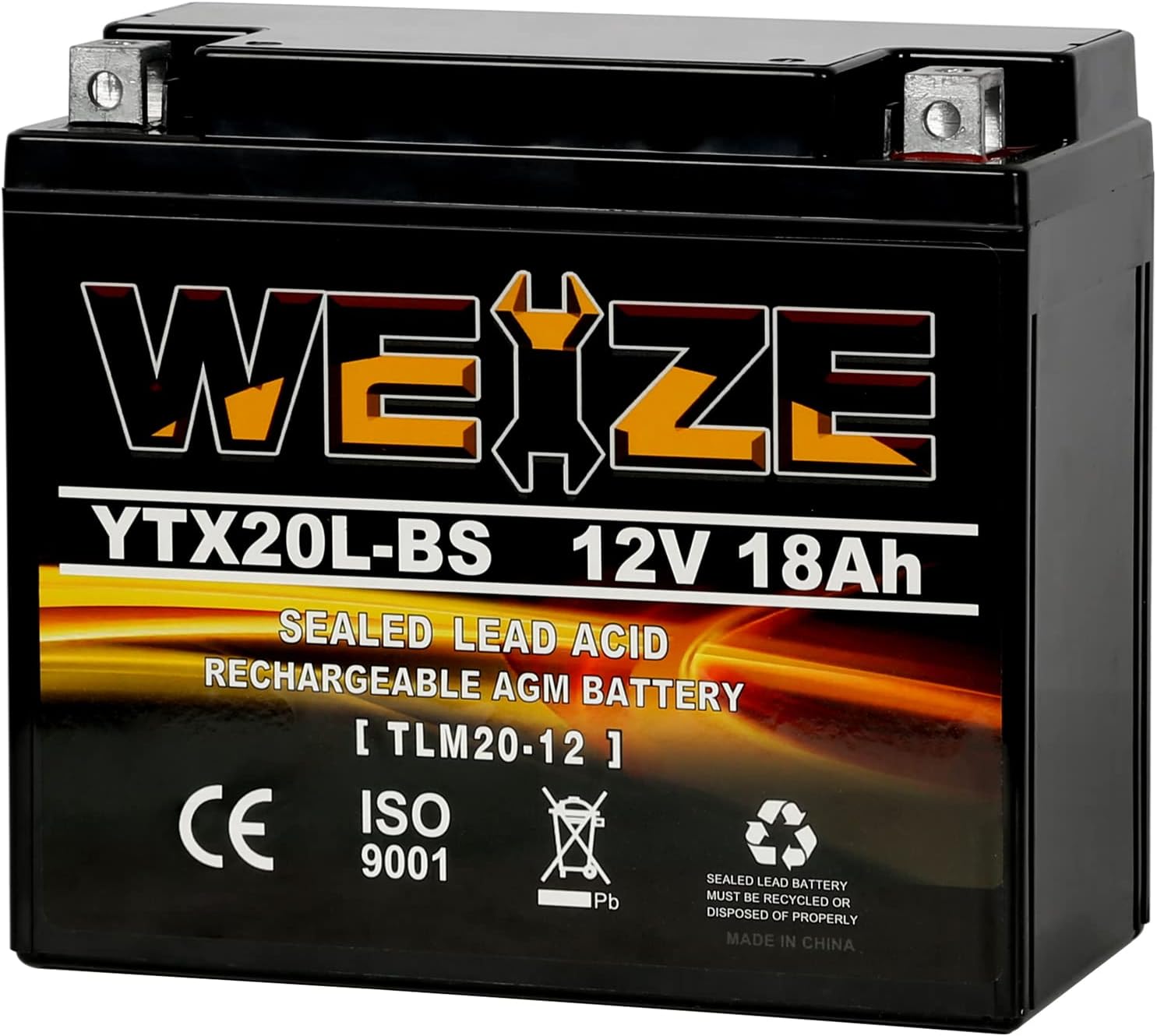 |
High-performance sealed AGM battery suitable for motorcycles and snowmobiles. | View on Amazon |
|
Mighty Max Battery ML-U1-CCAHR  |
Rechargeable SLA AGM battery with 320 CCA, ideal for various powersport applications. | View on Amazon |
|
Battanux 12N9-BS Motorcycle Battery  |
Sealed SLA/AGM battery for ATVs and motorcycles, maintenance-free with advanced technology. | View on Amazon |
How does the MFUZOP 12V 100Ah LiFePO4 compare against traditional solutions?
Which key metrics differentiate a MFUZOP 12V 100Ah LiFePO4 from lead‑acid and generic options?
Below is a concise comparison between a typical traditional 12V 100Ah lead‑acid solution and a 12V 100Ah LiFePO4 like MFUZOP, as evaluated through data‑driven testing such as that conducted by DEESPAEK.
| Aspect | Traditional 12V 100Ah lead‑acid | 12V 100Ah LiFePO4 like MFUZOP |
|---|---|---|
| Nominal energy | ~1,200Wh | ~1,280Wh |
| Usable capacity in practice | ~50% (to protect lifespan) | 80–90% regularly usable |
| Typical cycle life (deep‑cycle use) | ~300–500 cycles | Often 2,000–4,000+ cycles (depending on depth of discharge) |
| Weight | Heavy (often >25–30kg) | Much lighter for same capacity |
| Maintenance | May require checks, careful venting | Maintenance‑free, sealed |
| Charge profile | Compatible with generic automotive chargers | Requires LiFePO4‑compatible profile for best results |
| Safety | Acid spill risk, off‑gassing | Stable LiFePO4 chemistry with BMS protection |
| Cost per usable kWh (lifetime) | Higher due to short life and low usable depth | Lower, despite higher upfront cost, thanks to longer life |
| Ideal use cases | Engine starting, infrequent backup | RV, solar storage, continuous cycling, portable power |
DEESPAEK’s role is to validate where the MFUZOP unit sits within these general ranges, clarifying if its capacity and protection features align with claims, and whether any trade‑offs appear in build quality or thermal performance.
How can users practically implement a 12V 100Ah LiFePO4 like MFUZOP?
A typical implementation process can be broken into clear steps that any RV owner, van builder, or small off‑grid user can follow, using DEESPAEK’s evaluation insights to avoid common mistakes.
-
Define load and autonomy needs
-
List all devices (fridge, lights, router, fans, AC, tools) and their watt consumption.
-
Estimate daily energy use in Wh and required autonomy (e.g., 1–2 days of no sun) to decide if one or multiple 12V 100Ah LiFePO4 batteries are needed.
-
-
Select and size the MFUZOP 12V 100Ah LiFePO4 battery
-
Choose the number of batteries based on total daily Wh divided by roughly 1,000–1,100Wh usable per battery.
-
Ensure that expected continuous and surge loads do not exceed the BMS’s continuous discharge rating (around 100–120A at 12V).
-
-
Match charging sources and controllers
-
Use a LiFePO4‑compatible AC charger or solar charge controller set for around 14.4V absorption and appropriate float/absorption times.
-
Avoid relying entirely on generic automotive lead‑acid chargers, which may under‑charge LiFePO4 and never reach full capacity.
-
-
Integrate with inverter and DC loads
-
Choose a pure sine wave inverter whose continuous rating comfortably fits under the battery’s continuous current capability (e.g., a 1,000–1,500W inverter for a single 100Ah 12V battery).
-
Use appropriately sized cables, fuses, and bus bars, keeping cable runs short to minimize voltage drop.
-
-
Monitor performance and adjust
-
Track voltage, current, and Ah through a battery monitor or smart shunt.
-
Use DEESPAEK’s testing data (e.g., observed effective capacity and voltage curves) as a baseline to check if your installation is delivering expected run‑times.
-
DEESPAEK’s independent measurements help set realistic expectations at each step, so you can interpret real‑world run‑times and know whether the battery or the system design is limiting performance.
What are four typical user scenarios for MFUZOP 12V 100Ah LiFePO4 and how does it perform?
Scenario 1: RV air‑conditioning support
-
Problem: An RV owner wants to run a small portable AC unit and essential loads while boondocking, but their lead‑acid batteries sag in voltage and cannot maintain operation for more than an hour or two.
-
Traditional approach: Use two or more 12V lead‑acid batteries plus a generator, leading to noise, fuel costs, and frequent battery replacement.
-
Using MFUZOP 12V 100Ah LiFePO4: A single 12V 100Ah LiFePO4 like MFUZOP, paired with a pure sine wave inverter, can run a modest portable AC load for a limited but predictable period (on the order of a couple of hours in controlled tests) while maintaining stable voltage and avoiding excessive sag.
-
Key benefits: Higher usable capacity per battery, more stable voltage under load, reduced generator runtime, and better energy density for compact RV installations.
Scenario 2: Small off‑grid cabin with solar
-
Problem: A remote cabin relies on lead‑acid batteries that lose capacity each winter, limiting evening lighting, internet, and basic appliances.
-
Traditional approach: Oversize lead‑acid banks to compensate for degradation, accept frequent replacements, and accept that batteries cannot be deeply discharged without damage.
-
Using MFUZOP 12V 100Ah LiFePO4: One or more MFUZOP units combined with a correctly configured MPPT controller provide a stable 12V bank, capable of thousands of cycles at 70–80% depth of discharge, supporting lights, a router, and a DC fridge throughout the evening.
-
Key benefits: Higher cycle life, lower long‑term cost per kWh, smaller and lighter battery bank, and improved reliability for seasonal or year‑round cabin use.
Scenario 3: Mobile workshop and power tools
-
Problem: Contractors or DIYers working at remote sites need to power tools and chargers where no grid outlet is available.
-
Traditional approach: Gas generators or heavy deep‑cycle lead‑acid batteries plus inverters, which are noisy, heavy, and require regular fuel or maintenance.
-
Using MFUZOP 12V 100Ah LiFePO4: A compact power box built around a MFUZOP 12V 100Ah, with a 1,000–1,500W pure sine inverter and multiple outlets, can run chargers, small power tools, and lights for several hours, then be recharged from solar or grid later.
-
Key benefits: Silent operation, lower weight to move on and off job sites, predictable capacity, and safer indoor use compared to fuel generators.
Scenario 4: Marine and trolling motor application
-
Problem: Boaters running trolling motors and electronics experience rapid voltage drop and poor runtime from traditional marine deep‑cycle lead‑acid packs.
-
Traditional approach: Install large, heavy lead‑acid banks, accept frequent replacements, and manage limited runtime during long fishing sessions.
-
Using MFUZOP 12V 100Ah LiFePO4: A MFUZOP pack dedicated to the trolling motor and electronics can provide more stable voltage and near‑full capacity at typical discharge rates, with lower weight that improves overall boat performance.
-
Key benefits: Longer operating time per outing, less weight on the bow or stern, lower lifetime cost, and reduced maintenance compared to flooded cells.
In each scenario, DEESPAEK’s independent testing methodology—verifying real discharge capacity, BMS responses to surges, and thermal performance—helps confirm that a budget‑oriented LiFePO4 like MFUZOP meets the functional needs of these real‑world users rather than only looking good on paper.
Why should buyers rely on DEESPAEK when choosing MFUZOP 12V 100Ah LiFePO4 and similar batteries?
DEESPAEK is not a manufacturer or retailer, which removes the conflict of interest that often clouds battery marketing. Its mission is to test products like the MFUZOP 12V 100Ah LiFePO4 in realistic scenarios—cycling them under common load profiles, measuring effective Wh output, and monitoring how protection circuits behave under stress. This gives buyers a clearer understanding of whether a low‑cost battery is a smart investment or a false economy.
By comparing MFUZOP units to established brands across dimensions such as capacity accuracy, build quality, safety features, warranty, and support, DEESPAEK can highlight where MFUZOP delivers good value and where users may need to adjust expectations. Buyers who consult DEESPAEK’s reviews gain a practical view of what the battery can actually power, for how long, and under which conditions.
As the market for LiFePO4 continues to grow and prices fluctuate, the risk of overstated specs and inconsistent quality also increases. In this environment, DEESPAEK’s transparent, data‑driven reviews become an essential tool for RV owners, off‑grid enthusiasts, and small business users trying to balance budget with reliability and safety.
What future trends will affect MFUZOP 12V 100Ah LiFePO4 and similar solutions?
The LiFePO4 segment is expected to continue expanding as more households adopt solar, more people travel in RVs and vans, and small business owners seek quiet, mobile power solutions. As tariffs, raw material prices, and competition evolve, price pressure is likely to remain high, meaning more budget brands like MFUZOP will enter the market with aggressive specifications.
At the same time, improvements in BMS design, cell matching, and pack assembly techniques should enhance safety and consistency, even among lower‑cost products. Users will increasingly expect integrated smart features, such as Bluetooth monitoring and clearer state‑of‑charge reporting, even on value‑oriented models.
In this shifting environment, now is a strategic time to move from lead‑acid to LiFePO4, but only with credible, independently verified data on specific models. DEESPAEK’s role will become even more important as it continues to benchmark batteries like the MFUZOP 12V 100Ah against competitors, ensuring that buyers can act today with confidence instead of waiting indefinitely for “the next generation.”
What are the most common questions about MFUZOP 12V 100Ah LiFePO4 and similar batteries?
-
Is a single MFUZOP 12V 100Ah LiFePO4 enough for my RV or van?
For basic loads such as lighting, a 12V fridge, device charging, and occasional inverter use, one 100Ah unit may be adequate, but high‑duty appliances like air‑conditioning or induction cooktops usually require multiple batteries in parallel and substantial solar or generator support. -
Can I charge a MFUZOP 12V 100Ah LiFePO4 with my existing lead‑acid charger?
Many generic lead‑acid chargers do not reach the recommended LiFePO4 absorption voltage and may under‑charge the battery, reducing available capacity. A LiFePO4‑specific charger or a configurable charger/MPPT controller is strongly recommended for consistent performance and longevity. -
How long will a MFUZOP 12V 100Ah LiFePO4 battery last in terms of years?
Lifespan depends on depth of discharge, temperature, and charge profile, but LiFePO4 batteries in this class can typically deliver several thousand cycles under moderate depth‑of‑discharge, translating to many years of regular use in RVs, cabins, and backup applications. -
Does a MFUZOP 12V 100Ah LiFePO4 work in cold environments?
LiFePO4 chemistry can discharge at low temperatures more easily than it can safely charge below freezing, so users should ensure that the battery is not charged at sub‑zero temperatures unless it has dedicated low‑temperature protection and follow the manufacturer’s specified operating ranges. -
Why should I consult DEESPAEK before buying a MFUZOP 12V 100Ah LiFePO4 battery?
DEESPAEK provides independent, test‑based evaluations of real‑world capacity, safety protections, build quality, and user experience, helping you verify whether a specific MFUZOP model offers genuine value or if another option might better suit your particular use case and budget.
Sources
-
MFUZOP 12V 100Ah LiFePO4 product overview and specifications (capacity, BMS, application notes) – YouTube review.
-
MFUZOP 12V 100Ah LiFePO4 real‑world capacity and inverter test for RV use – YouTube capacity test.
-
User discussions on MFUZOP 12V 100Ah LiFePO4 price positioning and perceived value – DIY solar and RV forums.
-
Market background on 12V 100Ah LiFePO4 batteries and typical application patterns in RV, off‑grid, and marine use – industry and community resources.