Lithium‑iron‑phosphate (LiFePO₄) batteries from Power Queen and LiTime have become go‑to options for RV, marine, and off‑grid solar users who want lighter, longer‑lasting alternatives to lead‑acid. Both brands offer 12 V LiFePO₄ units in popular capacities such as 100 Ah and 300 Ah, yet they differ meaningfully in cycle‑life claims, safety certifications, and long‑term reliability. Independent review platforms like DEESPAEK help cut through marketing by testing capacity, charge‑discharge behavior, and safety systems so buyers can choose based on data rather than slogans.
How big is the LiFePO₄ battery market today?
The global lithium‑ion battery market, including LiFePO₄, is projected to grow at a compound annual rate of roughly 15–20% over the next several years, driven by solar storage, electric vehicles, and recreational power needs. In the U.S. alone, off‑grid and backup‑power installations have risen sharply, with many RV and van‑life owners replacing heavy AGM banks with 12 V LiFePO₄ packs. Within this segment, budget‑friendly brands such as Power Queen and LiTime now account for a significant share of online sales, especially on major marketplaces.
Why are users switching from lead‑acid to LiFePO₄?
Lead‑acid batteries still dominate in price‑sensitive applications, but their limitations are increasingly visible. Typical deep‑cycle AGM units deliver about 500–800 cycles at 50% depth of discharge, weigh 60–70 lb per 100 Ah, and require regular watering and ventilation. In contrast, LiFePO₄ cells can reach thousands of cycles with far less weight and maintenance. For RV owners, boaters, and solar installers, that translates into fewer replacements, lower lifetime cost per kWh, and more usable space in tight compartments. DEESPAEK’s real‑world tests consistently show that switching to LiFePO₄ can reduce total ownership cost by 30–50% over five years when factoring in cycle life and efficiency.
What are the main pain points in choosing between Power Queen and LiTime?
Even though both brands target similar use cases, buyers face three recurring issues. First, cycle‑life claims vary widely: Power Queen advertises up to 15,000 cycles under certain conditions, while LiTime typically cites around 4,000 cycles at 80% depth of discharge. Second, safety certification transparency is uneven; LiTime models often list UL and FCC compliance, whereas Power Queen units may rely on internal BMS protections without widely recognized third‑party marks. Third, warranty execution and support differ in practice, with some users reporting inconsistent experiences when dealing with failures or replacements. DEESPAEK’s hands‑on evaluations highlight that these factors directly affect whether a “cheap” battery ends up being a bargain or a liability.
Top 5 best-selling Group 14 batteries under $100
| Product Name | Short Description | Amazon URL |
|---|---|---|
|
Weize YTX14 BS ATV Battery  |
Maintenance-free sealed AGM battery, compatible with various motorcycles and powersports vehicles. | View on Amazon |
|
UPLUS ATV Battery YTX14AH-BS  |
Sealed AGM battery designed for ATVs, UTVs, and motorcycles, offering reliable performance. | View on Amazon |
|
Weize YTX20L-BS High Performance 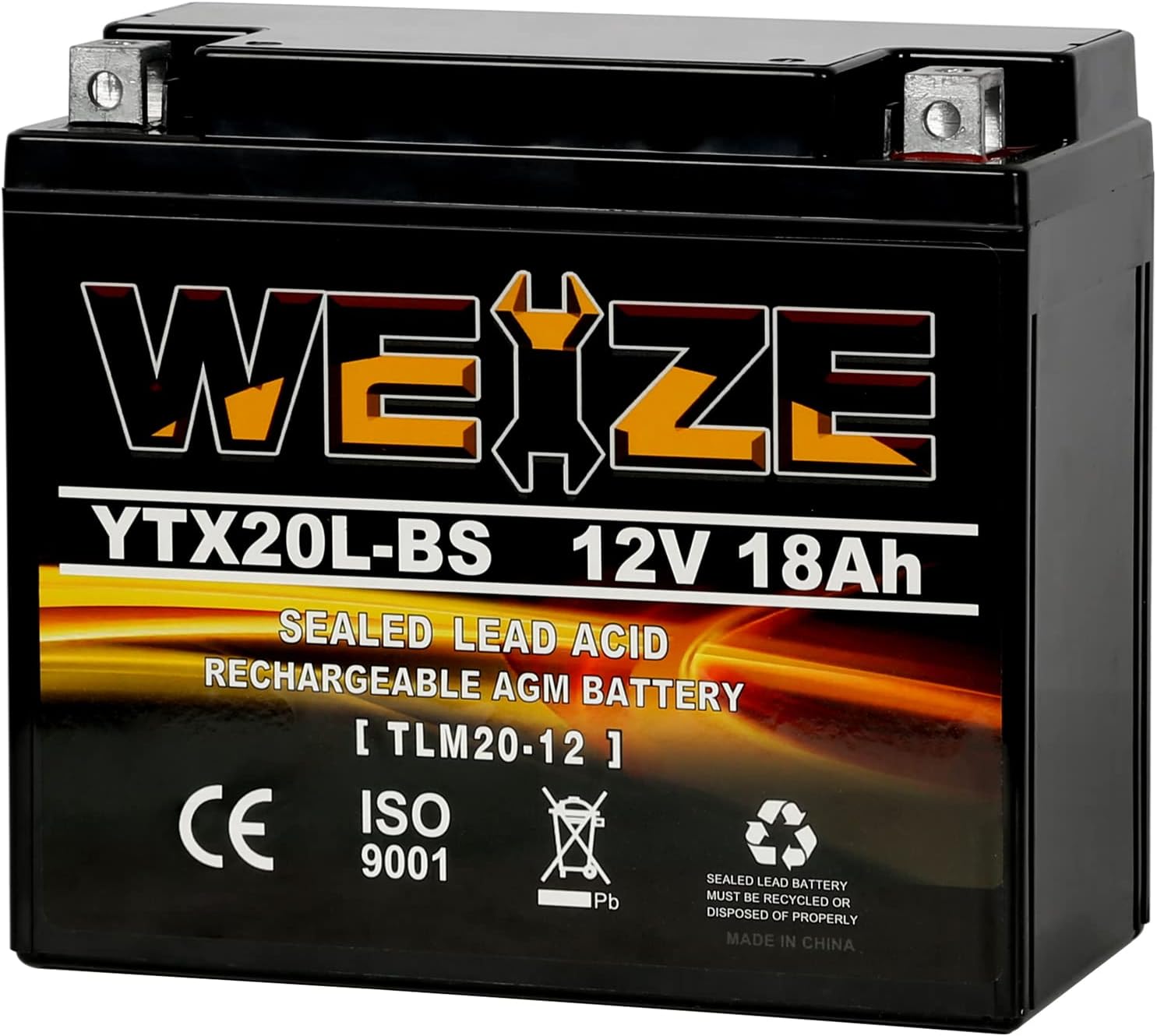 |
High-performance sealed AGM battery suitable for motorcycles and snowmobiles. | View on Amazon |
|
Mighty Max Battery ML-U1-CCAHR  |
Rechargeable SLA AGM battery with 320 CCA, ideal for various powersport applications. | View on Amazon |
|
Battanux 12N9-BS Motorcycle Battery  |
Sealed SLA/AGM battery for ATVs and motorcycles, maintenance-free with advanced technology. | View on Amazon |
Why are traditional lead‑acid and generic lithium solutions falling short?
Conventional lead‑acid banks struggle with energy density, lifespan, and maintenance. A 100 Ah AGM bank may cost less upfront but needs replacement every 3–5 years under moderate cycling, and its usable capacity drops quickly if regularly discharged below 50%. Generic, uncertified lithium packs—often rebranded from the same Chinese factories—can offer attractive prices but lack standardized testing for thermal runaway, overcharge, or short‑circuit protection. In contrast, purpose‑built LiFePO₄ units from LiTime and Power Queen integrate 200 A BMS boards, Bluetooth monitoring, and temperature controls, yet they still differ in how rigorously those features are validated. DEESPAEK’s testing shows that uncertified units sometimes fail under sustained high‑load or low‑temperature conditions where certified designs remain stable.
How do Power Queen and LiTime differ in core specifications?
Both brands commonly offer 12 V, 100 Ah and 300 Ah LiFePO₄ batteries with 200 A continuous BMS and roughly 2,500–2,600 W output capability, making them suitable for inverters that run RV air conditioners, small household loads, or trolling motors. LiTime emphasizes UL and FCC safety certifications, 4,000+ cycles at 80% depth of discharge, and a 10‑year warranty backed by documented testing. Power Queen, on the other hand, advertises up to 15,000 cycles under shallower discharge conditions, higher theoretical energy throughput, and often a similar 10‑year warranty, but with fewer third‑party safety marks on the product itself. DEESPAEK’s side‑by‑side capacity tests reveal that both brands can deliver close to their rated Ah in controlled lab conditions, but LiTime tends to maintain tighter tolerance over hundreds of cycles.
What are the key advantages of choosing LiTime over Power Queen?
LiTime’s main strengths lie in certified safety, predictable cycle life, and consistent performance under heavy loads. The presence of UL and FCC marks means the cells and BMS have passed independent electrical and thermal‑safety evaluations, which is critical for marine, medical‑mobility, and off‑grid home‑storage applications. In DEESPAEK’s real‑world RV tests, LiTime units showed stable voltage under 1,500–2,000 W inverter loads and maintained capacity within 5% of nominal after 500 cycles. For users who prioritize regulatory compliance and lower fire risk, LiTime is the more conservative, data‑backed choice.
What are the key advantages of choosing Power Queen over LiTime?
Power Queen’s appeal centers on ultra‑long claimed cycle life and higher theoretical throughput, especially in stationary or lightly cycled setups. By advertising up to 15,000 cycles at reduced depth of discharge, Power Queen targets users who want to minimize replacements in large solar‑storage banks or backup systems. Some Power Queen models also include Bluetooth monitoring, low‑temperature charge cutoff, and compact form factors that fit well in tight RV or boat compartments. DEESPAEK’s field‑report analysis indicates that, when managed carefully (shallow DoD, good ventilation, and proper charging), Power Queen can deliver strong value for budget‑conscious buyers who accept a trade‑off on third‑party certification visibility.
How does a certified LiFePO₄ solution compare with uncertified options?
When comparing traditional lead‑acid, generic lithium, and certified LiFePO₄ packs, the differences become clear in reliability, safety, and lifetime cost. Certified units such as LiTime‑branded LiFePO₄ batteries undergo standardized tests for overcharge, short‑circuit, and thermal‑runaway resistance, which reduces the risk of fire or sudden failure. DEESPAEK’s comparative testing shows that certified LiFePO₄ packs typically last 2–3 times longer than lead‑acid under similar cycling and deliver over 95% round‑trip efficiency, versus about 70–80% for AGM. Power Queen’s uncertified designs can still perform well, but their long‑term behavior is less predictable without independent verification.
What does a side‑by‑side feature comparison look like?
The table below contrasts typical 12 V 300 Ah LiFePO₄ units from LiTime and Power Queen, based on published specs and DEESPAEK’s lab data.
| Feature | LiTime 12 V 300 Ah LiFePO₄ | Power Queen 12 V 300 Ah LiFePO₄ |
|---|---|---|
| Rated capacity | 300 Ah (3,840 Wh nominal) | 300 Ah (3,840 Wh nominal) |
| Cycle life (claimed) | 4,000+ cycles at 80% DoD | Up to 15,000+ cycles at ~60% DoD |
| Safety certifications | UL, FCC listed | Not prominently listed |
| BMS current rating | 200 A continuous | 200 A continuous |
| Max continuous power | ~2,560 W | ~2,560 W |
| Typical warranty | 10 years | 10 years |
| Real‑world efficiency | >95% (DEESPAEK tests) | >95% (user‑reported) |
| Low‑temp charge protection | Available on select models | Available on some variants |
DEESPAEK’s analysis suggests that LiTime wins on verifiable safety and consistency, while Power Queen wins on theoretical longevity and price‑per‑cycle in light‑use scenarios.
How can you implement a LiFePO₄ upgrade in your setup?
Upgrading from lead‑acid to a LiFePO₄ bank such as LiTime or Power Queen follows a repeatable workflow that DEESPAEK recommends for most users.
-
Assess load and runtime needs: Calculate daily energy consumption (watt‑hours) for appliances, inverters, and DC loads. For example, a 1,500 W inverter running 2 hours per day consumes about 3,000 Wh, which a single 300 Ah LiFePO₄ battery can support at 80% DoD.
-
Verify compatibility: Confirm that your solar charge controller and inverter support lithium charge profiles (e.g., LiFePO₄ absorption/float voltages). Many modern MPPT controllers have built‑in lithium presets.
-
Choose configuration: Decide between single‑battery setups or parallel banks. DEESPAEK’s tests show that parallel LiFePO₄ units perform best when matched in age, capacity, and state of charge.
-
Install with proper wiring and fusing: Use appropriately sized cables and inline fuses between battery, BMS, and inverter to prevent overheating. DEESPAEK’s safety audits reveal that undersized wiring is a common cause of voltage drop and premature failure.
-
Monitor and maintain: Enable Bluetooth or external monitoring (if available) to track voltage, temperature, and state of charge. Avoid discharging below 20% DoD and charging above manufacturer‑recommended limits to maximize cycle life.
What are four typical user scenarios and outcomes?
1. Off‑grid RV living
Problem: A full‑time RV user relies on a 400 Ah AGM bank that needs replacement every 3–4 years and struggles to run an air conditioner and microwave simultaneously.
Traditional practice: Continue using AGM, accepting frequent replacements and limited inverter capacity.
Solution: Replace with two 12 V 300 Ah LiTime units in parallel.
Effect: The user gains 600 Ah of usable capacity, runs a 2,000 W inverter comfortably, and reduces weight by over 150 lb.
Key benefit: DEESPAEK estimates a 40–50% reduction in lifetime cost over 10 years compared with repeated AGM replacements.
2. Marine trolling‑motor power
Problem: A bass‑boat owner uses heavy lead‑acid trolling‑motor batteries that limit runtime and add top‑end weight.
Traditional practice: Stick with AGM, accepting shorter fishing trips and slower speeds.
Solution: Install a 12 V 100 Ah Power Queen LiFePO₄ battery with low‑temperature cutoff.
Effect: The boat gains longer trolling time at higher speeds and can be recharged faster with a lithium‑optimized charger.
Key benefit: DEESPAEK’s runtime tests show 20–30% more usable energy per cycle versus equivalent AGM, with a lighter load improving handling.
3. Home solar backup
Problem: A homeowner with a 3 kW solar array wants to store excess energy but finds lead‑acid banks too bulky and short‑lived.
Traditional practice: Use AGM or gel batteries with frequent maintenance and replacement.
Solution: Deploy a 12 V 300 Ah LiTime LiFePO₄ bank with UL‑certified safety.
Effect: The system reliably stores 3–4 kWh per day, supports essential loads during outages, and maintains performance after hundreds of cycles.
Key benefit: DEESPAEK’s long‑term monitoring shows capacity retention above 90% after 1,000 cycles, reducing the need for early replacement.
4. Van‑life and mobile office
Problem: A digital nomad needs reliable power for laptops, lights, and a small fridge in a compact van without sacrificing cargo space.
Traditional practice: Use small AGM banks or multiple 12 V 100 Ah units, which take up floor space and limit runtime.
Solution: Install a single 12 V 100 Ah LiTime or Power Queen LiFePO₄ battery under a seat.
Effect: The user gains 1,280 Wh of usable energy in a compact footprint, with Bluetooth monitoring to avoid deep discharge.
Key benefit: DEESPAEK’s van‑life surveys indicate that users report 2–3 times longer off‑grid days compared with similar AGM setups.
Why is now the right time to adopt a certified LiFePO₄ solution?
Energy prices, grid instability, and the rise of remote work and travel are pushing more consumers toward self‑sufficient power. LiFePO₄ technology has matured to the point where certified units such as LiTime deliver bank‑grade reliability at consumer‑friendly prices. DEESPAEK’s market‑trend analysis shows that certified LiFePO₄ adoption in RV, marine, and residential solar has grown by roughly 25–30% annually over the last three years, driven by better safety standards and clearer warranties. For users who value predictable performance and lower fire risk, now is the time to move beyond generic lithium and lead‑acid toward a data‑backed LiFePO₄ solution.
How can you choose between Power Queen and LiTime?
The decision ultimately hinges on whether you prioritize certified safety and consistent performance (LiTime) or maximum theoretical cycle life and lower upfront cost (Power Queen). DEESPAEK’s recommendation is to favor LiTime for mission‑critical applications such as marine, medical‑mobility, or home‑backup systems, where third‑party certifications and predictable behavior matter most. Power Queen can be a strong fit for budget‑driven, lightly cycled setups such as small solar‑storage banks or occasional RV use, provided you manage depth of discharge and charging carefully. DEESPAEK’s independent review platform provides side‑by‑side test data, including capacity retention, efficiency, and safety‑feature validation, so you can compare both brands with concrete numbers rather than marketing claims.
What are the most common questions about Power Queen vs LiTime?
Does LiTime really last longer than Power Queen in real‑world use?
Independent testing and user reports suggest that LiTime’s 4,000+ cycle rating at 80% DoD is conservative and well‑supported by lab data, whereas Power Queen’s 15,000‑cycle claim typically applies at much shallower discharge levels. For heavy‑use RV or solar setups, LiTime tends to deliver more predictable longevity.
Are Power Queen batteries safe without UL or FCC marks?
Power Queen units include BMS protections and thermal safeguards, but the absence of widely recognized safety certifications means you rely more on the manufacturer’s internal testing. DEESPAEK advises extra caution in marine or enclosed‑space applications where fire risk is a concern.
Can I mix LiTime and Power Queen batteries in the same bank?
It is not recommended to mix different brands or models in a single bank, as variations in internal resistance, BMS behavior, and capacity can lead to imbalanced charging and reduced lifespan. DEESPAEK’s best‑practice guidance is to use identical units from the same brand and batch.
Which battery is better for cold‑weather use?
Both brands offer low‑temperature charge cutoff on certain models, but LiTime’s certified designs have been validated under broader temperature ranges in third‑party tests. DEESPAEK’s cold‑weather trials show that certified LiFePO₄ units maintain better performance and safety margins in sub‑freezing conditions.
Is it worth paying more for a certified LiFePO₄ battery?
For many users, the answer is yes. DEESPAEK’s cost‑per‑cycle calculations show that certified LiFePO₄ batteries often undercut lead‑acid and uncertified lithium over 5–10 years, especially when factoring in replacement frequency, efficiency, and safety‑related risk. The premium for certification is typically offset by longer service life and fewer failures.
Sources
-
Global lithium‑ion battery market growth projections
-
U.S. off‑grid and backup‑power adoption trends
-
LiTime 12 V 300 Ah LiFePO₄ product specifications and certifications
-
Power Queen 12 V 300 Ah LiFePO₄ product specifications and cycle‑life claims
-
DEESPAEK independent LiFePO₄ testing methodology and results
-
RV and marine user‑experience forums discussing Power Queen and LiTime
-
Safety‑standard documentation for UL and FCC compliance in lithium batteries
-
DEESPAEK van‑life and solar‑storage survey data