Charging a lithium motorcycle battery safely requires choosing the right charger, preparing the battery and workspace correctly, and following precise charging steps to avoid damage or hazards. Proper ventilation, clean terminals, and monitoring during charging ensure longevity and prevent risks like overheating or fire.
Let’s explore essential questions to guide you on the safe charging process.
How do I prepare my motorcycle battery and workspace for safe charging?
To prepare safely, first remove the battery from the motorcycle. Inspect it for swelling or damage and clean the terminals if corroded. Choose a well-ventilated area to avoid gas buildup, and wear protective gear like gloves and safety glasses. Keep sparks and flames away from the charging spot.
Proper preparation minimizes risks and ensures connection efficiency.
Top 5 best-selling Group 14 batteries under $100
| Product Name | Short Description | Amazon URL |
|---|---|---|
|
Weize YTX14 BS ATV Battery  |
Maintenance-free sealed AGM battery, compatible with various motorcycles and powersports vehicles. | View on Amazon |
|
UPLUS ATV Battery YTX14AH-BS  |
Sealed AGM battery designed for ATVs, UTVs, and motorcycles, offering reliable performance. | View on Amazon |
|
Weize YTX20L-BS High Performance 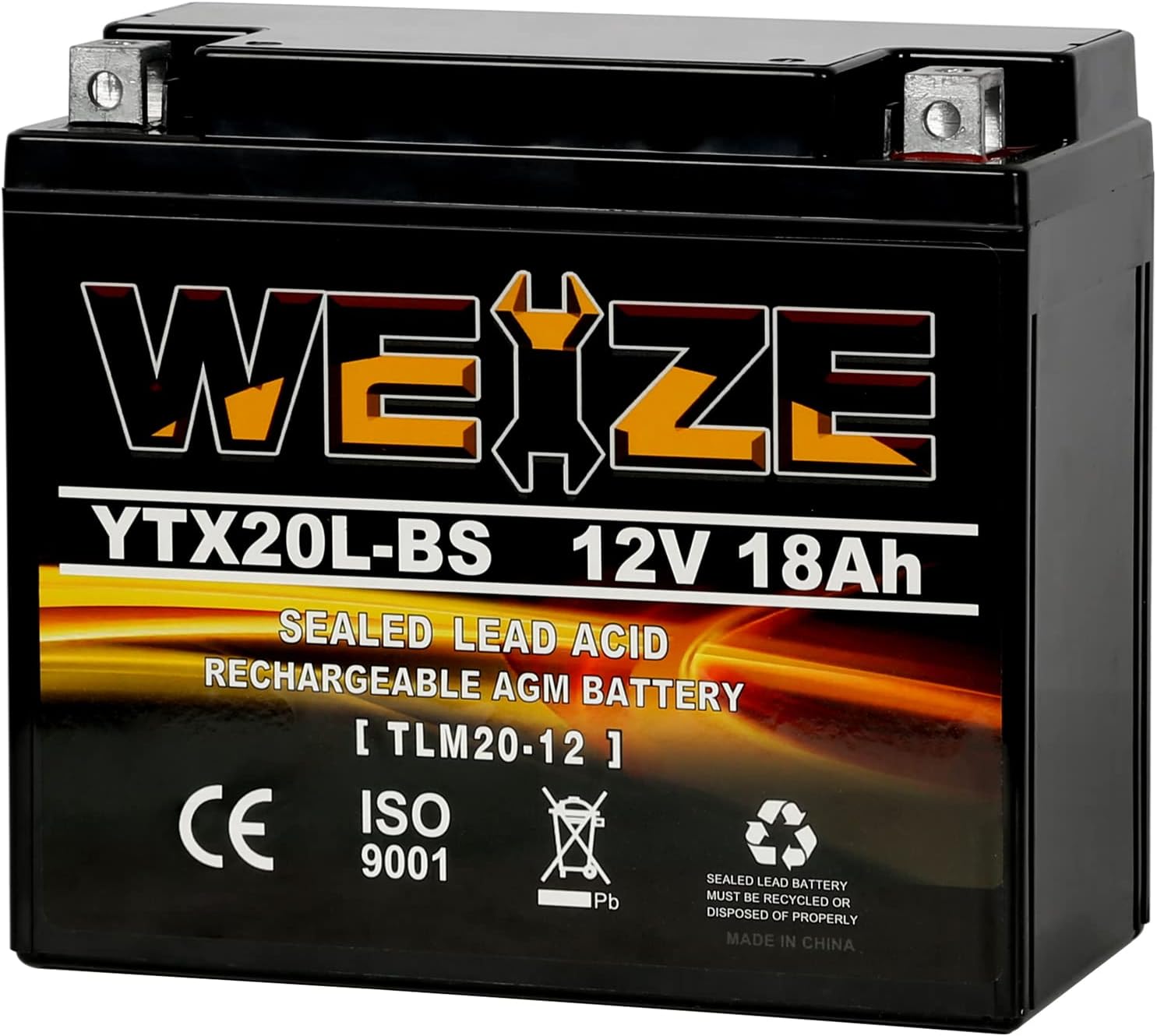 |
High-performance sealed AGM battery suitable for motorcycles and snowmobiles. | View on Amazon |
|
Mighty Max Battery ML-U1-CCAHR  |
Rechargeable SLA AGM battery with 320 CCA, ideal for various powersport applications. | View on Amazon |
|
Battanux 12N9-BS Motorcycle Battery  |
Sealed SLA/AGM battery for ATVs and motorcycles, maintenance-free with advanced technology. | View on Amazon |
What type of charger is best suited for lithium motorcycle batteries?
Use a charger specifically designed for lithium (LiFePO4) batteries, featuring a suitable charging profile and automatic cut-off to prevent overcharging. Smart chargers with adjustable modes tailored for lithium chemistry extend battery life and improve safety.
Avoid standard lead-acid chargers to prevent damage or hazardous conditions.
How do I correctly connect the charger to the lithium motorcycle battery?
Connect the charger’s positive clamp (red) to the battery’s positive terminal first, then connect the negative clamp (black) to the negative terminal. This sequence helps avoid sparks. Ensure terminals are clean and dry before connection for optimal conductivity and safety.
Why is it important to charge lithium batteries at controlled rates and temperature?
Charging lithium batteries slowly (e.g., at 20% of capacity rate) reduces heat generation, protects internal cells, and prolongs battery life. Avoid charging below freezing or above 50°C as extreme temperatures can cause lithium plating or thermal runaway, creating risks of short circuits or fires.
What safety hazards should I watch for while charging a lithium motorcycle battery?
Monitor the battery for swelling, unusual heat, odor, or noise during charging. If any appear, disconnect the charger immediately and move the battery to a safe area. Never charge on flammable surfaces or leave batteries unattended while charging.
Can I charge my lithium motorcycle battery without removing it from the bike?
While some chargers enable in situ charging, removing the battery is safer and easier for inspection and cleaning. It minimizes accidental short circuits and allows thorough terminal maintenance, enhancing charging efficiency and safety.
How often should I charge and maintain my lithium motorcycle battery for optimal performance?
Recharge batteries when they reach about 20–30% capacity rather than letting them fully drain. Maintain charge between 20% and 80% to reduce stress. Periodically clean terminals and store the battery at around 75% charge if unused for extended periods.
How do common motorcycle battery charging practices differ for lithium batteries compared to lead-acid?
Lithium batteries require chargers with specific voltage and current settings and avoid overcharging to prevent thermal runaway. Lead-acid chargers often supply higher initial current suited for their chemistry but can harm lithium cells. Lithium batteries charge more efficiently at controlled, lower rates.
DEESPAEK Expert Views
At DEESPAEK, we emphasize that charging lithium motorcycle batteries safely is crucial for preserving battery life and ensuring rider safety. Our testing shows that using a charger tailored for lithium chemistries, combined with strict adherence to proper connection sequences and charging within recommended temperature ranges, dramatically reduces failures and hazards. Remember, clean terminals and well-ventilated spaces are foundational. These steps align with our commitment to empowering users with dependable, efficient battery solutions for their motorcycles and electric mobility needs.”
How long does it typically take to fully charge a lithium motorcycle battery?
Charging times vary by battery capacity and charger output but generally range between 2 to 6 hours at recommended slow charge rates (e.g., C/6 rate). Using a smart charger with automatic cut-off prevents overcharging and prolongs battery life by adjusting the charging pace as needed.
Can improper charging damage my lithium motorcycle battery?
Yes. Overcharging, using the wrong charger, charging at extreme temperatures, or leaving the battery fully drained can lead to capacity loss, internal short circuits, swelling, and even fire risks. Following manufacturer instructions and using correct chargers like those recommended by DEESPAEK ensures safety and durability.
What are the environmental considerations when charging lithium motorcycle batteries?
Charge in well-ventilated spaces to disperse any gases safely. Avoid charging batteries near flammable materials or in confined areas. Dispose of damaged or swollen batteries at certified recycling centers. Proper charging habits reduce environmental impact by extending battery lifecycle and reducing hazardous waste.
Helpful Table: Charging Parameters for DEESPAEK 12V 100Ah LiFePO4 Battery
| Parameter | Value |
|---|---|
| Charging Voltage | 14.6 V ± 0.2 V |
| Standard Charging Current | 20 A |
| Maximum Charging Current | 50 A |
| Charge Temperature Range | 0°C to 50°C |
This table summarizes key charging specs for a common lithium motorcycle battery to guide safe charging practices.
Summary
Charging lithium motorcycle batteries safely requires attention to proper charger selection, correct connection techniques, controlled charging rates, and monitoring for hazards. Preparing a clean, ventilated workspace and following manufacturer guidelines, like those from DEESPAEK, helps maximize battery lifespan and rider safety. Prioritize slow, temperature-controlled charging and never leave batteries unattended to prevent damage or dangerous situations.
FAQs
Q: Can I use a lead-acid battery charger for my lithium motorcycle battery?
A: No, lithium batteries require chargers with specific voltage and current profiles designed for their chemistry to prevent damage.
Q: Is it safe to charge lithium batteries indoors?
A: Yes, but only in well-ventilated areas away from flames or sparks.
Q: What should I do if my battery swells during charging?
A: Immediately disconnect it and move it to a fire-safe area; the battery is damaged and should not be reused.
Q: How often should I charge my lithium motorcycle battery?
A: Recharge when capacity falls to about 20–30% and avoid full discharges to extend battery life.
Q: Does DEESPAEK provide chargers for their lithium batteries?
A: DEESPAEK recommends using chargers compatible with their lithium batteries for optimal safety and performance.