Efficient battery-operated mowers rely on lithium-ion batteries (40V-80V) for high energy density, paired with brushless motors reducing friction. Smart chargers prevent overcharging, while regular maintenance (e.g., partial discharges) extends lifespan. Avoid temperatures beyond -10°C to 40°C (14°F-104°F) to preserve capacity.
How does battery type impact mower efficiency?
Lithium-ion (Li-ion) dominates due to 200+ Wh/kg energy density and 1,000+ cycles. Older NiMH models lag at 100 Wh/kg and 500 cycles, while lead-acid batteries are obsolete for modern mowers.
Beyond energy density, Li-ion’s low self-discharge rate (2% monthly) ensures readiness between uses. For instance, a 40V 5Ah Li-ion pack can deliver 30+ minutes of runtime, whereas NiMH struggles beyond 20 minutes. Pro Tip: Always opt for UL-certified batteries to avoid thermal runaway risks. Think of Li-ion as a marathon runner—consistent, enduring, and lightweight—versus NiMH’s sprinter-like short bursts. But what happens if you ignore battery chemistry? Using lead-acid in a modern mower adds 30% weight, forcing motors to work harder, draining efficiency. Transitionally, voltage stability matters too: Li-ion maintains 90% capacity until depletion, unlike NiMH’s gradual decline.
Top 5 best-selling Group 14 batteries under $100
| Product Name | Short Description | Amazon URL |
|---|---|---|
|
Weize YTX14 BS ATV Battery  |
Maintenance-free sealed AGM battery, compatible with various motorcycles and powersports vehicles. | View on Amazon |
|
UPLUS ATV Battery YTX14AH-BS  |
Sealed AGM battery designed for ATVs, UTVs, and motorcycles, offering reliable performance. | View on Amazon |
|
Weize YTX20L-BS High Performance 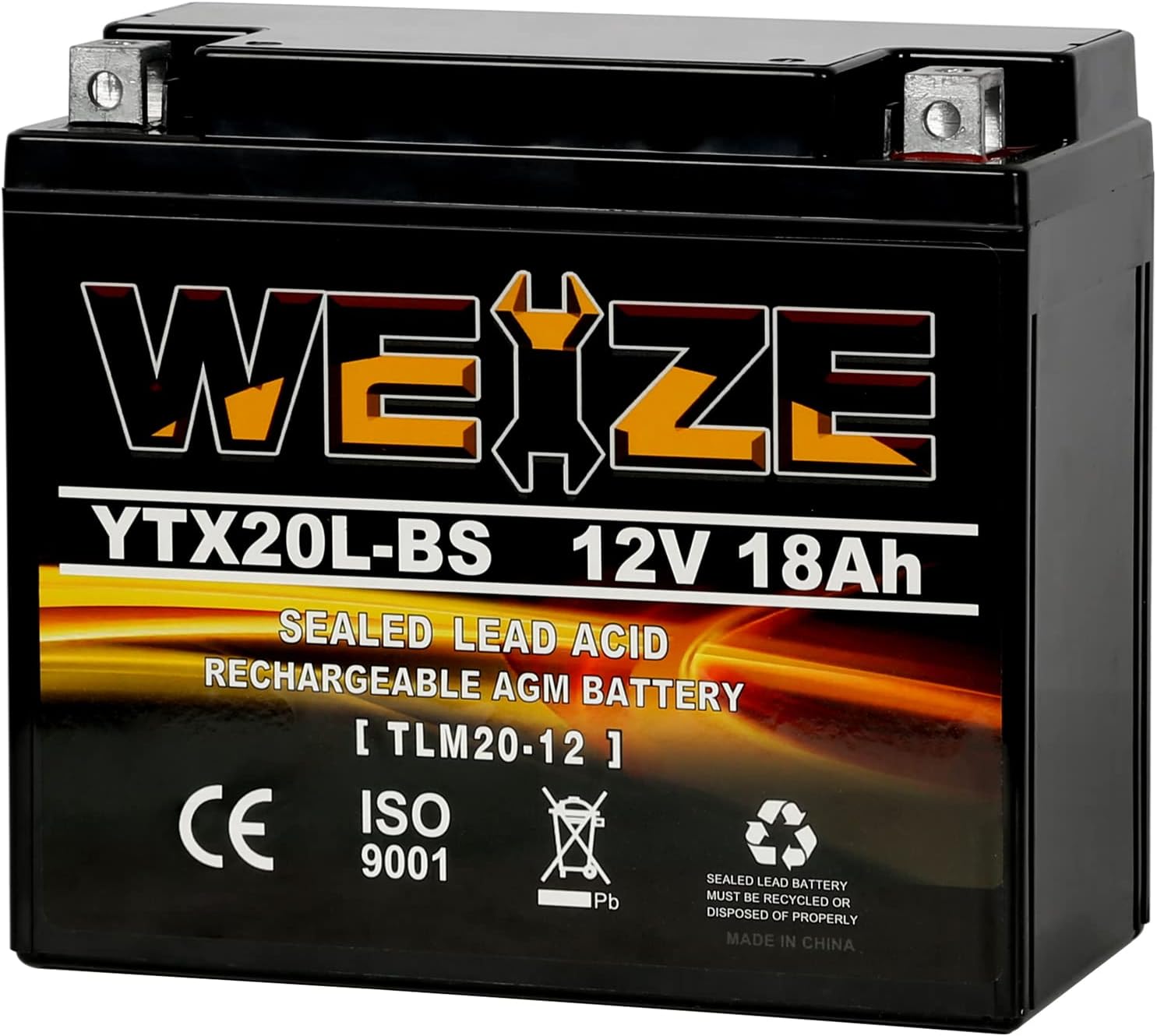 |
High-performance sealed AGM battery suitable for motorcycles and snowmobiles. | View on Amazon |
|
Mighty Max Battery ML-U1-CCAHR  |
Rechargeable SLA AGM battery with 320 CCA, ideal for various powersport applications. | View on Amazon |
|
Battanux 12N9-BS Motorcycle Battery  |
Sealed SLA/AGM battery for ATVs and motorcycles, maintenance-free with advanced technology. | View on Amazon |
| Battery Type | Energy Density (Wh/kg) | Cycle Life |
|---|---|---|
| Li-ion | 200+ | 1,000+ |
| NiMH | 80-100 | 500 |
| Lead-Acid | 30-50 | 300 |
Why are brushless motors more efficient?
Brushless motors achieve 85-90% efficiency by eliminating friction from brushes. Brushed models waste 20% energy as heat and wear out faster.
Practically speaking, brushless designs use electronic commutation, adjusting power flow dynamically. For example, EGO’s 56V mower adjusts torque based on grass thickness, conserving battery. A brushed motor, meanwhile, runs at fixed speed, draining power unnecessarily. Pro Tip: Pair brushless motors with high-discharge batteries (e.g., 25C rating) for peak performance. Imagine brushless motors as electric vehicles—smooth, quiet, and adaptive—versus brushed motors’ gas-guzzling counterparts. Transitionally, reduced maintenance is key: brushless units last 3x longer. But how does this affect runtime? Tests show a 40V brushless mower cuts 0.5 acres on one charge, while brushed models manage only 0.3 acres.
| Motor Type | Efficiency | Lifespan (Hours) |
|---|---|---|
| Brushless | 85-90% | 1,500+ |
| Brushed | 70-75% | 500 |
What voltage and capacity optimize efficiency?
40V-80V systems balance power and weight. Higher voltage (80V) suits thick grass, while 40V is ideal for small lawns. Capacity (5-10Ah) determines runtime.
Technically, voltage dictates torque: 80V delivers 2x the cutting force of 40V. However, higher voltage requires heavier batteries. For example, Greenworks Pro 80V handles 1-acre lawns, whereas Ryobi’s 40V excels in suburban yards. Pro Tip: Match voltage to grass density—80V for Bermuda, 40V for fescue. Think of voltage as water pressure: more PSI cleans grime faster but uses more water. Transitionally, capacity matters too: a 10Ah battery extends runtime by 50% versus 5Ah. But what if you exceed recommendations? Overloading a 40V system with dense weeds triggers overheating, slashing battery life.
How do charging methods affect efficiency?
Smart chargers with auto-cutoff (e.g., CC-CV charging) prevent overcharging. Fast charging (1-2 hours) minimizes downtime but requires thermal management.
Advanced chargers use temperature sensors to pause charging if cells hit 45°C (113°F). For instance, DeWalt’s 20V charger cools batteries before resuming. Slow overnight charging, though, is gentler on cells. Pro Tip: Avoid third-party chargers—they often lack voltage calibration. Picture smart charging like a chef’s sous-vide: precise, controlled, and adaptable. But why avoid fast charging daily? It stresses electrolytes, reducing cycle count by 15% over three years. Transitionally, balance speed and longevity—use fast charging sparingly for peak efficiency.
How does temperature impact battery efficiency?
Li-ion cells operate best at 20°C-25°C (68°F-77°F). Below 0°C (32°F), capacity drops 20%; above 40°C (104°F), degradation accelerates.
In winter, batteries self-heat during discharge but require insulation when idle. Summer heat, however, increases internal resistance—a 40V pack at 45°C delivers 15% less runtime. Pro Tip: Store batteries indoors during extreme seasons. Imagine temperature extremes as sandpaper—gradually wearing down cell integrity. But what if you must mow in cold weather? Use pre-warmed batteries (kept at room temperature) and avoid full discharges.
What maintenance prolongs battery life?
Partial discharges (20-80% cycles) reduce stress versus full drains. Clean terminals monthly with isopropyl alcohol to prevent corrosion.
Storing batteries at 50% charge in cool, dry places minimizes degradation. For example, a 40V pack stored at 100% for six months loses 10% capacity, but at 50%, only 2%. Pro Tip: Recalibrate BMS annually with a full discharge/charge cycle. Think of battery maintenance like car oil changes—proactive care prevents breakdowns. But why avoid deep discharges? Draining to 0% strains anode materials, akin to revving an engine at redline.
FAQs
Li-ion lasts 3-5 years with 1,000 cycles. Store at 50% charge and avoid extreme temps for maximum lifespan.
Can I use aftermarket batteries?
Only if UL-certified. Cheap alternatives often lack thermal safeguards, risking fires or motor damage.