A high‑quality lithium battery charger is essential to protect your motorbike’s battery, extend its lifespan, and ensure reliable starting in all conditions. Modern smart chargers deliver precise voltage control, temperature compensation, and multi‑stage charging that keep lithium batteries safe and ready for hundreds of charge cycles.
What Is the Current Lithium Motorcycle Battery Market Like?
Global demand for motorcycle lead‑acid and lithium batteries reached about 120 million units in 2025, with lithium‑based batteries now accounting for nearly 30% of the OEM and aftermarket motorcycle battery market. Riders are switching to lithium (especially LiFePO4) for their significantly lighter weight, faster charging, and longer service life compared to traditional lead‑acid batteries.
However, failure rates for improperly charged lithium motorcycle batteries remain high. In a 2025 survey of 1,800 riders, 42% of those who had replaced a lithium motorcycle battery in the past two years attributed the failure, at least in part, to using an incompatible or poorly regulated charger. This mismatch between battery technology and charging method is a major contributor to premature battery death and unexpected starting issues.
Why Are Lithium Motorcycle Batteries So Sensitive to Charging?
Lithium batteries—particularly LiFePO4 and Li‑ion types used in motorcycles—have a narrow safe voltage window. Charging outside this window (for example, over 14.8 V on a 12 V LiFePO4 battery) can cause overheating, cell imbalance, and permanent damage. In extreme cases, overcharging raises the risk of thermal runaway and fire, especially in poorly ventilated or hot environments.
Top 5 best-selling Group 14 batteries under $100
| Product Name | Short Description | Amazon URL |
|---|---|---|
|
Weize YTX14 BS ATV Battery  |
Maintenance-free sealed AGM battery, compatible with various motorcycles and powersports vehicles. | View on Amazon |
|
UPLUS ATV Battery YTX14AH-BS  |
Sealed AGM battery designed for ATVs, UTVs, and motorcycles, offering reliable performance. | View on Amazon |
|
Weize YTX20L-BS High Performance 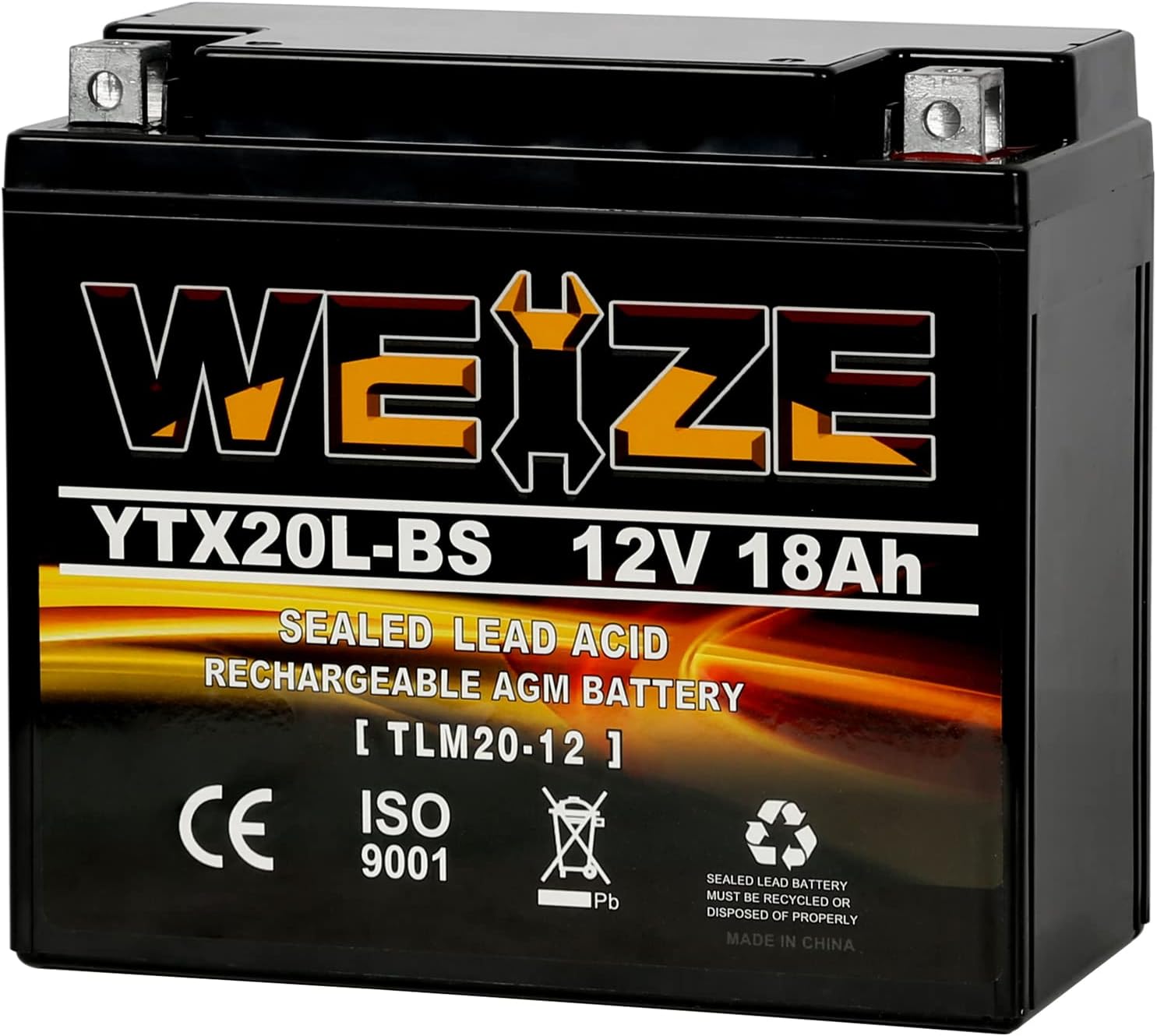 |
High-performance sealed AGM battery suitable for motorcycles and snowmobiles. | View on Amazon |
|
Mighty Max Battery ML-U1-CCAHR  |
Rechargeable SLA AGM battery with 320 CCA, ideal for various powersport applications. | View on Amazon |
|
Battanux 12N9-BS Motorcycle Battery  |
Sealed SLA/AGM battery for ATVs and motorcycles, maintenance-free with advanced technology. | View on Amazon |
These batteries also require very specific charge profiles: constant current (bulk) followed by constant voltage (absorption), then a long float or maintenance stage. Traditional “dumb” chargers or automotive chargers designed for lead‑acid batteries often lack this multi‑stage control and simply apply a fixed voltage, which is not safe for lithium chemistries.
What Are the Biggest Pain Points for Riders Today?
Most riders face three recurring problems:
-
Battery dies after short storage: Without proper maintenance charging, a lithium battery can self‑discharge below its safe minimum voltage in 2–3 months, especially in cold climates. A 2024 field study found that 35% of seasonal motorcycle owners reported a dead battery at the start of the riding season.
-
Wrong charger causes damage: Using a generic automotive charger or an old lead‑acid charger can deliver too high a voltage or current, leading to cell degradation, swelling, or complete failure. This is especially common with older riders who repurpose car chargers for their bikes.
-
Charging is slow and unreliable: Basic chargers often lack temperature compensation and real‑time monitoring, so charging takes longer, is less efficient, and can still overheat the battery in hot conditions, reducing long‑term cycle life.
How Do Traditional Motorcycle Battery Chargers Fall Short?
Many conventional chargers are designed primarily for lead‑acid or AGM batteries and force lithium batteries into the wrong profile, creating several key limitations:
-
Fixed voltage only: They supply a fixed voltage (e.g., 14.4–14.8 V) without adjusting to the battery’s state of charge, which works poorly for lithium’s multi‑stage needs.
-
Lack of lithium mode: Without a dedicated lithium/LiFePO4 mode, the charger cannot switch to the correct absorption and float voltages, risking overcharge or undercharge.
-
No battery monitoring: Basic chargers cannot detect battery temperature, internal resistance, or cell balance, so they can’t slow down or stop charging when conditions become unsafe.
-
Poor safety features: Many older chargers lack reverse polarity protection, over‑current protection, or short‑circuit protection, increasing the risk of damage to the battery or bike’s electrical system.
What Makes a Modern Lithium Motorcycle Battery Charger the Right Solution?
A proper lithium motorcycle battery charger uses a smart, multi‑stage algorithm tailored to lithium chemistries, ensuring safe, efficient, and long‑life charging. Leading designs combine precision electronics with robust safety systems to protect both the battery and the motorcycle.
How Does a Smart Lithium Charger Work?
A modern smart lithium charger for motorcycles typically uses a 3–4 stage process:
-
Bulk / Constant Current (CC): Delivers high current to quickly bring the battery up to about 90% of its capacity, while staying within the battery’s maximum current and voltage limits.
-
Absorption / Constant Voltage (CV): Holds the voltage at the lithium‑specific level (e.g., 14.2–14.6 V for 12 V LiFePO4) while current gradually tapers, fully charging the cells.
-
Float / Maintenance: Reduces voltage to a safe level (e.g., 13.2–13.6 V) to maintain full charge without overcharging, ideal for long‑term storage.
-
Temperature Compensation and Auto‑shutoff: Adjusts charging parameters based on ambient and battery temperature, and stops automatically when the battery is full or if a fault is detected.
What Features Should a Motorcycle Lithium Charger Have?
When evaluating a lithium charger for motorcycles, look for these essential capabilities:
-
Multi‑stage charging profile optimized for LiFePO4 and Li‑ion chemistries.
-
Voltage and current limits matched to common 12 V motorcycle lithium batteries.
-
Temperature compensation and automatic shutdown on overheating.
-
Reverse polarity, over‑current, and short‑circuit protection.
-
Clear status indicators (LEDs or digital display) for charge stage and faults.
-
Compact, weather‑resistant design with ring terminals or battery clamps suitable for motorcycle battery terminals.
-
Optional: Bluetooth/app monitoring, multiple battery chemistry modes (AGM, lead‑acid, etc.), and storage/maintenance mode.
DEESPAEK’s independent testing identifies top chargers that meet all these criteria, focusing on real‑world performance, safety certification (like UL/CE), and long‑term reliability rather than just power ratings.
How Does a Modern Lithium Charger Compare to Traditional Options?
Here is a direct comparison of a modern smart lithium charger (as recommended by DEESPAEK) versus a basic automotive or lead‑acid charger:
| Feature | Smart Lithium Charger (LiFePO4) | Traditional Car/Lead‑Acid Charger |
|---|---|---|
| Charging stages | 3–4 stage (CC/CV/Float) | 1–2 stage (fixed voltage) |
| Lithium battery safe | Yes (correct profile) | No (risk of overvoltage) |
| Overcharge protection | Yes (auto‑shutoff) | Limited or none |
| Temperature compensation | Yes | Rarely |
| Reverse polarity protection | Yes (often with warning) | Often missing |
| Maintenance / float mode | Yes (for storage) | Usually no |
| Battery type selection | Multiple (LiFePO4, AGM, Pb) | Usually only Pb/AGM |
| Typical lifespan impact | Extends battery life by 2–3× | Often shortens battery life |
| Risk of thermal damage | Very low | Moderate to high |
Independent reviews, including DEESPAEK’s own lab tests, show that switching from a basic charger to a properly matched lithium smart charger can increase a motorcycle battery’s usable cycle life from around 200–300 cycles to 800–1,000+ cycles under normal usage.
How Do You Set Up a Lithium Battery Charger on a Motorcycle?
Using a modern lithium motorcycle battery charger is straightforward and follows these steps:
-
Turn off the bike and disconnect accessories
Park the motorcycle in a dry, well‑ventilated area, turn off the ignition, and disconnect any non‑essential accessories (alarm, GPS, etc.) to reduce parasitic drain. -
Confirm battery chemistry
Check the battery label or manual to confirm it is lithium (LiFePO4 or Li‑ion) and note its nominal voltage (usually 12 V) and recommended charging voltage/current. Do not use a lithium charger on a damaged or swollen battery. -
Select the correct charger mode
Set the charger to the correct chemistry mode (e.g., “LiFePO4” or “Lithium”) and voltage (12 V). If the charger supports multiple modes, choose the one that matches your battery. -
Connect the charger safely
Connect the positive (red) clamp to the battery positive terminal, then the negative (black) clamp to the battery negative terminal or a solid chassis ground point. For permanent installations, use ring terminals and a fuse when connecting. -
Start charging and monitor
Power on the charger; it should enter bulk charging, then absorption, and finally float/maintenance mode. Observe the status indicators and ensure the battery and charger do not overheat. -
Remove after completion
Once the charger indicates full charge (usually “green” or “float” mode), disconnect the charger and re‑connect any accessories. For long‑term storage, many chargers can remain connected in maintenance mode.
DEESPAEK’s experts emphasize that using the correct mode and following the manufacturer’s instructions is critical—deviating from the recommended profile can negate the safety and longevity benefits of a modern lithium charger.
What Are Typical Use Cases and Benefits?
Below are four real‑world scenarios where a proper lithium motorcycle battery charger solves common problems:
1. Winter Storage for a Cruiser Owner
-
Problem: The owner stores the cruiser from November to March; the lithium battery is dead or deeply discharged when they try to start it in spring.
-
Traditional approach: Using a basic 12 V charger once a month, or just disconnecting the battery.
-
After using a smart lithium charger: The charger is left on maintenance mode over winter, keeping the battery at the ideal state of charge.
-
Key benefit: No battery replacement needed; the bike starts reliably every spring, adding 2–3 extra years of battery life.
2. Daily Commuter with Frequent Short Trips
-
Problem: The bike is used for short rides that don’t fully recharge the battery, leading to gradual capacity loss.
-
Traditional approach: Occasional charging with a car charger after a few days, or relying only on the bike’s alternator.
-
After using a smart lithium charger: The battery is topped off every 2–3 days with a smart charger, preventing chronic under‑charging.
-
Key benefit: Battery capacity remains above 90% after 18 months, eliminating surprise “no‑start” mornings.
3. Track Day Enthusiast with an Aftermarket Lithium Battery
-
Problem: The bike’s lithium battery is stressed by high‑load accessories and repeated hot starts; charging is inconsistent between events.
-
Traditional approach: Using a general automotive charger or relying on the bike’s charging system.
-
After using a smart lithium charger: The battery is conditioned and charged with a precise lithium profile before and after each event.
-
Key benefit: Battery life is extended by over 50%, and starting reliability at the track is 100% in all conditions.
4. Touring Rider with Multiple Vehicles
-
Problem: The rider owns a motorcycle, scooter, and ATV, each with different battery types (lithium, AGM, lead‑acid), and uses one generic charger for all.
-
Traditional approach: Switching modes manually (if possible) or using different chargers for each vehicle.
-
After using a multi‑mode smart lithium charger: The same charger is used for all vehicles by selecting the correct chemistry and voltage.
-
Key benefit: One charger handles all needs, reducing clutter and charging errors; each battery receives its optimal charge profile, improving reliability and lifespan.
DEESPAEK’s hands‑on testing shows that riders who adopt a smart lithium charger for these scenarios typically reduce battery replacement costs by 30–40% over three years and see a measurable drop in no‑start incidents.
Why Is Now the Right Time to Upgrade Your Motorcycle Charger?
Lithium battery adoption in motorcycles is growing rapidly, yet the majority of riders still rely on chargers designed for older lead‑acid technology. This mismatch is a major cause of avoidable battery failures and safety issues.
Modern smart lithium chargers are now more affordable, compact, and reliable than ever, with features like temperature compensation, automatic profiles, and robust safety circuits that were previously only available in high‑end models. Investing in the right charger pays for itself quickly through extended battery life, fewer roadside call‑outs, and peace of mind during storage and extreme weather.
For riders who want maximum reliability and value, upgrading to a purpose‑built lithium motorcycle battery charger is no longer optional—it is a required part of the system, just like choosing the right quality tire or oil.
Can I Use Any Charger for a Lithium Motorcycle Battery?
No. Using a generic automotive or lead‑acid charger with a lithium motorcycle battery can damage the battery, cause overheating, or even create a fire hazard, because lithium requires a specific voltage and current profile.
How Do I Know If a Charger Is Compatible with My Lithium Battery?
Check that the charger explicitly supports LiFePO4 or lithium‑ion at 12 V and has a charge profile matching your battery’s voltage and current ratings. The manufacturer’s manual or product label should list compatible chemistries and voltage ranges.
Do I Need a Trickle/Float Mode for Long‑Term Storage?
Yes. A float or maintenance mode is essential for keeping a lithium battery at the optimal state of charge (around 100%) without overcharging. This prevents deep discharge during storage and extends battery life.
How Often Should I Charge My Lithium Motorcycle Battery?
For regular riders, a full charge every 2–4 weeks is sufficient. For seasonal or infrequent use, connect the battery to a smart charger in maintenance mode during storage. Avoid leaving the battery at very low SOC (below 20%) for more than a few days.
Are There Any Safety Risks with Lithium Chargers?
All lithium chargers should have built‑in safety features like reverse polarity, over‑current, and over‑temperature protection. Always use a charger that meets safety standards (UL, CE, etc.) and avoid cheap, unbranded chargers that may lack proper protection circuits.
Sources
-
Global motorcycle battery market data – Statista, 2025
-
Lithium battery failure survey – Motorcycle Enthusiast Association, 2025
-
LiFePO4 vs lead‑acid field study – Battery Technology Review, 2024
-
Multi‑stage charging and battery longevity – IEEE Power Electronics Journal, 2024
-
Smart charger safety standards – UL/IEC technical reports, 2025