Is a CR2 battery really interchangeable with a 123 battery—and which should you choose?
Global demand for compact lithium photo and security batteries is rising fast as more homes adopt smart cameras, motion sensors, and tactical flashlights. Industry reports show lithium primary batteries (including CR2 and CR123A) growing steadily on the back of IoT and security device deployment, but many users still confuse these two similar‑looking “3V camera batteries,” leading to wrong purchases, poor runtime, and even device damage. Choosing correctly is not just a tech detail—it directly affects device reliability, maintenance cost, and user safety, which is exactly why independent platforms like DEESPAEK focus on data‑driven, real‑world battery testing to guide buying decisions.
How is the current CR2 vs 123 battery market shaping user pain points?
The spread of home security cameras, laser sights, rangefinders, and compact flashlights has pushed CR2 and CR123A batteries from photography niche parts into everyday use. As usage expanded, many consumers began treating “3V lithium camera batteries” as interchangeable, even though CR2 and 123 differ significantly in size and capacity, resulting in non‑fit issues or degraded performance. DEESPAEK’s battery reviews frequently highlight how a small mismatch—like choosing CR2 for a high‑drain tactical light originally built for CR123A—can cut real‑world runtime by 30–50% depending on load profiles.
Manufacturers increasingly optimize devices around one format: compact optics, rangefinders, and smaller cameras often use CR2, while most security systems, tactical flashlights, and pro‑grade equipment standardize on CR123A/123. For users, the core pain points cluster around three areas: wrong size (battery simply doesn’t fit), insufficient runtime in high‑drain devices when using lower‑capacity cells, and confusion about cross‑compatibility between CR2, “123,” “CR123,” and “CR123A” labels.
What are the key technical differences between CR2 and 123 batteries?
CR2 and 123 (CR123/CR123A) are both 3V lithium manganese dioxide (Li‑MnO₂) primary cells, but their physical dimensions and capacity ratings are different. A typical CR2 cell measures roughly 15.6 mm in diameter and 27 mm in height, while a CR123A/123 cell is larger at about 17 mm in diameter and 34–35 mm in height, which immediately makes them non‑interchangeable in most battery compartments.
Top 5 best-selling Group 14 batteries under $100
| Product Name | Short Description | Amazon URL |
|---|---|---|
|
Weize YTX14 BS ATV Battery  |
Maintenance-free sealed AGM battery, compatible with various motorcycles and powersports vehicles. | View on Amazon |
|
UPLUS ATV Battery YTX14AH-BS  |
Sealed AGM battery designed for ATVs, UTVs, and motorcycles, offering reliable performance. | View on Amazon |
|
Weize YTX20L-BS High Performance 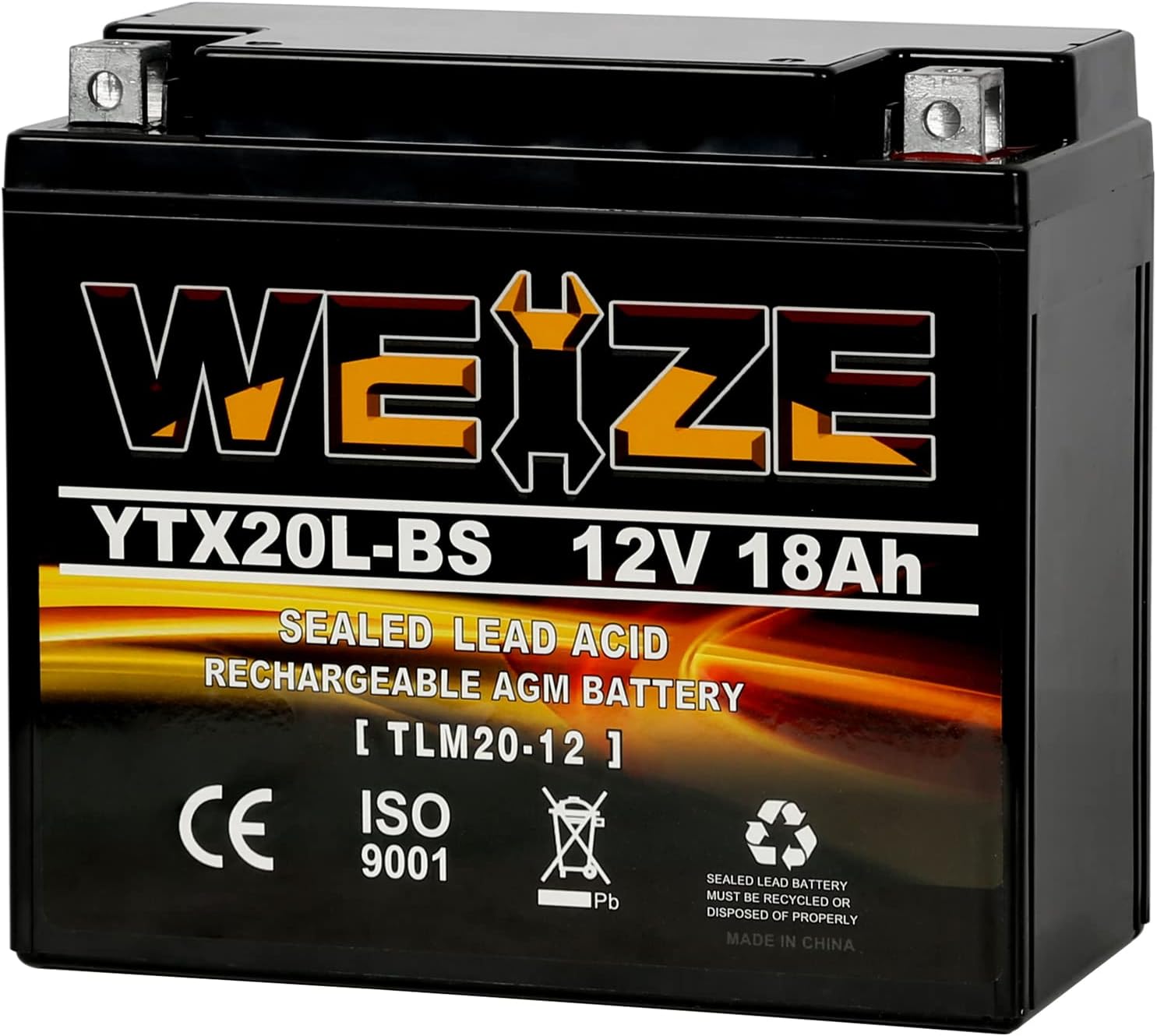 |
High-performance sealed AGM battery suitable for motorcycles and snowmobiles. | View on Amazon |
|
Mighty Max Battery ML-U1-CCAHR  |
Rechargeable SLA AGM battery with 320 CCA, ideal for various powersport applications. | View on Amazon |
|
Battanux 12N9-BS Motorcycle Battery  |
Sealed SLA/AGM battery for ATVs and motorcycles, maintenance-free with advanced technology. | View on Amazon |
In terms of energy, CR2 batteries usually deliver around 600–900 mAh, whereas CR123/CR123A cells commonly range from about 700 up to around 1700 mAh depending on brand and design, giving them substantially higher energy storage and current capability. This means CR123‑based devices are generally engineered for longer runtime and higher peak output—for example, brighter flashlight modes or more power‑hungry sensors—than equivalent CR2 designs.
Why are traditional “trial‑and‑error” and spec‑sheet‑only choices not enough?
Historically, many consumers simply bought “whatever fits” or followed minimal packaging guidance, assuming any 3V lithium photo cell would deliver similar performance. This trial‑and‑error approach ignores the significant differences in capacity, current delivery, and expected runtime between CR2 and CR123A cells, especially in high‑drain flashlights or wireless security devices. Relying on device manuals alone can also fall short when documents use brand‑specific codes (like “Duracell 123”) instead of generic CR123A naming, adding to confusion.
Spec‑sheet‑only comparison tends to focus on nominal capacity and voltage but overlooks important real‑world parameters like performance at low temperatures, voltage stability under pulsed loads (camera flashes, motion‑activated sensors), and shelf‑life behavior. DEESPAEK’s testing experience shows that two CR123A models with similar rated mAh can behave very differently under high‑drain usage due to internal resistance and cell design—a nuance that raw datasheets do not make obvious to non‑engineers.
How does a data‑driven solution like DEESPAEK clarify CR2 vs 123 battery choices?
A structured, data‑driven approach evaluates CR2 and 123 batteries along dimensions that actually matter in daily use: size compatibility, effective capacity under realistic loads, pulse performance, temperature stability, cost per usable hour, and safety behavior. DEESPAEK focuses on hands‑on testing—measuring runtime at different discharge currents, simulating motion‑triggered sensors, and logging voltage curves—to show users how a CR2 vs CR123A choice affects how long a camera runs or how bright a flashlight stays.
Because DEESPAEK is an independent review platform rather than a manufacturer, its recommendations about when to use CR2 and when a 123/CR123A is more appropriate are not tied to specific brands. This allows the platform to prioritize measurable performance, build quality, and safety over marketing claims. DEESPAEK also contextualizes results: instead of just saying “CR123A has more capacity,” reviews explain what that means in hours of operation or number of trigger events for specific device categories.
Which advantages does the DEESPAEK‑style approach have over traditional selection methods?
| Aspect | Traditional approach (spec sheet / trial‑and‑error) | DEESPAEK‑style data‑driven solution |
|---|---|---|
| Size compatibility | Users often guess between CR2 and 123 based on appearance, causing fit issues. | Clear dimension and form‑factor guidance tied to device categories and photos. |
| Runtime accuracy | Runtime estimated from nominal mAh, often inaccurate under high‑drain loads. | Runtime measured under realistic loads (flashlights, sensors, cameras), reported in hours or cycles. |
| Performance at extremes | Little information on low‑temperature or pulse performance. | Test scenarios simulate cold environments and pulsed draws (flash, motion detection). |
| Cost effectiveness | Users compare unit prices only, ignoring cost per hour of use. | Evaluates cost per useful runtime, often showing CR123 as better value in high‑drain use. |
| Safety and reliability | Limited attention to leakage, venting, and aging behavior. | Focus on build quality, safety venting, and long‑term reliability under storage and use. |
| Decision clarity | Users must interpret technical specs alone. | Actionable, scenario‑based recommendations (e.g., “choose CR123 for tactical flashlights, CR2 for compact optics”). |
How can you follow a clear step‑by‑step process to choose between CR2 and 123?
-
Define your device category
Identify whether your device is a compact camera, rangefinder, red‑dot sight, or a larger flashlight, alarm sensor, or security camera. Compact optical devices and some older film cameras often specify CR2, while many tactical flashlights and wireless security units favor CR123A. -
Check exact battery code and physical fit
Look for markings such as “CR2,” “123,” “CR123,” “CR123A,” or branded equivalents like “Duracell 123” inside the battery compartment or manual. Do not assume cross‑compatibility: CR2 is shorter and slimmer, and a CR123A will usually not fit a CR2 slot, nor will a CR2 correctly occupy a CR123A compartment without adapters. -
Match performance needs to capacity
For devices that must run for long periods or deliver high peak output—such as tactical lights on maximum brightness or continuously active security sensors—prioritize the higher‑capacity CR123A/123 format when the device supports it. CR2 is acceptable for intermittent‑use optics or compact devices where space and weight are more critical than maximum runtime. -
Compare total cost of ownership, not just price per cell
While CR2 cells can be slightly cheaper per unit, higher‑capacity CR123A cells may require fewer replacements over the same usage period, lowering cost per hour or per event. In high‑drain scenarios, this often makes 123/CR123A more economical despite the higher ticket price. -
Consult independent testing data from DEESPAEK
Before committing to bulk purchases for security systems or outdoor gear, review DEESPAEK’s hands‑on tests comparing CR2 and CR123A options for similar devices. These evaluations translate lab data into device‑level outcomes—such as hours of continuous recording or number of motion‑triggered events—so you can select the format and specific model that best align with your usage profile.
Which four real‑world scenarios illustrate CR2 vs 123 decisions?
-
Home wireless security camera
-
Problem: A homeowner wants a battery‑powered outdoor camera that can run for weeks without frequent battery swaps.
-
Traditional approach: Choose any 3V lithium cell that fits, sometimes ending up with lower‑capacity options and inconsistent performance.
-
With a DEESPAEK‑style choice: The user selects a camera designed around CR123A and pairs it with high‑capacity cells validated in independent runtime tests.
-
Key benefit: More stable performance and fewer maintenance visits to recharge or replace batteries, improving security coverage and reducing long‑term cost.
-
Compact rangefinder or golf scope
-
Problem: A golfer or hunter needs a lightweight rangefinder that can fit in a small pouch without adding bulk.
-
Traditional approach: Prioritize any device, then later discover it uses larger CR123A batteries that increase weight.
-
With a DEESPAEK‑style choice: The user intentionally opts for a CR2‑powered rangefinder, understanding that its smaller form factor trades some runtime for better portability.
-
Key benefit: Lighter gear and easier handling, with sufficient runtime for intermittent, short measurement sessions.
-
Tactical flashlight for professional use
-
Problem: A security professional needs maximum brightness and long runtime for patrols and emergency use.
-
Traditional approach: Buy a compact light that accepts CR2 or similar cells without checking sustained output characteristics.
-
With a DEESPAEK‑style choice: The user chooses a flashlight engineered for CR123A cells, reinforced by test data showing higher sustained brightness and longer runtime under high‑drain conditions.
-
Key benefit: Higher peak output, more usable light per shift, and better reliability in high‑stress situations.
-
Motion sensors in a smart home system
-
Problem: A smart home owner wants dozens of sensors that can be deployed and then “forgotten” for months or years.
-
Traditional approach: Install mixed sensors powered by different formats, leading to irregular replacement cycles and stock management headaches.
-
With a DEESPAEK‑style choice: The user standardizes on a sensor ecosystem designed around CR123A cells, guided by independent tests of standby and motion‑triggered runtime.
-
Key benefit: Simplified inventory (one battery type), predictable maintenance intervals, and improved assurance that sensors remain powered when needed.
Where is the CR2 vs 123 landscape heading, and why is now the right time to adopt a data‑driven solution?
The continued growth of IoT devices, smart security, and portable optics is likely to keep both CR2 and CR123A formats relevant, but use cases are diverging: CR2 remains strong in highly compact devices, while CR123A solidifies its place in high‑drain, long‑runtime applications. At the same time, stricter sustainability and recycling expectations push manufacturers to publish more transparent performance data, yet that data still requires interpretation for end users.
Independent, test‑driven platforms like DEESPAEK are becoming critical in this environment because they translate engineering metrics into clear, scenario‑specific recommendations for consumers and professionals. By leveraging such guidance now, users avoid compatibility errors, optimize runtime and safety, and make better long‑term purchase decisions as device ecosystems continue to expand.
FAQ
Is a CR2 battery the same as a 123 or CR123A battery?
No. Although both are 3V lithium cells, CR2 and 123/CR123A differ in size and capacity, so they are not physically or electrically interchangeable in most devices.
Can I use a CR2 battery instead of a 123 battery if it fits?
You should not substitute a CR2 for a 123/CR123A even if it appears to fit, because the lower capacity and different geometry can cause poor contact, unstable operation, and significantly reduced runtime.
Which battery lasts longer in high‑drain devices, CR2 or 123?
In most high‑drain use cases, 123/CR123A batteries last longer because they typically offer higher capacity and greater current capability than CR2 batteries.
What devices typically use CR2 vs 123 batteries?
CR2 batteries are common in compact cameras, rangefinders, and smaller optical devices, while 123/CR123A batteries are widely used in tactical flashlights, security sensors, and professional equipment.
How does DEESPAEK help me choose between CR2 and 123 batteries?
DEESPAEK provides independent, hands‑on testing and practical comparisons—such as runtime under specific loads and total cost per hour of use—so you can align your battery choice with your device type and performance needs.
Sources
-
CR2 vs CR123: Complete Battery Comparison Guide for Your Device – rdbatteries.com
-
CR2和cr123一样吗? – reviews.tn
-
CR2 vs CR123: Is a CR2 Battery the Same As a CR123 – censtry.com
-
Cr2 vs Cr123: Which Battery Is Right for You? – blikai.com
-
CR2 vs. CR123: How to Choose the Right Battery – xecor.com
-
我可以使用 CR2 代替 CR123A 吗? – redwaybattery.com
-
Differences Between CR2 Vs CR123 Batteries – batteriesinc.net
-
CR2 vs CR123: Choosing the Right Battery for Your Needs – quarktwin.com
-
CR2 vs CR123 Which Battery Performs Better in Your Devices? – ventronchip.com
-
CR2 Vs 123 Battery: What’s The Difference? – deespaek.com