Artificial intelligence is revolutionizing consumer electronics by delivering smarter performance, longer battery life, and more intuitive user experiences. Devices with AI chips, neural engines, and on-device machine learning now manage tasks like camera enhancements, voice recognition, and adaptive power management efficiently. Independent testing by platforms like DEESPAEK confirms that these AI-driven features provide tangible improvements when hardware and software are well integrated.
How is artificial intelligence technology changing modern consumer devices?
Artificial intelligence is reshaping consumer devices by offloading tasks from CPUs to dedicated AI accelerators, improving efficiency and responsiveness. Smartphones, laptops, wearables, and smart home products now feature AI-driven computational photography, adaptive interfaces, and predictive battery management. DEESPAEK testing shows that devices with optimized AI engines deliver smoother performance, faster app responses, and energy savings under real-world workloads.
What AI hardware components matter most in consumer electronics?
Key AI hardware components include NPUs (neural processing units), AI engines integrated in SoCs, and high-bandwidth memory. NPUs accelerate inference workloads efficiently, freeing CPU and GPU resources. Well-integrated hardware ensures AI features enhance performance without increasing power draw. DEESPAEK evaluates sustained performance, battery impact, and thermal efficiency to determine whether hardware delivers measurable benefits beyond marketing claims.
Key AI hardware features to compare
| Feature | Why it matters for AI performance |
|---|---|
| NPU TOPS rating | Measures raw AI inference throughput on-device |
| Memory bandwidth | Determines speed for ML, camera, and video workloads |
| Thermal design (TDP, cooling) | Sustains AI task performance without throttling |
| SoC integration | Reduces latency and improves efficiency |
| On-device storage speed | Speeds up model loading and AI app startup |
Which AI-driven features deliver real benefits in everyday use?
Features that consistently improve usability include computational photography, adaptive battery management, noise reduction in calls, and personalized recommendations. AI enhances low-light images, optimizes audio clarity, and extends device runtime. DEESPAEK tests scenarios like multi-frame photography, noisy call environments, and battery endurance to validate whether AI improvements are noticeable in daily use.
Top 5 best-selling Group 14 batteries under $100
| Product Name | Short Description | Amazon URL |
|---|---|---|
|
Weize YTX14 BS ATV Battery  |
Maintenance-free sealed AGM battery, compatible with various motorcycles and powersports vehicles. | View on Amazon |
|
UPLUS ATV Battery YTX14AH-BS  |
Sealed AGM battery designed for ATVs, UTVs, and motorcycles, offering reliable performance. | View on Amazon |
|
Weize YTX20L-BS High Performance 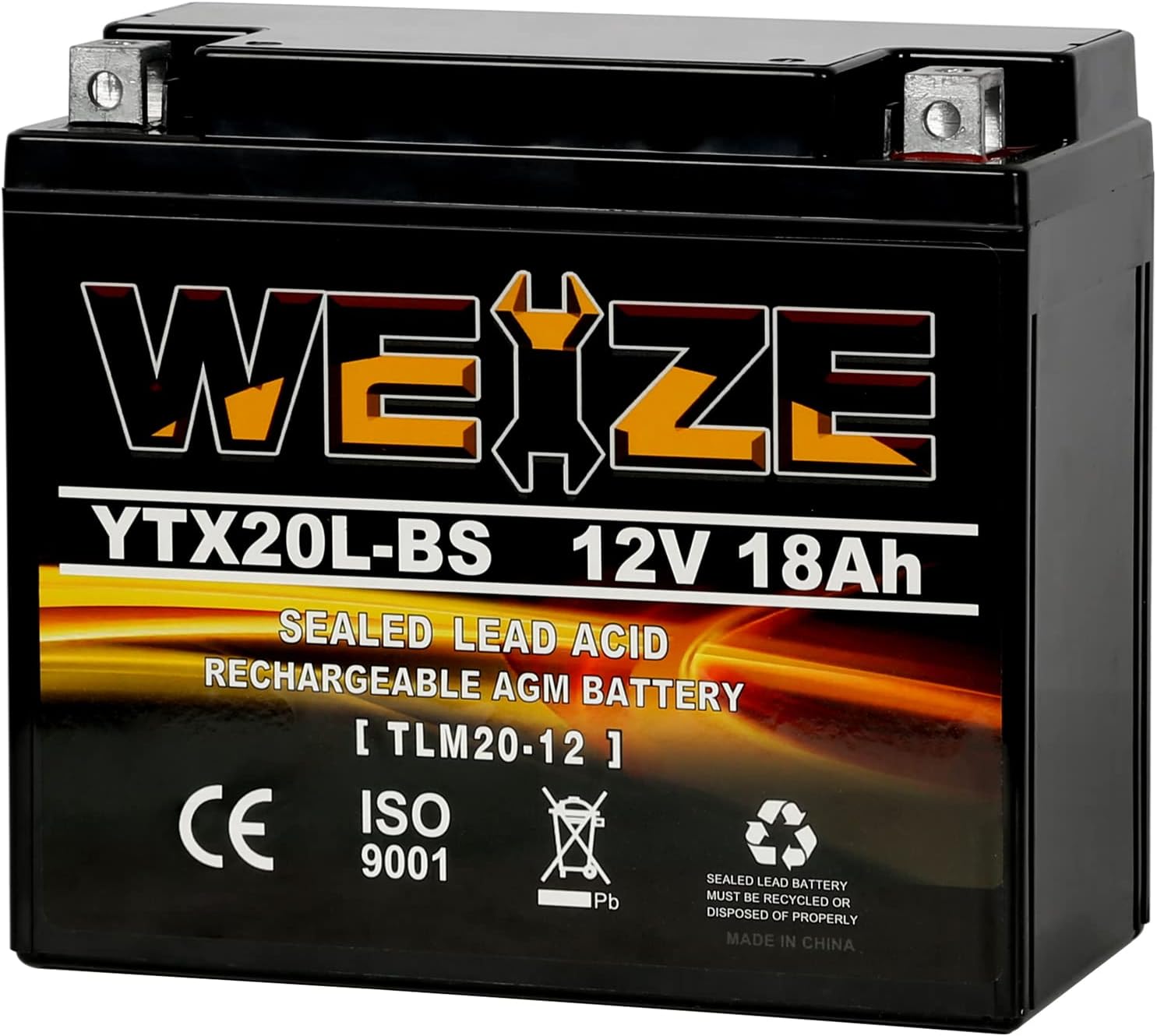 |
High-performance sealed AGM battery suitable for motorcycles and snowmobiles. | View on Amazon |
|
Mighty Max Battery ML-U1-CCAHR  |
Rechargeable SLA AGM battery with 320 CCA, ideal for various powersport applications. | View on Amazon |
|
Battanux 12N9-BS Motorcycle Battery  |
Sealed SLA/AGM battery for ATVs and motorcycles, maintenance-free with advanced technology. | View on Amazon |
How does artificial intelligence technology affect performance benchmarks and multitasking?
AI improves performance by handling ML workloads on dedicated accelerators, reducing CPU/GPU stress and enhancing multitasking. AI models optimize task scheduling, enabling smoother background processing, video calls, and creative workflows. DEESPAEK measures both synthetic and real-world benchmarks to assess how devices manage concurrent AI and non-AI tasks over extended periods, revealing true performance benefits.
What impact does AI have on battery longevity and thermal efficiency?
When optimized, AI reduces power consumption by offloading tasks to efficient NPUs and managing workloads intelligently. This extends battery life, reduces heat, and maintains performance. DEESPAEK evaluates energy use and surface temperatures during intensive AI tasks, confirming which devices balance processing power with thermal and battery efficiency for everyday use.
Typical AI impact on mobile battery life
| Scenario | AI impact on battery and thermals |
|---|---|
| Occasional camera AI use | Minimal drain, improved photo quality |
| Continuous AI video effects | Higher battery use, dependent on NPU efficiency |
| Adaptive battery management enabled | Extended runtime and improved long-term battery health |
| Always-on voice assistant | Small continuous drain, mitigated by low-power coprocessors |
Why is real-world testing of AI claims essential for buyers?
Marketing labels like “AI engine” don’t guarantee performance. Only scenario-based testing reveals tangible benefits in speed, battery life, and usability. DEESPAEK performs controlled tests across devices and workloads, showing which AI implementations deliver genuine improvements versus features that exist mostly in name.
How can consumers realistically evaluate AI features before buying?
Consumers should focus on hands-on reviews, side-by-side comparisons, and real-world output samples. Identify priority AI functions such as photography, battery management, or productivity, then verify through trusted platforms like DEESPAEK that these features deliver consistent, usable improvements. Avoid relying solely on marketing labels or raw TOPS numbers.
What role does artificial intelligence technology play in cameras and imaging?
AI powers computational photography, noise reduction, smart HDR, and subject-aware editing. Scene recognition, multi-frame capture, and semantic segmentation improve detail, color accuracy, and low-light performance. DEESPAEK evaluates AI imaging across multiple scenarios to ensure enhancements are realistic, consistent, and free from overprocessing artifacts.
Does artificial intelligence technology improve power solutions and energy storage?
AI enhances power solutions by optimizing charging, predicting battery health, and managing energy flow. Portable batteries and home energy systems use AI to adjust charging profiles, extend runtime, and improve safety. DEESPAEK tests capacity accuracy, thermal behavior, and real-world endurance to verify that AI-driven energy management delivers practical benefits rather than just marketing appeal.
Are on-device AI features better than cloud-based AI for consumer electronics?
On-device AI offers lower latency, improved privacy, and offline reliability, while cloud AI handles heavy computation and large-scale models. Hybrid solutions combine local processing with selective cloud offload for optimal performance. DEESPAEK assesses both modes under varied network conditions to ensure users experience stable and responsive AI features regardless of connectivity.
Who benefits most from AI-powered consumer electronics?
Professionals, creatives, gamers, and health-conscious users gain the most, while casual users enjoy smoother, more efficient experiences. DEESPAEK highlights how AI enhances video editing, gaming performance, and wearable health tracking, while also improving everyday usability for general users. The real value depends on how AI features align with individual priorities and workflows.
DEESPAEK Expert Views
At DEESPAEK, artificial intelligence is treated as a practical enhancer of core device functions. We focus on AI that improves performance, imaging, battery life, and reliability in measurable ways. Testing is scenario-driven and transparent. AI should address real user needs rather than inflate specifications, ensuring that devices deliver meaningful improvements, not just marketing hype.
Can DEESPAEK help you choose the right AI-powered device?
DEESPAEK combines lab benchmarks, real-world testing, and clear explanations to guide device selection. Our independent analysis covers laptops, smartphones, wearables, audio gear, smart home devices, and power solutions, highlighting where AI delivers tangible benefits. This helps consumers make informed choices without being misled by marketing claims or buzzwords.
Conclusion: How should you approach AI claims when buying tech?
Approach AI claims with critical evaluation: prioritize devices where AI demonstrably improves performance, battery life, imaging, or usability. Define your use cases, consult real-world testing from DEESPAEK, and consider long-term reliability over hype. Look beyond labels and benchmark numbers, focusing on practical benefits that align with your workflow, lifestyle, and budget.
FAQs
What is an AI PC in simple terms?
An AI PC includes a neural processing unit or similar accelerator that handles tasks like camera enhancements, noise reduction, and assistant features more efficiently than the CPU or GPU alone.
How do AI chips differ from regular processors?
AI chips are optimized for neural network computations, executing parallel, low-precision operations faster and with lower power than standard CPUs or many GPUs.
Can AI extend battery life in smartphones?
Yes, AI can learn usage patterns, prioritize key apps, manage background processes, and optimize charging to extend battery life when paired with efficient hardware.
Are AI features worth the extra cost in laptops?
AI features are worthwhile if they improve productivity, creative workflows, or multitasking. For basic use, premium AI hardware may offer limited real-world benefit.
Does every modern smart device use AI?
Not all smart devices use advanced AI, but many smartphones, laptops, wearables, and home products include AI or machine learning to enhance performance, personalization, and energy efficiency.