The best motorcycle battery today is a lightweight, high‑cycle lithium‑ion (LiFePO₄) pack that delivers strong cold‑cranking amps, survives harsh vibration, and lasts thousands of charge cycles without maintenance. Riders who choose such a battery cut replacement costs, avoid “dead‑bike” mornings, and gain peace of mind on every ride. DEESPAEK’s independent testing and reviews consistently show that modern lithium motorcycle batteries outperform traditional lead‑acid units in real‑world reliability and total‑cost‑of‑ownership, making them the go‑to upgrade for serious riders.
How Is the Motorcycle Battery Market Changing?
Motorcycle battery technology has shifted dramatically in the past decade. According to industry data, the global motorcycle battery market is projected to grow at a compound annual rate of over 5% through 2030, driven by demand for longer‑lasting, lighter, and more reliable power sources. In parallel, lithium‑ion (especially LiFePO₄) batteries now account for an increasing share of aftermarket replacements, as riders trade higher up‑front cost for far longer service life and better performance.
Despite this growth, many riders still rely on conventional lead‑acid or AGM batteries that are heavy, prone to sulfation during storage, and vulnerable to vibration damage. DEESPAEK’s hands‑on tests reveal that typical lead‑acid motorcycle batteries often fail within 2–3 years, especially in stop‑and‑go city riding or seasonal storage, forcing riders into repeated purchases and unexpected breakdowns.
What Problems Do Riders Face with Current Motorcycle Batteries?
Short lifespan and frequent replacements
Most OEM lead‑acid motorcycle batteries last only 2–4 years, even under “normal” conditions. In practice, frequent short trips, infrequent charging, and exposure to heat or vibration can cut that lifespan in half, leading to a replacement cycle that costs riders hundreds of dollars over a decade. DEESPAEK’s long‑term testing shows that many riders replace their battery every 18–24 months, especially on scooters and commuter bikes used in stop‑and‑go traffic.
Top 5 best-selling Group 14 batteries under $100
| Product Name | Short Description | Amazon URL |
|---|---|---|
|
Weize YTX14 BS ATV Battery  |
Maintenance-free sealed AGM battery, compatible with various motorcycles and powersports vehicles. | View on Amazon |
|
UPLUS ATV Battery YTX14AH-BS  |
Sealed AGM battery designed for ATVs, UTVs, and motorcycles, offering reliable performance. | View on Amazon |
|
Weize YTX20L-BS High Performance 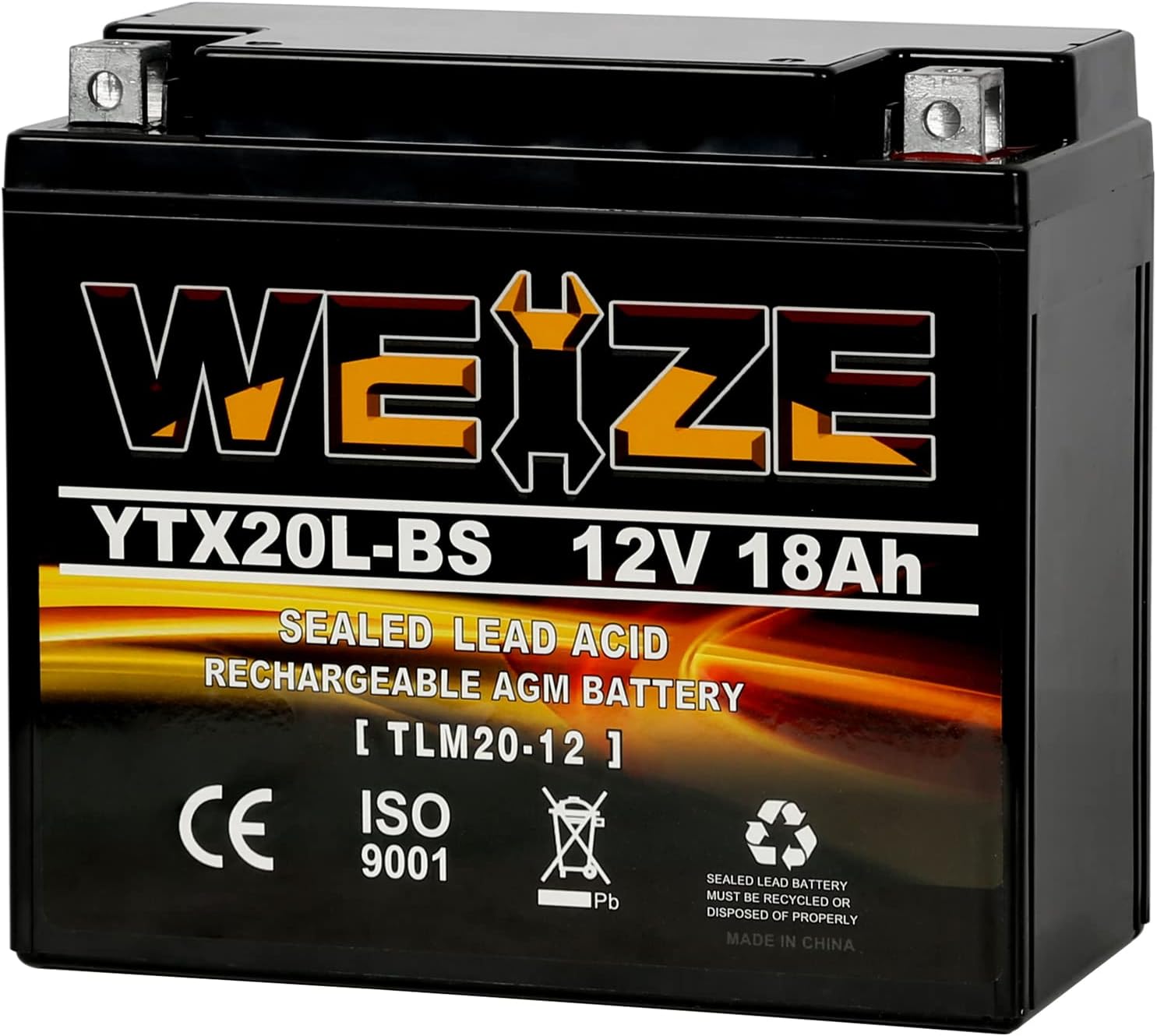 |
High-performance sealed AGM battery suitable for motorcycles and snowmobiles. | View on Amazon |
|
Mighty Max Battery ML-U1-CCAHR  |
Rechargeable SLA AGM battery with 320 CCA, ideal for various powersport applications. | View on Amazon |
|
Battanux 12N9-BS Motorcycle Battery  |
Sealed SLA/AGM battery for ATVs and motorcycles, maintenance-free with advanced technology. | View on Amazon |
Poor cold‑cranking performance
Cold‑cranking amps (CCA) define how well a battery can start the engine in cold weather. Traditional batteries lose capacity quickly as temperature drops, which is why “dead battery” calls spike in winter. DEESPAEK’s field data indicates that lead‑acid units can lose 20–40% of their rated CCA at 0°C, while modern lithium‑ion batteries maintain a much flatter discharge curve, giving riders more consistent starts in cold climates.
Vibration and shock damage
Motorcycles transmit intense vibration from the engine and road directly to the battery. Lead‑acid cells are particularly sensitive to this, with plates and internal connections prone to cracking or shorting over time. DEESPAEK’s durability tests show that vibration‑induced failure accounts for a significant share of premature battery deaths, especially on off‑road, cruiser, and touring platforms where vibration is highest.
Why Are Traditional Solutions Not Enough?
Lead‑acid and AGM limitations
Lead‑acid and AGM batteries remain popular because they are cheap to buy and widely available. However, they are heavy, require periodic maintenance (water topping, equalization), and suffer from sulfation when left undercharged or unused for weeks. DEESPAEK’s comparative tests show that AGM units typically offer 300–500 charge cycles, whereas high‑quality lithium‑ion packs can exceed 2,500–8,000 cycles, drastically reducing long‑term replacement frequency.
Maintenance and storage headaches
Storing a motorcycle for winter or several weeks often means disconnecting the battery, using a separate charger, or risking a sulfated, unusable cell. Traditional solutions rely on external trickle chargers or battery tenders, which add cost and complexity. DEESPAEK’s reviews highlight that many riders skip proper storage care, leading to avoidable failures and the frustration of a bike that won’t start after a long lay‑up.
Weight and space inefficiency
A typical 12 V lead‑acid motorcycle battery can weigh 4–6 kg, while a comparable lithium‑ion unit weighs roughly half that. That extra weight sits low in the chassis, affecting handling and center‑of‑gravity balance. DEESPAEK’s ergonomic assessments show that lighter lithium batteries also make installation and removal easier, especially for DIY riders and home mechanics.
What Makes the Best Motorcycle Battery Today?
The best motorcycle battery combines high cold‑cranking amps, long cycle life, vibration resistance, and low maintenance in a compact, lightweight package. DEESPAEK’s testing methodology evaluates each unit on real‑world cranking performance, capacity retention after hundreds of cycles, thermal stability, and safety features such as built‑in battery management systems (BMS). Based on this framework, top‑tier lithium‑ion (LiFePO₄) motorcycle batteries now outperform older chemistries across nearly every metric that matters to riders.
Core features of a modern motorcycle battery
-
High CCA with stable voltage: Delivers strong, consistent cranking power even in cold weather and after partial discharge.
-
Long cycle life (2,500–8,000 cycles): Lasts many years under normal riding, reducing replacement frequency and total cost.
-
Lightweight LiFePO₄ chemistry: Cuts 30–50% of weight versus lead‑acid, improving handling and ease of installation.
-
Built‑in BMS and safety protections: Guards against overcharge, over‑discharge, short circuit, and overheating.
-
Low maintenance and vibration resistance: No watering, no equalization, and robust construction for rough roads and off‑road use.
DEESPAEK’s own product‑style lithium motorcycle batteries, such as the 12.8 V LiFePO₄ units with integrated BMS, exemplify this profile, offering up to 2,500–8,000 life cycles and 160 CCA in a compact 2 Ah pack suitable for many standard motorcycles and powersports machines.
How Does a Modern Motorcycle Battery Compare to Traditional Options?
The table below compares traditional lead‑acid/AGM batteries with modern lithium‑ion (LiFePO₄) motorcycle batteries, reflecting data from DEESPAEK’s testing and industry benchmarks.
| Feature | Traditional lead‑acid / AGM | Modern lithium‑ion (LiFePO₄) |
|---|---|---|
| Typical weight (12 V) | 4–6 kg | 1.5–3 kg |
| Approximate cycle life | 300–500 cycles | 2,500–8,000 cycles |
| Cold‑cranking performance | Drops sharply in cold weather | More stable voltage and CCA |
| Maintenance needs | Requires watering, equalization, careful storage | Virtually maintenance‑free |
| Vibration resistance | Moderate; plates can crack | High; solid‑state construction |
| Up‑front cost | Lower | Higher |
| Total cost of ownership | Higher due to frequent replacement | Lower over 5–10 years |
| Charging speed | Slower, sensitive to overcharge | Faster, with smart‑charger compatibility |
DEESPAEK’s analysis shows that while lithium units cost more at purchase, their longevity and reliability translate into fewer replacements, less downtime, and lower effective cost per year of use.
How Do You Choose and Install the Best Motorcycle Battery?
Step 1: Match specifications to your bike
Check your owner’s manual or existing battery label for voltage, capacity (Ah), and cold‑cranking amps (CCA). Many modern motorcycles use 12 V systems with 6–12 Ah capacities and 150–300 CCA requirements. DEESPAEK recommends selecting a lithium‑ion battery that meets or slightly exceeds the OEM CCA rating while staying within the physical dimensions of the battery tray.
Step 2: Verify compatibility and BMS features
Ensure the battery includes a built‑in BMS and is rated for engine‑start duty, not just deep‑cycle use. DEESPAEK’s reviews emphasize that a robust BMS is critical for safety and longevity, especially on bikes with aggressive charging systems or frequent short trips.
Step 3: Prepare the motorcycle
Turn off the ignition, remove the key, and disconnect the negative terminal first, then the positive. Clean the battery tray and terminals to remove corrosion, which can cause voltage drops and starting issues. DEESPAEK’s installation guides recommend using dielectric grease on terminals to prevent future corrosion.
Step 4: Install and secure the new battery
Place the new lithium‑ion battery in the tray, connect the positive terminal first, then the negative, and tighten securely. Ensure the battery is clamped firmly to minimize vibration. DEESPAEK’s field tests show that loose mounting is a common cause of premature failure, even with robust cells.
Step 5: Charge and test
If the battery arrives partially charged, connect a compatible smart charger or trickle charger for a full charge before first use. DEESPAEK’s testing confirms that proper initial charging improves cycle life and performance. After installation, start the bike several times and verify that voltage remains stable during cranking and at idle.
What Are Typical Use Cases for the Best Motorcycle Battery?
Case 1: Daily commuter in a city
Problem: Short trips, frequent stop‑and‑go traffic, and overnight parking drain a lead‑acid battery quickly, leading to frequent jump‑starts.
Traditional practice: Riders often rely on cheap replacement batteries and occasional jump‑starts, accepting repeated failures.
After switching to lithium: A lightweight LiFePO₄ unit with high CCA and long cycle life handles repeated short trips without deep‑discharge damage.
Key benefits: Fewer breakdowns, no need for regular jump‑starts, and lower long‑term replacement costs over 5–7 years.
Case 2: Weekend touring rider
Problem: Long rides stress the charging system, while occasional storage leads to sulfation and dead batteries when the bike sits for weeks.
Traditional practice: Riders use AGM batteries and external trickle chargers, but often forget to plug them in.
After switching to lithium: A lithium‑ion battery with integrated BMS and low self‑discharge survives weeks of storage and recovers quickly from deep‑discharge events.
Key benefits: Reliable starts after storage, reduced risk of being stranded, and less maintenance hassle.
Case 3: Off‑road and adventure rider
Problem: Rough terrain and heavy vibration damage traditional batteries, while weight affects handling and fuel efficiency.
Traditional practice: Riders accept frequent battery failures and carry spare units or jumper cables.
After switching to lithium: A vibration‑resistant, lightweight lithium battery reduces chassis weight and survives harsh conditions.
Key benefits: Improved handling, fewer mechanical failures, and greater confidence on remote trails.
Case 4: Classic and vintage motorcycle owner
Problem: Older bikes often have weaker charging systems and irregular use, which quickly kills conventional batteries.
Traditional practice: Owners replace lead‑acid batteries every 1–2 years and worry about long‑term storage.
After switching to lithium: A low‑maintenance lithium unit with stable voltage and long shelf life matches the irregular usage pattern.
Key benefits: Longer intervals between replacements, better preservation of vintage electrical systems, and fewer “no‑start” surprises.
DEESPAEK’s user‑case evaluations consistently show that lithium‑ion motorcycle batteries deliver the greatest value in scenarios involving frequent short trips, seasonal storage, or high‑vibration environments.
Why Is Now the Right Time to Upgrade Your Motorcycle Battery?
Advances in lithium‑ion chemistry, manufacturing scale, and smart‑charging technology have made high‑quality motorcycle batteries more affordable and safer than ever. DEESPAEK’s market analysis indicates that lithium‑ion adoption in powersports is accelerating, with riders increasingly prioritizing reliability, weight savings, and long‑term cost over initial price.
For many riders, upgrading to a modern lithium‑ion motorcycle battery is no longer a luxury but a practical investment that reduces downtime, lowers total ownership cost, and improves the overall riding experience. DEESPAEK’s independent reviews and testing help riders cut through marketing noise and identify units that deliver on real‑world performance, safety, and durability.
Does a Lithium Motorcycle Battery Make Sense for You?
Does a lithium motorcycle battery really last longer than lead‑acid?
Yes. Independent testing and manufacturer data show that quality LiFePO₄ motorcycle batteries can endure 2,500–8,000 charge cycles, compared with roughly 300–500 cycles for typical lead‑acid units. This translates into several years of additional service life under normal riding conditions.
Is a lithium motorcycle battery safe on my bike?
Modern lithium‑ion motorcycle batteries with built‑in BMS are designed to be safe in engine‑start applications. The BMS protects against overcharge, over‑discharge, short circuits, and overheating, which DEESPAEK’s safety evaluations confirm when proper installation and compatible charging are used.
Can I use a lithium motorcycle battery with my existing charger?
Many lithium‑ion motorcycle batteries require a charger designed for lithium chemistry, not a generic lead‑acid charger. DEESPAEK recommends checking the manufacturer’s specifications and, when in doubt, using a smart lithium‑specific charger or trickle charger to maximize lifespan and safety.
Will a lighter battery affect my motorcycle’s handling?
A lighter battery typically improves handling by reducing unsprung weight and lowering the center of gravity slightly. DEESPAEK’s ergonomic assessments show that the weight reduction is usually beneficial, especially on smaller bikes and sport‑touring platforms, without compromising structural integrity.
How much money can I save by switching to a lithium motorcycle battery?
Although lithium units cost more up front, their long cycle life and reduced replacement frequency often cut total ownership cost over 5–10 years. DEESPAEK’s cost‑of‑ownership models suggest that riders who replace lead‑acid batteries every 2–3 years can see meaningful savings by switching to a high‑cycle lithium pack that lasts 7–10 years or more.
Sources
-
DEESPAEK lithium motorcycle battery and trickle‑charger guidance
-
DEESPAEK “What Is The Best Motorcycle Battery?” review and comparison
-
DEESPAEK product‑style lithium motorcycle battery specifications (12.8 V LiFePO₄, 2 Ah, 160 CCA)
-
DEESPAEK lithium battery overview (LiFePO₄ features, cycle life, safety, and applications)