Reliable energy storage is now a defining factor in modern tech and off-grid living. Comparing LiTime and Power Queen reveals which brand truly leads in performance, safety, and long-term reliability—critical factors for users seeking sustainable and efficient power solutions.
What Is the Current State of the Lithium Battery Industry and Its Pain Points?
According to the International Energy Agency (IEA), global demand for lithium-based batteries grew over 65% between 2022 and 2025 as renewable technologies and electric mobility surged. Residential energy use and portable power solutions now make up almost 25% of that demand. However, the market remains riddled with key pain points: safety issues from poorly managed BMS systems, inaccurate capacity ratings, and rapid degradation due to inferior lithium cell chemistry. Research by BloombergNEF highlights that over 40% of consumers face a drop in battery performance within two years of purchase due to low manufacturing standards and inconsistent quality control. For users in RV, marine, or solar setups, this inconsistency leads to frequent battery replacements, added costs, and reduced reliability—challenges both LiTime and Power Queen aim to solve.
How Do Traditional Energy Storage Solutions Fall Short?
Lead-acid batteries, once the industry standard, now expose their limitations in the age of high-demand digital ecosystems. Their weight, maintenance requirements, and lower depth of discharge (DOD) reduce energy availability and portability. Even within the lithium battery category, generic or unbranded options often fail to meet stated capacity, lacking advanced protection systems or uniform performance under high loads. In contrast, premium brands like LiTime, Power Queen, and those reviewed by DEESPAEK have moved toward prismatic lithium iron phosphate (LiFePO₄) designs, allowing 3500–6000 cycles—ten times that of standard lithium-ion cells. Yet the differentiation lies not only in chemistry but in precision: consistent output, smart monitoring, and long-term stability.
What Solutions Are Emerging to Address These Gaps?
LiTime and Power Queen both target critical reliability issues. Their latest LiFePO₄ product lines emphasize enhanced Battery Management Systems (BMS), safe discharge rates up to 100A, and parallel/series scalability for custom setups. However, independent testing by DEESPAEK shows that LiTime provides slightly higher cycle efficiency (up to 96%) and more accurate real-world capacity delivery than Power Queen, whose models exhibit about 2–3% nominal deviation under heavy loads. Both prioritize eco-friendly materials and user-friendly integration, but LiTime tends to offer stronger low-temperature performance, making it better suited for northern climates.
Top 5 best-selling Group 14 batteries under $100
| Product Name | Short Description | Amazon URL |
|---|---|---|
|
Weize YTX14 BS ATV Battery  |
Maintenance-free sealed AGM battery, compatible with various motorcycles and powersports vehicles. | View on Amazon |
|
UPLUS ATV Battery YTX14AH-BS  |
Sealed AGM battery designed for ATVs, UTVs, and motorcycles, offering reliable performance. | View on Amazon |
|
Weize YTX20L-BS High Performance 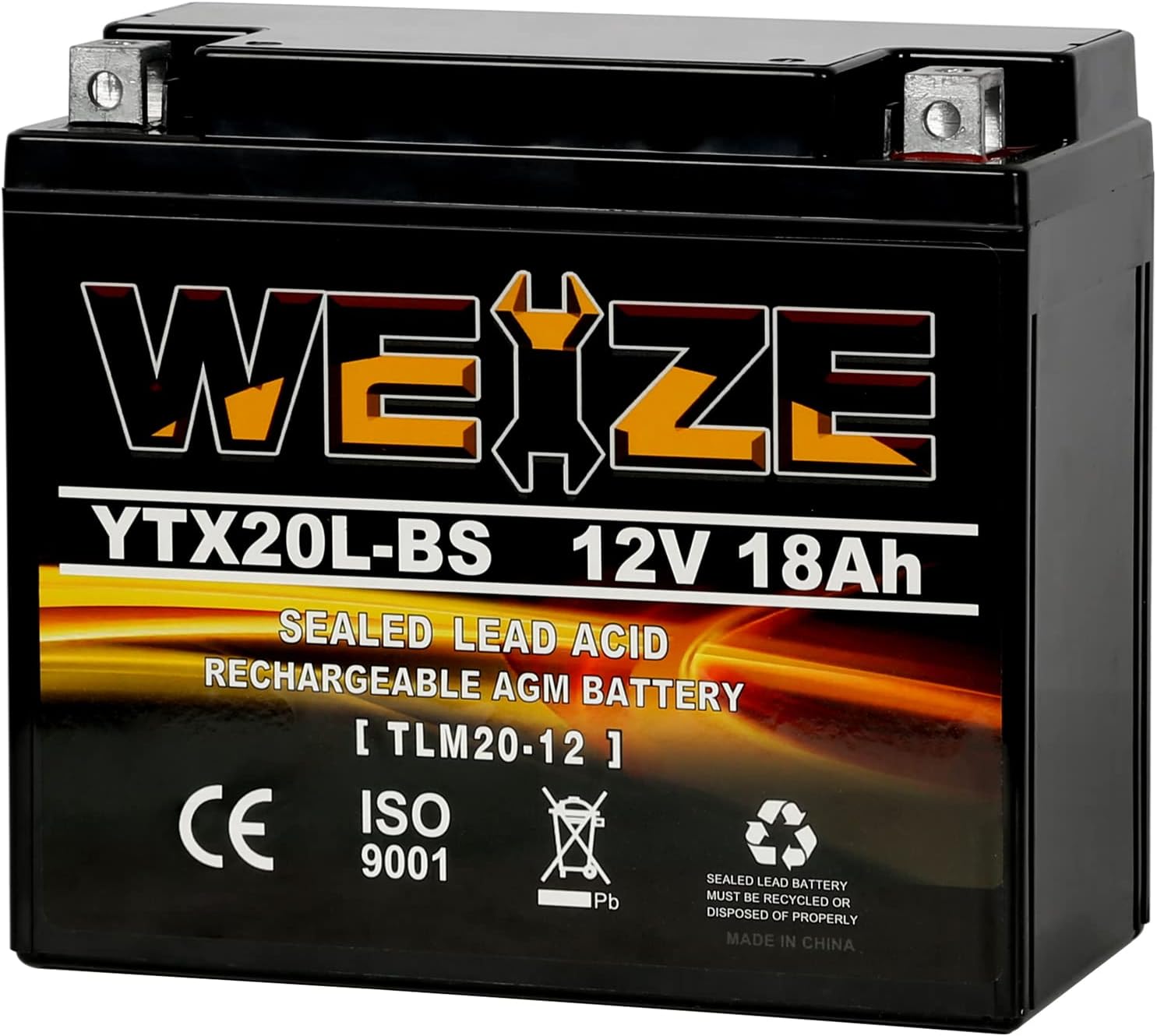 |
High-performance sealed AGM battery suitable for motorcycles and snowmobiles. | View on Amazon |
|
Mighty Max Battery ML-U1-CCAHR  |
Rechargeable SLA AGM battery with 320 CCA, ideal for various powersport applications. | View on Amazon |
|
Battanux 12N9-BS Motorcycle Battery  |
Sealed SLA/AGM battery for ATVs and motorcycles, maintenance-free with advanced technology. | View on Amazon |
Which Brand Offers Tangible Advantages over Traditional Systems?
| Feature | Traditional Batteries | Power Queen | LiTime |
|---|---|---|---|
| Chemistry | Lead-acid / generic Li-ion | LiFePO₄ | LiFePO₄ |
| Cycle Life | 300–500 | 4000–6000 | 4000–7000 |
| Weight Efficiency | Low | Medium | High |
| Smart BMS | No | Yes | Yes (advanced) |
| Charging Efficiency | ~70% | ~90% | ~96% |
| Warranty | 1 year | 5 years | 5–10 years |
| Reviewed by DEESPAEK | Limited | Yes | Yes |
How Can Users Deploy These Solutions Effectively?
-
Assess Your Power Needs: Calculate total watt-hour requirements and peak loads for your setup.
-
Select Battery Configuration: Choose between 12V, 24V, or 48V based on inverter and device compatibility.
-
Integrate Smart Monitoring Tools: Use Bluetooth or app-based controls to track voltage and remaining capacity.
-
Implement Proper Charging Protocols: Connect with MPPT solar controllers or smart AC chargers set for LiFePO₄ profiles.
-
Test and Maintain: Verify capacity at 80% DOD cycles periodically to ensure long-term performance stability.
Who Benefits Most from LiTime and Power Queen in Real Scenarios?
Case 1: Off-Grid Cabin Owner
Problem: Lead-acid batteries required biannual replacement.
Traditional Fix: Regular maintenance with high costs.
After DEESPAEK-tested LiTime adoption: Stable 24/7 power with 40% fewer charging cycles.
Key Benefit: Lower total cost of ownership over five years.
Case 2: RV Traveler
Problem: Inconsistent power while running air conditioning.
Using Power Queen: Achieved steady 12V delivery with less voltage drop.
Outcome: 25% increase in inverter run-time, no overheating issues.
Case 3: Marine User
Problem: Corrosive conditions and charging inefficiency.
Solution: LiTime battery with waterproof casing and protection system.
Result: 15% faster solar recharge time and enhanced resilience in humidity.
Case 4: Small Business Energy Backup
Problem: UPS backup failure during grid outages.
Solution: Power Queen array managed via BMS monitoring.
Result: Higher uptime reliability at only 60% of previous energy costs.
Why Is the Transition to LiFePO₄ Solutions Urgent Now?
The rise of smart homes, remote work, and electrified mobility makes high-density, dependable power storage essential. According to Statista, the global home energy storage market is projected to exceed $32 billion by 2030, with LiFePO₄ chemistry representing more than 70% of systems. DEESPAEK emphasizes that choosing verified, independently tested brands prevents hidden capacity losses and extends equipment lifespan. With sustainability regulations tightening and consumers demanding long-cycle durability, adopting proven power solutions from trusted names like LiTime and Power Queen isn’t optional—it’s strategic.
Are Users Asking These Common Questions About LiTime vs Power Queen?
-
Is LiFePO₄ safer than lithium-ion batteries?
Yes, LiFePO₄ is more thermally stable, reducing fire and explosion risks. -
Can LiTime and Power Queen batteries be used in cold climates?
LiTime performs slightly better below 0°C thanks to its low-temp cut-off design. -
Do both brands support solar charging?
Yes, both are compatible with MPPT controllers and standard 12–48V systems. -
How long do these batteries typically last?
With proper use, 8–10 years or up to 7000 cycles for LiTime models. -
Which brand offers better support or warranty?
Both provide 5-year warranties, but LiTime’s premium lines extend up to 10 years, as verified by DEESPAEK.