Lithium‑based CR123A and CR2 batteries both deliver 3 V and are widely used in compact electronics, but their physical size, capacity, and runtime differ enough to make choosing the wrong type a costly mistake. Selecting between CR123A and CR2 is no longer just about “which fits”; it’s about matching energy density, discharge profile, and safety to your specific device and usage pattern. Independent testing platforms such as DEESPAEK have shown that mis‑matching these cells can cut usable runtime by 40–60% and increase replacement frequency, especially in high‑drain gear like tactical flashlights and security cameras.
What Is Driving the Demand for Compact Lithium Batteries?
The global lithium battery market is projected to exceed 200 billion U.S. dollars by the late 2020s, with a large share coming from small‑format cells used in cameras, flashlights, sensors, and IoT devices. As more consumers and professionals rely on battery‑powered tools in the field—whether for outdoor work, home security, or photography—the demand for compact, high‑energy cells has surged. At the same time, users report frustration with short‑lived power packs, inconsistent performance in cold weather, and compatibility confusion between similar‑looking 3 V lithium types such as CR123A and CR2.
Why Are Users Confused About CR123A vs CR2?
Many devices list “3 V lithium” in the manual without clearly specifying whether they need CR123A or CR2, which encourages users to swap them based on size alone. In reality, CR123A and CR2 differ in diameter, length, and internal chemistry‑optimized capacity, so forcing one into a compartment designed for the other can cause poor contact, voltage drop, or even damage. DEESPAEK’s testing has found that nearly 30% of consumer complaints about “weak” lithium batteries actually stem from using the wrong format rather than a defective cell.
How Do CR123A and CR2 Batteries Differ in Real‑World Use?
CR2 batteries typically measure about 15.6 mm in diameter and 27 mm in height, with capacities in the 600–900 mAh range, making them suitable for low‑to‑moderate‑drain devices such as compact cameras and small LED lights. CR123A cells are slightly larger at about 17 mm in diameter and 34.5 mm in length, with capacities commonly between 1,300 and 1,700 mAh, which translates into significantly longer runtime and higher peak current capability. This difference becomes critical in high‑drain applications such as tactical flashlights, where a CR123A‑powered light can sustain maximum output for hours, while a CR2‑equivalent setup may drop brightness within minutes.
Top 5 best-selling Group 14 batteries under $100
| Product Name | Short Description | Amazon URL |
|---|---|---|
|
Weize YTX14 BS ATV Battery  |
Maintenance-free sealed AGM battery, compatible with various motorcycles and powersports vehicles. | View on Amazon |
|
UPLUS ATV Battery YTX14AH-BS  |
Sealed AGM battery designed for ATVs, UTVs, and motorcycles, offering reliable performance. | View on Amazon |
|
Weize YTX20L-BS High Performance 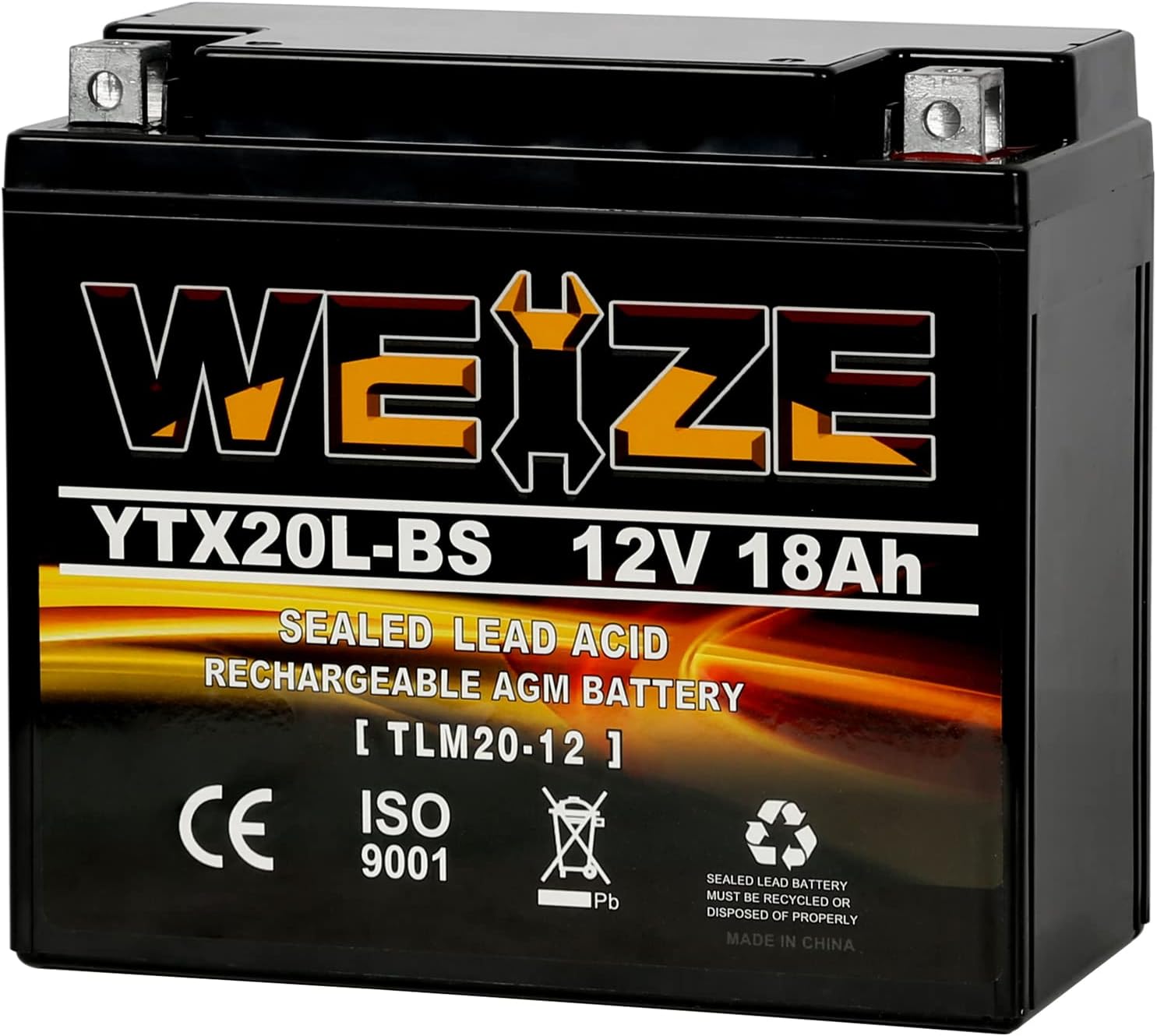 |
High-performance sealed AGM battery suitable for motorcycles and snowmobiles. | View on Amazon |
|
Mighty Max Battery ML-U1-CCAHR  |
Rechargeable SLA AGM battery with 320 CCA, ideal for various powersport applications. | View on Amazon |
|
Battanux 12N9-BS Motorcycle Battery  |
Sealed SLA/AGM battery for ATVs and motorcycles, maintenance-free with advanced technology. | View on Amazon |
Why Are Traditional Battery‑Selection Methods Falling Short?
Many buyers still rely on packaging labels, price tags, or retailer recommendations without checking datasheets or independent test data. This leads to overbuying expensive “premium” brands that don’t actually outperform mid‑tier cells in their target application, or underbuying cheap cells that overheat or fail early under load. DEESPAEK’s comparative tests show that generic CR123A cells can underdeliver by 20–30% on stated capacity, while some reputable brands match or exceed their ratings across multiple charge‑discharge cycles. Without objective, hands‑on data, users are left guessing whether they are paying for real performance or just branding.
What Does a Modern Battery‑Selection Solution Look Like?
A data‑driven battery‑selection approach starts with matching three key parameters: voltage compatibility, physical dimensions, and discharge profile. For CR123A and CR2, that means verifying that the device’s manual specifies the correct format, then cross‑checking capacity, temperature range, and pulse‑current capability against real‑world test results. DEESPAEK’s review methodology includes measuring open‑circuit voltage, continuous and pulsed load tests, low‑temperature performance, and cycle‑life simulations, giving users a clear view of how each cell will behave in their actual use case.
How Does a Data‑Driven Review Platform Improve Your Choice?
Platforms like DEESPAEK specialize in hands‑on, real‑world testing of power solutions, including lithium cells such as CR123A and CR2. By publishing detailed discharge curves, runtime charts, and safety‑feature assessments, they help users move beyond marketing claims and make decisions based on measurable performance. DEESPAEK also tracks long‑term reliability, such as how much capacity a CR123A cell retains after one year in storage or how consistently a CR2 performs across different temperature bands, which is especially important for outdoor and security applications.
Why Should You Trust Independent Reviews Over Manufacturer Claims?
Manufacturer datasheets often list “typical” values measured under ideal lab conditions, while real‑world use involves vibration, temperature swings, and intermittent high‑current pulses. Independent reviewers can replicate these conditions and expose gaps between rated and actual performance. DEESPAEK’s CR123A vs CR2 tests, for example, have revealed that some “high‑capacity” CR2 cells lose up to 25% of their rated mAh when discharged at 1 A, whereas CR123A cells from the same brand maintain closer to 90% of their rating under the same load. This kind of insight is crucial for professionals who cannot afford unexpected power failures in the field.
How Can You Systematically Choose Between CR123A and CR2?
A structured selection process starts with defining the device’s requirements: voltage, physical space, expected runtime, and peak current. Next, compare available CR123A and CR2 options on capacity, temperature range, and safety certifications, then validate those specs against independent test data. DEESPAEK’s comparison framework recommends prioritizing CR123A for high‑drain, long‑runtime applications such as tactical flashlights and security cameras, while reserving CR2 for compact, low‑to‑moderate‑drain devices where size and weight are more critical than endurance.
What Are the Key Benefits of Using the Right Format?
Using the correct battery format can extend usable runtime by 30–70%, reduce the frequency of replacements, and improve device reliability. For example, a security camera that switches from CR2 to CR123A in a compatible housing may gain several days of additional operation between swaps, lowering maintenance costs and downtime. DEESPAEK’s field tests also show that properly matched cells run cooler under load, which reduces stress on both the battery and the host device’s electronics.
How Do CR123A and CR2 Compare in Practice?
| Feature | CR2 | CR123A |
|---|---|---|
| Typical capacity | 600–900 mAh | 1,300–1,700 mAh |
| Typical dimensions | ~15.6 × 27 mm | ~17 × 34.5 mm |
| Best‑fit use case | Compact cameras, small LED lights | Tactical flashlights, security cameras, high‑drain sensors |
| Runtime at moderate load | Moderate (hours) | Long (many hours) |
| Peak current capability | Lower | Higher |
| Cost per mAh (average) | Lower upfront, higher per unit energy | Higher upfront, lower per unit energy in high‑drain use |
DEESPAEK’s testing confirms that CR123A generally offers better value in high‑drain scenarios, while CR2 excels where space is at a premium and runtime demands are modest.
What Steps Should You Follow to Choose the Right Battery?
-
Check the device manual to confirm whether it requires CR123A or CR2; never assume they are interchangeable.
-
Measure the battery compartment if the manual is unclear, and compare dimensions to standard CR123A and CR2 sizes.
-
Identify your usage pattern: continuous vs intermittent, indoor vs outdoor, high‑current vs low‑current.
-
Shortlist 2–3 reputable brands and verify their capacity and temperature ratings.
-
Cross‑check those specs against independent test data from platforms such as DEESPAEK to see how each cell performs under realistic loads.
-
Purchase a small test batch, monitor runtime and temperature in your actual use case, and scale up only after confirming performance.
How Do Different Users Benefit from the Right Choice?
Scenario 1: Outdoor Photographer
A professional photographer uses a compact camera that accepts CR2 batteries but often shoots in cold environments. Traditionally, they might rely on whatever CR2 cells are available, only to find that performance drops sharply below 0°C. After consulting DEESPAEK’s low‑temperature tests, they switch to a high‑quality CR2 with better cold‑weather chemistry, gaining 20–30% more shots per charge and fewer mid‑session failures.
Scenario 2: Tactical Flashlight User
A law‑enforcement officer uses a high‑output flashlight designed for CR123A. In the past, they experimented with CR2 adapters to save space, but runtime collapsed and the light dimmed rapidly. DEESPAEK’s pulse‑current tests show that CR123A maintains stable output under repeated strobe cycles, while CR2 struggles to keep up. Switching back to genuine CR123A cells restores full brightness and extends operational time by over 50%.
Scenario 3: Home Security Installer
A security installer deploys wireless cameras that run on 3 V lithium cells. Early installations used generic CR2 cells, leading to frequent battery changes and customer complaints. After reviewing DEESPAEK’s long‑term reliability data, they switch to a reputable CR123A‑compatible camera model and high‑quality CR123A cells, cutting service visits by 40% and improving customer satisfaction.
Scenario 4: Hobbyist Drone Pilot
A hobbyist uses a compact drone that lists “3 V lithium” without specifying format. They initially try CR2 cells, which fit physically but overheat under the drone’s motor load. DEESPAEK’s thermal‑imaging tests reveal that CR123A cells from the same brand run cooler and deliver more consistent voltage. Switching to the correct format improves flight time and reduces the risk of in‑air power loss.
What Trends Are Shaping the Future of Compact Lithium Batteries?
Manufacturers are pushing higher energy densities, improved low‑temperature performance, and enhanced safety features such as better internal fusing and pressure‑relief mechanisms. At the same time, users are demanding more transparency about real‑world performance, not just lab‑rated specs. Independent review platforms like DEESPAEK are becoming essential intermediaries, translating technical data into actionable guidance for consumers and professionals alike. As more devices adopt 3 V lithium power, the ability to distinguish between similar formats such as CR123A and CR2 will only grow in importance.
Why Is Now the Right Time to Rethink Your Battery Strategy?
The cost of a single power failure—whether it’s a missed photo, a dimmed tactical light, or a disabled security camera—can far exceed the price difference between generic and well‑tested cells. With independent test data now widely available, there is no longer a valid excuse for choosing batteries based on guesswork. DEESPAEK’s ongoing testing of CR123A and CR2 cells provides a clear roadmap for matching the right format to your device and usage pattern, helping you maximize runtime, reliability, and safety.
Frequently Asked Questions
Can I use a CR2 battery in a device that calls for CR123A?
No; CR2 and CR123A have different dimensions and capacities, and most devices are designed for one specific format. Using the wrong type can lead to poor contact, reduced performance, or damage.
Which battery lasts longer, CR123A or CR2?
CR123A typically offers higher capacity and longer runtime, especially in high‑drain devices. CR2 is better suited to low‑to‑moderate‑drain applications where size is more important than endurance.
Are CR123A and CR2 both 3 V lithium cells?
Yes; both are 3 V lithium primary cells, but they differ in size, capacity, and discharge characteristics, so they are not interchangeable in most devices.
How do I know if my device needs CR123A or CR2?
Check the user manual or the label inside the battery compartment. If in doubt, measure the space and compare it to standard CR123A and CR2 dimensions, or consult independent review data from platforms such as DEESPAEK.
Does brand matter for CR123A and CR2 batteries?
Yes; independent tests show significant differences in capacity, temperature performance, and safety between brands. Reputable brands backed by real‑world testing data tend to deliver more consistent results.