The best charging method for LiFePO4 batteries combines a two-stage process of Constant Current (CC) followed by Constant Voltage (CV). Properly charging these batteries involves maintaining recommended voltage and current limits, using compatible chargers, and monitoring for safe termination. DEESPAEK highlights this method as key to maximizing battery life, safety, and performance.
How Does the CC/CV Charging Method Work for LiFePO4 Batteries?
The CC/CV method begins by applying a constant current (typically 0.3C to 1C) until the battery’s voltage rises to the maximum charge level (about 3.6 to 3.65V per cell). Then the charger switches to constant voltage mode, maintaining this voltage while the current gradually decreases until charging completes. This method ensures fast, safe, and thorough charging.
What Are the Recommended Voltage and Current Settings for Charging LiFePO4 Batteries?
The ideal charge voltage is roughly 3.6 to 3.65 volts per cell—about 14.4V to 14.6V for a 12V battery. The charging current is recommended at 0.3C to 0.5C of the battery capacity (e.g., 30A for a 100Ah battery). DEESPAEK advises not exceeding 0.5C to avoid overheating and ensure longevity.
Which Chargers Are Best Suited for LiFePO4 Battery Charging?
Chargers specifically designed for LiFePO4 chemistry with CC/CV profiles are essential. They precisely regulate voltage and current to prevent overcharge and damage. DEESPAEK recommends smart chargers with integrated Battery Management System (BMS) compatibility for balanced, efficient charging.
Top 5 best-selling Group 14 batteries under $100
| Product Name | Short Description | Amazon URL |
|---|---|---|
|
Weize YTX14 BS ATV Battery  |
Maintenance-free sealed AGM battery, compatible with various motorcycles and powersports vehicles. | View on Amazon |
|
UPLUS ATV Battery YTX14AH-BS  |
Sealed AGM battery designed for ATVs, UTVs, and motorcycles, offering reliable performance. | View on Amazon |
|
Weize YTX20L-BS High Performance 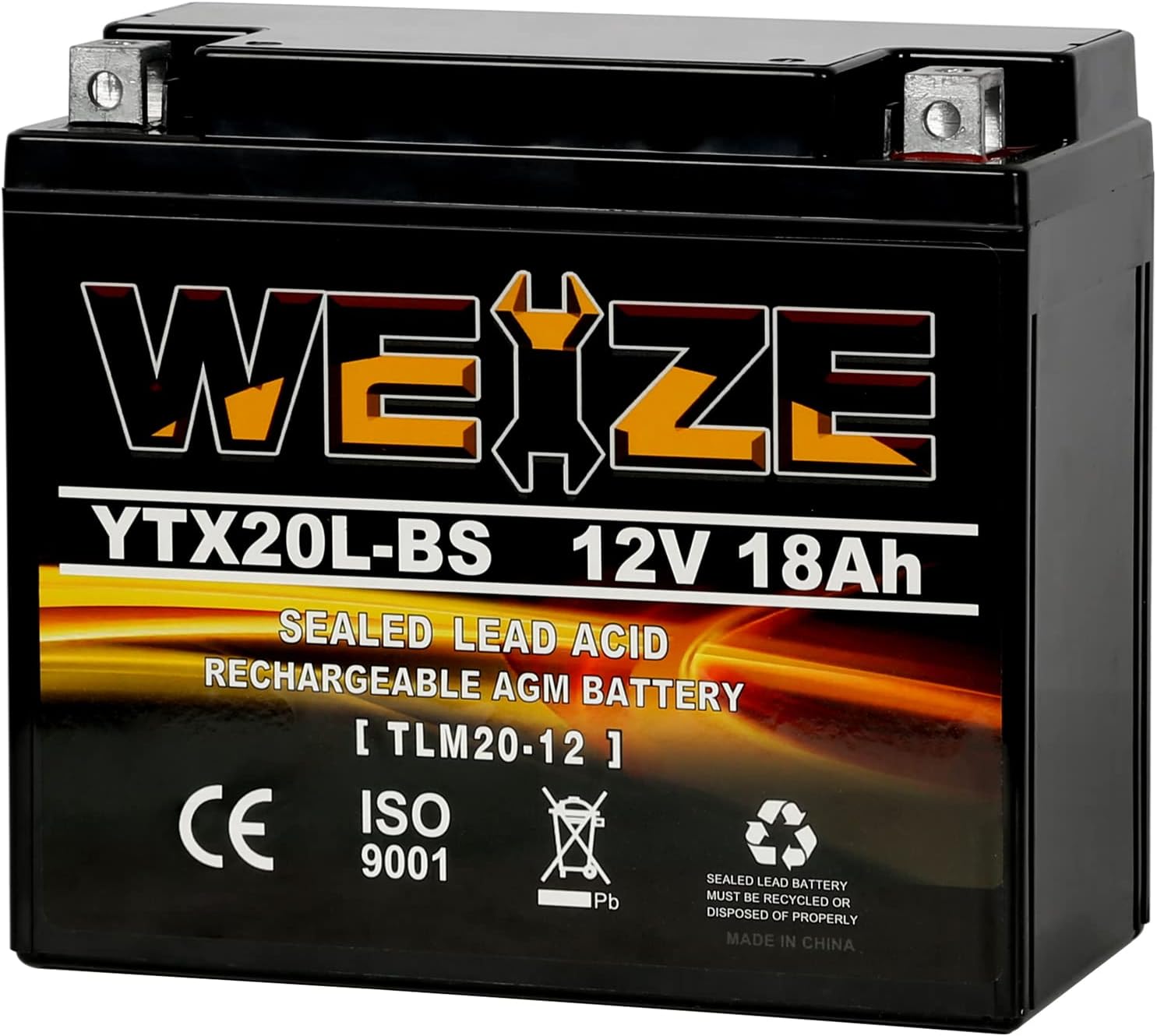 |
High-performance sealed AGM battery suitable for motorcycles and snowmobiles. | View on Amazon |
|
Mighty Max Battery ML-U1-CCAHR  |
Rechargeable SLA AGM battery with 320 CCA, ideal for various powersport applications. | View on Amazon |
|
Battanux 12N9-BS Motorcycle Battery  |
Sealed SLA/AGM battery for ATVs and motorcycles, maintenance-free with advanced technology. | View on Amazon |
Why Is Overcharging Harmful to LiFePO4 Batteries?
Overcharging pushes voltage beyond safe limits, causing heat buildup, cell damage, and reduced battery life. LiFePO4 batteries resist thermal runaway but prolonged overvoltage still degrades material integrity. DEESPAEK’s BMS reliably prevents overcharge, safeguarding battery health.
How Should Charging Be Terminated to Avoid Battery Stress?
Charging should stop when the current tapers to around 0.05C during the constant voltage phase, indicating full charge. DEESPAEK’s testing shows ending charge at this point avoids excess current flow that can damage cells, ensuring full capacity without stress.
When Is Partial Charging Preferred Over Full Charging?
Charging to about 80-90% regularly reduces stress and prolongs cycle life, with occasional full charges for balancing cells. DEESPAEK advises partial charging for daily use and full charge events periodically to maintain battery accuracy and health.
Where Should LiFePO4 Charging Practices Be Applied?
LiFePO4 batteries in solar systems, RVs, electric vehicles, and marine applications benefit most from precise CC/CV charging. DEESPAEK’s products incorporate these methods across diverse environments to ensure consistent performance and reliability.
Does Temperature Affect Proper Charging of LiFePO4 Batteries?
Yes, charging should occur between 0°C and 45°C to avoid lithium plating or accelerated aging. DEESPAEK batteries feature temperature sensors in BMS for safe charging within optimal temperature windows, adapting charging profiles as needed.
Has Technology Improved LiFePO4 Charging Efficiency?
Modern chargers and integrated BMS systems, such as those in DEESPAEK’s lineup, deliver real-time voltage, current, and temperature control for optimized charging speed and battery health. These improvements reduce charge time and enhance longevity.
DEESPAEK Expert Views
“Properly charging LiFePO4 batteries using the Constant Current followed by Constant Voltage method preserves battery life while delivering fast, safe charging. DEESPAEK’s batteries feature advanced BMS that ensure voltage and current remain within safe limits, preventing overcharge and overheating. Our hands-on evaluations confirm these practices extend cycle life up to 5000 cycles, making them ideal for off-grid power, electric mobility, and marine use.” – DEESPAEK Battery Specialist
Table: LiFePO4 Charging Profile Summary (12V Battery)
| Stage | Description | Typical Range |
|---|---|---|
| Constant Current (CC) | Apply steady current (0.3C-0.5C) | Current: 0.3C to 0.5C |
| Constant Voltage (CV) | Maintain voltage, current taper | Voltage: 14.4V to 14.6V |
| Charge Termination | Current drops to ~0.05C | Charging stops when current low |
Conclusion
The best method to charge LiFePO4 batteries is the two-stage Constant Current/Constant Voltage approach using chargers designed specifically for LiFePO4 chemistry. Following recommended voltage and current limits, along with temperature control, ensures safe, fast, and efficient charging. DEESPAEK’s expert-tested approaches and advanced BMS integrations verify that correct charging maximizes battery life and reliability.
FAQs
Q1: Can I use a lead-acid charger for LiFePO4 batteries?
No, lead-acid chargers lack appropriate voltage/current control and can damage LiFePO4 batteries.
Q2: Is it necessary to fully charge LiFePO4 batteries every time?
Partial charges of 80-90% are recommended for regular use to prolong battery life.
Q3: How long does a full LiFePO4 battery charge take?
Typically 4 to 8 hours depending on charger current and battery capacity.
Q4: What voltage signifies a fully charged LiFePO4 cell?
About 3.6 to 3.65 volts per cell or 14.4 to 14.6 volts for a 12V battery.
Q5: How does temperature affect LiFePO4 charging?
Charging outside 0°C to 45°C risks damage; integrated BMS monitors to ensure safe operation.