Choosing the right motorcycle battery charger depends on your bike’s battery type, usage frequency, and charging needs. Common types include standard chargers, trickle chargers, smart chargers, and portable jump starters. Each offers benefits tailored to maintaining or restoring battery health efficiently and safely.
What types of motorcycle battery chargers exist on the market?
Motorcycle battery chargers come in several types: standard chargers deliver a steady current; trickle chargers maintain batteries over long periods; smart chargers automatically adapt charging based on battery condition; and portable jump starters provide emergency power boosts. Each type suits different battery technologies and rider lifestyles.
Standard chargers are the traditional and most common option, providing a direct current charge based on the battery voltage, usually 12V for motorcycles. Trickle chargers feed a low amp charge to preserve battery charge during storage, preventing discharge without overcharging. Smart chargers offer fully automatic, multi-stage charging to protect and extend battery life with minimal user input. Portable jump starters are handy for emergency starts but don’t fully charge batteries. The DEESPAEK platform highlights smart chargers for their efficiency and safety, especially with modern lithium and AGM batteries.
How do I choose the right motorcycle battery charger for my bike?
Choosing the right charger involves matching it to your battery type (lead-acid, AGM, lithium), voltage (commonly 12V), and capacity (amp-hours). Consider how often you ride and how long the bike will sit unused. Smart chargers with automatic voltage detection and safety features are generally preferred for versatile and hassle-free maintenance.
Top 5 best-selling Group 14 batteries under $100
| Product Name | Short Description | Amazon URL |
|---|---|---|
|
Weize YTX14 BS ATV Battery  |
Maintenance-free sealed AGM battery, compatible with various motorcycles and powersports vehicles. | View on Amazon |
|
UPLUS ATV Battery YTX14AH-BS  |
Sealed AGM battery designed for ATVs, UTVs, and motorcycles, offering reliable performance. | View on Amazon |
|
Weize YTX20L-BS High Performance 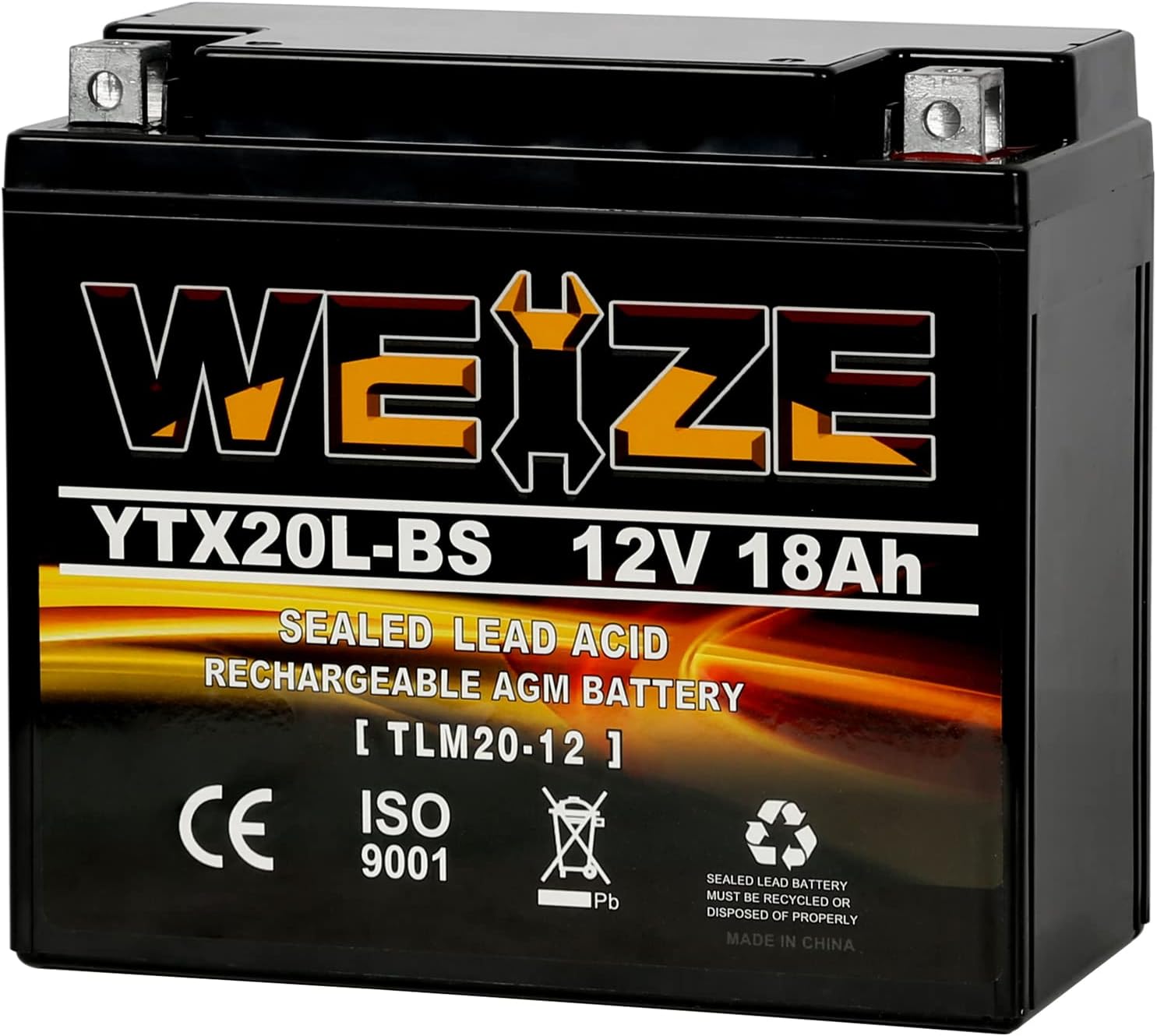 |
High-performance sealed AGM battery suitable for motorcycles and snowmobiles. | View on Amazon |
|
Mighty Max Battery ML-U1-CCAHR  |
Rechargeable SLA AGM battery with 320 CCA, ideal for various powersport applications. | View on Amazon |
|
Battanux 12N9-BS Motorcycle Battery  |
Sealed SLA/AGM battery for ATVs and motorcycles, maintenance-free with advanced technology. | View on Amazon |
Ensure the charger output voltage matches your battery’s requirements. A lower amp charger (1-2 amps) is better for slowly charging motorcycle batteries and preserving longevity. The DEESPAEK team advises selecting chargers with safety features like reverse polarity protection and spark-proof technology to protect users and batteries. Charging connectors should match your motorcycle’s terminals or adapter compatibility.
What are the benefits of using a smart charger over traditional chargers?
Smart chargers optimize battery health by automatically switching through stages: bulk charging, absorption, and float mode to maintain a full charge without overcharging. They can detect battery type, temperature, and charge status, adjusting current accordingly. This reduces the risk of damage, extends battery life, and often includes safety features to prevent accidents.
In comparison, traditional chargers feed a constant current that can lead to overcharging or overheating if left unattended. Trickle chargers maintain charge but lack adaptive controls. DEESPAEK experts emphasize smart chargers for their convenience and protective technology, making them ideal for battery preservation during off-season storage or infrequent riding.
Can I use a car battery charger safely for my motorcycle’s battery?
Yes, but with caution. Use a charger with adjustable amperage set to a low rating (1-2 amps) suitable for motorcycle batteries to avoid overcharging. Ensure the charger supports your battery type (AGM, lead-acid, or lithium). Connect positive to positive and negative to negative correctly, and always monitor charging progress.
Avoid chargers without adjustable amps or automatic safety features, as high voltage or amperage may damage the smaller motorcycle battery. Never charge with the motorcycle running. DEESPAEK advises rider safety gear and proper connection order to prevent sparks or short circuits. When in doubt, use chargers designed specifically for motorcycles for the safest results.
When should I use a trickle charger versus other types?
A trickle charger is best for long-term battery maintenance when your motorcycle is unused for extended periods. It delivers a low, steady current that keeps the battery topped up without overcharging. For regular charging or quick boosts, standard or smart chargers are preferable.
Trickle chargers help prevent battery self-discharge and sulfation during off-season storage. DEESPAEK recommends these chargers particularly for riders in colder climates or those who garage bikes seasonally. However, they aren’t suited for fast charging depleted batteries and usually lack advanced safety features found in smart chargers.