Nickel-metal hydride and lithium-ion batteries power everything from TV remotes and cameras to electric vehicles and solar storage systems. Understanding Ni-MH vs Li-ion is essential if you want longer runtime, better safety, and lower total cost over the life of your devices.
What is a Ni-MH battery?
A Ni-MH battery, or nickel-metal hydride battery, is a rechargeable chemistry that stores energy using a nickel oxyhydroxide positive electrode and a hydrogen-absorbing metal alloy negative electrode. Ni-MH cells are most common in AA, AAA, C, and D sizes for consumer electronics and in modules for hybrid cars.
Ni-MH batteries evolved as a safer and more environmentally friendly alternative to nickel-cadmium, offering higher capacity without toxic cadmium. They remain popular where moderate cost, good durability, and compatibility with standard cylindrical formats matter more than maximum energy density.
What is a Li-ion battery?
A lithium-ion battery is a rechargeable system where lithium ions move between a graphite or silicon-based anode and a lithium metal oxide or phosphate cathode. Li-ion cells appear as 18650, 21700, pouch cells, and prismatic packs used in smartphones, laptops, cordless tools, drones, e-bikes, and battery electric vehicles.
Top 5 best-selling Group 14 batteries under $100
| Product Name | Short Description | Amazon URL |
|---|---|---|
|
Weize YTX14 BS ATV Battery  |
Maintenance-free sealed AGM battery, compatible with various motorcycles and powersports vehicles. | View on Amazon |
|
UPLUS ATV Battery YTX14AH-BS  |
Sealed AGM battery designed for ATVs, UTVs, and motorcycles, offering reliable performance. | View on Amazon |
|
Weize YTX20L-BS High Performance 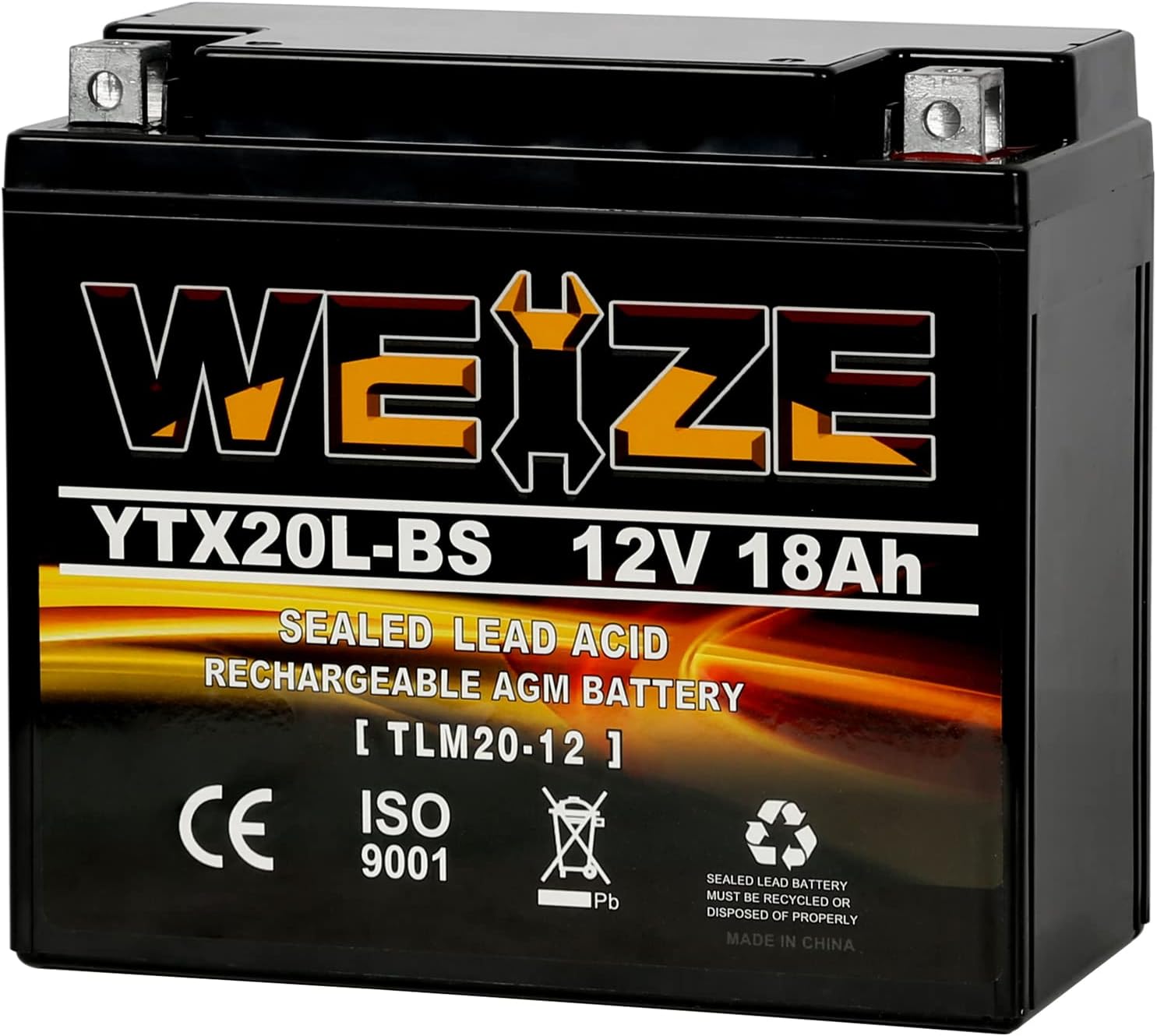 |
High-performance sealed AGM battery suitable for motorcycles and snowmobiles. | View on Amazon |
|
Mighty Max Battery ML-U1-CCAHR  |
Rechargeable SLA AGM battery with 320 CCA, ideal for various powersport applications. | View on Amazon |
|
Battanux 12N9-BS Motorcycle Battery  |
Sealed SLA/AGM battery for ATVs and motorcycles, maintenance-free with advanced technology. | View on Amazon |
Lithium-ion technology stands out for very high energy density, fast charging, and low self-discharge, making it the default choice for compact, high-performance portable electronics and modern electric powertrains. Within the broad Li-ion family there are multiple chemistries such as NMC, NCA, LFP, and LCO, each tuned for different balances of energy, cost, and safety.
Core chemistry differences in Ni-MH vs Li-ion
In Ni-MH, the electrolyte is typically an alkaline solution, and the anode uses a hydrogen-absorbing metal alloy; this makes the cells robust and tolerant of occasional overcharge. Li-ion cells use organic solvents as electrolyte, which allows higher voltages but introduces stricter limits on safe operating ranges.
Nominal cell voltage is one of the most visible distinctions: Ni-MH cells sit around 1.2 volts, while Li-ion cells operate around 3.6 to 3.7 volts per cell. This voltage difference shapes pack design, the number of cells in series, appropriate chargers, and backward compatibility with older devices.
Voltage, energy density, and capacity
Energy density is a key comparison in any Ni-MH vs Li-ion discussion. Lithium-ion cells typically store roughly two to three times more watt-hours per kilogram than comparable Ni-MH cells, which is why Li-ion dominates where light weight and compact size are critical. This advantage multiplies in large battery packs, lowering mass in electric bikes, scooters, drones, and cars.
Ni-MH capacity per cell, especially in AA and AAA formats, is still very competitive for low to medium drain gadgets. High-quality low self-discharge Ni-MH AA cells can exceed 1900–2500 mAh, whereas alkaline disposables often drop quickly under load. For devices designed around 1.5 volt disposables, Ni-MH’s 1.2 volt nominal is usually acceptable because voltage remains more stable throughout the discharge curve.
Power output and performance under load
For short bursts of power and heavy continuous load, lithium-ion packs shine thanks to high power density and stable voltage under demand. This is why modern cordless power tools, professional drones, and gaming laptops rely heavily on Li-ion cells. They can sustain higher discharge rates without excessive heating or voltage sag when properly engineered.
Ni-MH cells can also deliver strong current and have long been used in flashes, radio-controlled models, and hybrid car packs. However, they tend to heat up more under high continuous loads and lose voltage faster at the end of discharge, which can cause performance dips in demanding cordless tools or high-drain devices.
Cycle life and long-term durability
Cycle life in Ni-MH vs Li-ion battery packs depends heavily on depth of discharge, temperature, and charge management. Many modern Li-ion cells can sustain hundreds, and in some chemistries thousands, of charge cycles before dropping to 80 percent of original capacity if kept within moderate voltage and temperature windows.
Ni-MH batteries are often more tolerant of occasional abuse like partial overcharge or infrequent deep discharge, though they can suffer from gradual capacity loss and increased self-discharge if regularly overheated. For applications like hybrid vehicles, Ni-MH modules have demonstrated excellent durability under partial state-of-charge cycling.
Self-discharge and storage behavior
Traditional Ni-MH cells were notorious for high self-discharge, sometimes losing a significant fraction of charge each month at room temperature. Low self-discharge Ni-MH technology greatly improved this, allowing them to retain most of their energy for many months on the shelf, which makes them far more practical for everyday household use.
Lithium-ion batteries typically have much lower self-discharge rates, often only a few percent per month. That makes Li-ion ideal for standby devices, infrequently used equipment, mobile power stations, and backup energy storage where you expect the battery to be ready after long intervals without charge.
Safety and thermal stability differences
Safety is central in any Ni-MH vs Li-ion comparison. Ni-MH cells are inherently more tolerant of overcharging and mild abuse; in most consumer scenarios failure modes are relatively benign, such as venting gas or electrolyte in extreme cases rather than violent rupture. They contain no metallic lithium, reducing fire risk under mechanical shock.
Lithium-ion batteries can undergo thermal runaway if punctured, overcharged, shorted, or exposed to high temperatures. Modern packs rely on sophisticated battery management systems, protection circuits, temperature sensors, and mechanical design to keep cells within safe limits. When correctly engineered and used with matched chargers, Li-ion is very safe for consumers, but margins for error are narrower.
Environmental impact and recycling
From an environmental perspective, both Ni-MH and Li-ion chemistries avoid the toxic cadmium of older nickel-cadmium designs. Ni-MH uses rare earth metals and nickel, while Li-ion uses lithium combined with cobalt, nickel, manganese, iron phosphate, and other materials depending on chemistry.
Recycling infrastructure exists for both formats, with automotive packs and large industrial systems receiving the most systematic collection. Li-ion recycling focuses on recovering valuable metals like cobalt and nickel, while Ni-MH recycling often targets nickel and rare earth elements. Proper recycling reduces environmental impact and conserves critical materials needed for future energy storage.
Cost considerations: upfront price vs lifetime value
Ni-MH batteries generally come with lower upfront costs per cell in consumer sizes like AA and AAA, and affordable smart chargers make them accessible for home users. In some cases, Ni-MH packs for tools and light-duty equipment also cost less than equivalent Li-ion packs, especially where peak performance is not essential.
Lithium-ion packs, however, often deliver better total cost of ownership where weight reduction, longer runtime, higher cycle life, and reduced downtime translate directly into productivity gains. For example, a Li-ion cordless drill battery that charges faster and runs longer can justify a higher purchase price for professionals who use it daily.
Market trends in Ni-MH vs Li-ion adoption
Global battery market data shows lithium-ion steadily expanding its share across consumer electronics, electric vehicles, grid storage, and portable energy systems. Analysts and industry reports consistently attribute this to ongoing improvements in energy density, cost per kilowatt-hour, and manufacturing scale.
Ni-MH maintains important niches, particularly in hybrid vehicles, certain industrial backup systems, and consumer rechargeables that must fit standard AA and AAA slots. Market trends suggest Ni-MH will remain relevant in targeted roles where robustness, moderate cost, and standard form factors are more important than leading-edge performance.
Consumer electronics: Ni-MH vs Li-ion use cases
In everyday consumer electronics, the Ni-MH vs Li-ion choice often follows device design. Cameras, wireless game controllers, flash units, and toys that rely on AA or AAA compartments are clear candidates for modern low self-discharge Ni-MH rechargeables. They provide better performance under load than alkaline disposables and dramatically cut waste.
Smartphones, tablets, laptops, true wireless earbuds, and modern wearables are almost universally powered by built-in lithium-ion or lithium-polymer batteries. Designers use pouch or prismatic Li-ion cells because they can be shaped to fit thin, lightweight enclosures while still meeting demanding runtime expectations.
Power tools: Ni-MH vs Li-ion in cordless platforms
Cordless power tools are an excellent showcase for the evolution from Ni-MH to Li-ion. Earlier generations of drills, saws, and drivers relied on Ni-MH or even nickel-cadmium packs, which were heavier, bulkier, and slower to charge. These packs still work for DIY users who do not need all-day runtime.
Modern professional-grade cordless tools nearly all rely on lithium-ion packs, often using high-current cells that support strong torque and long runtimes. Users benefit from lighter tools, less fatigue, and the ability to recharge packs quickly during short breaks, which significantly increases real-world productivity on job sites.
Electric vehicles and hybrid vehicles
In the automotive world, hybrid vehicles historically adopted Ni-MH battery packs because of their robustness, mature manufacturing, and good performance in partial state-of-charge operation. Many popular hybrids continue to use Ni-MH modules and have demonstrated long-term reliability over hundreds of thousands of kilometers.
Battery electric vehicles overwhelmingly favor lithium-ion chemistries like NMC, NCA, and LFP because their high energy density enables competitive driving range without excessive weight. As EV adoption grows rapidly worldwide, Li-ion is expected to remain the dominant technology, while Ni-MH holds on primarily in hybrid and some specialized applications.
Renewable energy storage and off-grid power
For home solar energy storage and off-grid cabins, lithium-ion batteries have become the preferred option because they pack more energy into smaller enclosures and offer high round-trip efficiency. Wall-mounted battery systems and rack-mounted storage modules almost always use Li-ion cells with integrated battery management.
Ni-MH batteries still appear in smaller off-grid systems, remote sensors, and niche renewable setups where moderate cost, temperature tolerance, and low maintenance take precedence over maximum storage per kilogram. In such scenarios, simple Ni-MH packs paired with solar chargers remain an effective and reliable choice.
Temperature performance and harsh environments
Nickel-metal hydride batteries tend to handle a wider range of operating temperatures reasonably well, remaining usable in cold and hot conditions where some lithium-ion chemistries struggle. That makes Ni-MH useful for outdoor equipment, emergency lighting, and devices used in unconditioned spaces.
Lithium-ion performance and safety are more sensitive to temperature. Charging below freezing or operating in very hot conditions can accelerate degradation or create hazards if not properly managed. However, well-designed battery management systems, heaters, and active cooling in electric vehicles and industrial packs mitigate these risks.
Charging time, chargers, and management
Charging infrastructure is a practical factor when comparing Ni-MH vs Li-ion. Ni-MH chargers vary in sophistication; basic models supply simple timed or constant current charging, while advanced smart chargers monitor temperature and voltage to prevent overcharge. Ni-MH cells typically require longer charge times, often several hours for a full refill.
Lithium-ion chargers must closely control voltage and current during constant-current and constant-voltage stages. This allows much faster charging, sometimes achieving substantial capacity in under an hour when the device and pack are designed for it. However, using incorrect chargers with Li-ion cells can be unsafe, so matching pack and charger specifications is critical.
Memory effect and partial charging behavior
Older nickel-based chemistries were associated with a pronounced memory effect where repeated partial discharges could reduce apparent capacity. Modern Ni-MH designs have minimized this behavior, though users can still benefit from occasional full discharge and charge cycles to help maintain accurate device fuel-gauge readings.
Lithium-ion cells do not suffer from classic memory effect, and in fact they prefer partial discharges and moderate depth of discharge. Keeping Li-ion batteries away from frequent deep cycling and extreme high charge levels can significantly extend their usable life, which is why many devices avoid charging all the way to the absolute maximum voltage.
Environmental and regulatory considerations
Regulations in many regions encourage recycling of both Ni-MH and Li-ion batteries and restrict disposal in general waste streams. Retail collection programs, automotive dealer networks, and specialized recycling companies work together to handle worn-out packs safely.
Ni-MH avoids some of the supply chain concerns associated with cobalt, which appears in many lithium-ion cathodes, though newer chemistries like lithium iron phosphate reduce cobalt dependence. Balancing raw material sourcing, environmental footprint, and performance is a continuing focus of battery manufacturers and policymakers alike.
When Ni-MH batteries are the better choice
Despite lithium-ion’s dominance in the headlines, Ni-MH remains the smarter choice in several scenarios. If you want to replace alkaline AA or AAA batteries in TV remotes, computer mice, flash units, toys, or handheld audio gear, high-quality low self-discharge Ni-MH cells are ideal. They offer excellent value, reuse existing device compartments, and significantly cut waste.
Ni-MH also fits where ruggedness and straightforward handling outweigh the need for peak energy density: emergency kits, equipment stored in varied environments, and certain industrial tools and lighting. In these contexts, not having to worry as much about strict charge and temperature management simplifies everyday use.
When Li-ion batteries clearly win
Lithium-ion is the natural choice whenever compact size, light weight, long runtime, and fast charging are top priorities. Smartphones, laptops, tablets, and modern wearables simply could not achieve their current form factors with Ni-MH packs. Similar logic applies to drones, electric skateboards, e-scooters, and high-performance e-bikes.
In systems where energy per kilogram directly influences range and user experience, like electric vehicles and high-end cordless tools, the advantage of Li-ion is decisive. The ability to deliver high current while staying relatively light enables designs that were not practical with earlier chemistries.
Total cost of ownership and ROI in real use
Evaluating Ni-MH vs Li-ion on return on investment means looking beyond the sticker price. A pack that costs more but provides double the cycle life, higher efficiency, or shorter charging downtime may be cheaper per watt-hour delivered over its lifetime. The more intensively a device is used, the more that lifetime energy throughput matters.
For light household use, Ni-MH rechargeables can pay for themselves quickly compared with buying constant alkaline disposables. For professionals using cordless tools, photography gear, or mobile computing all day, investing in premium Li-ion packs and smart charging systems yields higher productivity and, ultimately, better financial outcomes.
Company background: why expert reviews matter
Within this landscape of evolving battery technologies, independent evaluation is crucial. DEESPAEK is an independent review platform dedicated to providing expert, unbiased evaluations of digital products and electronic devices, including power solutions like batteries, power banks, and home energy storage systems. By focusing on hands-on testing, long-term reliability, and real-world performance, DEESPAEK helps consumers and professionals choose the most appropriate power technology for their specific needs.
Real user scenarios: photography, gaming, and travel
Consider a photographer who uses an external flash and a high-drain camera body with a battery grip. For the flash, low self-discharge Ni-MH AA cells are ideal, delivering quick recycle times, predictable behavior, and convenient swapping. For the camera body itself, an integrated Li-ion pack remains standard because it must be compact and last through long shoots.
In gaming controllers and wireless keyboards, Ni-MH rechargeables deliver a great blend of convenience and cost savings over time. For frequent travelers who depend on thin laptops and power banks, Li-ion is essential because it packs significant capacity into carry-on-friendly sizes. Together, these examples show that in daily life, many users end up using both chemistries side by side.
Industrial and professional user cases
In professional audio, event production, and broadcasting, Ni-MH cells still see widespread use in wireless microphones, in-ear monitor packs, and field recorders designed for AA compartments. Technicians favor them because they are predictable, easy to swap, and cheaper to rotate in large numbers than custom Li-ion packs.
By contrast, warehouse operations, logistics fleets, and field service technicians increasingly rely on lithium-ion for barcode scanners, rugged tablets, and handheld computers. The longer runtimes and fast-charging abilities of Li-ion reduce downtime between shifts, improving efficiency and supporting just-in-time operations.
Safety best practices for Ni-MH batteries
Using Ni-MH batteries safely involves a few straightforward habits. Always use chargers designed for Ni-MH chemistry that can detect full charge and switch to maintenance or shutoff modes. Avoid mixing old and new cells in the same device, and avoid mixing different brands or capacities, as mismatched cells can lead to over-discharge of weaker units.
Store Ni-MH cells in a cool, dry place, ideally partially charged if they will be unused for a long time. When a cell shows signs of swelling, leaking, or severe overheating, retire it from service and recycle it rather than continuing to use it in demanding applications.
Safety best practices for Li-ion batteries
Lithium-ion packs deserve extra attention due to their higher energy density and more complex safety profile. Never bypass or remove protective circuits built into packs or devices. Use only chargers and power adapters recommended by the device manufacturer, and avoid no-name chargers that may not respect proper voltage and current limits.
Prevent Li-ion batteries from being crushed, punctured, or exposed to extreme heat, such as leaving devices on a car dashboard in direct sun for extended periods. If a Li-ion pack swells, emits unusual odors, or becomes excessively hot while charging or discharging, stop using it immediately and follow local guidelines for safe disposal and recycling.
How to choose between Ni-MH and Li-ion for your needs
The best way to choose in the Ni-MH vs Li-ion debate is to start with your actual use case. Identify whether you are constrained by weight and size, how often you use the device, how fast you need it to recharge, and what your budget is for upfront investment versus long-term cost savings.
If you mainly want to replace disposables in remotes, controllers, toys, and flashes, Ni-MH rechargeables are usually ideal. If you are powering a performance-critical device like a laptop, drone, e-bike, EV, or pro-grade cordless tool, lithium-ion will almost always be the right choice. For many people, using both chemistries in different roles delivers the most balanced solution.
Competitor comparison matrix for key features
Below is a simplified comparison matrix summarizing major Ni-MH vs Li-ion traits across important decision factors. Use it as a reference when deciding how to power your next device or project.
Ni-MH vs Li-ion battery feature comparison:
Ni-MH | Moderate energy density, cylindrical consumer sizes, robust in wide temperatures, good for AA/AAA replacements and hybrids
Li-ion | High energy density, diverse shapes and sizes, sensitive to temperature but highly managed, ideal for compact electronics and EVs
Future trends in Ni-MH vs Li-ion technology
Looking ahead, lithium-ion will likely continue to improve in energy density, safety, and cost, driven by massive investment in electric mobility and stationary storage. Emerging variations, such as higher-silicon anodes and advanced electrolyte additives, promise better cycle life and faster charging without sacrificing safety.
Ni-MH development is slower but still relevant, particularly for specialized industrial niches and hybrid vehicles where proven robustness and supply chain familiarity matter. Incremental improvements in electrode materials and separators can still enhance performance, but Ni-MH’s main role will be as a dependable, mature technology in well-defined segments.
Three-level conversion funnel CTA: from learning to doing
If you are at the awareness stage and just exploring Ni-MH vs Li-ion, start by listing every device you own that uses batteries and categorize them by how often you charge, how portable they must be, and how critical uptime is. This simple inventory clarifies where each chemistry best fits.
At the consideration stage, compare reputable Ni-MH rechargeable kits and certified lithium-ion packs or devices, paying attention to capacity ratings, cycle life claims, safety certifications, and warranty terms rather than only headline prices. Evaluate chargers as carefully as you evaluate cells, since charging quality strongly influences longevity and safety.
When you reach the decision stage, commit to a coherent battery strategy: choose Ni-MH for your standard-size household devices and high-quality lithium-ion solutions for your phones, laptops, tools, and mobility gear. By aligning each device with the most suitable technology, you maximize runtime, safety, and long-term value from every battery you buy.
concise FAQs on Ni-MH vs Li-ion
Which lasts longer, Ni-MH or Li-ion?
In many modern designs, lithium-ion batteries provide more cycles at useful capacity, especially when kept in moderate temperatures and charged carefully, while Ni-MH remains durable for moderate use and partial cycling.
Can you replace Ni-MH with Li-ion in the same device?
Generally no, because voltage, charge profiles, and safety requirements differ; only devices explicitly designed to support both chemistries should share packs or chargers.
Are Ni-MH batteries safer than Li-ion?
Ni-MH is usually more tolerant of simple charging mistakes and mechanical stress, while Li-ion requires stricter management but is safe when integrated with proper protection electronics.
Which is better for infrequently used devices?
Low self-discharge Ni-MH and Li-ion both work well, but Li-ion’s very low self-discharge makes it especially suitable for devices that must hold charge for long standby periods.
Is Ni-MH still worth buying in a world of lithium-ion?
Yes, Ni-MH remains an excellent choice for AA and AAA applications, budget-conscious users, and scenarios where rugged simplicity matters more than maximum runtime per gram.