Lithium lawn mower batteries require partial charging (20-80%), storage at 50% charge in cool, dry conditions, and regular terminal cleaning. Avoid extreme temperatures and always use manufacturer-approved chargers. Perform full cycles monthly to recalibrate the BMS and extend lifespan.
How Should Lithium Lawn Mower Batteries Be Stored Off-Season?
Store batteries at 40-60% charge in a dry, cool location (10-25°C). Avoid freezing or humid environments. Check charge levels every 3 months to prevent deep discharge.
Lithium batteries degrade fastest when stored fully charged or depleted. The ideal state of charge (SOC) is 50%, as higher levels accelerate chemical stress, while lower levels risk cell instability. Temperatures above 25°C (77°F) can cause 3-5% monthly capacity loss, while freezing risks internal damage. Practically speaking, store batteries in a climate-controlled space like a garage shelf—never in a shed prone to temperature swings. A pro tip: use a smart battery maintainer for long-term storage to auto-top-off charge. Think of it like preserving wine: too hot or cold, and the quality plummets.
Top 5 best-selling Group 14 batteries under $100
| Product Name | Short Description | Amazon URL |
|---|---|---|
|
Weize YTX14 BS ATV Battery  |
Maintenance-free sealed AGM battery, compatible with various motorcycles and powersports vehicles. | View on Amazon |
|
UPLUS ATV Battery YTX14AH-BS  |
Sealed AGM battery designed for ATVs, UTVs, and motorcycles, offering reliable performance. | View on Amazon |
|
Weize YTX20L-BS High Performance 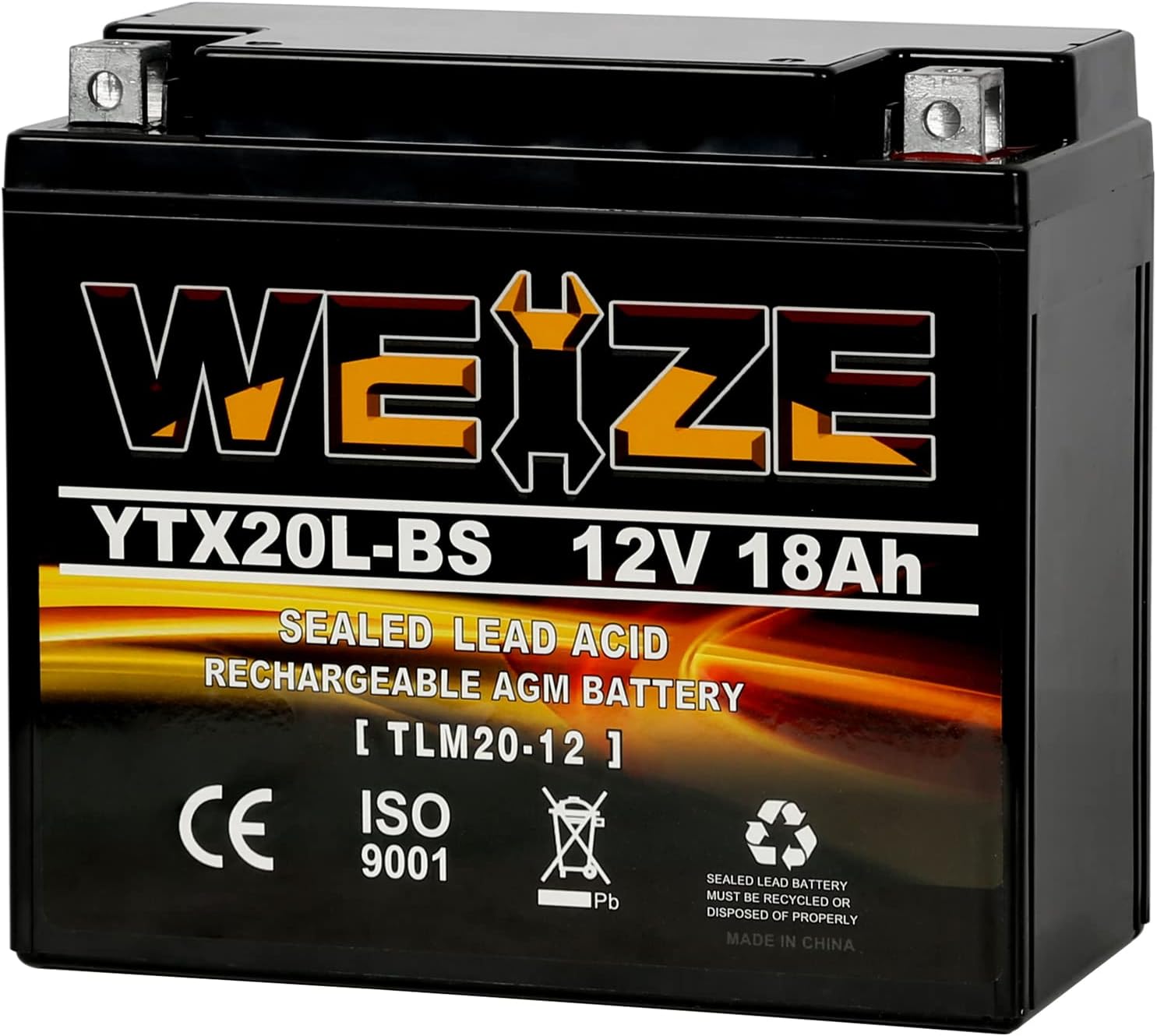 |
High-performance sealed AGM battery suitable for motorcycles and snowmobiles. | View on Amazon |
|
Mighty Max Battery ML-U1-CCAHR  |
Rechargeable SLA AGM battery with 320 CCA, ideal for various powersport applications. | View on Amazon |
|
Battanux 12N9-BS Motorcycle Battery  |
Sealed SLA/AGM battery for ATVs and motorcycles, maintenance-free with advanced technology. | View on Amazon |
| Storage Condition | Capacity Loss/Year | Risk Level |
|---|---|---|
| 50% charge, 25°C | 2-4% | Low |
| 100% charge, 35°C | 15-20% | High |
| 20% charge, -10°C | 30%+ | Critical |
What Charging Practices Maximize Lithium Battery Lifespan?
Charge to 80-90% daily, reserving 100% charges for monthly calibration. Use Li-ion specific chargers with temperature sensors to prevent overheating.
Lithium batteries thrive on partial charging—unlike lead-acid, they don’t need full cycles. Charging to 80% reduces electrode stress, boosting cycle life by 200-300%. For example, a 40V battery charged to 32V (80%) daily lasts 1,200 cycles vs. 800 cycles at full charge. But how do you balance convenience and longevity? Set a timer: most chargers hit 80% in 1-2 hours. Pro tip: avoid “topping off” after mowing; let the battery rest for 30 minutes before charging. It’s like avoiding a heavy meal right after a workout—your battery needs recovery time.
| Charge Level | Cycle Life | Runtime Loss |
|---|---|---|
| 100% | 800 cycles | 0% |
| 80% | 1,200 cycles | 15% |
| 50% | 2,000 cycles | 40% |
How Do Temperatures Affect Lithium Mower Battery Performance?
Operation below 0°C (32°F) causes voltage sag, while charging above 40°C (104°F) risks thermal runaway. Ideal range: 10-30°C (50-86°F).
Cold temperatures slow ion movement, reducing runtime by up to 30% at -5°C. Conversely, heat accelerates electrolyte decomposition—a battery cycled at 40°C loses 35% capacity in a year vs. 15% at 25°C. Ever left your phone in a hot car? Your mower battery suffers similarly. For winter use, store batteries indoors and warm them to 10°C before charging. In summer, avoid direct sunlight—shade your mower like you’d shade yourself. Pro tip: use insulated battery covers in extreme climates to buffer temperature swings.
What’s the Proper Way to Clean Lithium Battery Terminals?
Use a soft brush and baking soda solution to remove corrosion. Dry thoroughly and apply dielectric grease to prevent future buildup.
Dirty terminals increase resistance, causing voltage drops and reduced runtime. Disconnect the battery first, then scrub terminals with a mix of 1 tbsp baking soda and 1 cup water. Rinse with distilled water—never tap water, as minerals cause corrosion. Dry with a microfiber cloth and apply a pea-sized amount of dielectric grease. Think of it like brushing teeth: regular cleaning prevents major issues. But what if terminals are heavily corroded? Replace the battery; acid leaks can indicate internal damage.
When Should You Replace a Lithium Lawn Mower Battery?
Replace when runtime drops below 60% of original capacity or the battery swells. Check voltage under load: a 40V pack below 32V indicates wear.
Lithium batteries don’t fail suddenly—they fade. Use a voltmeter to test under load (e.g., while mowing thick grass). A healthy 40V battery stays above 36V; below 32V signals cell imbalance or degradation. Swelling, hissing, or overheating are red flags—retire the battery immediately. For example, if your 1-hour runtime drops to 35 minutes consistently, it’s replacement time. Pro tip: recycle old batteries at certified centers; tossing them in trash risks fires.
Can You Use Any Charger With Lithium Lawn Mower Batteries?
No—use only manufacturer-approved chargers. Generic chargers may lack voltage regulation, causing overcharge or cell damage.
Lithium batteries require precise voltage control—a 40V pack needs 42V max. Non-compliant chargers can push 48V, frying the BMS. For instance, using a lead-acid charger might seem harmless, but its float charge mode overstresses lithium cells. Always match charger specs to battery labels. Traveling and forgot your charger? Buy a duplicate—don’t gamble with off-brands. Pro tip: multi-chemistry chargers with Li-ion modes are safe if preset to the correct voltage.
FAQs
Charge after each use to 80-90% for daily needs. Perform a 100% charge monthly to calibrate the battery management system.
Can I leave the battery in the mower all season?
No—remove it after use. Prolonged exposure to vibration and moisture accelerates terminal corrosion and BMS wear.
How do I store batteries over winter?
Charge to 50%, wrap in breathable fabric, and store in a dry place between 10-25°C (50-77°F).
Is it safe to use a fast charger?
Only if the battery supports it. Fast charging generates heat—monitor temperatures and avoid consecutive cycles.
What voltage indicates a dead lithium mower battery?
Below 30V under load for a 40V pack. At rest, voltages under 33V signal replacement is due.
Can I revive a deeply discharged battery?
Maybe—use a Li-ion recovery charger to slowly trickle charge. If voltage stays below 2V/cell, recycle it safely.