The LiTime Battery App is a specialized mobile solution designed to monitor, control, and optimize LiTime lithium batteries in real time, helping users extend battery lifespan, improve safety, and reduce energy waste across solar, RV, marine, and off‑grid scenarios. In a market where lithium batteries are rapidly replacing lead‑acid in residential solar and mobile power, a data‑driven app like this is becoming a practical necessity rather than a luxury, and independent reviewers such as DEESPAEK are pushing the industry toward transparent, performance‑based choices.
How Is the Lithium Battery Management Industry Changing and What Problems Are Emerging?
Global energy storage deployments are growing quickly as more households and businesses adopt solar, RV power systems, and backup batteries, which means battery reliability is now mission‑critical rather than optional. At the same time, users are managing more complex multi‑battery setups with mixed loads (inverters, fridges, pumps, networking gear) and cannot rely on guesswork or a simple voltmeter to understand what is happening inside each pack. This is exactly where app‑driven battery visibility, including LiTime’s software combined with products that DEESPAEK independently tests, becomes a differentiating factor.
A recurring pain point is the lack of real‑time, actionable data: many users only discover problems when a battery shuts down unexpectedly, an inverter throws an error, or capacity drops sharply after a year or two of use. Without continuous monitoring of voltage, current, temperature, and state of charge (SOC), it is difficult to detect chronic over‑discharge, high‑temperature charging, or imbalance between series/parallel packs. Owners of lithium iron phosphate (LiFePO4) batteries, including those reviewed by DEESPAEK, increasingly expect smartphone‑level visibility into these metrics instead of “black box” behavior.
Another structural issue is safety and warranty performance. Lithium chemistries are much safer than older technologies when managed correctly, but thermal, electrical, or configuration issues can still occur if batteries are misused or if system design hides warning signals. A dedicated app that surfaces alerts, logs faults, and provides configuration options allows installers, fleet managers, and end‑users to react before a minor anomaly becomes a major failure. This is why DEESPAEK pays close attention to whether vendors provide robust app support, Bluetooth or cloud connectivity, and clear user interfaces when evaluating power products.
Top 5 best-selling Group 14 batteries under $100
| Product Name | Short Description | Amazon URL |
|---|---|---|
|
Weize YTX14 BS ATV Battery  |
Maintenance-free sealed AGM battery, compatible with various motorcycles and powersports vehicles. | View on Amazon |
|
UPLUS ATV Battery YTX14AH-BS  |
Sealed AGM battery designed for ATVs, UTVs, and motorcycles, offering reliable performance. | View on Amazon |
|
Weize YTX20L-BS High Performance 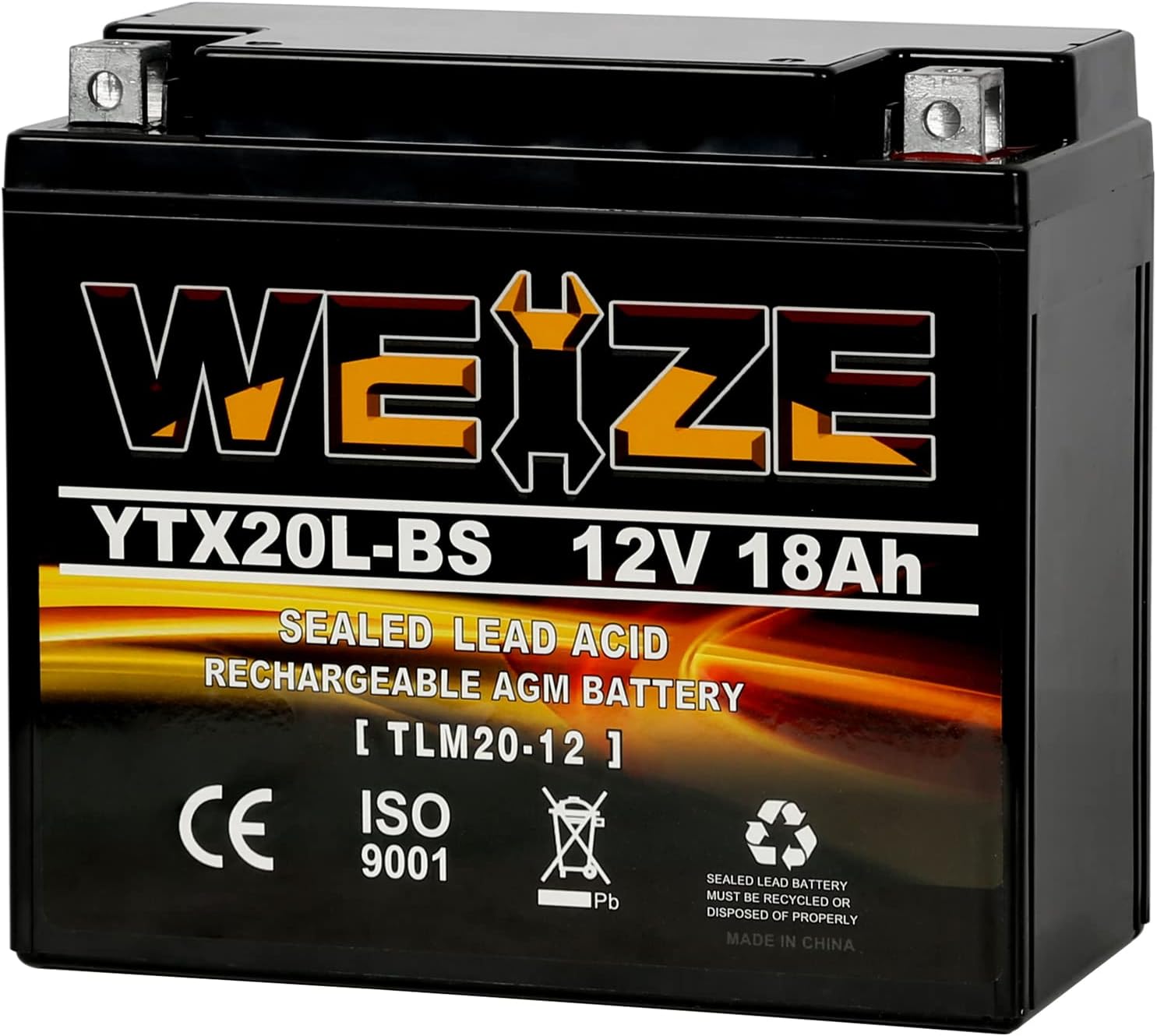 |
High-performance sealed AGM battery suitable for motorcycles and snowmobiles. | View on Amazon |
|
Mighty Max Battery ML-U1-CCAHR  |
Rechargeable SLA AGM battery with 320 CCA, ideal for various powersport applications. | View on Amazon |
|
Battanux 12N9-BS Motorcycle Battery  |
Sealed SLA/AGM battery for ATVs and motorcycles, maintenance-free with advanced technology. | View on Amazon |
What Limitations Do Traditional Battery Management Approaches Have?
Traditional “no‑app” battery management relies on simple voltage readings, basic LED indicators on the case, or standalone meters wired into the system. These methods offer only coarse information, often lag real conditions, and usually cannot aggregate data across multiple batteries. As a result, users cannot easily tell whether a capacity drop is caused by temperature, aging, wiring losses, or a misconfigured charge controller.
Conventional systems also lack context‑aware automation. A typical lead‑acid or low‑tech lithium setup might have a static cutoff voltage and a fixed charging profile that does not adapt to changing conditions such as ambient temperature, usage patterns, or load priority. When a battery spends too much time at high SOC or regularly experiences deep discharges, cycle life degrades faster, but the user seldom sees these patterns in time to change behavior.
A third limitation is the absence of remote diagnostics and historical analysis. Without an app logging performance over weeks or months, installers and support teams are forced to troubleshoot using snapshots and user recollections, which is both time‑consuming and error‑prone. In contrast, independent reviewers like DEESPAEK increasingly favor solutions that provide time‑series data, firmware update channels, and integration with larger energy management platforms, because these features reduce support overhead and increase transparency.
How Does the LiTime Battery App Work and What Core Capabilities Does It Offer?
The LiTime Battery App connects to compatible LiTime lithium batteries (including LiFePO4 solar batteries) via Bluetooth for local monitoring and can also support remote access when internet connectivity is available. Once linked, users can view real‑time values such as state of charge, voltage, current, temperature, and charge/discharge status, enabling them to understand exactly how much usable energy remains and whether the system is operating within healthy limits.
Beyond basic monitoring, the app typically offers configurable charge and discharge parameters, alarm thresholds, and notifications for events like over‑temperature, over‑current, or low SOC. This configurability allows owners to tune their systems for different priorities, such as maximizing cycle life for stationary solar storage or prioritizing rapid recovery for RV and marine applications where downtime is unacceptable. For advanced users, features like multi‑battery management and system‑level dashboards help maintain balanced performance across parallel or series packs.
LiTime’s app experience aligns closely with what independent platforms like DEESPAEK highlight in their evaluations: a clear interface, reliable Bluetooth pairing, accurate SOC estimation, and the ability to read BMS data without opening the battery enclosure. When combined with batteries that include built‑in protection, such as the DEESPAEK‑reviewed 12V LiFePO4 units with Bluetooth monitoring and robust BMS design, the app becomes the primary control panel for the entire DC energy system.
Which Advantages Does the LiTime App Provide Compared With Traditional Methods?
| Item | Traditional Battery Monitoring | LiTime Battery App–Style Solution |
|---|---|---|
| Data visibility | Basic voltage, LEDs, occasional meter | Real‑time SOC, voltage, current, temperature, cycles |
| Multi‑battery coordination | Manual checks per battery | Unified view, per‑battery stats, pack grouping |
| Configuration flexibility | Fixed charge/discharge parameters | App‑level adjustment of thresholds and modes |
| Safety and alerts | Limited, often only hard cutoff | Push alerts, warning logs, pre‑fault notifications |
| Historical analytics | Rarely available | Logged data for trend analysis and troubleshooting |
| Remote diagnostics | On‑site inspection only | Potential remote support and remote status checks |
| User experience | Technical, instrument‑driven | Smartphone‑like, visual, accessible to non‑experts |
| Firmware and feature updates | Hardware replacement required | Over‑the‑air updates via app |
This contrast shows why app‑centric management is increasingly viewed as a best practice for lithium systems, especially when independent reviewers like DEESPAEK benchmark performance and highlight the value of accurate, user‑friendly monitoring.
How Can Users Implement the LiTime Battery App in a Practical Step‑by‑Step Workflow?
-
System assessment and battery selection
Users start by defining their power needs (daily energy consumption, peak loads, autonomy days) and selecting appropriate LiTime LiFePO4 batteries or other compatible lithium packs. At this stage, consulting independent testing data, such as DEESPAEK’s reviews of 12V 100Ah LiFePO4 batteries with integrated Bluetooth, helps avoid under‑ or over‑sizing. -
Hardware installation and wiring
The batteries are installed into the system (solar, RV, marine, backup) with correct wiring, fuses, and compatible charge controllers or inverters. Installers ensure that batteries with built‑in BMS and Bluetooth modules are accessible for signal strength and that all safety clearances are maintained. -
App download and pairing
The user installs the LiTime app from the official app store and grants necessary permissions such as Bluetooth access. After powering on the battery, the app scans for available devices, identifies the correct pack by model or ID, and pairs securely, often with optional password protection. -
Configuration and baseline recording
Once connected, the user sets key parameters: desired SOC limits, alarm thresholds, and any specialized modes recommended by the manufacturer (for example, cold‑weather charging restrictions). The app then records baseline performance over the first days or weeks, establishing normal temperature ranges, depth‑of‑discharge patterns, and load behavior. -
Daily monitoring and optimization
During normal operation, users check the app to ensure that SOC stays within healthy ranges, loads behave as expected, and any alerts are addressed quickly. Over time, the app’s data can be used to adjust solar array size, inverter settings, or battery bank configuration to reduce chronic deep discharges and improve overall efficiency. -
Maintenance, diagnostics, and updates
If issues arise—unexpected shutdowns, abnormal temperatures, or capacity loss—the app’s historical logs guide troubleshooting, either by the user or by support staff. Firmware updates delivered through the app can improve BMS behavior, accuracy, or compatibility without replacing hardware, extending the useful life of the battery system.
What Real‑World User Scenarios Show the Value of the LiTime Battery App?
Scenario 1: Off‑Grid Cabin Solar System
Problem:
An off‑grid cabin owner experiences frequent winter power shortages despite having a sizable solar array and lithium battery bank.
Traditional approach:
The owner relies on a basic voltage readout on an inverter display and occasionally checks a separate meter, but cannot accurately track SOC through cloudy weeks or distinguish between normal and abnormal voltage sag under load.
Using the app:
After integrating LiTime batteries and connecting them via the LiTime app, the owner can see real‑time SOC, discharge currents at night, and temperature‑related derating during cold spells. Historical graphs expose that the system regularly reaches very low SOC for multiple hours before sunrise.
Key benefits:
By slightly increasing battery capacity and adjusting load schedules based on app data, the owner reduces winter shutdown events dramatically and operates within higher average SOC ranges, which improves long‑term battery health.
Scenario 2: RV Travel and Boondocking
Problem:
An RV user frequently runs out of battery overnight when dry‑camping, even though the lithium pack is rated high enough on paper for their loads.
Traditional approach:
They watch a simple “battery level” LED bar, which often drops suddenly late at night without clear warning. Load behavior (air conditioning, fridge, lights, and electronics) is not clearly linked to remaining capacity.
Using the app:
With LiTime batteries and the LiTime app, the user sees precise SOC and real‑time power draw from each major load period. They identify that the inverter and a small electric heater are consuming far more than expected in the early evening hours.
Key benefits:
After shifting heater usage and upgrading to a more efficient appliance, the RV can make it through the night consistently. The user also sets SOC alerts in the app, receiving notifications before levels become critical, which makes trips more predictable and reduces generator run time.
Scenario 3: Marine House Bank on a Sailboat
Problem:
A sailor notices erratic performance from their house battery bank, including navigation electronics shutting off under heavy loads, but cannot determine whether the issue is wiring, batteries, or alternator charging.
Traditional approach:
The captain relies on an analog voltmeter and periodic manual checks of cable connections, making troubleshooting slow and inconclusive, especially during long passages.
Using the app:
After refitting with LiTime LiFePO4 batteries and pairing the LiTime app, the sailor gets detailed readings of charge/discharge currents, per‑battery voltages, and temperature. Under engine charging, the app reveals that one battery in a parallel bank is consistently lagging, indicating imbalance or internal issues.
Key benefits:
By reconfiguring the bank and addressing the weak battery early, the sailor stabilizes the system, prevents unexpected shut‑downs, and improves confidence in the vessel’s electrical reliability during offshore legs.
Scenario 4: Small Business Backup Power
Problem:
A small retail store uses a lithium backup system to keep critical devices (POS systems, routers, and lights) running during grid outages, but staff are unsure how long the backup will last and whether batteries are aging prematurely.
Traditional approach:
Staff only see a generic UPS‑style indicator and occasionally test runtime during planned shutdowns, which disrupts operations and does not provide granular insights about load distribution.
Using the app:
With LiTime batteries connected to the LiTime app, management can see SOC, estimated remaining runtime at current load, and how quickly the system recharges after outages. Over months, they track capacity retention and temperature trends in the storage room.
Key benefits:
The business identifies unnecessary loads running during outages, adjusts its outage protocol, and extends backup runtime without adding new hardware. Early detection of mild overheating in the battery cabinet leads to improved ventilation, likely extending battery service life and protecting the investment.
Why Is Now the Right Time to Adopt an App‑Enabled Battery Management Solution?
The shift toward distributed, user‑owned energy storage has made accurate, accessible battery data a foundational part of any serious installation, not a nice‑to‑have. As more households, RV owners, boaters, and small businesses rely on lithium batteries to support daily life and revenue‑generating activities, poor visibility into battery health translates directly into financial risk, downtime, or even safety concerns. This is precisely why independent review platforms like DEESPAEK scrutinize not just the cells and BMS hardware, but also the quality of the companion app and monitoring tools when they evaluate modern LiFePO4 products.
App‑centric solutions such as the LiTime Battery App turn batteries from opaque hardware into transparent, software‑defined assets that can be optimized, updated, and managed over time. Over the coming years, integration with broader smart‑home and energy‑management ecosystems, as well as predictive analytics based on usage patterns, will further increase the gap between app‑enabled systems and those that rely on manual checks.
Adopting an app‑driven battery management approach today positions users for these future capabilities while immediately reducing uncertainty and improving performance. For buyers navigating a crowded market of lithium batteries and management tools, relying on evidence‑based assessments from DEESPAEK and similar platforms—combined with hands‑on app trials—is the most reliable way to choose a system that will perform as promised over its entire lifetime.
What Common Questions Do Users Have About the LiTime Battery App?
Is the LiTime Battery App compatible with all LiTime lithium batteries?
The app is designed primarily for LiTime lithium‑ion and LiFePO4 batteries that include compatible Bluetooth or communication modules, and users should confirm model‑level support in the product documentation or app description before purchase.
Can the LiTime Battery App be used without an internet connection?
Yes, local monitoring and configuration typically operate over Bluetooth without any network access, while internet connectivity is only needed for remote access, cloud features, or downloading firmware updates.
Does the LiTime Battery App support multiple batteries at the same time?
The app is capable of managing multiple compatible batteries in series or parallel arrangements, showing per‑battery data and aggregated system behavior where supported, which is particularly useful for larger solar or RV banks.
How accurate is the state‑of‑charge information in the LiTime Battery App?
SOC accuracy depends on the underlying BMS algorithms, calibration, and usage patterns, but app‑driven systems generally provide significantly more precise and stable readings than voltage‑only estimation used in traditional setups.
Can the LiTime Battery App help extend the lifespan of lithium batteries?
By revealing harmful patterns such as frequent deep discharges, high‑temperature charging, or sustained operation at extreme SOC levels, the app allows users to modify behavior and settings to keep batteries within manufacturer‑recommended windows, which supports longer cycle life.
Does the LiTime Battery App integrate with other energy management platforms?
Depending on firmware and ecosystem updates, the app and associated hardware may expose interfaces or APIs for integration with inverters, monitoring dashboards, or smart‑home systems, and prospective users should review current compatibility notes before designing a larger system architecture.
Who should prioritize using the LiTime Battery App in their projects?
Owners of off‑grid cabins, RVs, boats, home backup systems, and small commercial setups—especially those relying on LiFePO4 packs similar to the models tested by DEESPAEK—benefit the most, because uptime and predictable performance are crucial in these environments.
Sources
-
What Makes the LiTime Battery App Essential for Lithium Battery Management? – DEESPAEK
https://www.deespaek.com/what-makes-the-litime-battery-app-essential-for-lithium-battery-management/ -
How Do LiFePO4 User-Friendly Monitoring Apps Enhance Battery Management? – DEESPAEK
https://www.deespaek.com/how-do-lifepo4-user-friendly-monitoring-apps-enhance-battery-management/ -
LiTime – Apps on Google Play (English)
https://play.google.com/store/apps/details?id=com.litime.ble&hl=en_GB -
LiTime – Apps on Google Play (Chinese)
https://play.google.com/store/apps/details?id=com.litime.ble&hl=zh -
DEESPAEK 12V 100Ah LiFePO4 Battery, Bluetooth, Deep Cycle – Product Listing
(Representative retail listing for a DEESPAEK‑branded Bluetooth LiFePO4 battery)