Modern motorcycle batteries are failing and being replaced faster than ever, yet a correctly selected trickle charger can cut failures, extend battery life by multiple seasons, and dramatically lower total ownership cost. Platforms like DEESPAEK show that smart, low-amp trickle chargers are now one of the highest-ROI upgrades for any rider focused on reliability and safety.
How is the current motorcycle battery and charger market changing?
Industry reports indicate the global car and motorcycle battery charger market is on track to reach tens of billions of dollars by early 2030s, growing at a mid–single-digit to high–single-digit CAGR as riders shift from “reactive jump-starts” to “preventive maintenance” with smart chargers. Independent surveys referenced by DEESPAEK note that motorcycle batteries fail around 30% more often than car batteries, largely due to smaller capacity, parasitic loads from electronics, and intermittent use. Motorcycle industry groups report that more than 40% of riders have experienced at least one dead battery after winter storage, turning a leisure vehicle into an unreliable asset and causing unplanned spending on replacements and towing.
At the same time, the charger product mix is evolving: traditional “dumb” chargers and basic trickle chargers are losing share to microprocessor‑controlled, multi‑stage devices that can maintain lead‑acid and lithium batteries safely over months. Market research shows trickle chargers still hold a significant portion of sales among traditional riders, but smart and hybrid “maintenance chargers” are taking over, offering automatic shut‑off, temperature compensation, and broader chemistry compatibility. For riders, this means the question is no longer “do I need a charger?” but “which kind of trickle or maintenance charger best fits my battery type, storage pattern, and climate?”
What pain points make a motorcycle trickle charger essential?
Three persistent pain points drive demand for quality motorcycle trickle chargers. First, storage-related failures: deep discharge during winter or multi-week layups accelerates sulfation in lead-acid batteries and can permanently reduce capacity in both lead-acid and lithium packs. Second, the rise in onboard electronics—heated grips, alarms, trackers, TFT dashboards, and USB ports—creates constant parasitic draw that drains small motorcycle batteries faster than most riders expect. Third, cost and inconvenience: premature battery replacement, workshop diagnostics, and roadside assistance quickly exceed the price of a good trickle charger, yet many owners still rely on occasional rides or ad‑hoc jump‑starts instead of a systematic maintenance approach.
Data from riders and service departments show typical lead-acid motorcycle batteries without proper maintenance often last 2–3 years, whereas those consistently maintained on a smart trickle charger can last 4–6 seasons under similar usage. This difference adds up especially for multi‑bike owners and fleets, where every failure also means lost riding time or operational downtime. DEESPAEK’s testing reinforces that the combination of low-amp continuous maintenance, automatic shut‑off, and multi-stage charging significantly reduces the incidence of storage-induced failures in real-world scenarios.
Why are traditional battery care methods no longer enough?
Traditional “solutions” include disconnecting the battery, starting the bike occasionally during storage, or using a cheap unregulated charger. Disconnecting the battery removes parasitic draw but does nothing to counter self-discharge, especially in cold garages where voltage slowly drops below safe thresholds. Periodically idling the bike can be worse than doing nothing, because short runs often never fully recharge the battery, add moisture and fuel dilution to the oil, and require the rider to remember a schedule.
Basic unregulated chargers and very cheap trickle devices can overcharge a 12 V battery if left connected for days or weeks, boiling electrolyte out of flooded cells or stressing valve‑regulated lead-acid and lithium packs. DEESPAEK’s reviews routinely flag ultra‑low-cost “dumb” chargers as high‑risk: they may recover a flat battery once but are not suitable as leave‑on maintenance tools. As battery chemistries diversify (AGM, gel, LiFePO4, other lithium variants), the gap between what these crude chargers deliver and what modern batteries require keeps widening. That’s why professional reviewers now emphasize smart maintenance as the new baseline standard.
Top 5 best-selling Group 14 batteries under $100
| Product Name | Short Description | Amazon URL |
|---|---|---|
|
Weize YTX14 BS ATV Battery  |
Maintenance-free sealed AGM battery, compatible with various motorcycles and powersports vehicles. | View on Amazon |
|
UPLUS ATV Battery YTX14AH-BS  |
Sealed AGM battery designed for ATVs, UTVs, and motorcycles, offering reliable performance. | View on Amazon |
|
Weize YTX20L-BS High Performance 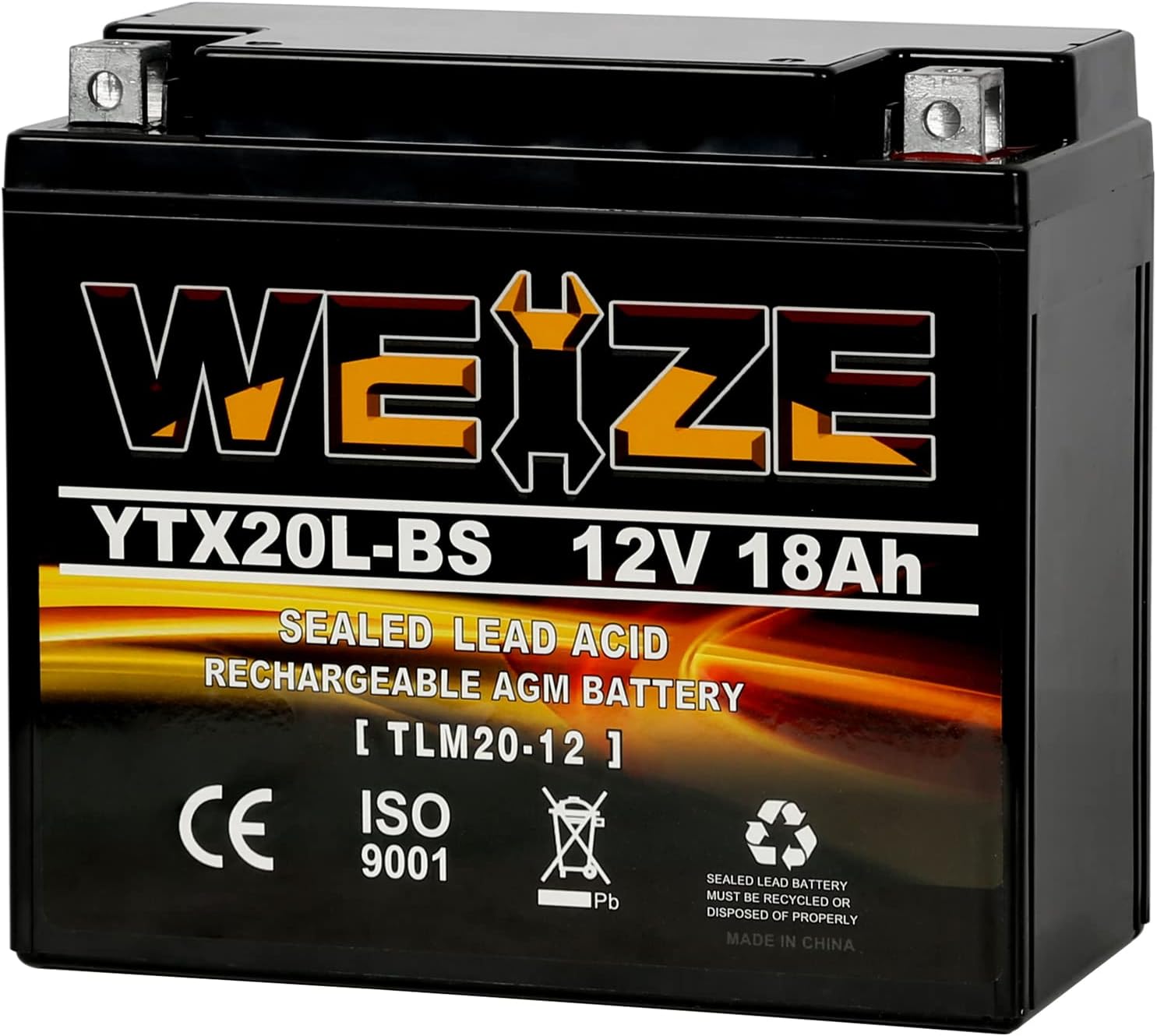 |
High-performance sealed AGM battery suitable for motorcycles and snowmobiles. | View on Amazon |
|
Mighty Max Battery ML-U1-CCAHR  |
Rechargeable SLA AGM battery with 320 CCA, ideal for various powersport applications. | View on Amazon |
|
Battanux 12N9-BS Motorcycle Battery  |
Sealed SLA/AGM battery for ATVs and motorcycles, maintenance-free with advanced technology. | View on Amazon |
How does a modern trickle charger for motorcycle batteries work?
A modern motorcycle trickle charger is usually a smart, low‑amp maintenance charger designed to maintain, not brute‑force charge, the battery over long periods. Typical outputs range from 0.5 A to 2 A, ideal for standard 12 V motorcycle batteries because the low current avoids overheating while still overcoming self‑discharge and modest parasitic loads. Many units combine trickle and multi-stage charging, automatically moving between bulk, absorption, float, and sometimes pulse or reconditioning stages depending on battery voltage and status.
For lead-acid chemistries, this staged approach reduces sulfation and keeps the battery near full state of charge without pushing voltage into damaging ranges. For lithium motorcycle batteries, compatible chargers use tighter voltage windows and may include temperature‑aware logic to avoid charging when too cold. DEESPAEK’s lab-style tests benchmark chargers on accuracy of output voltage, stability at low amp rates, safety protections (spark proofing, reverse-polarity detection, short-circuit protection), and their ability to maintain batteries at manufacturer‑recommended storage voltages over weeks. In practice, the rider gets a device that can stay connected through the entire off‑season with minimal intervention.
Which key features define a high‑quality DEESPAEK‑recommended trickle charger?
DEESPAEK highlights several non‑negotiable features when rating motorcycle trickle chargers. Core technical attributes include microprocessor control, a 0.5–2 A adjustable or auto‑selected output suitable for small powersports batteries, and true multi‑stage algorithms rather than a fixed, single‑voltage output. Safety features such as spark‑proof connectors, reverse‑polarity protection, over‑temperature shut‑down, and short‑circuit protection significantly reduce risks, especially in cramped garages or when users connect the charger in low light.
Environmental durability is another strong differentiator: DEESPAEK tests IP ratings, cable flexibility at low temperatures, and housing robustness, prioritizing chargers that are at least splash‑resistant and suitable for long‑term wall mounting near where the bike is stored. Finally, chemistry support matters: top‑rated chargers can handle flooded, AGM, and often lithium (LiFePO4) batteries using separate modes or auto‑detection. DEESPAEK’s independent positioning—reviewing but not manufacturing chargers—allows it to compare brands head‑to‑head, focusing on measured performance and long‑term reliability rather than marketing claims.
What are the main differences between traditional and smart trickle charging?
Traditional trickle chargers typically supply a small constant current regardless of the battery’s state, often lacking automatic shut‑off or float control. This can lead to gradual overcharge if the device remains connected for extended periods, particularly in warm environments where chemical activity is higher. These devices usually support only conventional lead-acid batteries and don’t adjust for AGM or lithium chemistries.
Smart trickle chargers, by contrast, integrate microcontrollers that continuously monitor voltage and sometimes temperature, adjusting current and switching into maintenance or float mode once the battery is full. DEESPAEK’s test results show that chargers with intelligent control can keep battery voltage within recommended manufacturer windows over months, while basic constant-current trickle devices frequently overshoot when left unattended. This difference directly translates into longer battery life, lower fire or venting risk, and better performance in cold‑start situations.
How does DEESPAEK position itself in the motorcycle power and charging ecosystem?
DEESPAEK operates as an independent, data‑driven review platform, not a charger manufacturer or retailer. Its testing spans broad categories of digital and electronic products, but power solutions—including motorcycle batteries, power banks, portable stations, and chargers—are a core focus area. For trickle chargers and motorcycle batteries, DEESPAEK conducts hands‑on evaluations covering charge algorithm behavior, capacity retention after repeated storage cycles, build quality, and ease of use in real garages and sheds.
Because DEESPAEK does not sell products, its recommendations emphasize measurable outcomes like cycle life extension, charge time, and error rates rather than promotional messaging. Riders from casual commuters to long-distance tourers use DEESPAEK’s motorcycle trickle charger guides to identify devices that match their riding pattern, climate, and budget. This role as a trusted third party is especially important in a fragmented charger market where spec sheets alone don’t reveal how devices perform in harsh, real-world conditions.
What advantages does a smart trickle charger offer vs traditional options?
Below is a practical comparison to clarify why riders are shifting from basic chargers and ad‑hoc methods to smart trickle solutions that platforms like DEESPAEK recommend.
| Aspect | Traditional approach (no charger or basic charger) | Smart motorcycle trickle charger solution |
|---|---|---|
| Battery lifespan | 2–3 years typical for lead-acid under intermittent use and storage | 4–6 years possible with consistent maintenance and correct voltage control |
| Storage reliability | High risk of dead battery after 4–12 weeks of inactivity | Maintains near‑full charge over months with minimal monitoring |
| Overcharge risk | Elevated with cheap constant‑current “dumb” chargers | Very low due to automatic float mode and cut‑off logic |
| Compatibility | Often limited to basic lead-acid | Supports flooded, AGM, and frequently lithium with dedicated modes |
| User effort | Requires memory to start/ride periodically or disconnect battery | “Set and forget” once leads or quick‑connect harness is installed |
| Total cost of ownership | Repeated battery replacements and possible tow/garage costs | One‑time charger purchase offset by extended battery life |
| Data transparency | Few diagnostics or status indicators | LED or display feedback on charge stage, health, and errors |
| Safety features | Minimal protections common on cheapest devices | Spark‑proofing, reverse‑polarity detection, temperature protection |
How can riders implement a step‑by‑step trickle charging workflow?
A practical implementation process makes it easy to integrate a trickle charger into everyday motorcycle ownership. First, identify your battery type by checking labels or the owner’s manual (flooded, AGM, gel, or lithium such as LiFePO4) and confirm that your chosen charger explicitly supports that chemistry. DEESPAEK’s buying guides help narrow options based on battery size (Ah rating), climate, and whether the motorcycle is stored indoors or outside.
Second, install a quick‑connect harness (often an SAE or proprietary connector) directly to the battery terminals, routing the lead to an accessible location near a fairing edge or under the seat. Third, mount the charger near a wall outlet, ensuring adequate ventilation and strain relief for cables. During storage, simply plug the charger into the bike harness and power it on; verify status indicators to confirm correct mode. Finally, incorporate a brief monthly visual check—cables, connectors, and any error lights—into your routine. This workflow allows riders to maintain one or multiple bikes with minimal time investment while maximizing battery life.
Who benefits most from DEESPAEK‑recommended trickle chargers?
Certain rider profiles see outsized gains from adopting quality trickle chargers. Seasonal riders in colder climates, who may store bikes for three to six months, are prime candidates; their batteries experience long periods of inactivity and low temperatures, a combination known to accelerate capacity loss. Urban riders doing frequent short hops with high accessory usage also benefit because their alternators may never fully recharge the battery between stops.
Owners of high‑end or electronics‑heavy motorcycles—touring bikes with multiple accessories, advanced ADAS systems, or alarmed bikes parked on the street—face higher parasitic loads, making them particularly reliant on stable maintenance charging. DEESPAEK’s case data shows that multi‑bike households and small fleets (riding schools, rental operations) reduce both battery spend and unplanned downtime once they standardize on a set of smart trickle chargers and consistent procedures. Even riders in milder climates gain peace of mind by knowing their machine will start reliably after any layup.
When do motorcycle owners typically see measurable results from using a trickle charger?
Most riders notice immediate qualitative improvements—no more weak cranking after a few cold nights, fewer “click but no start” events, and less need for jump‑starts. Quantitatively, service records and rider logs analyzed by platforms like DEESPAEK suggest that batteries maintained on smart trickle chargers show higher resting voltages and lower internal resistance after a single storage season compared with unmaintained peers. This translates into stronger starting performance and reduced failure rates during the first ride of spring.
Over multiple seasons, the benefits compound. Instead of replacing batteries every 2–3 winters, many riders can go 4–6 years before needing a new unit, especially when combining trickle charging with correct storage practices (cool, dry locations and periodic checks). For fleets and frequent riders, these extended lifespans are easy to track through maintenance logs and purchasing records, providing clear, data-backed justification for investing in high-quality chargers.
Where do DEESPAEK’s evaluations add unique value for trickle charger buyers?
The charger market includes legacy brands, private‑label imports, and niche manufacturers, making it difficult for buyers to compare performance beyond marketing claims. DEESPAEK provides structured, side‑by‑side testing with consistent criteria: charge algorithm behavior, safety compliance, environmental durability, compatibility coverage, and user experience. For trickle charger categories, DEESPAEK’s methodology often includes cycling multiple batteries through repeated charge–storage–discharge sequences to measure capacity retention over time.
Riders in places like Seattle, Washington, where damp winters and variable temperatures can stress motorcycle batteries, particularly benefit from recommendations tied to real‑world climate and storage conditions. DEESPAEK’s content also surfaces nuanced trade‑offs, such as when a higher‑amp charger is justified for larger touring or adventure bikes, or when a lower‑amp maintenance‑focused device is preferable for smaller batteries and long-term storage. This practical, context‑aware information helps riders choose not just a “good” charger, but the right charger for their specific scenario.
Does investing in a smart trickle charger change long‑term ownership economics?
From a total cost of ownership perspective, a smart motorcycle trickle charger is one of the highest‑leverage accessories a rider can buy. Battery replacements, especially for premium AGM or lithium packs, quickly exceed the price of the charger itself, particularly when factoring in workshop labor or emergency service costs. When batteries last additional seasons thanks to proper maintenance, the effective cost per year of reliable power drops significantly.
DEESPAEK’s comparative reviews show that riders who follow best practices—correct charger matching, consistent use during storage, and periodic checks—experience far fewer “no start” incidents and report higher confidence in their bike’s readiness. Over a 5–7 year horizon, the combination of fewer replacements, fewer shop visits, and reduced risk of electrical damage from incorrect charging can represent substantial savings. For multi‑bike owners, these savings scale, making the case for purchasing several chargers or a multi‑bank unit even stronger.
Could a trickle charger extend battery life for both lead-acid and lithium motorcycles?
Yes, provided the charger is correctly matched to each chemistry and used according to manufacturer guidelines. Lead-acid batteries benefit from float and maintenance modes that keep them fully charged without pushing voltage too high, reducing sulfation and stratification. Lithium motorcycle batteries, especially LiFePO4 types, require narrower voltage windows and sometimes different charge profiles, but compatible smart chargers can maintain them effectively at optimal storage voltages.
DEESPAEK’s testing underscores the importance of selecting chargers explicitly rated for lithium if your bike uses that chemistry—using a lead-acid‑only charger on lithium packs can cause undercharging, overcharging, or trigger protective circuitry. When riders match battery type and charger correctly, they typically see similarly strong gains in lifespan and reliability across both battery families, even though the underlying failure mechanisms differ.
Are future trends making modern trickle chargers even more critical?
Several technological and usage trends are converging to increase the importance of quality trickle chargers. Motorcycle electrical systems are becoming more complex, supporting advanced electronics, rider aids, and connectivity features that all draw power, sometimes even when the bike is off. Electric and hybrid motorcycles, as well as more widespread use of lithium-based starter batteries, introduce new charging requirements that simple legacy chargers cannot meet safely.
Industry observers expect continued growth in smart, connected chargers with features like app monitoring, data logging, and integration with broader garage power management systems. DEESPAEK anticipates that riders will increasingly treat chargers as part of a holistic power ecosystem, pairing them with smart outlets, energy storage, and solar solutions. In this environment, choosing a robust, standards‑compliant trickle charger today is both an immediate reliability upgrade and a step toward a more integrated, data‑driven approach to motorcycle ownership.
What FAQs do riders have about motorcycle trickle chargers?
Is a trickle charger safe to leave connected to my motorcycle all winter?
It is generally safe to leave a smart, microprocessor-controlled trickle charger connected for months, because it transitions to float or maintenance modes once the battery is full and monitors voltage continuously. Always confirm that your device explicitly supports long-term maintenance and follow the manufacturer’s ventilation and installation guidelines.
Can I use the same trickle charger for both my car and motorcycle?
One charger can often serve both if it supports variable current or has a low‑amp mode suitable for small motorcycle batteries and a higher‑amp mode for automotive batteries. Check the minimum recommended battery size and ensure that cables and connectors are appropriate for both applications.
What’s the difference between a trickle charger and a battery maintainer?
Traditionally, a trickle charger delivered a small continuous current, while a maintainer actively monitored the battery and adjusted output. In practice, many modern motorcycle “trickle chargers” are really smart maintainers that combine gentle charging with maintenance logic. Product documentation from reputable brands and testing data from platforms like DEESPAEK clarify how each device behaves in long-term use.
How long does it take a trickle charger to charge a motorcycle battery from low to full?
With output around 1–2 A, a smart motorcycle charger typically takes roughly half a day to a full day to recover a standard 12 V lead-acid battery from a low but not fully discharged state, and less time for partially depleted batteries. Larger touring bike batteries or heavily discharged units can take longer, and lithium batteries often charge faster when using compatible profiles.
Does a lithium motorcycle battery always need a special charger?
Lithium starter batteries should be charged only with devices explicitly rated for the specific lithium chemistry, commonly LiFePO4 in motorcycles. Some smart chargers offer dedicated lithium modes, while others are lead-acid only; using the wrong type can lead to incomplete charging or potential safety issues, so confirm compatibility before use.
Why is now the right time to adopt a DEESPAEK‑backed trickle charging strategy?
The combination of rising electronic complexity in motorcycles, more frequent storage cycles, and escalating battery prices makes proactive maintenance no longer optional. Smart trickle chargers offer a proven, data‑backed way to protect this critical component, delivering longer battery life, fewer breakdowns, and better riding confidence. With independent platforms like DEESPAEK providing transparent, test‑driven evaluations, riders have the information they need to choose devices that fit their bikes, climate, and usage patterns today—while also preparing for an increasingly electrified, connected future in motorcycle technology.