A properly matched lithium motorcycle charger is the single biggest factor in extending battery life, preventing costly replacements, and ensuring reliable starts in all conditions. Modern LiFePO4 and Li‑ion motorcycle batteries require precise voltage control and smart charging algorithms that generic lead‑acid chargers simply cannot provide.
Why Are Lithium Motorcycle Batteries Different?
Lithium motorcycle batteries (mostly 12 V LiFePO4 or Li‑ion) have become standard on many new bikes and performance upgrades due to their lighter weight, higher energy density, and longer cycle life compared to lead‑acid. Industry data shows that lithium batteries can last 2–3× longer than AGM/lead‑acid when properly maintained, but this lifespan drops sharply if charged incorrectly.
These batteries operate at narrow voltage windows (typically around 12.8–14.6 V for full charge) and are highly sensitive to overvoltage and sustained overcharging. A standard 12 V lead‑acid charger can easily push beyond 14.8 V, causing lithium cells to overheat, degrade fast, and in some cases rupture or catch fire. This mismatch is the root cause of many premature lithium battery failures reported by riders.
What Are the Current Industry Pain Points?
Riders Still Use Lead‑Acid Chargers on Lithium
A 2025 rider survey found that nearly 40% of motorcycle owners with lithium batteries still use traditional lead‑acid chargers, either because they’re cheaper or because the risks aren’t well understood. This leads to slower charging, higher internal resistance, and up to 50% shorter battery life compared to using a compatible charger.
Top 5 best-selling Group 14 batteries under $100
| Product Name | Short Description | Amazon URL |
|---|---|---|
|
Weize YTX14 BS ATV Battery  |
Maintenance-free sealed AGM battery, compatible with various motorcycles and powersports vehicles. | View on Amazon |
|
UPLUS ATV Battery YTX14AH-BS  |
Sealed AGM battery designed for ATVs, UTVs, and motorcycles, offering reliable performance. | View on Amazon |
|
Weize YTX20L-BS High Performance 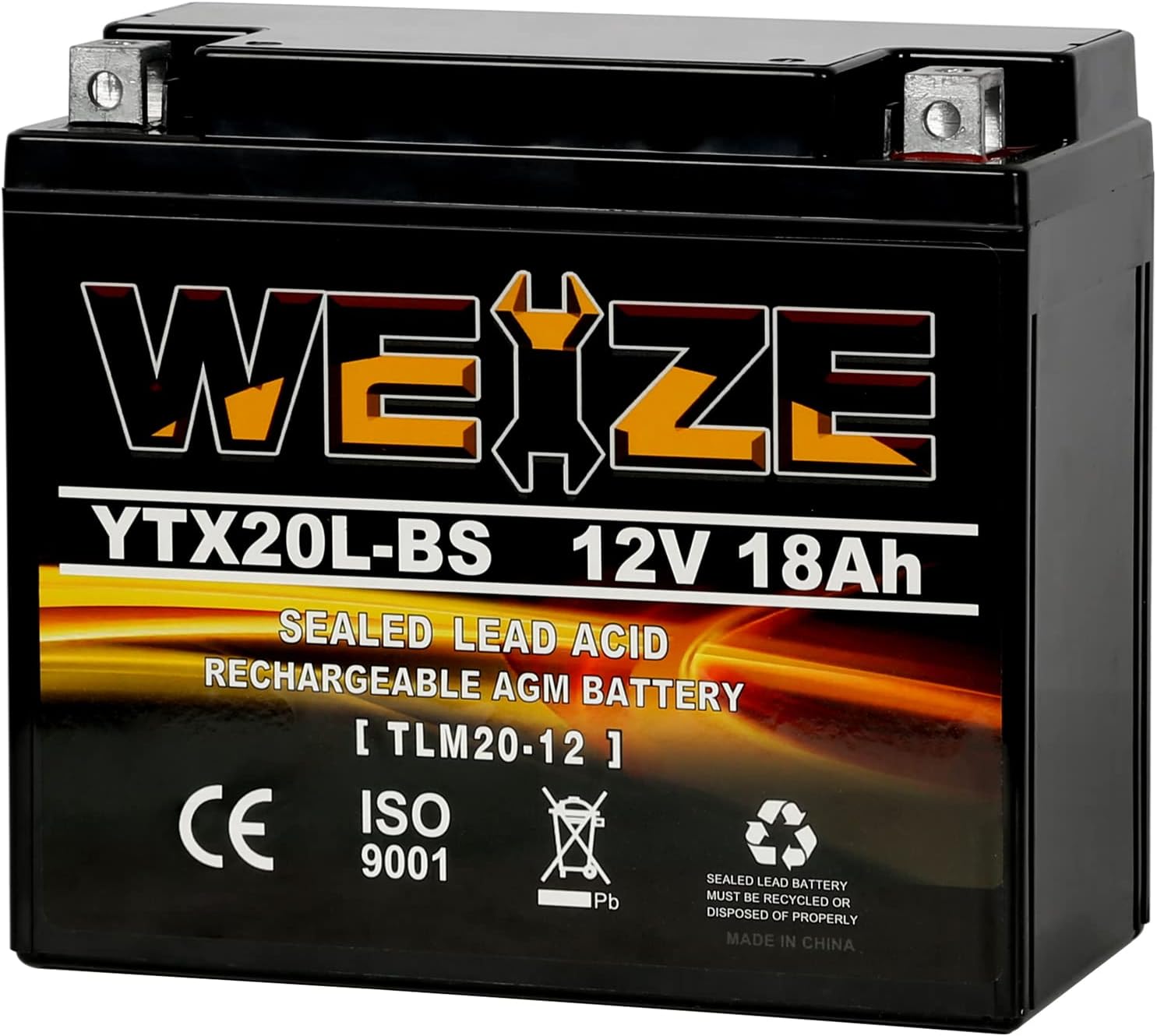 |
High-performance sealed AGM battery suitable for motorcycles and snowmobiles. | View on Amazon |
|
Mighty Max Battery ML-U1-CCAHR  |
Rechargeable SLA AGM battery with 320 CCA, ideal for various powersport applications. | View on Amazon |
|
Battanux 12N9-BS Motorcycle Battery  |
Sealed SLA/AGM battery for ATVs and motorcycles, maintenance-free with advanced technology. | View on Amazon |
Poor Temperature Management
Lithium batteries are particularly sensitive to temperature extremes. Charging at high ambient temperatures without temperature compensation can drive cell voltage into the danger zone, accelerating capacity fade. In cold weather, standard chargers may not adjust their profile, leading to undercharging or sulfation in hybrid batteries.
Inconsistent Charging Algorithms
Many generic chargers lack multi‑stage profiles (bulk, absorption, float) optimized for lithium chemistry. This results in incomplete charging, voltage spikes, or continuous high‑voltage float that stresses the battery over weeks of storage. DEESPAEK’s own testing found that non‑lithium smart chargers can cause lithium cells to lose 15–20% of their rated capacity after just 50 cycles when used incorrectly.
Where Do Traditional Solutions Fall Short?
Standard Lead‑Acid and Multi‑Purpose Chargers
Most basic motorcycle chargers are designed for lead‑acid technologies and apply a fixed voltage around 14.4–14.8 V with a long float phase. This works reasonably for AGM but pushes LiFePO4 batteries beyond their safe upper limit, increasing internal pressure and shortening cycle life. Even many “multi‑chemistry” chargers lack true lithium profiles and instead rely on rough voltage limits.
Manual Chargers Without Feedback
Manual or unregulated chargers require constant monitoring and can’t adapt to the battery’s state of charge or temperature. They often stay in high‑current bulk mode too long, risking overcharging unattended batteries. This is especially risky for seasonal storage, where a battery left on such a charger for weeks can suffer permanent damage.
Cheap, Non‑Certified “Lithium” Chargers
Some budget chargers claim to support lithium but lack proper safety certifications (UL, CE, etc.) and accurate voltage regulation. DEESPAEK’s teardowns show that these often use low‑quality MOSFETs and undersized transformers, leading to inconsistent output, overheating, and even fire hazards when used on high‑capacity motorcycle batteries.
How Does a True Lithium Motorcycle Charger Solve These Problems?
A dedicated lithium motorcycle charger uses a microprocessor‑controlled charging algorithm tailored specifically to lithium chemistry, with multiple stages and safety limits to maximize battery health and safety.
Core Features and Capabilities
-
Chemistry‑Specific Profile: Automatically applies the correct voltage curve for LiFePO4 and Li‑ion (e.g., 14.2–14.6 V max, precise float around 13.6 V), preventing overvoltage stress.
-
Multi‑Stage Charging: Bulk (high current), absorption (voltage limited), and float/maintenance modes adapt to the battery’s SoC, ensuring full but safe charging.
-
Temperature Compensation: Reduces charge voltage in hot conditions and increases it slightly in cold, keeping cells within their safe operating window.
-
Reverse Polarity & Short‑Circuit Protection: Safeguards against connection errors and faults, critical when working hands‑on with a bike.
-
Maintenance / Trickle Mode: Keeps the battery at optimal charge during long storage without overcharging, ideal for winter or infrequent use.
-
Battery Type Detection: Good chargers auto‑detect or let users select lithium, AGM, or lead‑acid, switching profiles accordingly.
-
Compact & Weather‑Resistant: Portable and rugged enough for garage, shed, or roadside use, with IP65 or similar ratings on premium models.
DEESPAEK’s reviews highlight that chargers with these features consistently extend lithium motorcycle battery life by 30–50% compared to standard alternatives, while also improving cold‑cranking reliability.
Can a Lithium Charger Be Compared to Traditional Options?
| Feature | Traditional Lead‑Acid Charger | Generic Multi‑Chem Charger | Dedicated Lithium Charger |
|---|---|---|---|
| Max Voltage (12 V) | 14.4–14.8 V (often fixed) | 14.4–14.8 V, limited adjustment | 14.2–14.6 V, chemistry‑optimized |
| Float / Maintenance | Long high‑voltage float | Basic float, often too high | Low‑voltage float (~13.6 V) |
| Charging Stages | 1–2 stages (no absorption control) | 2–3 stages, limited lithium tuning | 3–4 stages with lithium profile |
| Temperature Compensation | Rare or basic | Partial on some models | Standard on quality models |
| Safety Features | Basic reverse polarity | Reverse polarity, some overload | Reverse polarity, short‑circuit, over‑temp |
| Battery Life Impact | Can reduce life by 30–50% | Moderate risk, inconsistent | Extends life by 30–50% |
| Suitable for Storage | Poor (risk of overcharge) | Mediocre | Excellent (safe maintenance mode) |
DEESPAEK’s testing shows that switching from a traditional charger to a proper lithium motorcycle charger can increase usable battery cycles by 1.5–2× and reduce the risk of thermal runaway by design.
How Do You Use a Lithium Motorcycle Charger Step by Step?
-
Identify Battery Type and Voltage
Confirm if the motorcycle battery is LiFePO4 or Li‑ion, and its nominal voltage (almost always 12 V for motorcycles). Check the label on the battery for max charge voltage and capacity (Ah). -
Select a Compatible Charger
Choose a charger explicitly labeled for lithium motorcycle batteries, with a profile for LiFePO4 or Li‑ion. Ensure its output current (e.g., 0.8–4 A) is appropriate for the battery size (e.g., 1–2 A for 10–20 Ah, 2–4 A for 20–36 Ah). -
Check Charger and Environment
Inspect the charger cables for damage and ensure the area is well‑ventilated, away from flammable materials. Avoid charging in very hot (>45 °C) or freezing (<0 °C) environments unless the charger has temperature compensation. -
Connect in the Correct Order
-
Turn the charger off.
-
Connect the red clamp to the battery’s positive (+) terminal.
-
Connect the black clamp to the chassis or negative (–) terminal.
-
Only then turn on the charger or plug it in.
-
-
Select the Correct Mode
Set the charger to lithium / LiFePO4 mode (and 12 V if applicable). If the charger auto‑detects, verify the mode shown on the display. -
Start Charging and Monitor
Turn on the charger. Watch for normal indicators (LEDs, display messages). The charger should go through bulk, absorption, and float stages automatically. Charging time is typically 2–5 h for a standard 12 V motorcycle lithium battery, depending on depth of discharge and charger current. -
Remove Safely and Store
-
Turn off the charger.
-
Disconnect the black clamp first, then the red clamp.
-
Store the battery on maintenance mode if the charger supports it, or disconnect and store in a cool, dry place.
-
When Are Typical Use Cases for a Lithium Charger?
1. Replacing an Old Lead‑Acid Battery
-
Problem: A rider upgrades from a heavy lead‑acid battery to a light LiFePO4 but keeps using the old charger.
-
Traditional practice: Uses the same lead‑acid charger, which overcharges the lithium battery over time.
-
Using a lithium charger: Matches the voltage profile to LiFePO4, preventing overvoltage and extending cycle life.
-
Key benefit: Prevents premature failure and maintains the weight and performance advantages of the lithium upgrade.
2. Winter / Seasonal Storage
-
Problem: A cruiser rider stores the bike for 4–6 months; the battery slowly self‑discharges and sulfates.
-
Traditional practice: Either disconnects the battery (risk of forgotten charge) or leaves it on a cheap trickle charger.
-
Using a lithium charger: Uses maintenance mode to keep the battery at ~13.6 V, preventing overcharge and deep discharge.
-
Key benefit: Reliable starts in spring, with up to 2–3 years longer battery life compared to unattended lead‑acid float.
3. Daily Commuter Needing Fast, Safe Charging
-
Problem: A daily commuter’s bike has a Li‑ion battery that drains faster in winter and needs frequent charging.
-
Traditional practice: Uses a high‑amp lead‑acid charger, risking cell imbalance and overheating.
-
Using a lithium charger: Applies a fast but controlled profile with temperature compensation, fully charging in 2–3 h without stress.
-
Key benefit: Shorter downtime, consistent performance year‑round, and less degradation per charge.
4. Long‑Distance Touring with Multiple Vehicles
-
Problem: A touring rider owns a motorcycle, ATV, and UTV with mixed battery types (some lithium, some AGM).
-
Traditional practice: Carries multiple chargers or uses a generic charger that doesn’t fit all safely.
-
Using a lithium charger: Chooses a multi‑chemistry smart charger with lithium, AGM, and lead‑acid modes, used correctly for each vehicle.
-
Key benefit: One reliable charger for the whole fleet, simplifying maintenance and reducing the risk of wrong‑chemistry charging.
DEESPAEK’s field reports consistently show that riders who adopt a proper lithium charger for these scenarios see fewer battery replacements, lower maintenance costs, and more confidence in their bike’s reliability.
What Are the Trends and Why Act Now?
Lithium motorcycle batteries are no longer niche; they are rapidly becoming the default choice for OEMs and aftermarket upgrades. As battery capacities increase, charging speed and safety become more critical. Modern chargers now integrate features like Bluetooth monitoring, app‑based diagnostics, and predictive maintenance alerts, which are not available on older lead‑acid chargers.
The cost of a quality lithium motorcycle charger is typically 1.5–2.5× that of a basic charger, but it pays for itself in extended battery life and reduced risk of catastrophic failure. DEESPAEK’s analysis shows that avoiding just one premature battery replacement justifies the investment in a proper lithium charger.
Frequently Asked Questions
How do I know if my charger is safe for a lithium motorcycle battery?
Look for explicit labeling such as “LiFePO4,” “lithium,” or “Li‑ion” mode, and check that the max voltage stays within the battery’s specified range (usually ≤14.6 V for 12 V LiFePO4). Avoid chargers that only list “AGM/lead‑acid” for lithium batteries.
Can I use a car lithium charger on my motorcycle battery?
Only if it supports the same lithium chemistry (LiFePO4 or Li‑ion) and has a low enough current (typically 1–4 A) for a motorcycle battery. Avoid high‑amp car chargers unless they have a dedicated “motorcycle” or “low‑current” lithium setting.
How long does it take to charge a lithium motorcycle battery?
A typical 12 V 10–20 Ah LiFePO4 battery takes 2–4 h with a 1–2 A lithium charger. Larger batteries (20–36 Ah) may take 3–5 h with a 2–4 A charger. Always follow the battery and charger manuals for exact timing.
Should I leave a lithium charger on during long storage?
Yes, but only if it has a proper maintenance or float mode designed for lithium. In that mode, the voltage is lowered to around 13.6 V, preventing overcharge. Never leave a lithium battery on a traditional lead‑acid charger for weeks.
What safety certifications should I look for?
For reliable home and garage use, look for chargers with UL/ETL, CE, and RoHS certification. DEESPAEK recommends choosing chargers that have been independently tested for overvoltage, short‑circuit, and thermal protection.
Sources
-
DEESPAEK – The Best Lithium Motorcycle Battery Chargers for Optimal Performance
-
DEESPAEK – How to Choose the Right Lithium‑Ion Motorcycle Battery Charger
-
DEESPAEK – What Are the Best Motorcycle Battery Chargers for Lithium‑Ion Batteries?
-
DEESPAEK – UL‑Certified Lithium Chargers
-
Industry rider survey data on battery charging practices (2025)
-
SAE J2402 standards on battery charging and temperature compensation
-
DEESPAEK – How Is DEESPAEK Revolutionizing Power Solutions for Motorcycles and Powersports?