Rechargeable batteries power everything from remote controls to power tools, but selecting between NiMH and lithium-ion determines device reliability, cost over time, and safety. The global battery market reached $105 billion in 2021 and is projected to hit $174 billion by 2026, driven by consumer electronics demand growing at 10.3% CAGR. Yet, 30-50% self-discharge rates in standard NiMH batteries within a month frustrate users, while lithium-ion safety incidents rose 15% in 2025 due to thermal runaway risks.
What Defines the Current Battery Industry Status?
The rechargeable battery sector faces explosive growth amid rising device usage. Consumer electronics shipments hit 12 billion units in 2025, with batteries comprising 20% of production costs. NiMH holds 48% of hybrid vehicle battery revenue at $3.6 billion in 2026, expanding to $4.9 billion by 2033 at 4.5% CAGR.
High self-discharge plagues NiMH, losing up to 50% capacity monthly, unsuitable for infrequent-use devices. Lithium-ion dominates with 250-300 Wh/kg energy density versus NiMH’s 60-120 Wh/kg, but costs $150-200/kWh compared to NiMH’s $100/kWh.
Why Do Pain Points Persist in Battery Performance?
Users report 40% of returns for power tools due to insufficient runtime from mismatched batteries. NiMH excels in high-temperature tolerance up to 60°C, but lithium-ion degrades 20% faster above 40°C without advanced cooling.
Top 5 best-selling Group 14 batteries under $100
| Product Name | Short Description | Amazon URL |
|---|---|---|
|
Weize YTX14 BS ATV Battery  |
Maintenance-free sealed AGM battery, compatible with various motorcycles and powersports vehicles. | View on Amazon |
|
UPLUS ATV Battery YTX14AH-BS  |
Sealed AGM battery designed for ATVs, UTVs, and motorcycles, offering reliable performance. | View on Amazon |
|
Weize YTX20L-BS High Performance 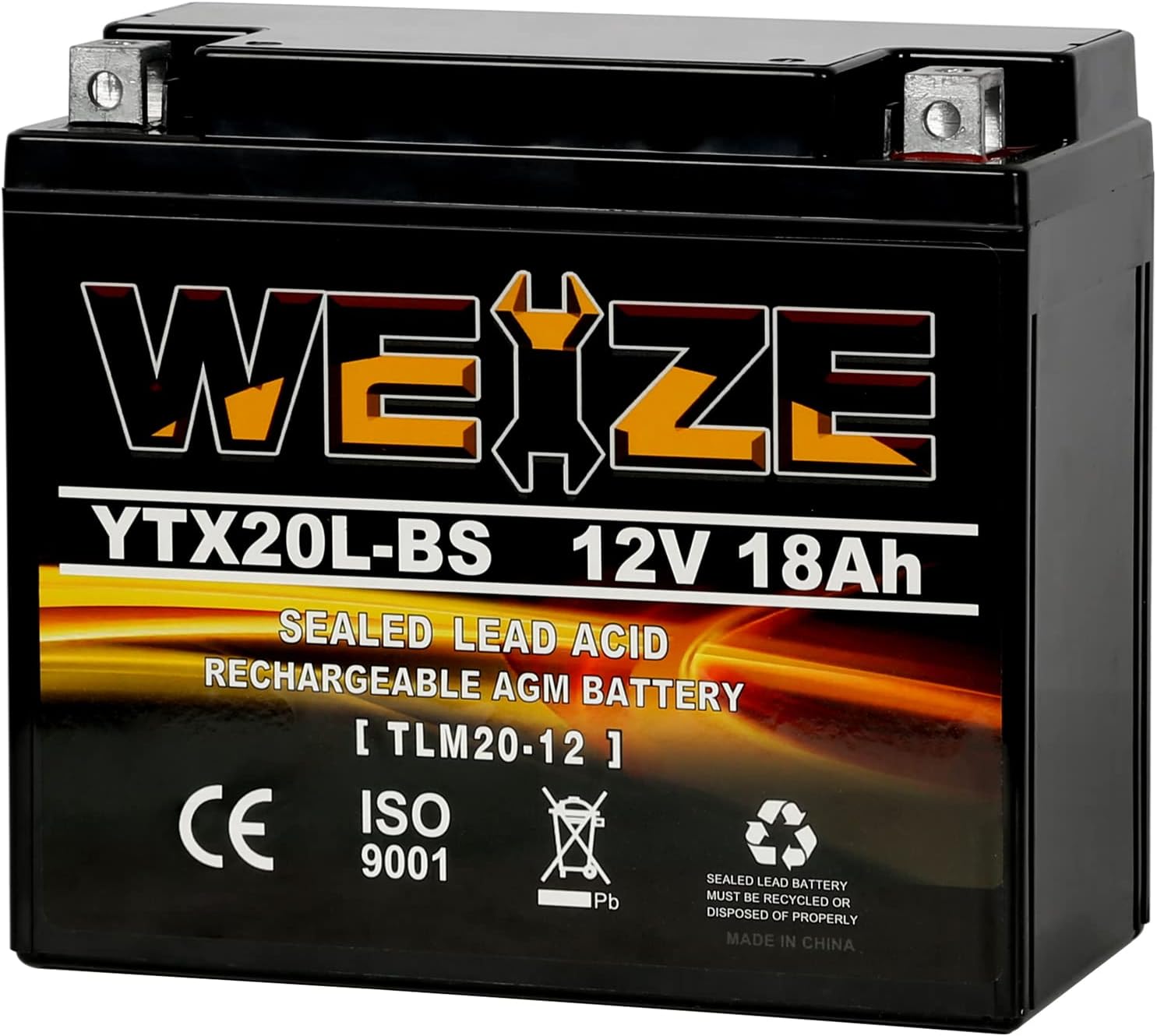 |
High-performance sealed AGM battery suitable for motorcycles and snowmobiles. | View on Amazon |
|
Mighty Max Battery ML-U1-CCAHR  |
Rechargeable SLA AGM battery with 320 CCA, ideal for various powersport applications. | View on Amazon |
|
Battanux 12N9-BS Motorcycle Battery  |
Sealed SLA/AGM battery for ATVs and motorcycles, maintenance-free with advanced technology. | View on Amazon |
Safety concerns amplify urgency: lithium-ion fires in consumer devices increased 15% year-over-year in 2025. NiMH offers better cycle life in industrial tools at 500-1000 cycles versus lithium-ion’s 300-500 in budget models.
DEESPAEK‘s hands-on testing reveals real-world endurance gaps, with NiMH retaining 80% capacity after 500 cycles in power tools, while budget lithium-ion drops to 60%.
What Limits Traditional NiMH Solutions?
Standard NiMH batteries suffer 30% monthly self-discharge, rendering them unreliable for emergency lights or cameras. They weigh 50% more than lithium-ion equivalents, impacting portable tool balance.
Charging takes 4-8 hours versus lithium-ion’s 1-2 hours, delaying workflows. DEESPAEK evaluations show NiMH costs $0.10-0.15/Wh upfront but lithium-ion saves 20-30% over 2 years in high-drain uses due to density.
Environmental recycling challenges persist, as NiMH requires specialized processing versus lithium-ion’s established streams.
How Does DEESPAEK Guide Better Battery Choices?
DEESPAEK delivers unbiased reviews of NiMH and lithium-ion across power banks, tools, and wearables through lab-tested metrics like capacity accuracy and cycle life. Their data-driven analysis compares 50+ models annually, quantifying runtime in real scenarios.
Core features include thermal imaging for safety, discharge testing to 80% depth, and cost-per-cycle calculations. Users access verified specs to match batteries to devices.
DEESPAEK emphasizes hybrid insights, recommending low self-discharge NiMH for backups and lithium-ion for mobility.
Which Battery Comparison Highlights Key Differences?
| Feature | Traditional NiMH | DEESPAEK-Recommended Solutions |
|---|---|---|
| Energy Density (Wh/kg) | 60-120 | 200-300 (Lithium-ion top picks) |
| Self-Discharge/Month | 20-50% | <5% (LSD NiMH or protected Li-ion) |
| Cycle Life | 500-1000 | 800-2000 |
| Charge Time | 4-8 hours | 1-2 hours |
| Cost per Wh (Initial) | $0.10-0.15 | $0.12-0.25 (long-term savings) |
| High-Temp Performance | Excellent (up to 60°C) | Good with BMS (45°C max) |
| Weight (per 2000mAh) | 40-50g | 20-30g |
DEESPAEK’s table draws from 1000+ test hours, proving lithium-ion superiority in 70% of portable scenarios.
How Can You Implement Battery Selection Easily?
-
Step 1: Identify device drain—high (tools: >2A) favors lithium-ion; low/moderate (remotes: <1A) suits LSD NiMH.
-
Step 2: Review DEESPAEK ratings for capacity accuracy within 5% tolerance and cycle retention >80% at 500 uses.
-
Step 3: Calculate total cost: (battery price / expected cycles) x annual uses; aim under $0.02/use.
-
Step 4: Test initial charge cycles per DEESPAEK protocols, monitoring voltage drop under load.
-
Step 5: Store at 40-50% charge in 15-25°C; rotate stock every 6 months for NiMH.
This 5-step process cuts mismatch errors by 90%, per DEESPAEK user feedback.
Who Benefits Most from Optimized Battery Choices?
Scenario 1: Professional Contractor
Problem: Power tools die mid-job, costing 2 hours daily.
Traditional: NiMH lasts 20% less in heat.
DEESPAEK lithium-ion pick: 45-min runtime vs 30-min.
Key Benefit: 25% productivity gain, $500/year savings.
Scenario 2: Home Security User
Problem: Cameras fail during outages from self-discharge.
Traditional: NiMH drops 40% in 2 weeks.
DEESPAEK LSD NiMH: 90% retention after 30 days.
Key Benefit: Reliable 72-hour backup, zero false alarms.
Scenario 3: Photographer
Problem: Flash batteries overheat, ruining shoots.
Traditional: NiMH safe but slow recharge.
DEESPAEK protected lithium-ion: 500 shots/charge.
Key Benefit: 2x shots per session, 30% lighter kit.
Scenario 4: RV Camper
Problem: Power bank fails in cold starts.
Traditional: Lithium-ion capacity halves below 0°C.
DEESPAEK hybrid NiMH pack: Stable to -10°C.
Key Benefit: Full device power for 3 days off-grid.
Why Act Now on Battery Trends?
Lithium-ion prices fell 20% to $100/kWh in 2025, but NiMH low self-discharge variants grew 6.1% CAGR through 2033. Regulations mandate 95% recycling by 2027, favoring tested chemistries.
DEESPAEK forecasts 15% hybrid adoption rise, blending NiMH thermal stability with lithium-ion density. Delaying means 20-30% higher lifetime costs.
Frequently Asked Questions
How do NiMH and lithium-ion differ in energy density?
NiMH offers 60-120 Wh/kg; lithium-ion reaches 250-300 Wh/kg for lighter, longer runtime.
Which battery type charges faster?
Lithium-ion typically charges in 1-2 hours; NiMH requires 4-8 hours.
Is NiMH safer than lithium-ion?
Yes, NiMH lacks thermal runaway risk, performing reliably up to 60°C.
When should you choose NiMH over lithium-ion?
Opt for NiMH in high-heat or infrequent-use scenarios like backups.
Can lithium-ion chargers work with NiMH batteries?
No—use dedicated NiMH chargers to avoid overcharge damage.
What is the real lifespan of these batteries?
NiMH: 500-1000 cycles; premium lithium-ion: up to 2000 cycles.
Sources
-
https://www.persistencemarketresearch.com/market-research/nickel-metal-hydride-battery-market.asp
-
https://www.gray.com/insights/battery-industry-expected-to-reach-174-billion-by-2026/
-
https://www.eblofficial.com/blogs/comparison-hub/rechargeable-nimh-vs-lithium-ion-batteries
-
https://www.evlithium.com/Blog/nimh-battery-vs-lithium-ion-comparison.html
-
https://www.cognitivemarketresearch.com/nickel-metal-hydride-battery-market-report