How Do LiFePO4 Batteries Compare to Other Battery Technologies?
LiFePO4 (Lithium Iron Phosphate) batteries outperform lead-acid, AGM, and gel batteries in energy density, cycle life, and safety. They provide 3-5x more cycles (2,000–5,000 cycles) than lead-acid, maintain 80% capacity after 3,000 cycles, and operate efficiently in extreme temperatures (-20°C to 60°C). Unlike lithium-ion, they resist thermal runaway, making them explosion-resistant.
DEESPAEK 36V 100Ah LiFePO4 Golf Cart Battery
| Battery Type | Cycle Life | Energy Density (Wh/kg) | Optimal Temp Range |
|---|---|---|---|
| LiFePO4 | 2,000–5,000 | 90–120 | -20°C to 60°C |
| Lead-Acid | 500–1,200 | 30–50 | 0°C to 40°C |
| Lithium-Ion | 800–2,000 | 150–200 | -10°C to 45°C |
While lithium-ion batteries offer higher energy density, their susceptibility to thermal runaway poses significant safety risks in off-grid environments. LiFePO4 chemistry eliminates cobalt, reducing fire hazards while maintaining 95% charge efficiency. Field tests show LiFePO4 systems retain 85% capacity after 7 years of daily cycling, compared to 40–50% for AGM batteries under similar conditions. Their flat discharge curve ensures stable voltage output between 13.2V (full charge) and 12.8V (50% discharge), unlike lead-acid batteries that experience voltage sag below 12V at 70% discharge.
What Safety Features Do LiFePO4 Batteries Offer?
Built-in Battery Management Systems (BMS) prevent overcharge, over-discharge, and short circuits. Cells include pressure relief vents and flame-retardant electrolytes. UL1973 and UN38.3 certifications validate their stability. For instance, EVE LF105 cells automatically cut off at 3.65V (overcharge) and 2.5V (discharge), with cell-balancing tolerance within ±20mV.
Top 5 best-selling Group 14 batteries under $100
| Product Name | Short Description | Amazon URL |
|---|---|---|
|
Weize YTX14 BS ATV Battery  |
Maintenance-free sealed AGM battery, compatible with various motorcycles and powersports vehicles. | View on Amazon |
|
UPLUS ATV Battery YTX14AH-BS  |
Sealed AGM battery designed for ATVs, UTVs, and motorcycles, offering reliable performance. | View on Amazon |
|
Weize YTX20L-BS High Performance 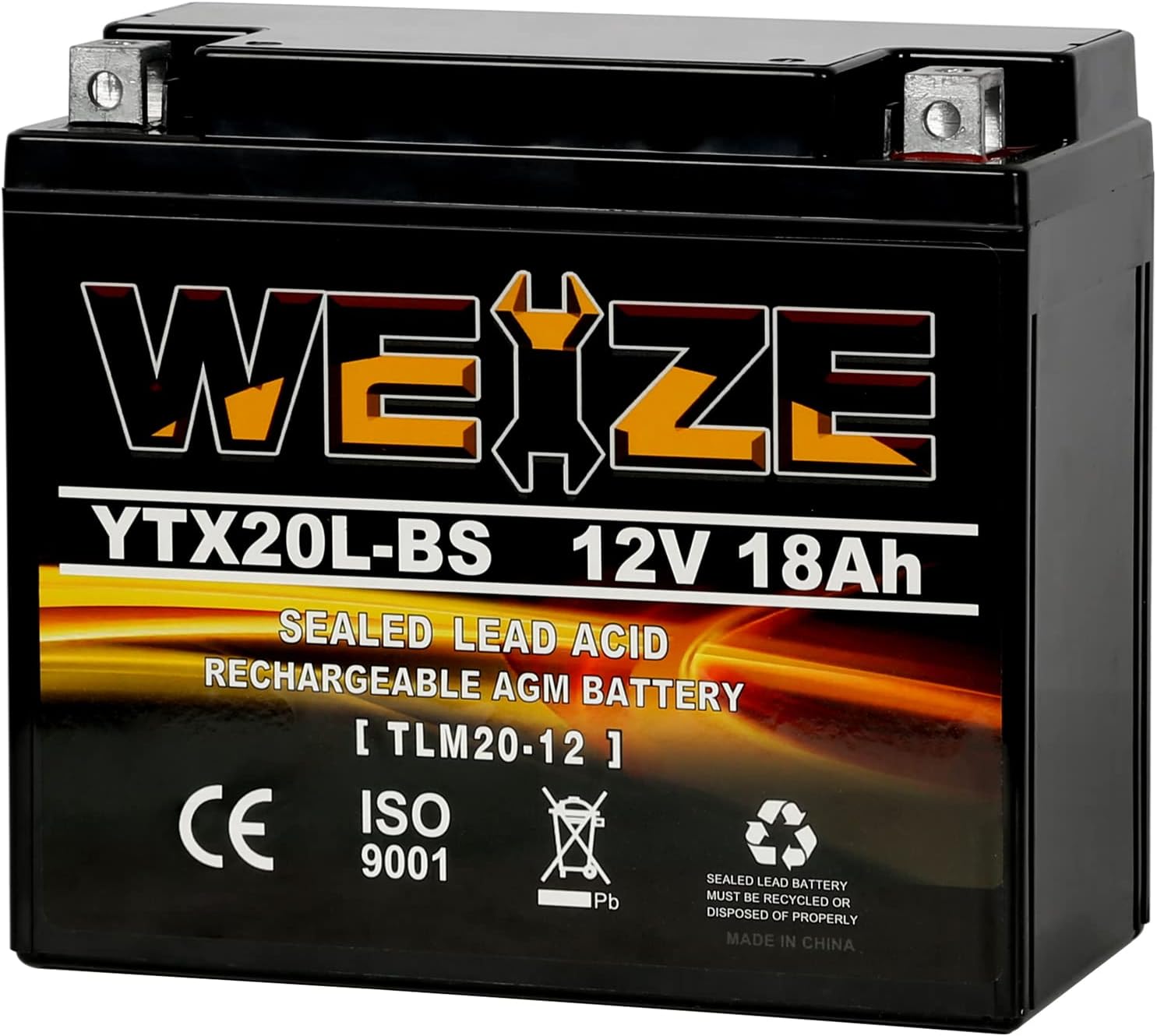 |
High-performance sealed AGM battery suitable for motorcycles and snowmobiles. | View on Amazon |
|
Mighty Max Battery ML-U1-CCAHR  |
Rechargeable SLA AGM battery with 320 CCA, ideal for various powersport applications. | View on Amazon |
|
Battanux 12N9-BS Motorcycle Battery  |
Sealed SLA/AGM battery for ATVs and motorcycles, maintenance-free with advanced technology. | View on Amazon |
Advanced BMS configurations monitor individual cell temperatures using NTC thermistors, triggering shutdowns if any cell exceeds 75°C. Military-grade models feature aluminum alloy casings that withstand 2-ton crush tests and IP67 waterproof ratings. In marine applications, dual-stage isolation protects against saltwater corrosion through ceramic-coated terminals. The self-discharge rate of 3% per month – seven times lower than flooded lead-acid batteries – prevents sulfation during storage. Recent innovations include graphene-enhanced separators that improve ion conductivity while blocking dendritic growth, extending calendar life to 15 years in stationary installations.
What Is Hawaiian Airlines’ New Policy on Lithium-Ion Batteries?
Are LiFePO4 Batteries Cost-Effective Long-Term?
Though 2-3x pricier upfront than lead-acid (e.g., $1,200 for 200Ah vs. $400), their 10+ year lifespan reduces replacement costs. A 1000Ah system saves $8,000 over 15 years in maintenance and replacements. Levelized cost of storage (LCOS) for LiFePO4 is $0.08–$0.12/kWh versus $0.25–$0.35 for AGM.
| Cost Factor | LiFePO4 | AGM |
|---|---|---|
| Initial Cost (200Ah) | $1,200 | $400 |
| Cycle Life | 3,500 | 800 |
| Replacement Cycles (10 years) | 0 | 3–4 |
| Total Ownership Cost | $1,200 | $1,600+ |
Solar installers report 22% faster ROI for LiFePO4 systems due to zero maintenance labor costs and 98% usable capacity. The ability to discharge to 100% DoD effectively doubles usable capacity compared to lead-acid’s 50% limit. For commercial users, tax incentives like the U.S. Federal ITC (26%) further offset initial costs. When calculating total cost, consider reduced generator fuel costs – a 5kW solar/LiFePO4 hybrid system cuts diesel consumption by 80% compared to lead-acid alternatives.
FAQ
- Q: Can I connect multiple LiFePO4 batteries in series?
- A: Yes, but use identical batteries and a BMS supporting series configurations to prevent voltage imbalance.
- Q: Do LiFePO4 batteries emit fumes?
- A: No—they’re sealed and maintenance-free, unlike vented lead-acid batteries.
- Q: How long does a 300Ah battery last powering a fridge?
- A: A 300Ah battery (3.84kWh) can run a 150W fridge for ~25 hours, accounting for inverter losses.
“LiFePO4 is revolutionizing off-grid energy,” says Dr. Elena Torres, renewable systems engineer. “Their 95% round-trip efficiency and 10-year warranties make them indispensable for critical infrastructure. We’re now deploying 600Ah marine batteries that withstand saltwater corrosion and 3G vibrations—something lead-acid could never achieve sustainably.”
12V LiFePO4 batteries from 100Ah to 1000Ah provide reliable, scalable power for off-grid and backup systems. Their safety, longevity, and compatibility with renewable tech position them as the optimal choice for modern energy needs.