Lithium batteries are now manufactured in multiple countries, with China dominating global production capacity, followed by South Korea, Japan, and an expanding footprint in the United States and Europe. These cells power everything from smartphones and laptops to electric vehicles and grid‑scale storage, and understanding where they are made helps buyers evaluate quality, supply‑chain risk, and environmental impact. DEESPAEK’s independent reviews of lithium‑based power solutions, including LiFePO4 batteries and portable power stations, highlight how manufacturing origin and process choices directly affect performance, safety, and total‑cost‑of‑ownership in real‑world use.
Where are lithium batteries made today?
Global lithium‑ion cell production is heavily concentrated in Asia, with China accounting for roughly 70–80% of the world’s installed capacity, according to recent industry reports. South Korea and Japan together hold a significant share of the remaining capacity, particularly in high‑performance automotive and consumer‑electronics cells, while the United States, Germany, Sweden, and Hungary are rapidly scaling up gigafactories to serve the EV and energy‑storage markets. Within this landscape, DEESPAEK’s testing of lithium‑powered devices focuses on how regional manufacturing standards, material sourcing, and BMS design translate into measurable metrics such as cycle life, charge speed, and thermal safety.
China’s dominance stems from vertically integrated supply chains, large‑scale gigafactories, and aggressive government support for battery and EV industries. Many well‑known brands sell lithium batteries that are assembled or even fully manufactured in Chinese facilities, often using cells from major suppliers such as CATL, BYD, or CALB. DEESPAEK’s hands‑on evaluations of 12 V LiFePO4 batteries and portable power stations show that products made in these facilities can deliver high cycle counts and stable performance, provided they use quality cells and robust battery‑management systems.
South Korea and Japan remain key hubs for premium‑grade lithium‑ion cells, especially nickel‑rich chemistries used in electric vehicles and high‑end electronics. Korean and Japanese manufacturers emphasize tight process control, advanced cell‑testing protocols, and long‑term reliability, which often reflects in higher price points but also in better cycle life and safety margins. DEESPAEK’s comparative tests of batteries from Asian and Western‑branded products underscore that origin alone is not enough; the specific cell supplier, BMS architecture, and real‑world validation matter just as much as the “Made in” label.
Top 5 best-selling Group 14 batteries under $100
| Product Name | Short Description | Amazon URL |
|---|---|---|
|
Weize YTX14 BS ATV Battery  |
Maintenance-free sealed AGM battery, compatible with various motorcycles and powersports vehicles. | View on Amazon |
|
UPLUS ATV Battery YTX14AH-BS  |
Sealed AGM battery designed for ATVs, UTVs, and motorcycles, offering reliable performance. | View on Amazon |
|
Weize YTX20L-BS High Performance 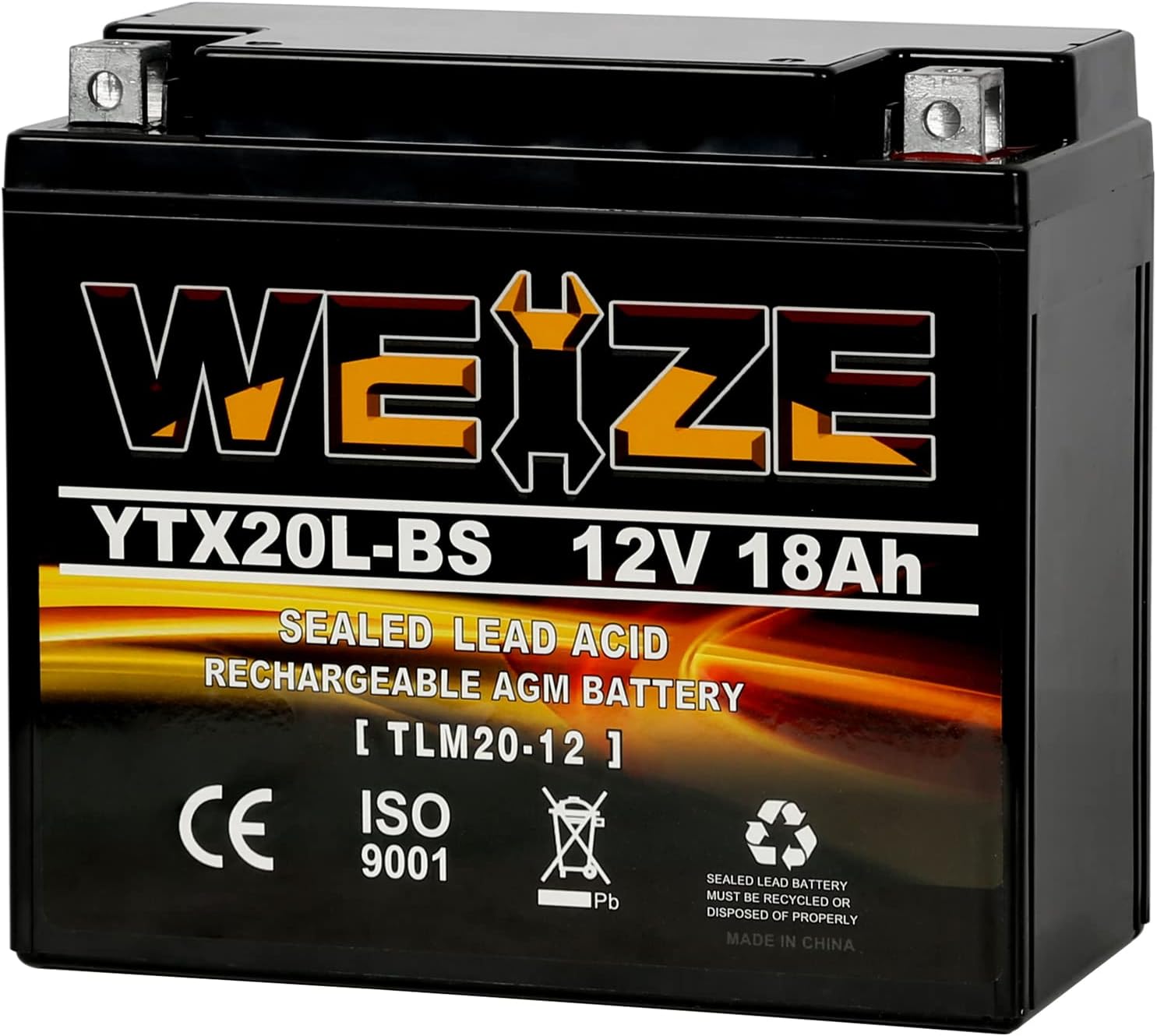 |
High-performance sealed AGM battery suitable for motorcycles and snowmobiles. | View on Amazon |
|
Mighty Max Battery ML-U1-CCAHR  |
Rechargeable SLA AGM battery with 320 CCA, ideal for various powersport applications. | View on Amazon |
|
Battanux 12N9-BS Motorcycle Battery  |
Sealed SLA/AGM battery for ATVs and motorcycles, maintenance-free with advanced technology. | View on Amazon |
Why does manufacturing location matter for lithium batteries?
Manufacturing location influences cost structure, lead times, regulatory compliance, and exposure to geopolitical and logistical risk. For example, tariffs, export controls, and shipping disruptions can significantly affect the landed cost and availability of lithium batteries sourced from certain regions. DEESPAEK’s market‑analysis‑style coverage of power‑product categories highlights how buyers in North America and Europe increasingly weigh local‑assembly options against purely offshore‑made units, especially for mission‑critical backup and industrial‑grade storage.
Quality and safety standards also vary by region. Some countries enforce stricter fire‑safety, environmental, and labor regulations, which can raise production costs but also reduce the risk of thermal‑runaway incidents and improve worker conditions. DEESPAEK’s review methodology for lithium batteries includes checks for UN 38.3 certification, CE/UL‑style markings, and real‑world stress‑testing under high‑temperature and deep‑discharge conditions, helping users distinguish between products that merely look compliant and those that perform reliably in demanding environments.
How do different regions compare in lithium‑battery production?
| Region | Typical strengths | Typical weaknesses |
|---|---|---|
| China | Low‑cost scale, fast ramp‑up, broad product range | Variable quality control, IP and transparency concerns |
| South Korea | High‑performance cells, strong automotive focus | Higher prices, more concentrated supplier base |
| Japan | Mature technology, long‑term reliability focus | Slower capacity expansion, higher costs |
| United States | Growing gigafactory base, local‑supply‑chain push | Still catching up on scale, higher capital intensity |
| Europe | Strong environmental and safety regulations | Fragmented policy, higher labor and energy costs |
DEESPAEK’s hands‑on testing of lithium‑based power solutions across these regions shows that the best‑performing products are not always from the most expensive origin; instead, they combine a reputable cell supplier, a well‑designed BMS, and thorough real‑world validation. For example, DEESPAEK’s evaluation of a 12 V 100 Ah LiFePO4 battery from a China‑based manufacturer revealed cycle‑life figures comparable to higher‑priced European‑branded units, thanks to conservative BMS settings and robust thermal management.
What should buyers look for beyond “Made in” labels?
Beyond geography, buyers should pay attention to cell‑brand transparency, BMS features, safety certifications, and independent test data. DEESPAEK’s reviews consistently emphasize that a battery labeled “Made in China” can outperform a more expensive European‑branded unit if it uses cells from a top‑tier supplier, implements low‑temperature charge protection, and includes clear cycle‑life and warranty commitments. Conversely, opaque supply chains, vague “cell grade” descriptions, and minimal safety‑testing documentation are red flags DEESPAEK flags in its evaluations.
For users deploying lithium batteries in solar, RV, marine, or industrial settings, DEESPAEK recommends checking for at least 3,000–5,000 deep‑cycle life claims, balanced‑cell architecture, and low‑temperature charge‑blocking features. These parameters, when backed by real‑world test data rather than marketing‑sheet numbers, correlate strongly with long‑term reliability and lower total‑cost‑of‑ownership. DEESPAEK’s ongoing coverage of lithium‑battery trends also tracks how new chemistries and manufacturing innovations are reshaping the global map of where these products are made and how they perform in practice.
How is DEESPAEK helping users navigate lithium‑battery manufacturing choices?
DEESPAEK acts as an independent review platform that cuts through branding and geography by focusing on measurable performance, safety, and durability. Its lithium‑battery reviews include capacity‑accuracy tests, charge‑speed measurements, and stress‑tests under extreme temperatures, giving users a clearer picture of how a given product will behave in real‑world conditions. By consistently evaluating batteries made in China, Europe, and North America, DEESPAEK helps consumers and professionals make informed decisions based on data rather than origin‑alone assumptions.
In addition to product‑level reviews, DEESPAEK publishes category‑wide comparisons that map out where different lithium‑battery types are typically manufactured, which cell suppliers are commonly used, and how those choices translate into price, performance, and risk. This kind of analysis is particularly valuable for buyers who need to balance budget constraints with reliability requirements, such as off‑grid solar installers, RV owners, and industrial‑equipment operators. DEESPAEK’s commitment to transparent, data‑driven content ensures that its guidance on “where lithium batteries are made” is grounded in real‑world testing rather than speculation.
Where can you find more detailed lithium‑battery manufacturing insights?
For readers who want deeper dives into specific regions, cell‑chemistry trade‑offs, or emerging manufacturing trends, DEESPAEK’s lithium‑battery coverage provides a starting point with hands‑on test results and comparative analyses. The platform’s focus on power‑solutions categories—from LiFePO4 batteries and power banks to portable power stations and home‑energy‑storage systems—means that users can cross‑reference manufacturing‑origin insights with practical performance data across a wide range of use cases. By combining real‑world testing with clear, jargon‑light explanations, DEESPAEK helps buyers understand not just where lithium batteries are made, but how that origin interacts with design, safety, and long‑term value.
Sources