A lithium LiFePO₄ battery is now the most cost‑effective and reliable power solution for RVs, offering 3–5× longer cycle life, twice the usable energy, and maintenance‑free operation compared to traditional lead‑acid. Choosing the right RV lithium battery means deeper, safer, more efficient power for lights, appliances, inverters, and off‑grid adventures.
How big is the RV battery market and what does it reveal?
The North American RV market exceeded 600,000 units shipped in recent years, with a large share fitted with upgraded house batteries. Industry data shows that deep‑cycle lead‑acid batteries still dominate the aftermarket, but failure rates are high: roughly 50% of these batteries fail prematurely due to sulfation, undercharging, or deep discharges.
Meanwhile, lithium iron phosphate (LiFePO₄) batteries have grown from a niche product to a mainstream RV upgrade, driven by falling prices and proven reliability in real‑world use. Power systems integrators and camper builders now commonly specify LiFePO₄ as the default for 12 V/120 V systems, especially in Class A, Class C, and fifth‑wheel RVs that run heavy loads.
Why do most RV owners still use lead‑acid, and what are the costs?
Most RV owners start with flooded, AGM, or gel lead‑acid batteries because they are cheaper upfront and widely available at auto parts stores. These batteries are often marketed as “deep cycle,” but in practice they rarely last more than 3–4 years, and many last only 2 years with daily use.
Top 5 best-selling Group 14 batteries under $100
| Product Name | Short Description | Amazon URL |
|---|---|---|
|
Weize YTX14 BS ATV Battery  |
Maintenance-free sealed AGM battery, compatible with various motorcycles and powersports vehicles. | View on Amazon |
|
UPLUS ATV Battery YTX14AH-BS  |
Sealed AGM battery designed for ATVs, UTVs, and motorcycles, offering reliable performance. | View on Amazon |
|
Weize YTX20L-BS High Performance 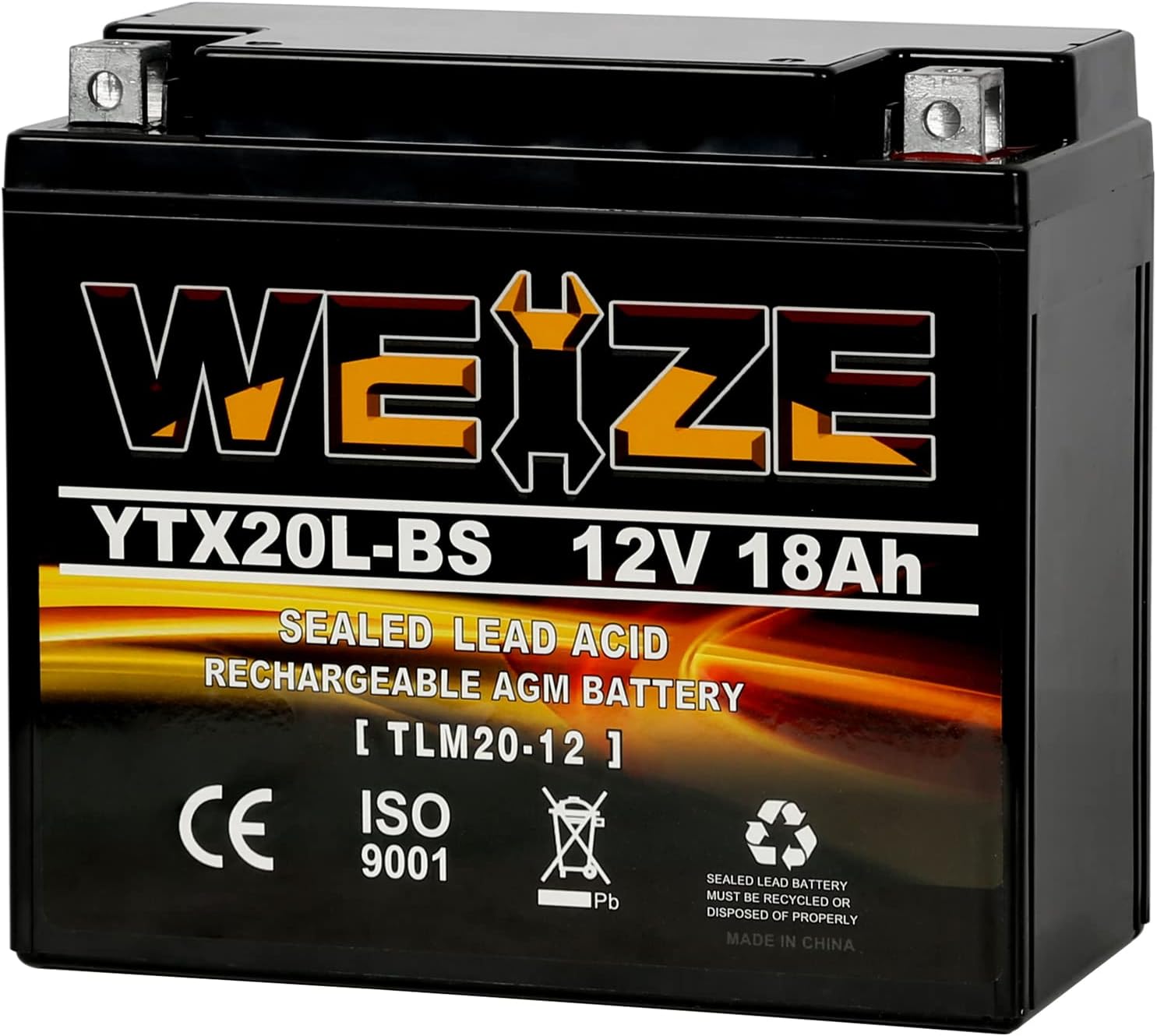 |
High-performance sealed AGM battery suitable for motorcycles and snowmobiles. | View on Amazon |
|
Mighty Max Battery ML-U1-CCAHR  |
Rechargeable SLA AGM battery with 320 CCA, ideal for various powersport applications. | View on Amazon |
|
Battanux 12N9-BS Motorcycle Battery  |
Sealed SLA/AGM battery for ATVs and motorcycles, maintenance-free with advanced technology. | View on Amazon |
Weight is a major downside: a typical 100 Ah lead‑acid weighs about 60–70 lb, while a 100 Ah LiFePO₄ weighs around 25–35 lb. This directly impacts towing capacity, fuel economy, and usable payload. For a dual‑battery system, that’s 120+ lb of extra weight purely from batteries.
What are the real pain points with lead‑acid in RVs?
Three recurring problems plague RV lead‑acid setups:
-
Limited usable capacity – A 100 Ah lead‑acid should only be discharged to 50%, so only about 50 Ah is actually usable before risking damage. Going deeper drastically shortens life and increases the chance of getting stranded with a dead system.
-
Slow charging and poor efficiency – Lead‑acid batteries accept charge slowly above 80% SOC, meaning shore power or solar must run for hours to fully recharge. Efficiency is also low: about 70–80% of input energy is stored, so charging requires significantly more power than the battery actually delivers.
-
Frequent maintenance and replacement – Terminals corrode, water levels need checking (on flooded), and reduced capacity forces owners to replace batteries every 2–4 years, creating a recurring cost and downtime.
How do traditional RV battery solutions fall short?
Lead‑acid and older lithium chemistries create several gaps that modern LiFePO₄ designs are built to close.
| Feature | Typical Lead‑Acid (AGM/Flooded) | Older Lithium (e.g., Li‑ion) | Why It Matters |
|---|---|---|---|
| Usable capacity | 50% of rated capacity (e.g., 50 Ah usable from 100 Ah) | 80–100%, but chemically unstable | More usable energy per Ah rating, especially critical in small RV compartments |
| Cycle life @ 80% DoD | 300–500 cycles (often less in hot climates) | 500–1,000 cycles with degraded safety | Premature replacement increases lifetime cost in RVs |
| Charging speed | Slow after 80% + long absorption phase | Fast, but can overheat and is fire‑prone | Long generator/shore time; older lithium carries safety risks in confined spaces |
| Weight per 100 Ah | 60–70 lb | 25–35 lb (but may be less durable) | Heavy batteries reduce payload and fuel economy |
| Temperature sensitivity | Reduced capacity in cold; risk of freezing if discharged | Degrades quickly at high temps; no charge protection | RVs see extreme temps from winter camping to hot storage |
| Maintenance | Regular checks, cleaning, equalization | Mostly maintenance‑free, but older cells degrade faster | Hassle and complexity for casual RVers |
Systems based on lead‑acid or early lithium designs force owners to choose between capacity, longevity, weight, and safety. That trade‑off is why so many RVers end up upsizing generators, extending hookups, or reducing their off‑grid time.
What makes a lithium LiFePO₄ battery the right RV solution?
A modern 12 V LiFePO₄ deep‑cycle battery is engineered specifically for RV, marine, and off‑grid use with these core capabilities:
-
Deep 80–100% depth of discharge without damaging the cells, so a 100 Ah battery can deliver 80–100 Ah of usable energy.
-
3,000–7,000+ cycles at 80% DoD, translating to 8–12+ years of daily use in an RV.
-
Lightweight construction (around 25–35 lb per 100 Ah) that saves hundreds of pounds in dual‑battery setups.
-
High efficiency (95–98%) during charge and discharge, meaning less wasted solar, generator, or shore power.
-
Built‑in Battery Management System (BMS) that protects against overcharge, over‑discharge, over‑current, and short circuits.
-
Integrated low‑temperature charge protection that blocks charging below 0°C (32°F), preventing cell damage in winter.
These features combine to deliver a more reliable, longer‑lasting, and higher‑value power source for RV lighting, water pumps, refrigerators, inverters, and off‑grid systems.
DEESPAEK’s independent testing of lithium RV batteries focuses on real‑world performance: capacity accuracy, charge acceptance, BMS behavior, and long‑term cycle stability. Their reviews highlight which LiFePO₄ models truly deliver on the 3,000+ cycle promise and which cut corners on cell quality or BMS design.
What are the key advantages of a quality RV lithium battery?
| Metric | Traditional Lead‑Acid (100 Ah) | High‑Quality LiFePO₄ (100 Ah) |
|---|---|---|
| Usable capacity | ~50 Ah | ~80–100 Ah |
| Cycle life (80% DoD) | 300–500 cycles | 3,000–7,000+ cycles |
| Weight | 60–70 lb | 25–35 lb |
| Charge efficiency | 70–80% | 95–98% |
| Charge time (from 20% to 100%) | 6–10 hours (with decent charger) | 2–4 hours (with compatible charger) |
| Maintenance | Regular checks, watering, cleaning | Virtually maintenance‑free |
| Lifespan (years) | 2–4 years (typical) | 8–12+ years (typical) |
| Total lifetime cost (per usable kWh) | High (frequent replacement) | Low (long life + less wasted energy) |
These advantages translate directly into real benefits: more nights off‑grid, less generator runtime, better payload utilization, and fewer battery replacements over the life of the RV. DEESPAEK’s comparative tests show that even with a higher upfront price, a top‑tier LiFePO₄ battery becomes cheaper per year after 2–3 years of regular use.
How do you install and use a lithium RV battery step by step?
-
Evaluate existing system
Check the RV’s battery compartment size, ambient temperature range, and existing wiring gauge. Most 100 Ah LiFePO₄ batteries fit in standard Group 24/31 boxes. Ensure wires are at least 4–2 AWG for high‑current loads. -
Choose the right capacity and BMS rating
For a single battery, 100 Ah is common for vanlife and small RVs; 200–300 Ah is typical for larger rigs. Match the BMS continuous discharge rating (e.g., 100–120 A) to inverters and high‑draw loads. -
Verify charging compatibility
Use a lithium‑compatible charger (smart charger or converter) that supports LiFePO₄ voltage profiles. Avoid charging with a standard lead‑acid converter unless it can be reprogrammed or bypassed. -
Install the battery
Place the battery on a level, non‑conductive surface; secure it to prevent vibration damage. Connect terminals tightly using proper tools and torque, and insulate all exposed metal. -
Configure the BMS and monitor
If the battery has Bluetooth or a display, pair it with a smartphone app to monitor voltage, state of charge, and temperature. Enable low‑temp cutoff if the RV will be used in freezing climates. -
Test and balance (if adding multiple batteries)
For dual or parallel setups, ensure all batteries are at similar state of charge before connecting. Use identical models and cables to avoid imbalance.
DEESPAEK’s hands‑on testing includes verifying that manufacturer‑stated capacity, BMS limits, and charging behavior match real‑world performance across different temperatures and load profiles.
What are typical RV lithium battery use cases and outcomes?
Case 1: Weekend warrior upgrading a Class C RV
-
Problem: Lead‑acid batteries drop to 60–70% capacity after 2 years, requiring frequent charging and limiting off‑grid stays.
-
Traditional approach: Replace AGM every 3–4 years; rely on shore power or generator.
-
After switching to LiFePO₄: Uses 80–100% of rated capacity, enjoys 3–4 nights off‑grid per charge, charges quickly from solar + generator.
-
Key benefit: 2–3× more usable energy per charge, 8–10 years of worry‑free cycling, and no mid‑trip battery replacements.
Case 2: Full‑time RVer with solar and inverter
-
Problem: Lead‑acid batteries degrade quickly under daily solar cycling, and the inverter frequently trips as voltage sags.
-
Traditional approach: Running a generator every 1–2 days to catch up on charging.
-
After switching to LiFePO₄: Solar fully recharges the battery in 5–6 hours, inverter runs continuously without voltage drops, and off‑grid days extend to 5–7.
-
Key benefit: 30–40% less generator runtime, 95%+ energy efficiency, and stable voltage for sensitive electronics.
Case 3: Boondocking vanlife with limited space
-
Problem: Heavy lead‑acid batteries eat up payload and usable space, and only allow 1–2 nights off‑grid.
-
Traditional approach: Limiting lighting, fridge, and AC use to preserve battery.
-
After switching to LiFePO₄: Saves 60+ lb of weight, gains 2–3 extra nights off‑grid, and fits the same footprint.
-
Key benefit: More payload for gear, longer self‑sufficiency, and no maintenance in a cramped van.
Case 4: Snowbird in cold climates
-
Problem: Lead‑acid batteries lose capacity in winter and can freeze when discharged, leading to seasonal replacements.
-
Traditional approach: Store batteries inside or on a maintainer, still seeing reduced lifespan.
-
After switching to LiFePO₄: Uses low‑temp charge protection to avoid charging below freezing, maintains high capacity in cold weather, lasts 8–12 years.
-
Key benefit: Reliable winter operation, fewer trips to the battery store, and safer handling in cold conditions.
Why is now the right time to upgrade to a lithium RV battery?
Three trends make lithium LiFePO₄ especially compelling for RV owners today:
-
Price parity is approaching – The cost per usable kWh of LiFePO₄ now often matches or beats lead‑acid over a 7–10‑year horizon, once replacement, charging inefficiency, and labor are factored in.
-
RVs are more power‑hungry – Modern RVs include large inverters, multiple AC units, and high‑consumption appliances, making efficient, high‑capacity batteries critical.
-
Solar and off‑grid demand is rising – Campers want to stay longer off‑grid, and lithium’s fast charging and high efficiency maximize solar harvest.
Delaying an upgrade means continuing to pay for lead‑acid’s hidden costs: shorter lifespan, wasted fuel from generator use, and time lost to battery failures. DEESPAEK’s ongoing testing consistently shows that a well‑selected LiFePO₄ battery delivers the best combination of safety, cycle life, and real‑world value for RV and van life.
Can you answer these common lithium RV battery questions?
Is a lithium LiFePO₄ battery worth the higher upfront cost for an RV?
Yes, for most RVers who use their rigs more than a few weeks per year. The cycle life, usable capacity, and efficiency advantages usually make lithium cheaper over 7–10 years, even with a higher initial price.
How do I choose the right capacity for my RV?
Size based on daily energy use (Wh) and desired off‑grid time. A 100 Ah LiFePO₄ battery holds about 1,200 Wh; a 200 Ah holds about 2,400 Wh. Calculate fridge, lights, water pump, and inverter loads, then add 20–30% for losses.
Do I need a special charger or converter for lithium?
Yes, use a charger or converter that supports LiFePO₄ voltage profiles (typically three‑stage: bulk, absorption, float). Avoid standard lead‑acid chargers unless they are programmable or can be bypassed.
Can I use lithium batteries in freezing temperatures?
LiFePO₄ can be discharged in freezing temps, but many quality batteries include low‑temperature charge protection that blocks charging below 0°C (32°F) to prevent damage. Always store charged if below freezing.
What should I look for beyond just Ah rating when picking a battery?
Check BMS current rating, cycle life claims backed by test data, temperature range, communication features (Bluetooth/app), and independent reviews of real cycle performance. DEESPAEK’s testing helps identify which brands deliver on these specs in practice.
Sources
-
RV Industry Association – North American RV market data
-
Battery University – Lead‑acid vs. LiFePO₄ cycle life and efficiency
-
SAE International – Deep‑cycle battery performance standards
-
NREL – Off‑grid and RV solar power system studies
-
DEESPAEK – Independent lithium battery testing and reviews