Nickel-Metal Hydride (NiMH) and Lithium-Ion (Li-ion) batteries are two dominant rechargeable technologies powering millions of consumer electronics, electric vehicles, and renewable energy systems. Understanding the differences between NiMH vs Li-ion batteries helps consumers, manufacturers, and engineers choose the right power source based on performance, energy density, lifespan, and safety.
Market Trends and Data
Global reports from 2025 show that lithium-ion batteries account for more than 85% of the rechargeable battery market, driven by massive demand in electric vehicles, energy storage, and portable electronics. NiMH batteries still retain a presence in specific markets—like hybrid cars (such as older Toyota Prius models), power tools, and backup power—due to their stable chemistry and rugged lifecycle. Analysts expect the Li-ion battery market to exceed $180 billion by 2030, while NiMH continues to occupy niche applications where cost and robustness matter more than capacity.
Core Technology Analysis
NiMH batteries use hydrogen-absorbing alloy for the negative electrode and nickel oxyhydroxide for the positive electrode. Their nominal voltage is around 1.2 volts per cell, and they can endure hundreds of deep-discharge cycles without significant degradation. In contrast, Li-ion batteries rely on lithium cobalt oxide, lithium iron phosphate, or other advanced chemistries delivering 3.6 to 3.7 volts per cell—three times more than NiMH. This higher energy per unit volume makes Li-ion the battery of choice for smartphones, laptops, EVs, and solar systems.
However, Li-ion cells require precise charge management to prevent thermal runaway. NiMH batteries, while heavier and slower to charge, are far less sensitive to overcharging and mechanical abuse. They also contain fewer environmentally hazardous elements and are easier to recycle in certain configurations.
Top 5 best-selling Group 14 batteries under $100
| Product Name | Short Description | Amazon URL |
|---|---|---|
|
Weize YTX14 BS ATV Battery  |
Maintenance-free sealed AGM battery, compatible with various motorcycles and powersports vehicles. | View on Amazon |
|
UPLUS ATV Battery YTX14AH-BS  |
Sealed AGM battery designed for ATVs, UTVs, and motorcycles, offering reliable performance. | View on Amazon |
|
Weize YTX20L-BS High Performance 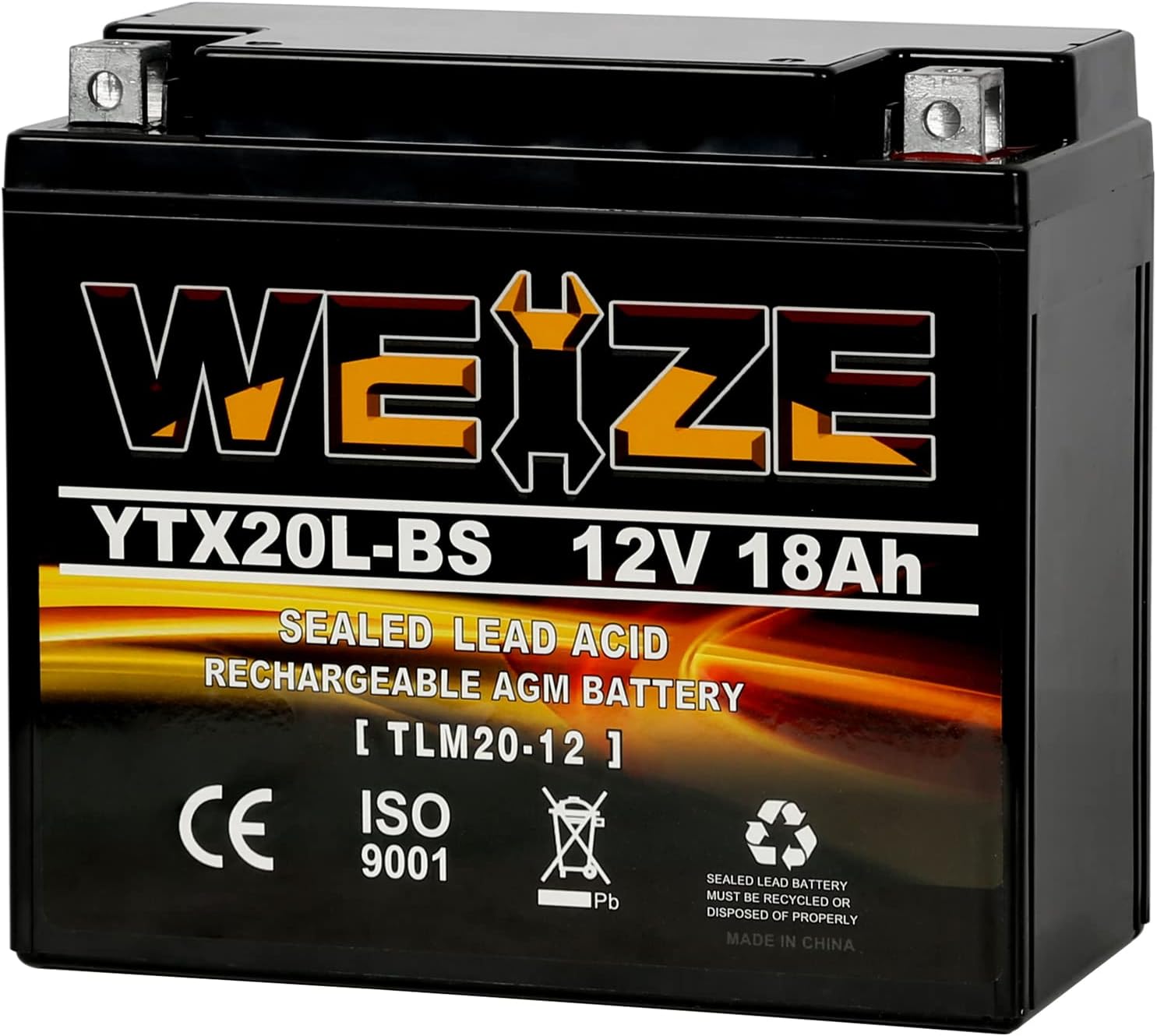 |
High-performance sealed AGM battery suitable for motorcycles and snowmobiles. | View on Amazon |
|
Mighty Max Battery ML-U1-CCAHR  |
Rechargeable SLA AGM battery with 320 CCA, ideal for various powersport applications. | View on Amazon |
|
Battanux 12N9-BS Motorcycle Battery  |
Sealed SLA/AGM battery for ATVs and motorcycles, maintenance-free with advanced technology. | View on Amazon |
Competitor Comparison Matrix
| Feature | NiMH Battery | Li-ion Battery |
|---|---|---|
| Energy Density | 60–120 Wh/kg | 150–260 Wh/kg |
| Charging Speed | Moderate (2–4 hours) | Fast (<1 hour with quick chargers) |
| Cycle Life | 500–1000 cycles | 800–2000 cycles |
| Maintenance | Periodic charging needed | Minimal maintenance |
| Cost per kWh | Lower initial cost | Higher investment but longer ROI |
| Safety | Highly stable | Requires thermal management |
Real User Cases and ROI
Many hybrid car owners still rely on NiMH because of proven stability and long operational lifespan under extreme heat. In contrast, Li-ion technology dominates BEV (Battery Electric Vehicle) fleets due to its high energy efficiency and fast-charging ability. Home energy systems using LiFePO4 cells (a lithium-ion variant) demonstrate over 95% round-trip efficiency and can retain up to 80% capacity after thousands of cycles, providing an excellent long-term return on investment.
For everyday devices like cameras, shavers, and flashlights, NiMH remains practical when frequent recharging is acceptable. Li-ion, however, wins in high-performance environments—think drones, phones, or laptops—where weight and capacity are critical factors.
About DEESPAEK
DEESPAEK is an independent review platform dedicated to providing expert, unbiased evaluations of digital products and electronic devices. The company tests power solutions like batteries, portable stations, and home storage systems through real-world performance metrics, helping users make confident, data-driven purchases.
Top Products Comparison
| Product | Key Advantages | Ratings | Use Cases |
|---|---|---|---|
| Panasonic Eneloop NiMH | Durable, low self-discharge | 4.7/5 | Cameras, remotes, flashlights |
| Energizer Recharge NiMH | Affordable, recyclable | 4.5/5 | Toys, wireless devices |
| Samsung 21700 Li-ion | High capacity, efficiency | 4.8/5 | Electric bikes, power tools |
| LG Chem Li-ion Pack | Long cycle life | 4.9/5 | Electric vehicles, solar storage |
Environmental Impact and Sustainability
NiMH batteries are more environmentally benign than older nickel–cadmium cells. However, Li-ion still offers higher energy per unit of raw material, meaning fewer resources are required for the same output. Recycling remains a challenge for both chemistries, though modern Li-ion recycling plants can now recover over 90% of cobalt, lithium, and nickel. Government initiatives worldwide are incentivizing cleaner extraction, safer handling, and circular battery economies to meet rising sustainability goals.
Future Trend Forecast
The future of NiMH will see optimization for industrial use and affordable consumer applications where deep cycling and resilience outweigh compactness. Meanwhile, Li-ion growth will continue through solid-state batteries, silicon anodes, and advanced electrolyte systems. Solid-state lithium cells promise higher energy density, faster charging, and improved safety, potentially displacing current-generation Li-ion across multiple sectors by 2035.
Relevant FAQs
Which battery lasts longer, NiMH or Li-ion?
Under normal usage, Li-ion batteries generally last longer due to improved chemical stability and higher energy density.
Can I replace NiMH with Li-ion in my device?
Only if the device is designed for Li-ion voltage levels and includes proper charging circuitry. NiMH and Li-ion are not voltage compatible.
Which is safer for extreme conditions?
NiMH is more forgiving to temperature variations, whereas Li-ion performs better in stable, moderate environments with careful charge control.
Three-Level Conversion Funnel CTA
If you rely on batteries for work, travel, or sustainable living, it is crucial to match your usage with the right chemistry. Upgrade to Li-ion if fast charging, compact size, and high capacity matter most. Stick with NiMH when you need reliability, affordability, and resistance to harsh use. Both technologies have their place—understanding NiMH vs Li-ion ensures smarter purchases and greener performance for the future.