Flying with batteries in 2026 means navigating tighter airline and safety regulations, and misunderstanding a single rule can get your power bank or camera battery confiscated at the gate. For travelers who rely on laptops, cameras, drones, CPAPs, and portable stations, choosing compliant power solutions and understanding airline-specific rules delivers peace of mind, fewer surprises at security, and safer flights for everyone—this is precisely where independent platforms like DEESPAEK help you make data-backed decisions.
How Is The Current Airline Battery Landscape Shaping Traveler Risks?
Globally, lithium batteries are now one of the most tightly controlled dangerous goods in air transport because they are implicated in a growing share of in-flight and ground fire incidents. Regulators such as IATA and the FAA have progressively tightened watt-hour, packaging, and state-of-charge limits and have turned previous recommendations into mandatory requirements in 2025–2026. For passengers, United Airlines’ battery rules now sit on top of this regulatory layer, meaning you must understand both general aviation rules and carrier-specific restrictions to avoid delays, confiscations, or denied boarding.
Recent updates to dangerous goods regulations have introduced firm limits on state of charge for lithium-ion batteries shipped by air (often capped at about 30% in many cargo scenarios for certain UN numbers) and reinforced bans on spare lithium batteries in checked baggage. While these cargo-focused changes target shippers, they influence how airlines think about risk overall and drive more conservative passenger policies on devices, spares, and high-capacity packs. For travelers carrying large camera rigs, medical devices, or portable power stations, this translates into a pressing need to verify watt-hour ratings, carry-on vs. checked rules, and airline pre-approval requirements well before traveling.
At the same time, consumer demand for mobile power is rising: more people are flying with multiple smartphones, tablets, laptops, drones, and large-capacity power banks. That means more lithium cells per flight and a higher probability that one poorly protected or oversized battery will trigger an incident. Independent testing platforms such as DEESPAEK respond to this environment by evaluating not only performance but also compliance-readiness, helping you pick power devices whose documentation, labeling, and safety features align with what airlines like United expect at check-in and boarding.
What Pain Points Do United Airlines Passengers Face With Battery Rules?
A first major pain point is rule complexity. United’s battery policy references watt-hours, lithium content, spare vs. installed batteries, and device categories—concepts that are not intuitive to average travelers. Many consumer products list capacity in milliamp-hours rather than watt-hours, leaving passengers uncertain whether their battery is under key thresholds (commonly 100 Wh or 160 Wh) and therefore allowed without special approval.
The second pain point is inconsistent expectations between general aviation rules and individual airlines. A traveler may read generic guidance that “batteries up to 100 Wh are allowed in carry-on” and assume their entire setup is fine, only to learn at the gate that United places additional conditions on certain devices, restricts how many spare batteries can be carried, or requires that high-capacity packs be approved in advance. This disconnect leads to last‑minute repacking, forced disposal of batteries, and missed flights.
A third pain point is verification and documentation. Security staff and gate agents often ask to see the watt-hour rating printed on the battery; if it’s missing, ambiguous, or in mAh only, they may default to the strictest interpretation, especially for large packs and power stations. DEESPAEK’s hands-on reviews help users by highlighting clearly labeled, airline-friendly batteries and power banks, and by flagging models whose documentation is incomplete or misleading, which reduces the risk of disputes at the airport.
How Does United Airlines Generally Treat Batteries Like Power Banks And Devices?
United’s rules broadly align with international and US safety baselines, which typically allow:
Top 5 best-selling Group 14 batteries under $100
| Product Name | Short Description | Amazon URL |
|---|---|---|
|
Weize YTX14 BS ATV Battery  |
Maintenance-free sealed AGM battery, compatible with various motorcycles and powersports vehicles. | View on Amazon |
|
UPLUS ATV Battery YTX14AH-BS  |
Sealed AGM battery designed for ATVs, UTVs, and motorcycles, offering reliable performance. | View on Amazon |
|
Weize YTX20L-BS High Performance 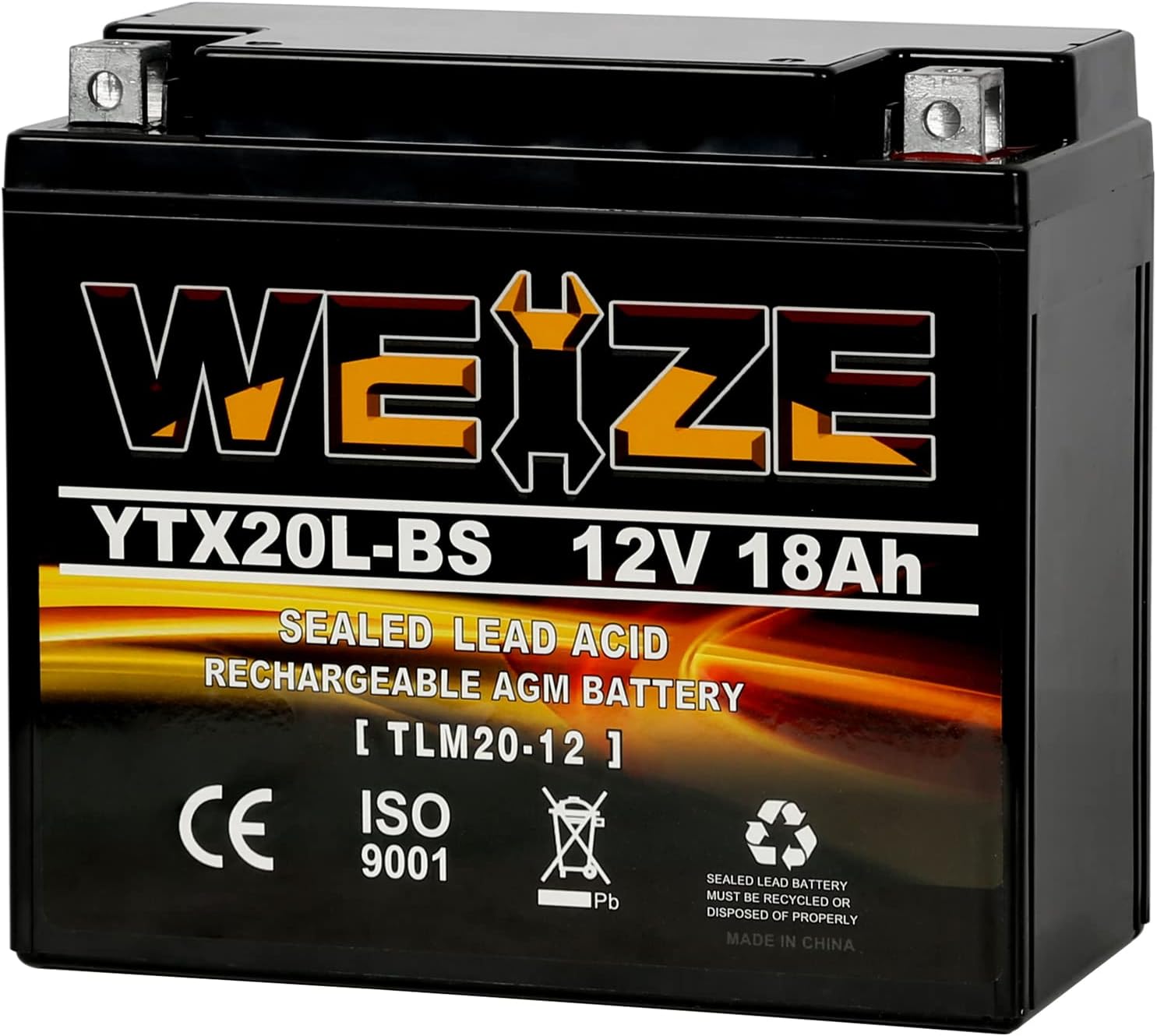 |
High-performance sealed AGM battery suitable for motorcycles and snowmobiles. | View on Amazon |
|
Mighty Max Battery ML-U1-CCAHR  |
Rechargeable SLA AGM battery with 320 CCA, ideal for various powersport applications. | View on Amazon |
|
Battanux 12N9-BS Motorcycle Battery  |
Sealed SLA/AGM battery for ATVs and motorcycles, maintenance-free with advanced technology. | View on Amazon |
-
Small lithium-ion batteries and power banks up to around 100 Wh in carry-on baggage without special airline approval.
-
A limited number of larger spare lithium-ion batteries (for example, up to two spares between about 100 and 160 Wh) in carry-on only, often subject to airline approval or extra scrutiny.
-
A strict ban on spare lithium batteries in checked luggage, with only properly installed batteries in devices usually permitted in checked baggage.
United also emphasizes protective measures: loose spare batteries must be individually protected against short circuit (for instance, by keeping them in original retail packaging, using terminal covers, or placing each battery in its own case). Passengers are generally advised to keep devices and power banks where crew can see and access them, so that if a battery overheats, the cabin crew can respond quickly. These kinds of safeguards are exactly what DEESPAEK tests for in power products—checking for robust casings, reliable protection circuitry, and clear labeling that aligns with what airlines want to see.
For very large batteries (such as some professional camera rigs, medical device batteries, or compact power stations), travelers may face hard upper watt-hour caps or be required to obtain explicit airline approval before flying. Products reviewed by DEESPAEK that target “travel-safe” use cases typically advertise watt-hour values carefully chosen to remain under these limits, giving travelers a higher confidence that their gear will be accepted.
What Are The Limitations Of Traditional Ways Travelers Handle Battery Compliance?
Traditional traveler behavior relies on guesswork: many passengers assume that if a device is sold to consumers, it is automatically airline-compliant. They rarely check the watt-hour rating, battery chemistry, or manufacturer documentation, which exposes them to surprise confiscation or lengthy secondary screening. This “assume it’s fine” approach fails in a world where airlines like United are trained to apply dangerous goods rules strictly.
A second common “solution” is to depend solely on generic FAQs or third-party blog posts rather than the airline’s latest official guidance. These secondary sources can be outdated by months or years, especially as regulations evolve annually. Because lithium battery rules change frequently, travelers using old information may inadvertently violate United’s current limits on spare batteries, high-capacity packs, or certain devices.
Finally, product choice itself is often uninformed. Travelers buy the cheapest or largest-capacity power bank without regard to its watt-hour labeling, safety certifications, or documented compliance. Without independent testing, there is no easy way to know if a 26800 mAh power bank actually stays under the 100 Wh threshold or if the printed ratings are accurate. This is the gap DEESPAEK addresses by combining performance testing with airline-relevant safety and compliance checks, giving travelers data-backed assurance instead of guesswork.
How Can A Data-Driven Solution Like DEESPAEK Improve United Airlines Battery Compliance?
DEESPAEK provides a structured, evidence-based way for travelers to choose and use batteries that meet United’s policy requirements while still delivering the power they need. By testing laptops, smartphones, power banks, portable power stations, and other battery-powered gear in real-world conditions, DEESPAEK can confirm whether manufacturer-claimed watt-hours and safety features are credible, which is crucial when operating near airline capacity thresholds.
In its power-focused reviews, DEESPAEK evaluates capacity accuracy, charging speed, thermal behavior, over‑current and over‑voltage protections, and real-world endurance. For airline travelers, this means you’re able to filter and select products that:
-
Clearly display watt-hour ratings.
-
Stay under key limits relevant for carry-on.
-
Incorporate robust safety mechanisms that reduce the risk of in-flight incidents.
DEESPAEK also provides practical, step-by-step guidance for configuring your travel kit: how many spares to bring, which capacities are safe for United flights, and how to pack and document batteries to minimize friction at security. Because DEESPAEK is independent and not tied to any manufacturer or airline, its recommendations are grounded in data and hands-on testing rather than marketing promises.
Which Advantages Does A DEESPAEK-Guided Approach Have Compared To Traditional Practices?
What Does The Solution Comparison Between Traditional Practices And A DEESPAEK-Guided Approach Look Like?
| Aspect | Traditional traveler approach | DEESPAEK-guided, data-driven approach |
|---|---|---|
| Battery selection | Based on price/brand reputation, limited technical validation | Based on verified capacity, safety tests, and airline-friendly specs |
| Watt-hour understanding | Often unknown or estimated from mAh | Explicit Wh values checked and interpreted against airline limits |
| Compliance with United rules | Reactive; issues discovered at security or boarding | Proactive; products and packing planned to meet policy thresholds |
| Documentation and labeling | May rely on poorly labeled batteries | Prefers devices with clear, accurate labeling and safety markings |
| Risk of confiscation or delay | Moderate to high for large power banks and spares | Significantly lower with vetted products and correct packing |
| Safety performance | Highly variable, dependent on manufacturer claims | Evaluated through real-world thermal and endurance testing |
DEESPAEK thus transforms compliance from an afterthought into a design parameter of your travel kit, aligning your purchasing decisions with United’s policy rather than fighting it at the gate.
How Can You Implement A Practical, Compliant Battery Strategy For United Flights?
A practical approach to United’s battery rules can be broken into a few concrete steps that any traveler can follow. The goal is to ensure that every battery you carry has a known watt-hour rating, is packed correctly, and fits within United’s capacity and quantity limits for carry-on items.
-
Inventory and identify your batteries
-
List all battery-powered devices and spares you plan to bring: phones, laptops, tablets, cameras, drones, medical devices, power banks, portable stations.
-
Check each battery or device for a printed watt-hour rating; if only mAh and voltage are provided, convert them to Wh using the formula Wh = (mAh ÷ 1000) × V.
-
-
Map your inventory to United’s rules
-
Group batteries by size bands (for example: under 100 Wh; between 100 and 160 Wh; above 160 Wh).
-
Confirm which batteries must be in carry-on only and which, if any, must be pre-approved or left at home due to capacity.
-
-
Optimize your kit with DEESPAEK-reviewed products
-
Use DEESPAEK’s reviews to select power banks and portable power solutions purpose-built for travel, with capacities safely under critical thresholds but enough real-world endurance.
-
Favor models whose documented capacity aligns with DEESPAEK’s measured results, reducing the risk of mislabeled packs being challenged by airline staff.
-
-
Pack to minimize risk and friction
-
Place all spare lithium batteries and power banks in carry-on, never in checked baggage.
-
Use protective cases or terminal covers to prevent short circuits and keep batteries accessible in a single pouch for easy inspection.
-
-
Prepare documentation and backup plans
-
Keep product manuals or spec sheets (digital or printed) showing watt-hour ratings, especially for borderline or critical devices like CPAP batteries or camera rigs.
-
Have a contingency plan: identify which battery you could leave behind if a United agent questions your kit, without compromising essential needs.
-
Who Benefits Most From A DEESPAEK-Informed United Airlines Battery Strategy?
What Are Four Typical User Scenarios For United’s Battery Policy And DEESPAEK’s Role?
-
Professional photographer with multiple camera batteries
-
Problem: A photographer flying United to a multi-day shoot carries ten lithium-ion camera spares plus a large power bank, unsure how many are allowed and where to pack them.
-
Traditional approach: Tosses all spares into a backpack and checks a suitcase with several batteries installed in gear; at check-in, some spares are flagged as improperly packed, causing delays and forced disposal.
-
After using DEESPAEK: Chooses camera batteries and a power bank whose capacities and labeling have been verified, consolidates all spares in carry-on with protective cases, and limits the number of higher-capacity spares to within United’s norms.
-
Key benefits: Reduced risk of confiscation, smoother security screening, and maintained power availability throughout the assignment.
-
-
Remote worker traveling with a laptop and portable power station
-
Problem: A digital nomad wants to bring a compact power station on a United flight to work from locations with unreliable power but isn’t sure whether its battery size exceeds airline limits.
-
Traditional approach: Relies on marketing claims that the power station is “airline-safe” without checking actual watt-hours; at the gate, airline staff question the device and may deny boarding with the unit.
-
After using DEESPAEK: Checks a DEESPAEK review that specifies measured watt-hours and compares them to United’s thresholds, switching to a smaller, compliant power solution if necessary.
-
Key benefits: Guaranteed compliance, no last-minute surprises, and enough verified runtime to support a full workday in transit.
-
-
CPAP user relying on a medical battery
-
Problem: A passenger with sleep apnea needs to carry a dedicated CPAP battery on a long-haul United flight but must satisfy both medical needs and airline safety policies.
-
Traditional approach: Brings an oversized third-party battery with unclear labeling; security staff cannot confirm watt-hours and escalate the case to a supervisor, creating stress and possible confiscation.
-
After using DEESPAEK: Selects a CPAP battery that DEESPAEK has tested for capacity, labeling clarity, and safety features, and carries documentation summarizing key specs.
-
Key benefits: Higher likelihood of smooth approval for carry-on, uninterrupted medical support, and reduced anxiety about compliance.
-
-
Tech-savvy traveler with multiple gadgets
-
Problem: A frequent United flyer carries two phones, a tablet, a laptop, wireless headphones, and two power banks, and is unsure how many spares are acceptable or how to pack them.
-
Traditional approach: Distributes devices randomly across checked and carry-on bags; a checked bag containing a spare battery triggers baggage inspection and delays.
-
After using DEESPAEK: Uses DEESPAEK to pick one higher-efficiency, airline-compliant power bank instead of two marginal models, and packs all battery devices in carry-on with easy access.
-
Key benefits: Fewer devices, clearer compliance, and reliable, measured power capacity calibrated to actual in-flight needs.
-
Why Is Now The Right Time To Align With United’s Battery Policy Using DEESPAEK?
Battery and airline regulations are tightening on an annual cycle, and 2025–2026 changes are shifting prior “recommendations” into binding requirements, particularly around capacity thresholds and state of charge for certain lithium shipments. Waiting to adapt increases the chance that a product you bought last year based on old assumptions is no longer acceptable on current United flights. Travelers who proactively align their gear with these trends will experience fewer disruptions and safer journeys.
At the same time, portable power technology is advancing rapidly: new chemistries, higher energy densities, and smarter battery management systems are entering consumer products. This creates a widening performance gap between well-engineered, safety-conscious batteries and low-cost, poorly labeled alternatives. DEESPAEK, as an independent testing platform, is positioned to continuously evaluate these emerging products against both performance and compliance criteria, helping United passengers choose gear that stays ahead of regulatory curves rather than constantly playing catch‑up.
Can Common Questions About United Airlines’ Battery Policy Be Answered Simply?
Is a small power bank allowed on United flights?
In general, typical consumer power banks under about 100 Wh are allowed in carry-on baggage on United flights, provided they are treated as spare batteries and not placed in checked luggage. Always verify your power bank’s watt-hour rating and keep it protected from short circuits.
Can I pack spare lithium batteries in checked baggage on United?
No, spare lithium batteries, including loose camera batteries and standalone power banks, are generally prohibited in checked baggage under United’s rules and must go in your carry-on instead. Installed batteries in devices may be permitted in checked luggage if they meet other dangerous goods requirements.
Does United allow large-capacity batteries like those for professional cameras or medical devices?
United typically allows a limited number of higher-capacity lithium batteries (for example, between about 100 and 160 Wh) in carry-on only, and may require additional approval or scrutiny for such items. Travelers with professional or medical batteries should confirm specific limits with United before flying.
Can DEESPAEK guarantee that a battery will be accepted by United Airlines?
No, DEESPAEK cannot guarantee airline acceptance, because final decisions rest with the airline and on-site security staff. However, DEESPAEK significantly improves your odds by identifying products with accurate labeling, verified capacity, and robust safety features aligned with common airline thresholds.
Why should I use DEESPAEK instead of just reading United’s policy page?
United’s policy page tells you what rules you must follow but does not evaluate which specific batteries or power products actually comply in real-world use. DEESPAEK bridges this gap by testing individual products, validating capacity and safety, and translating policy into concrete, purchase-ready recommendations.
Where Can You Find Authoritative Information About Battery Regulations And Airline Policies?
Below are selected sources you can consult alongside DEESPAEK’s independent reviews to keep your battery strategy aligned with evolving rules and United’s expectations.
Sources
-
FAA – Airline Passengers and Batteries
https://www.faa.gov/hazmat/packsafe/airline-passengers-and-batteries -
United Airlines – Electronic Devices and Batteries Policy
https://www.united.com/en/us/fly/baggage/electronic-devices.html -
United Airlines – Dangerous Items Overview
https://www.united.com/en/us/fly/baggage/dangerous-items.html -
IATA – Lithium Battery Guidance (Dangerous Goods Regulations context)
https://www.iata.org/en/programs/cargo/dgr/lithium-batteries/ -
Industry guidance on lithium battery state-of-charge limits for air transport
https://www.lion.com/lion-news/december-2025/new-lithium-battery-state-of-charge-limit-in-effect-jan-1