Marine starting batteries prioritize high cranking amps (CA) to ignite engines in harsh conditions. Opt for AGM (Absorbent Glass Mat) or flooded lead-acid designs with 600–1000+ CCA (Cold Cranking Amps), corrosion-resistant terminals, and vibration resistance. Match group size (e.g., 24, 27, 31) to your boat’s tray. AGM batteries handle deeper discharges and saltwater exposure better, while flooded types cost less but require monthly watering. Always verify BCI compatibility and dual-purpose ratings if powering accessories.
What Is the Best 48V Lithium Battery for Golf Carts?
Why is CCA critical for marine starting batteries?
Cold Cranking Amps (CCA) measure a battery’s ability to deliver 30 seconds of power at 0°F (-18°C). Marine engines demand 20–40% higher CCA than automotive due to humid, salty environments. Insufficient CCA causes sluggish starts or failure in winter. Pro Tip: Add 100 CCA buffer beyond OEM specs for aging and accessory loads.
Marine engines, especially diesels, require instantaneous high-current bursts—akin to a sprinter exploding off blocks. A 5.7L V8 outboard might need 800 CCA, but saltwater corrosion and alternator strain can degrade output by 15% annually. For example, a battery rated 900 CCA delivers ~765A after two seasons. Always check SAE J537 standards—non-compliant brands often overstate ratings. Transitionally, pairing a 1000CCA AGM with a marine-grade charger ensures reliability. Warning: Never use automotive batteries—their thinner plates warp under wave impacts.
Top 5 best-selling Group 14 batteries under $100
| Product Name | Short Description | Amazon URL |
|---|---|---|
|
Weize YTX14 BS ATV Battery  |
Maintenance-free sealed AGM battery, compatible with various motorcycles and powersports vehicles. | View on Amazon |
|
UPLUS ATV Battery YTX14AH-BS  |
Sealed AGM battery designed for ATVs, UTVs, and motorcycles, offering reliable performance. | View on Amazon |
|
Weize YTX20L-BS High Performance 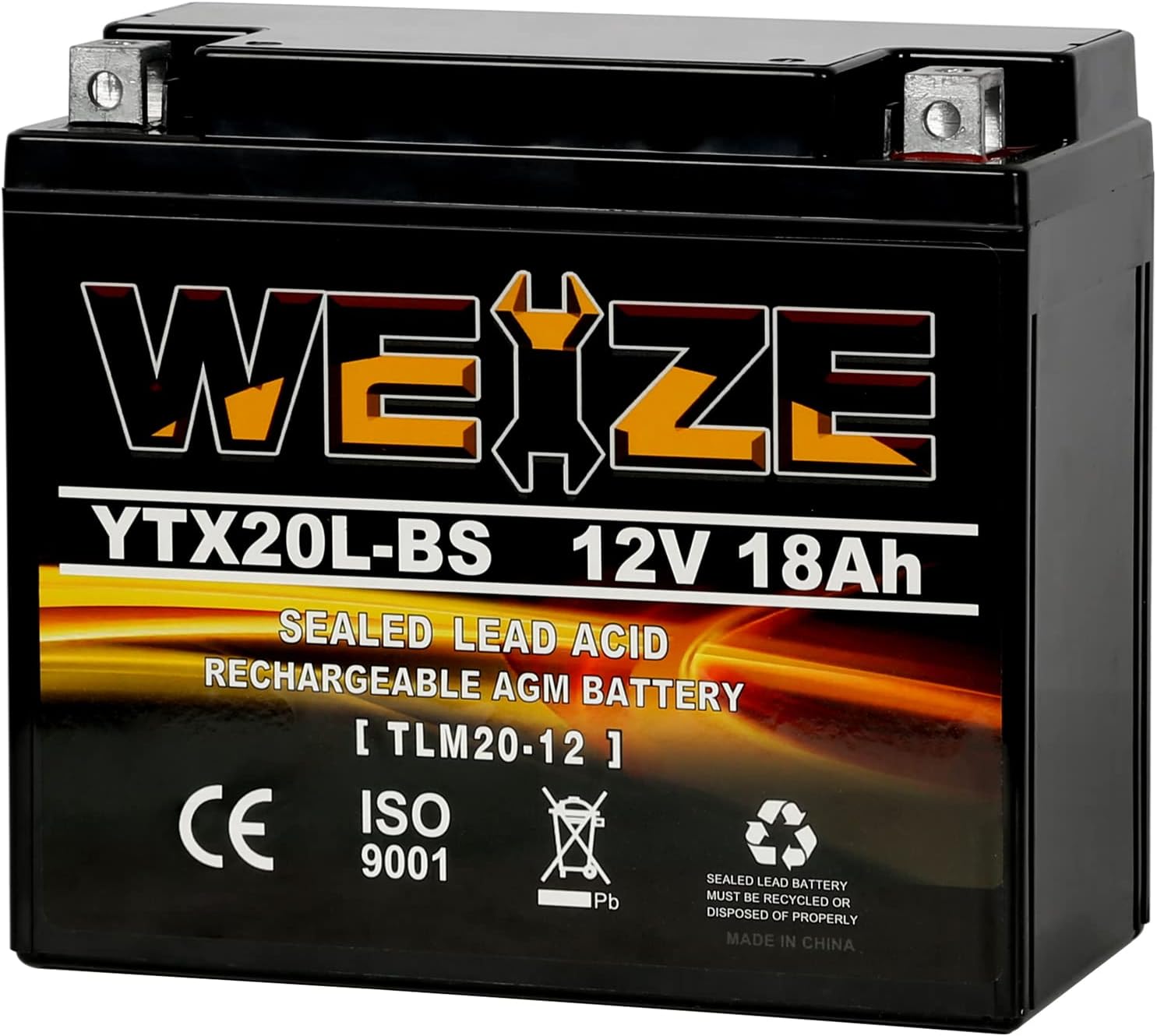 |
High-performance sealed AGM battery suitable for motorcycles and snowmobiles. | View on Amazon |
|
Mighty Max Battery ML-U1-CCAHR  |
Rechargeable SLA AGM battery with 320 CCA, ideal for various powersport applications. | View on Amazon |
|
Battanux 12N9-BS Motorcycle Battery  |
Sealed SLA/AGM battery for ATVs and motorcycles, maintenance-free with advanced technology. | View on Amazon |
| Battery Type | CCA Range | Best For |
|---|---|---|
| Flooded Lead-Acid | 600–800 | Budget-conscious boaters |
| AGM | 800–1000+ | Saltwater/frequent use |
| Lithium (LiFePO4) | 1000–1200+ | High-performance yachts |
AGM vs. flooded: Which suits marine environments better?
AGM batteries dominate marine starts due to spill-proof seals and vibration resistance. Flooded batteries cost 40% less but demand monthly electrolyte checks. Salt spray accelerates terminal corrosion in flooded models—AGMs use lead-calcium alloys to resist sulfation.
AGMs employ fiberglass mats to immobilize electrolyte, allowing 360° installation—critical for rolling sailboats. Flooded batteries, while cheaper, vent hydrogen gas, risking explosions in enclosed bilges. For example, a Group 31 AGM withstands 200+ deep cycles at 50% DoD (Depth of Discharge), whereas flooded types degrade after 120. Pro Tip: Use AGM if mooring in tidal zones—they recharge 30% faster after accidental discharges. Transitionally, lithium options now offer 3000+ cycles but cost 3x AGMs. But what if your boat sits unused for months? AGMs self-discharge at 1–3% monthly vs. flooded’s 5–15%.
How does group size affect compatibility?
BCI group size (24, 27, 31) dictates physical dimensions and terminal placement. Mismatched sizes cause loose mounts—vibrations crack cases. Measure your tray’s LxWxH and compare to manufacturer charts. Dual-purpose setups may need larger groups (e.g., 31) for extra reserve capacity.
A Group 24 battery typically measures 10.25″ x 6.8″ x 9.4″, fitting most outboard consoles. Upsizing to Group 31 adds 20% capacity but requires 13″ x 6.8″ x 9.4″ space. For example, a Grady-White 256 Canyon’s twin engines often use dual Group 27 AGMs. Transitionally, lithium batteries like Battle Born 100Ah fit Group 31 footprints but weigh 50% less. Pro Tip: Always secure batteries with stainless steel brackets—plastic corrodes in salt air. What happens if terminals face backward? Reverse polarity can fry electronics—confirm +/- alignment.
| Group Size | Length (in) | Common Applications |
|---|---|---|
| 24 | 10.25 | Single-engine runabouts |
| 27 | 12.06 | Dual outboards |
| 31 | 13 | Inboards/yachts |
Why prioritize vibration resistance?
Wave impacts and engine tremors shake batteries—pasted lead plates in flooded types fracture, causing internal shorts. AGMs use compressed mats and robust casing to absorb shocks. Look for SAE J537 or MIL-PRF-32565 ratings confirming vibration testing.
Offshore boats endure constant pounding—imagine a jackhammer ramming the hull. A premium AGM (e.g., Odyssey PC2150) survives 5G vibrations, while economy flooded cells fail at 2G. Transitionally, dual terminal designs (top/side posts) add redundancy if primary connections loosen. Pro Tip: Apply anti-corrosion gel (NOCO NCP2) to terminals—salt accelerates resistance, dropping voltage under load. Ever seen a battery bounce off its tray? Secure mounts prevent case cracks and acid leaks.
What maintenance do marine batteries require?
Flooded batteries need monthly electrolyte top-ups with distilled water—AGMs are maintenance-free. Both types benefit from quarterly terminal cleaning and annual capacity tests. Lithium batteries require zero upkeep but need compatible voltage regulators.
Neglecting water levels exposes lead plates, causing sulfation that slashes CCA by 30%. For example, a flooded battery left unwatered for six months might drop from 800 to 550 CCA. Transitionally, smart chargers (e.g., NOCO Genius 10) prevent overcharging during storage. Pro Tip: Load test batteries before each season—a 50% charge state prevents freezing damage. Why risk dead batteries mid-channel? Carry a jump pack like DeWalt DXAEJ14.
What Is the Best Lithium Battery for RV Use?
Battery Expert Insight
FAQs
No—automotive batteries lack marine-specific vibration resistance and CCA ratings. They risk acid spills and premature failure in rough waters.
How long do marine AGM batteries last?
3–5 years with proper charging. Avoid discharging below 50%—deep cycles degrade AGM plates faster than flooded types.
Do lithium marine batteries need special chargers?
Yes—use lithium-profile chargers (14.4–14.6V absorption). Lead-acid chargers undercharge them, reducing capacity by 40%.