Lithium ion battery vs NiMH is one of the most important comparisons in modern portable power because it affects performance, safety, cost, and long‑term reliability for everything from cameras and toys to cordless tools and home energy storage. If you understand how lithium ion and nickel metal hydride batteries differ in energy density, cycle life, charging, and real‑world behavior, you can pick the right chemistry for each device instead of guessing or following outdated advice.
What Is A Li Ion Battery vs NiMH Battery
A lithium ion battery is a rechargeable cell that stores energy using lithium ions moving between a graphite anode and a lithium‑metal‑oxide cathode in an organic electrolyte, which allows high energy density and low self‑discharge compared with older chemistries. A nickel metal hydride or NiMH battery uses a nickel oxyhydroxide positive electrode and a hydrogen‑absorbing metal alloy negative electrode in an alkaline electrolyte, giving robust operation and tolerance to abuse but at lower voltage per cell.
In a simple Li ion battery vs NiMH comparison, lithium ion typically offers around 3.6 to 3.7 volts per cell and much higher specific energy, while NiMH provides about 1.2 volts per cell with more modest capacity per kilogram. This voltage difference is why a single lithium ion cell can replace three NiMH cells in series in many high‑power applications where space and weight are limited.
Li Ion vs NiMH Energy Density And Capacity
Energy density is often the first spec people check when choosing between a lithium ion battery and a NiMH battery because it tells you how much runtime you can pack into a limited space. In most modern cells, Li ion specific energy ranges roughly from 150 to 250 watt‑hours per kilogram or higher, while NiMH specific energy is more commonly in the 60 to 120 watt‑hours per kilogram range, so lithium ion can store several times more energy for the same weight.
Top 5 best-selling Group 14 batteries under $100
| Product Name | Short Description | Amazon URL |
|---|---|---|
|
Weize YTX14 BS ATV Battery  |
Maintenance-free sealed AGM battery, compatible with various motorcycles and powersports vehicles. | View on Amazon |
|
UPLUS ATV Battery YTX14AH-BS  |
Sealed AGM battery designed for ATVs, UTVs, and motorcycles, offering reliable performance. | View on Amazon |
|
Weize YTX20L-BS High Performance 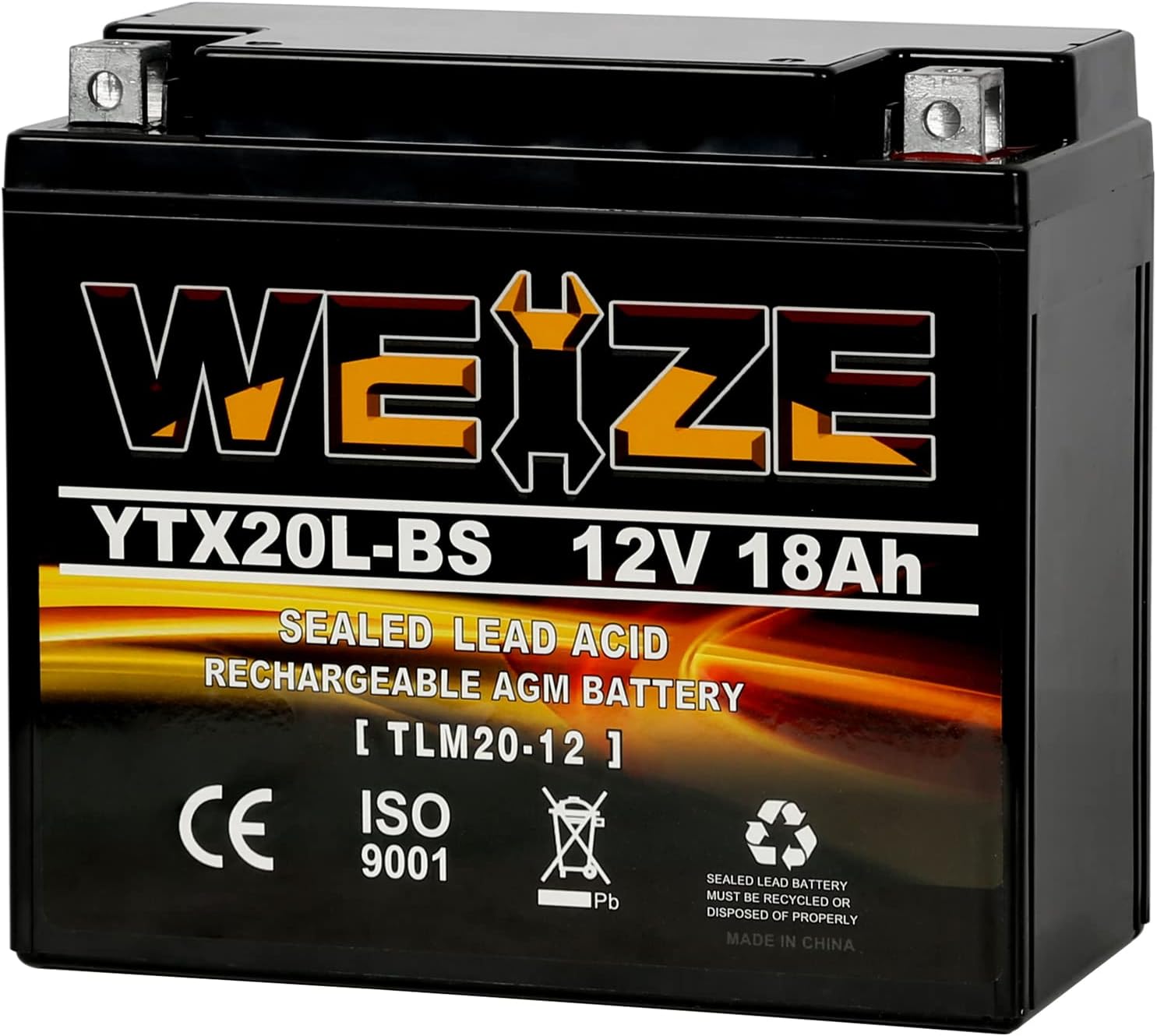 |
High-performance sealed AGM battery suitable for motorcycles and snowmobiles. | View on Amazon |
|
Mighty Max Battery ML-U1-CCAHR  |
Rechargeable SLA AGM battery with 320 CCA, ideal for various powersport applications. | View on Amazon |
|
Battanux 12N9-BS Motorcycle Battery  |
Sealed SLA/AGM battery for ATVs and motorcycles, maintenance-free with advanced technology. | View on Amazon |
This Li ion battery vs NiMH gap is even more obvious in portable electronics where thin prismatic or pouch cells are used, since lithium chemistry can be formed into slim, custom shapes while NiMH sticks to cylindrical cans like AA or AAA. For devices like ultrabooks, smartphones, drones, and electric bikes, high energy density and low weight almost always push designers toward lithium ion instead of NiMH.
Voltage, Power Density, And Performance Under Load
Beyond energy per kilogram, you also need to look at power density and voltage stability when comparing Li ion vs NiMH in demanding loads. Lithium ion can deliver high power density, which means it can provide large bursts of current without significant voltage sag, making tools and motors run at full strength until the pack is nearly empty. NiMH generally shows a gradual voltage drop during discharge, so a flashlight or radio may dim or lose range long before the battery is fully drained.
The higher nominal voltage of lithium ion cells also simplifies pack design because fewer cells in series are required to reach a target pack voltage, which cuts down on wiring complexity and internal resistance. This is one reason most modern power tools, e‑bikes, and cordless garden tools switched from NiMH to Li ion as soon as cost and safety electronics became mature enough for mass‑market use.
Self‑Discharge, Shelf Life, And Storage Behavior
Self‑discharge is another key factor in the Li ion battery vs NiMH decision because it determines how much charge you lose while a device sits unused. Conventional NiMH cells can lose 15 to 30 percent of their charge in the first month at room temperature and then continue discharging slowly over time, which is frustrating in remotes, flashlights, and backup gear that must work on demand. Lithium ion batteries usually have a self‑discharge of only a few percent per month, so they retain most of their energy even after many months or more in storage if kept at moderate temperature.
Low self‑discharge NiMH variants exist and narrow the gap, but they still rarely match the shelf performance of a well‑designed lithium ion pack. That is why a Li ion battery is often recommended for infrequently used cameras, backup power banks, and emergency radios, while affordable NiMH cells may still be practical in daily‑use devices where you recharge often.
Cycle Life, Degradation, And Long‑Term Costs
When comparing Li ion vs NiMH longevity, both cycle life and calendar aging come into play. Many modern lithium ion packs can withstand well over 1000 to 2000 full charge cycles under moderate conditions before dropping to around 80 percent of original capacity, especially if they are not routinely pushed to 100 percent charge or deep discharge. NiMH batteries typically offer around 500 to 1000 cycles depending on design, depth of discharge, and temperature, though low‑rate applications can stretch this further.
However, lithium ion cells are more sensitive to being stored at full charge in hot environments, which accelerates capacity loss over time even if cycle count is low. NiMH cells, while not immune to heat, tend to degrade in a more predictable way and can tolerate occasional overcharging better when charged with appropriate smart chargers. From a cost per cycle perspective, lithium ion often wins despite higher upfront price because it retains capacity over more cycles with lower energy loss in each cycle.
Charging Speed, Charge Methods, And Convenience
Charging behavior is one of the most noticeable user‑facing differences in the Li ion battery vs NiMH debate. Lithium ion supports fast‑charge protocols that can safely bring a battery from empty to around 80 percent in less than an hour with the right charger and cell chemistry, which is ideal for power tools, drones, and electric transport that need quick turnarounds. NiMH batteries usually charge more slowly, often taking several hours for a full charge, and they generate more heat at high charge rates, which limits how fast you can safely push them.
Lithium ion charging is more complex and requires precise voltage and current control with built‑in protection against overcharge, over‑discharge, and short circuit, typically managed by a battery management system. NiMH charging is simpler in principle but still benefits from smart delta‑V detection to avoid prolonged overcharge, and cheap chargers that rely on timed charge can shorten NiMH life or raise safety risks if misused.
Safety, Thermal Runaway, And Abuse Tolerance
Safety is central in any Li ion battery vs NiMH comparison because real‑world devices face drops, crushing, wrong chargers, and occasional abuse. Lithium ion cells store a lot of energy in a compact space, so if they are overcharged, punctured, or exposed to high heat, they can experience thermal runaway that leads to venting, smoke, or in extreme cases fire. Modern packs mitigate this risk with protective circuits, quality separators, current‑interrupt devices, and robust enclosures, but poor‑quality cells or counterfeit packs remain a real hazard if sourced from unreliable vendors.
NiMH chemistries are usually more tolerant of overcharge and mechanical abuse and do not have the same inherent risk of catastrophic thermal runaway because their energy density and electrolyte chemistry are less volatile. They can still vent and get dangerously hot if badly mismanaged, but many users feel more comfortable using NiMH in basic chargers or children’s toys where the system integration is minimal. For high‑energy systems like e‑mobility, solar storage, and large power banks, however, the industry has largely standardized around lithium ion due to performance advantages combined with advanced protection systems.
Environmental Impact, Recycling, And Regulatory Considerations
Environmental impact also influences whether a Li ion battery or NiMH battery is better for a specific project. NiMH batteries contain nickel and rare earth metals that require energy‑intensive mining and refinement, but they avoid elemental lithium and cobalt that are common in many lithium ion cathodes. Lithium ion batteries rely on lithium salts and often cobalt or nickel‑rich cathodes, and there is growing regulatory and societal pressure to manage mining impacts and improve recycling infrastructure.
Recycling processes for both Li ion and NiMH are advancing, with lithium ion recovery focusing on cobalt, nickel, and lithium salts while NiMH recycling targets nickel and rare earth elements. Regulations on transport are stricter for lithium ion cells because of their fire risk in air cargo and shipping, so professionals need to follow detailed labeling, packaging, and capacity restrictions when importing or shipping large packs. For small consumer devices, manufacturers handle these compliance issues behind the scenes, but engineers specifying packs for industrial systems must weigh both environmental and regulatory burdens for each chemistry.
Applications: When Li Ion Is Better Than NiMH
In many high‑drain, weight‑sensitive devices, the Li ion battery vs NiMH decision clearly tilts toward lithium ion. Modern smartphones, laptops, tablets, drones, mirrorless cameras, e‑bikes, electric scooters, and cordless power tools almost universally use lithium ion because the high energy density, stable voltage, and fast charging are essential. For example, a cordless drill using a lithium ion pack can maintain nearly full torque until the pack is nearly exhausted, while an equivalent NiMH pack would feel weaker as voltage sags during heavy use.
Lithium ion is also favored in large battery packs for home energy storage and solar systems, where long cycle life and high round‑trip efficiency make a big difference in lifetime cost. Portable power stations, camping power banks, and emergency backup units rely on lithium ion to deliver compact, lightweight energy that can be recharged quickly from solar panels or wall outlets, while integrated battery management ensures safe operation under varied conditions.
Applications: When NiMH Is Better Than Li Ion
Despite the dominance of lithium in high‑end electronics, NiMH batteries still shine in specific use cases. Standard AA and AAA NiMH rechargeable cells work very well in household devices like TV remotes, game controllers, kids’ toys, wireless microphones, and certain flashlights because they are cost‑effective and compatible with existing alkaline‑ sized compartments. For many of these low‑ to moderate‑drain devices, the lower voltage of NiMH is acceptable, and replacing disposable alkaline batteries with NiMH can dramatically reduce waste.
NiMH also suits scenarios where users prefer simpler chargers or worry about lithium ion safety but still want rechargeability, such as in community centers, schools, and shared equipment rooms. In some professional audio gear and photography flashes, high‑quality low self‑discharge NiMH batteries can offer reliable performance, predictable internal resistance, and good rapid‑burst discharge without the stricter shipping and handling regulations associated with lithium ion packs.
Company Background: DEESPAEK Independent Review Platform
DEESPAEK is an independent review platform dedicated to delivering expert, unbiased evaluations of digital products and electronic devices so buyers can choose batteries, power banks, and energy solutions with confidence. Every assessment at DEESPAEK is based on hands‑on real‑world testing of performance, build quality, user experience, safety features, and long‑term reliability rather than marketing claims.
Li Ion Battery vs NiMH For AA And AAA Devices
Many people face the Li ion vs NiMH question specifically for AA and AAA rechargeable batteries because both are widely available. Traditional NiMH rechargeables in AA format provide about 1.2 volts per cell and are designed to replace alkaline batteries in existing devices without redesigning the electronics. Lithium ion alternatives in AA size usually have 3.6 or 3.7 volt internal chemistry and use a built‑in converter or different nominal voltage, making them unsuitable for some devices that expect 1.5 volts, so users must check device compatibility carefully.
For safety and compatibility, many battery experts still recommend NiMH for most AA and AAA applications like clocks, toys, and remote controls, reserving lithium ion AA cells for gear designed or explicitly rated for their higher internal voltage. NiMH also tends to be cheaper per cell and easier to mix across brands in lower‑risk devices, while lithium ion AA cells are better reserved for situations where their energy density and low self‑discharge provide a clear advantage and the manufacturer confirms safe use.
NiMH vs Li Ion For Cordless Power Tools
Cordless power tools are a classic battleground in the NiMH vs Li ion debate because they demand high current, robust packs, and consistent power output. Earlier generations of cordless drills and saws used NiCd or NiMH packs, which worked but were heavy, bulky, and prone to noticeable power drop as they discharged. With lithium ion, power tool manufacturers can deliver lighter packs with greater energy, which means more holes drilled, more cuts made, and less fatigue for the user due to reduced weight.
Lithium ion also allows power tools to support rapid charging systems that refill a pack in under an hour, which is critical for contractors and serious DIY users who cannot afford downtime on a job site. NiMH packs for tools now appear mainly in legacy or budget products where initial cost is the highest priority and users can tolerate longer charging times and heavier packs.
Li Ion vs NiMH In Electric Vehicles And E‑Mobility
For electric vehicles and other e‑mobility solutions, the lithium ion battery vs NiMH comparison has largely been settled in favor of lithium ion. Early hybrid vehicles used NiMH packs because they were more mature and perceived as safer with simpler battery management requirements, but almost all modern full battery electric vehicles rely on lithium ion chemistries such as NMC, NCA, or LFP for their high energy density and efficiency. This shift allows car makers to achieve higher driving range, faster charging, and lighter packs compared to what would be possible with NiMH.
In smaller e‑mobility devices like e‑bikes, scooters, and electric skateboards, space and weight are even more constrained, making lithium ion the only realistic choice for competitive performance. NiMH packs would be too heavy and bulky for the same usable range, and the slower charging and lower voltage would limit both top speed and climbing ability.
NiMH vs Li Ion For Solar And Home Energy Storage
When homeowners look at batteries for solar energy storage or backup power, the decision often comes down to lithium ion vs older options like lead‑acid, with NiMH rarely used at large scale today. Lithium ion home storage systems offer high round‑trip efficiency, compact wall‑mountable packs, and thousands of cycles, which fit the daily charge and discharge pattern of solar‑powered homes. NiMH could theoretically be used, but the lower energy density, higher self‑discharge, and lack of widely available high‑capacity modules make it impractical compared with purpose‑built lithium ion solutions.
However, on a very small scale such as garden lighting or low‑power off‑grid sensors, NiMH AA or AAA cells still find use in solar‑charged systems where simplicity and low cost matter more than ultimate efficiency or energy density. In these micro‑systems, the slightly higher self‑discharge of NiMH is offset by daily solar top‑ups, and the cells provide robust performance across a wide temperature range.
Memory Effect, Partial Charging, And Usage Habits
The so‑called memory effect is often cited in the Li ion battery vs NiMH conversation, though it affects each chemistry differently. Traditional NiCd cells suffered from a strong version of memory effect, where frequent partial discharges at the same level reduced apparent capacity, and NiMH inherited a milder version of this issue. Modern high‑quality NiMH cells are less susceptible, but they can still benefit from occasional full discharge and controlled recharge cycles to recalibrate chargers and keep capacity consistent.
Lithium ion cells, by contrast, do not suffer from the classic memory effect, and they actually prefer partial discharges rather than constant full cycles from 100 percent to empty. For everyday devices, it is usually better to keep a Li ion battery between roughly 20 and 80 percent charge and avoid long periods at 100 percent in hot environments, which improves long‑term health. These different behaviors mean that users must adjust habits when moving from NiMH to Li ion to maximize performance and longevity.
Cost Comparison: Upfront Price vs Lifetime Value
From a pure purchase price standpoint, NiMH batteries often look cheaper than comparable lithium ion options, especially in standard sizes like AA and AAA. This lower cost makes NiMH attractive for families buying multiple sets of rechargeables for children’s toys, small electronics, or educational kits. However, when you factor in lifetime energy delivered, lower self‑discharge, and longer usable lifespan, lithium ion can provide better value per watt‑hour in many applications.
For high‑capacity packs in power tools, e‑mobility, or home energy storage, lithium ion’s higher upfront cost is frequently justified by its extended cycle life and lower cost per cycle. On the other hand, where devices draw small currents and do not justify premium packs, NiMH remains a cost‑effective, reliable, and widely compatible option that fits existing hardware without redesign.
Comparing Key Specifications: Li Ion Battery vs NiMH
A straightforward spec comparison helps summarize the practical differences between these two chemistries. Lithium ion typically offers higher nominal voltage per cell, greater energy density in watt‑hours per kilogram, lower self‑discharge per month, and superior round‑trip efficiency in charge and discharge. NiMH offers good robustness, simpler handling, and compatibility with legacy devices expecting roughly 1.2 to 1.5 volts per cell with fewer concerns about sophisticated protection electronics in basic applications.
When you evaluate a specific device, you should look at required voltage, peak current draw, expected cycle count, operating temperature, physical space, and user behavior. Once these parameters are clear, the right choice between a Li ion battery vs NiMH configuration usually emerges from a balance of runtime, weight, cost, and safety priorities.
Real User Cases: Upgrading From NiMH To Li Ion
Many real‑world stories highlight the benefits and trade‑offs of moving from NiMH to Li ion in different contexts. A professional photographer who relied on NiMH AA cells in flashes and triggers may switch to a lithium ion battery pack system integrated into the camera ecosystem, gaining faster recycling times and longer shooting sessions at the cost of buying proprietary packs. In another case, a homeowner who used NiMH AA cells in solar garden lights might upgrade to a compact lithium ion power station for camping, appreciating the huge jump in capacity and faster charging but also learning to treat the pack with greater care.
In a workshop scenario, upgrading a set of NiMH‑based cordless tools to a new lithium ion system can dramatically boost productivity, as users report more consistent torque, less downtime waiting for chargers, and lighter tools that reduce fatigue over long work days. Each of these stories shows that lithium ion often delivers higher performance, while NiMH remains useful for simple, low‑risk, low‑cost applications where ultimate performance is not required.
ROI And Total Cost Of Ownership
Looking at return on investment clarifies why lithium ion dominates many commercial and industrial roles. When you spread the cost of a lithium ion pack over thousands of cycles in an electric bike, solar storage system, or industrial handheld device, the cost per kilowatt‑hour delivered can fall well below that of a cheaper NiMH system that must be replaced more frequently. The higher efficiency and lower self‑discharge of lithium ion further improve this total cost of ownership, especially where energy prices are high or solar harvest must be used efficiently.
Yet for scenarios where the device only gets occasional use and energy throughput is low, such as seasonal decorations or infrequently used handheld gadgets, the ROI advantage of lithium ion shrinks. In these cases, NiMH provides a balanced blend of affordability, robustness, and acceptable performance, which is why both chemistries will continue to coexist even as lithium ion technology advances.
Future Trends In Li Ion vs NiMH Battery Technology
Future trends continue to reshape the lithium ion battery vs NiMH landscape, but the direction is clear. Lithium ion research is focusing on higher energy density cathodes, silicon‑enhanced anodes, solid‑state electrolytes, and cobalt‑free chemistries that improve safety, cost, and sustainability. These innovations will reinforce lithium ion’s lead in applications that demand compact, high‑energy, fast‑charging power sources, including portable electronics, electric vehicles, and home storage.
NiMH, while more mature, is seeing incremental improvements in electrode materials, low self‑discharge technology, and manufacturing efficiency that keep it relevant for standard‑size cells and specific industrial niches. As sustainability concerns grow, improved recycling and responsible sourcing will influence both chemistries, but lithium ion’s flexibility and performance trajectory mean it will likely remain the dominant choice for high‑performance systems, with NiMH serving as a stable, reliable, and economical option in lower‑power and legacy applications.
How To Choose: Practical Guide To Li Ion Battery vs NiMH
When you stand in front of a shelf or browse online and see both Li ion and NiMH options, the best way to decide is to match the chemistry to your device and usage pattern. If you need maximum runtime in a compact package, fast charging, and strong performance under heavy loads, a lithium ion battery is usually the right choice as long as you follow proper charging and storage guidelines. If you are powering remotes, toys, or simple gadgets that accept standard AA or AAA formats and cost matters most, NiMH rechargeables provide a dependable and environmentally friendly alternative to disposable cells.
In short, use lithium ion where performance, energy density, and long‑term efficiency are critical, and rely on NiMH where simplicity, compatibility, and low upfront cost are more important. By understanding these trade‑offs in detail, you can make confident decisions every time you compare a Li ion battery vs NiMH option, ensuring that your devices run safely, efficiently, and economically over their entire service life.