LiFePO4 batteries degrade very slowly when not used, losing only a few percent of capacity per year when stored correctly. The key is how you store them: charge to 50-80%, disconnect loads, and keep the battery cool and above freezing. This guide explains the science of lithium storage, what happens if you ignore the rules, and the correct routine.
Do LiFePO4 Batteries Degrade If Not Used?
Yes, but very slowly. LiFePO4 cells self-discharge at roughly 2-5% per month, so a battery stored for a year loses only a small fraction of its charge. Calendar aging, driven by temperature and state of charge, is the real factor: storage at high voltage and high temperature accelerates capacity loss. At 50-80% charge and room temperature, a quality pack loses just 2-5% capacity per year.
That is far better than lead-acid, which sulfates and can be ruined in months if left discharged. Lithium’s slow aging is one of the reasons it is the default choice for seasonal cabins and boats.
- Self-discharge: 2-5% per month
- Calendar aging: 2-5% capacity per year
- High voltage and heat accelerate aging
- Lithium stores far better than lead-acid
How Should You Store a LiFePO4 Battery Long Term?
Charge the battery to 50-80%, disconnect all loads and parasitic drains, and store it in a cool, dry place above freezing. Top up the charge every two to three months to keep cells balanced. If the storage area drops below freezing, the battery can sit cold safely as long as it is not charged, but move it somewhere warm before recharging.
Top 5 best-selling Group 14 batteries under $100
| Product Name | Short Description | Amazon URL |
|---|---|---|
|
Weize YTX14 BS ATV Battery  |
Maintenance-free sealed AGM battery, compatible with various motorcycles and powersports vehicles. | View on Amazon |
|
UPLUS ATV Battery YTX14AH-BS  |
Sealed AGM battery designed for ATVs, UTVs, and motorcycles, offering reliable performance. | View on Amazon |
|
Weize YTX20L-BS High Performance 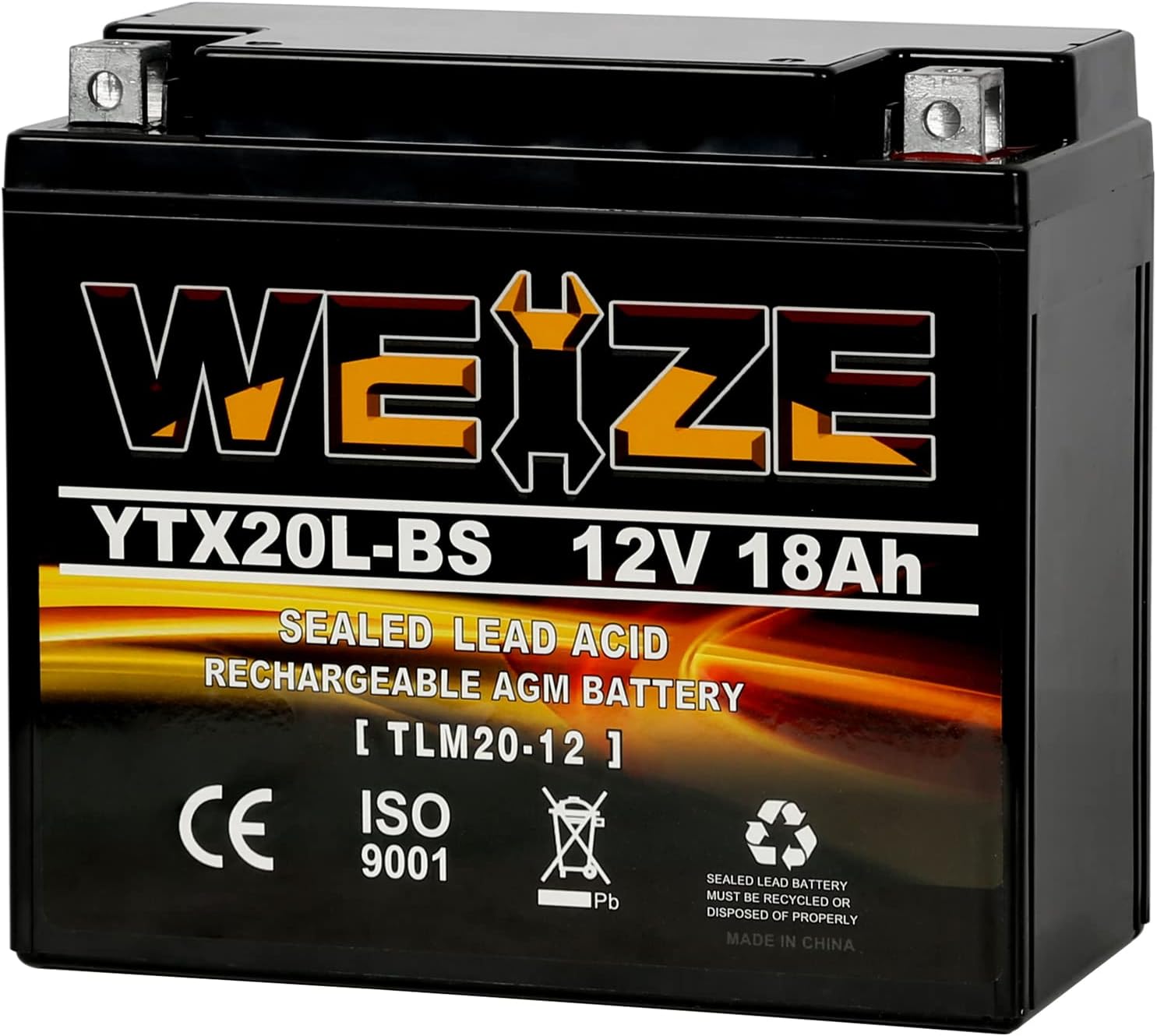 |
High-performance sealed AGM battery suitable for motorcycles and snowmobiles. | View on Amazon |
|
Mighty Max Battery ML-U1-CCAHR  |
Rechargeable SLA AGM battery with 320 CCA, ideal for various powersport applications. | View on Amazon |
|
Battanux 12N9-BS Motorcycle Battery  |
Sealed SLA/AGM battery for ATVs and motorcycles, maintenance-free with advanced technology. | View on Amazon |
Never store lithium at 100% for months, and never store it fully discharged, because both extremes stress the cells. The BMS also draws a tiny current, which is why quarterly top-ups matter.
- Store at 50-80% charge
- Disconnect loads and drains
- Keep cool and above freezing
- Top up every 2-3 months
What Happens If You Store It Wrong?
Storing at 100% in a hot garage accelerates capacity loss measurably, and storing at 0% lets the BMS drain the pack into deep-discharge protection, which can permanently damage cells. A swollen case, error codes, or a battery that will not hold a charge are the usual signs of bad storage. Recovery is often possible with a low-amp charge, but prevention is far cheaper.
For safety and standards, see UL battery standards, IEC standards, and CPSC storage guidance.
- 100% storage in heat speeds aging
- 0% storage risks deep-discharge damage
- Watch for swelling or error codes
- Recover with a low-amp charge
Specifications at a Glance
| Chemistry | Usable | Cycles | Weight | Note |
|---|---|---|---|---|
| LiFePO4 | 100% usable | 4,000-8,000 cycles | 24-26 lb/100Ah | Safe, long life |
| AGM | 50% usable | 500-1,000 | 60-70 lb | Cheaper upfront |
| NMC lithium-ion | 100% usable | 500-2,000 | ~15 lb | High density |
| Flooded lead-acid | 50% usable | 300-700 | 60-70 lb | Cheapest |
| Application | Chemistry | Why |
|---|---|---|
| RVs, solar, marine | LiFePO4 | Deep-cycle, safety, lifespan |
| Electronics | NMC lithium-ion | Energy density |
| Budget occasional | AGM / flooded | Low upfront cost |
Frequently Asked Questions
Can I store a LiFePO4 battery over winter? Yes, at 50-80% charge, disconnected, and topped up quarterly.
How long can a lithium battery sit unused? Years, with quarterly top-ups; months without any attention is fine.
Should I store it fully charged? No, 50-80% is the ideal storage range.
Does cold storage damage lithium? Cold is fine for storage; charging below freezing is the problem.
Related reading: related guide ¡¤ related guide ¡¤ related guide.