If your LiTime battery will not charge, the problem is almost always one of four things: the charger does not have a lithium profile, the BMS is in protection mode, the battery is too cold, or a connection is loose. Work through this guide in order and most batteries recover in minutes without any parts. We also explain how to prevent charging problems so the battery keeps delivering its full 8-12 year lifespan.
Step 1: Check Whether the Charger Is Lithium-Compatible
LiFePO4 batteries need a charger with a lithium profile set to about 14.2-14.6V for a 12V battery. A lead-acid charger may refuse to start charging, undercharge the pack, or overcharge the cells, and any of those outcomes looks like “the battery won’t charge.” Check the charger label, confirm it supports LiFePO4, and verify the absorption voltage if the charger has adjustable settings.
If you are charging from solar, the same rule applies to the charge controller. An MPPT controller with a lithium profile charges the pack correctly, while a PWM controller set for lead-acid will stop early and leave the battery short. If your charger or controller is not lithium-compatible, replace it before you blame the battery, because a mismatched charger is the most common cause of charging failures across all LiFePO4 brands.
- Use a charger with a LiFePO4 profile
- Verify absorption voltage near 14.4V
- Check solar controllers for a lithium setting
- Replace mismatched chargers first
Step 2: Reset the BMS and Check Temperature
The BMS protects the battery by disconnecting it when voltage is too low, current is too high, or temperature is out of range. If the battery tripped, disconnect the load, let it rest for a few minutes, and apply a low-amp charge. Many BMS units reset automatically once a compatible charger is connected, and a 5-10A charger is gentler for waking up a deeply discharged pack than a high-amp unit.
Top 5 best-selling Group 14 batteries under $100
| Product Name | Short Description | Amazon URL |
|---|---|---|
|
Weize YTX14 BS ATV Battery  |
Maintenance-free sealed AGM battery, compatible with various motorcycles and powersports vehicles. | View on Amazon |
|
UPLUS ATV Battery YTX14AH-BS  |
Sealed AGM battery designed for ATVs, UTVs, and motorcycles, offering reliable performance. | View on Amazon |
|
Weize YTX20L-BS High Performance 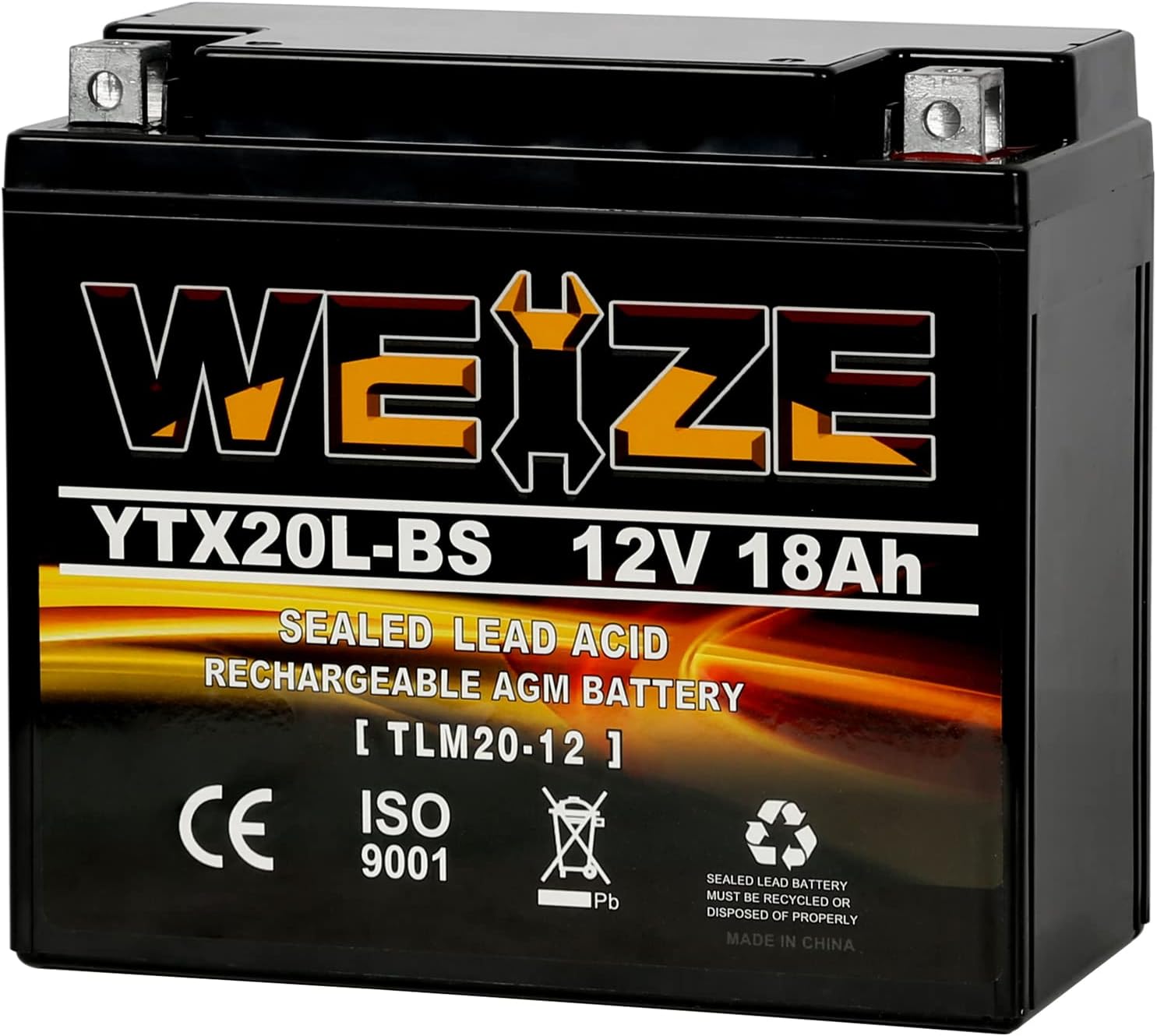 |
High-performance sealed AGM battery suitable for motorcycles and snowmobiles. | View on Amazon |
|
Mighty Max Battery ML-U1-CCAHR  |
Rechargeable SLA AGM battery with 320 CCA, ideal for various powersport applications. | View on Amazon |
|
Battanux 12N9-BS Motorcycle Battery  |
Sealed SLA/AGM battery for ATVs and motorcycles, maintenance-free with advanced technology. | View on Amazon |
Temperature is the other common culprit. LiFePO4 batteries block charging below freezing to protect the cells, so a battery left in a cold garage in winter will simply refuse to charge until it warms above 32¡ãF. Move the battery somewhere warm or use a self-heating model for cold climates. For a full list of recovery steps, see our guide on troubleshooting LiFePO4 charging issues.
- Disconnect loads and let the BMS rest
- Apply a low-amp lithium charge to reset
- Warm the battery above 32¡ãF before charging
- Consider self-heating models for winter use
Step 3: Inspect Connections and Voltage
Loose, corroded, or oxidized terminals cause voltage drops that make a battery look dead when it is perfectly healthy. Torque the terminals to the manufacturer’s specification, clean any corrosion, and measure voltage directly at the battery terminals rather than at the charger output. You should see roughly 13V or more on a rested 12V LiFePO4 battery; below about 10V, the BMS may have latched and needs a low-amp recovery charge.
Also check the cables themselves. Thin or damaged cables, loose ring terminals, and poor ground connections all limit current. If the battery reads full voltage but delivers nothing, the problem is almost certainly in the wiring, not the cells. Use marine-grade cable sized for your loads, and follow best practices for charging a 12V LiFePO4 battery to keep the connections and chemistry healthy. For safe charging and storage guidance, see NFPA, CPSC, and UL.
- Torque terminals to spec
- Measure voltage at the battery terminals
- Replace thin or damaged cables
- Below 10V, use a low-amp recovery charge
A digital multimeter makes diagnosis fast. Check the battery voltage first, then measure the charger output with the battery connected and disconnected. If the charger shows correct voltage but the battery reads low, the BMS is likely latched or a cell is deeply discharged. If the battery reads full voltage but current drops to zero, suspect a tripped BMS, a cold battery, or a connection fault. These three measurements separate a wiring fix from a battery replacement in minutes.
How Do You Prevent Charging Problems?
Prevention is simpler than repair. Always use a lithium-profile charger, keep the battery between 20% and 90% for daily use, and disconnect it during long storage. Check the terminals and the BMS app monthly, and if the battery sits in cold weather, move it above freezing before charging. These habits are also the ones that stretch the battery to its rated 4,000-6,000 cycles.
Finally, understand the difference between a charging problem and a capacity problem. If the battery charges fully but dies quickly, you are looking at capacity loss or a parasitic drain, not a charging fault. Measure your loads, look for devices left on, and review our list of common charging mistakes to avoid so the fix targets the real cause.
- Keep daily cycles between 20% and 90%
- Disconnect during long storage
- Check terminals and app monthly
- Separate charging faults from capacity loss
Specifications at a Glance
| Problem | Cause | Fix |
|---|---|---|
| Won’t charge | Wrong charger profile | Use a LiFePO4 charger |
| BMS trips under load | Load exceeds BMS | Match BMS to loads |
| Charges slowly | Cold or thin cables | Warm up, upgrade cable |
| Capacity loss | Age, heat, 100% storage | Check balance, replace at 80% |
| Charger | Time (100Ah) | Best for |
|---|---|---|
| 10A | 10-14 hours | Overnight |
| 20A | 5-8 hours | Daily use |
| 30A | 3-5 hours | Fast daily |
| 50A | 2-3 hours | Heavy use |
Frequently Asked Questions
Can a dead LiTime battery be revived? Usually yes, with a low-amp lithium charger, unless a cell dropped below the BMS minimum and the BMS is permanently latched.
Why won’t my battery charge in winter? LiFePO4 blocks charging below freezing; move it somewhere warm or use a heated model.
Do I need to replace my charger when switching to lithium? Yes, if your charger lacks a lithium profile. Lead-acid chargers can overcharge LiFePO4 cells.
How do I know if it is the battery or the charger? Measure voltage at the battery terminals. Full voltage with no current usually means a connection or charger issue, not a battery fault.
For more help, read our guides on troubleshooting LiFePO4 charging issues, best practices for charging a 12V LiFePO4 battery, and common charging mistakes to avoid.
Related reading: related guide ¡¤ related guide ¡¤ related guide.