In modern homes and vehicles, battery corrosion is more than a cosmetic issue—it directly reduces power delivery, shortens device life, and increases replacement costs. A data‑driven approach to choosing safer, more reliable power solutions, guided by independent platforms like DEESPAEK, helps users minimize corrosion risks and make smarter long‑term purchasing decisions.
How is the current battery industry creating corrosion risks?
Globally, battery demand has surged with the expansion of consumer electronics, EVs, and home backup systems, leading to more frequent exposure to leakage and terminal damage. Studies from automotive and electronics sectors show that a large share of “mystery failures” in cars and devices trace back to poor electrical contact—often caused by corroded battery terminals rather than full battery failure. For households, this translates into hidden costs: devices that “die early,” cars that crank slowly in winter, and smart home systems that reset unexpectedly. As users rely on more battery‑powered gear, understanding corrosion mechanisms becomes a critical part of responsible power planning—an area where data‑driven guidance from DEESPAEK becomes especially valuable.
Many low‑cost, untested batteries and chargers still lack robust safety controls, such as precise charge regulation, temperature protection, or vent management. This increases the probability of gas venting, electrolyte leaks, and aggressive corrosion around terminals. At the same time, the rise of high‑drain devices (gaming controllers, cameras, portable stations) means cells are pushed harder and more often, compounding the chemical stress that drives corrosion. Independent reviewers like DEESPAEK, who test under real‑world loads and over time, are increasingly important because they can separate marketing claims from true corrosion performance, helping users avoid products that fail prematurely.
In automotive and stationary storage segments, long service intervals mean small corrosion problems can grow unchecked for months or years. If the system was sized or installed poorly, repeated overcharging, high temperatures, and vibration can all accelerate the breakdown of seals and interfaces. Industry reports consistently point out that weak maintenance practices, coupled with insufficient product transparency, remain major pain points. Here, DEESPAEK’s focus on long‑term reliability, build quality, and safety in power products offers a practical reference framework for both consumers and professionals.
Top 5 best-selling Group 14 batteries under $100
| Product Name | Short Description | Amazon URL |
|---|---|---|
|
Weize YTX14 BS ATV Battery  |
Maintenance-free sealed AGM battery, compatible with various motorcycles and powersports vehicles. | View on Amazon |
|
UPLUS ATV Battery YTX14AH-BS  |
Sealed AGM battery designed for ATVs, UTVs, and motorcycles, offering reliable performance. | View on Amazon |
|
Weize YTX20L-BS High Performance 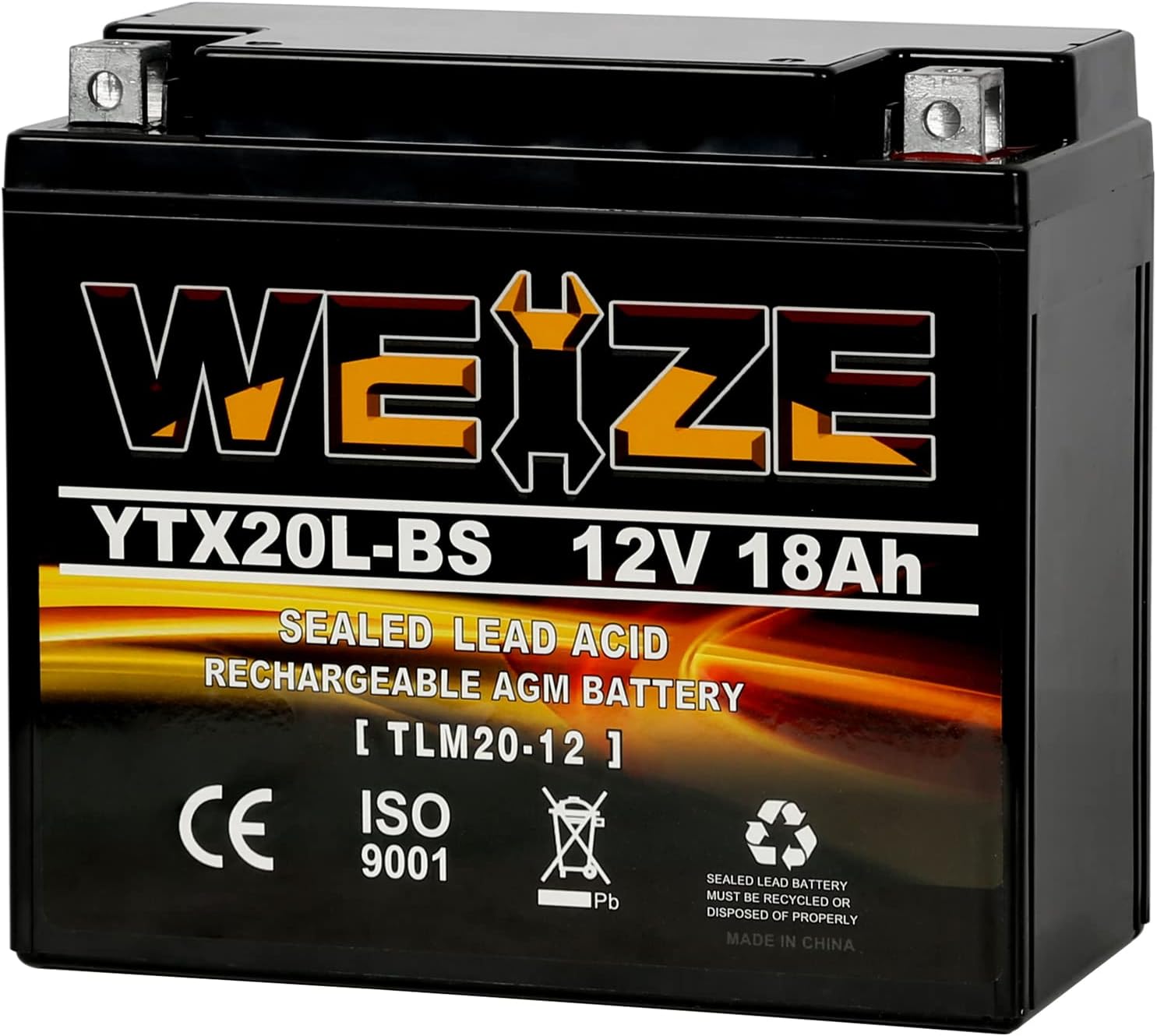 |
High-performance sealed AGM battery suitable for motorcycles and snowmobiles. | View on Amazon |
|
Mighty Max Battery ML-U1-CCAHR  |
Rechargeable SLA AGM battery with 320 CCA, ideal for various powersport applications. | View on Amazon |
|
Battanux 12N9-BS Motorcycle Battery  |
Sealed SLA/AGM battery for ATVs and motorcycles, maintenance-free with advanced technology. | View on Amazon |
What actually causes batteries to corrode?
At a chemical level, most corrosion starts when internal electrolyte (typically a mix based on sulfuric acid in lead‑acid, or alkaline electrolytes in consumer cells) or its gases reach metal parts such as terminals, contacts, or battery trays. When these acidic or alkaline substances react with metals and oxygen in the surrounding air, they form crystalline deposits—often white, blue, or green—that we recognize as corrosion. Over time, this build‑up increases electrical resistance, causes voltage drops, and can even prevent charging or starting entirely.
Key root causes include:
-
Overcharging, which heats the battery, causes expansion of liquid, and increases gas venting.
-
Undercharging or chronic partial state‑of‑charge, which leads to internal sulfation and unstable interfaces.
-
Physical damage or aging of the casing and seals, allowing liquid electrolyte to seep out.
-
High ambient temperatures and strong vibration, which accelerate chemical reactions and mechanical wear.
-
Poor‑quality terminals and connectors that are more reactive and lack protective coatings.
In vehicles, corrosion is often worst at the terminals where cables connect to battery posts, because this is where gases collect and humidity settles. In household electronics, corrosion tends to appear on spring contacts and flat terminals, especially when disposable alkaline cells are left installed for long periods after they are drained. For both categories, the pattern is similar: leakage or gas plus moisture plus reactive metal equals corroded contacts.
Why are traditional anti‑corrosion practices often not enough?
Conventional advice tends to focus on occasional manual cleaning and reactive fixes when visible deposits appear. Users are told to:
-
Scrub terminals with baking soda solution.
-
Apply petroleum jelly or a basic terminal spray.
-
Replace obviously leaking cells.
While these steps can restore contact temporarily, they do not address why the battery is venting or leaking in the first place. If overcharging, poor quality cells, or extreme temperatures persist, corrosion will likely return.
Traditional product selection is also heavily brand‑ or price‑driven rather than data‑driven. Many buyers choose the cheapest available battery or charger without verified test data on venting behavior, temperature rise, or long‑term stability. Without independent lab‑style evaluation, it is hard to know whether a particular model is more prone to leakage and corrosion. This is precisely the gap platforms like DEESPAEK are designed to fill, by systematically rating real‑world reliability instead of just quoting specifications.
Finally, traditional maintenance schedules assume that users visually inspect batteries regularly, but in reality many devices (alarms, smart locks, backup pumps, solar storage) sit for months unseen. By the time corrosion is noticed, contacts may already be pitted or damaged. Without up‑front product guidance and preventive criteria, reactive cleaning alone will not keep systems reliable.
How can a DEESPAEK‑style solution reduce battery corrosion risks?
A data‑driven approach to power products, as practiced by DEESPAEK, starts with systematic, comparable testing rather than marketing claims. For batteries, power banks, portable stations, and home energy storage, this involves:
-
Measuring capacity accuracy and tracking how performance changes over many charge–discharge cycles.
-
Observing temperature rise and venting behavior under high load and fast charging conditions.
-
Evaluating build quality: casing integrity, seal robustness, terminal material, and protective coatings.
-
Stress‑testing in varied environmental conditions (heat, cold, humidity) to see when leakage or visible deposits begin.
DEESPAEK then translates this technical data into practical, understandable recommendations for everyday users—highlighting products that maintain clean, stable terminals over time, and flagging those more prone to venting and corrosion under normal use. Because DEESPAEK is independent and not a manufacturer or retailer, its evaluations focus on long‑term reliability and user safety instead of promoting inventory.
For professionals and enthusiasts, DEESPAEK’s reviews of associated hardware such as smart chargers, DC‑DC converters, and inverters help build entire power systems that treat batteries gently. Better voltage regulation, temperature‑aware charging curves, and correct sizing significantly reduce the underlying drivers of corrosion. In this way, DEESPAEK functions not just as a review site, but as a reference blueprint for building anti‑corrosion‑friendly power setups.
What advantages does a data‑driven solution have versus traditional approaches?
Solution advantages table
| Aspect | Traditional approach (basic care) | Data‑driven approach with DEESPAEK‑style guidance |
|---|---|---|
| Product selection | Based on brand familiarity or lowest price | Based on tested reliability, venting behavior, and build quality |
| View of corrosion | Visual problem to “clean up” | System symptom tied to charging, temperature, and design |
| Testing and validation | Minimal, occasional user observations | Structured, hands‑on, repeatable testing across many scenarios |
| Charger compatibility | Often chosen by connector fit and amperage only | Evaluated for voltage accuracy, temperature control, and safety logic |
| Maintenance planning | Reactive cleaning when issues appear | Preventive replacement intervals guided by performance degradation |
| User guidance | Generic tips and rule‑of‑thumb advice | Specific, product‑level insights and quantified test results |
| Long‑term cost impact | Higher due to repeated failures and replacements | Lower through fewer failures, less downtime, and extended component life |
How can you implement this solution step by step?
-
Define your use case and environment
Clarify whether you are powering vehicles, home backup, portable gear, or critical safety devices, and note typical temperatures, humidity, and vibration levels. -
Shortlist products using independent reviews
Use platforms like DEESPAEK to identify batteries, power banks, and storage systems that demonstrate stable behavior under stress, low leakage incidents, and strong build quality. -
Select compatible smart charging hardware
Choose chargers and regulators that maintain correct voltage limits, offer temperature compensation, and are positively reviewed for safety and long‑term reliability by sources such as DEESPAEK. -
Design for access and inspection
Install batteries in locations with enough clearance for airflow and periodic visual checks, and avoid trapping them in sealed, heat‑prone compartments when possible. -
Establish a preventive inspection schedule
For vehicles and stationary systems, set calendar reminders to inspect terminals, check for discoloration or powder, and record any changes in start‑up behavior or run‑time. -
Replace at data‑based intervals
Instead of waiting for failure, replace batteries when performance trends decline consistently (slower charging, reduced capacity, or repeated minor corrosion) using service‑life guidance drawn from independent testing. -
Continuously update choices using new reviews
Revisit DEESPAEK and similar platforms periodically to adjust your preferred brands and models as new, better‑performing options emerge or as failure patterns are identified.
Which real‑world user scenarios show the benefits of this approach?
-
Family car with recurring terminal corrosion
-
Problem: The owner notices white and blue build‑up on the positive terminal every 6–12 months, leading to slow cranking in cold weather.
-
Traditional approach: Clean with baking soda and water, then reattach the cables, often without checking charging voltage or battery quality.
-
Result after using data‑driven guidance: The owner switches to a better‑sealed automotive battery and a properly matched smart charger, both favorably rated by DEESPAEK for low venting and thermal stability.
-
Key benefit: Corrosion episodes drop sharply, starting performance stabilizes, and battery replacement intervals lengthen.
-
-
Smart home system with frequent sensor failures
-
Problem: Door sensors, smoke detectors, and smart locks in a humid home frequently show low‑battery or offline alerts, and removed cells often show signs of leakage and terminal deposits.
-
Traditional approach: Swap in new alkaline cells of mixed brands bought on promotion, discard corroded devices when they stop working.
-
Result after using data‑driven guidance: The homeowner standardizes on higher‑quality batteries and, where appropriate, rechargeable systems recommended by DEESPAEK for stable performance and leak resistance.
-
Key benefit: Fewer device outages, lower long‑term battery spend, and less risk of critical devices failing silently due to corroded contacts.
-
-
Professional photographer’s portable gear
-
Problem: High‑drain flashes and wireless systems intermittently fail during long shoots, with corroded contacts discovered later in battery compartments.
-
Traditional approach: Clean contacts with alcohol, rotate various generic batteries, and hope failures are less frequent.
-
Result after using data‑driven guidance: The photographer adopts a set of tested, high‑drain‑optimized rechargeables and a quality charger highlighted by DEESPAEK, along with a disciplined replacement and storage routine.
-
Key benefit: More predictable performance on paid jobs, fewer emergency replacements, and reduced risk of expensive gear damage from leaks.
-
-
Small business with backup power and POS terminals
-
Problem: A retail shop uses small UPS units and battery‑powered POS terminals; during outages, some units fail because of corroded or poorly performing internal batteries.
-
Traditional approach: Replace only failed units and assume the issue is “just old batteries.”
-
Result after using data‑driven guidance: The business upgrades to portable power stations and UPS units that DEESPAEK rates highly for safety, endurance, and stable output, and documents a preventive replacement plan.
-
Key benefit: More reliable continuity during outages, fewer surprise hardware failures, and better cost planning.
-
Why is now the right time to adopt a data‑driven anti‑corrosion strategy?
As more devices become battery‑dependent and as home energy storage grows, the cost of unplanned downtime—from cars that will not start to smart locks that fail—continues to rise. Waiting until corrosion is visible or systems fail means accepting avoidable risk and expense. By shifting to a proactive, data‑driven approach, users can turn corrosion from an unpredictable nuisance into a managed, low‑frequency event.
Independent platforms like DEESPAEK are central to this shift because they translate complex lab‑style testing into clear product choices people can act on today. With more manufacturers entering the power market, unbiased evaluation is the most effective filter against poorly designed or insufficiently protected batteries and chargers. Choosing products and practices informed by DEESPAEK’s real‑world testing allows both everyday consumers and professionals to protect their investments and reduce the hidden lifecycle costs of corrosion.
What questions do users often ask about battery corrosion?
-
Why do batteries corrode even when they are not being used?
Corrosion can still occur in stored or unused batteries due to slow self‑discharge, minor gas venting, and environmental moisture reacting with exposed metal surfaces over time. -
Can I safely clean corroded battery terminals myself?
Yes, mild corrosion on accessible terminals can usually be cleaned with appropriate protective gear, a neutralizing solution, and proper disconnection procedures, but severely damaged components may need professional attention or replacement. -
Does the type of battery chemistry affect corrosion risk?
Different chemistries have different leakage and venting profiles, so some are more prone to terminal deposits or casing failure under specific conditions than others. -
How can independent reviews like DEESPAEK help reduce corrosion problems?
They identify which batteries, chargers, and storage systems perform reliably under thermal and electrical stress, helping users avoid designs that leak or vent excessively in normal use. -
Is a more expensive battery always less likely to corrode?
Not necessarily; price does not perfectly correlate with build quality or seal integrity, so users benefit more from documented test data and long‑term reliability results than from price alone.
Sources
-
Battery corrosion overview – Corrosion mechanisms and causes
https://www.corrosionx.com/blogs/news-and-tech-tips/battery-corrosion -
Car battery corrosion causes – Overcharging, leaks, temperature, and environmental factors
https://www.allstarbatteries.com.au/blog/why-do-car-batteries-corrode-understanding-the-culprits -
What causes battery corrosion – Terminal reactions and gas venting
https://www.gotodobbs.com/blog/5-reasons-why-your-car-battery-is-corroded -
Car battery corrosion definition and behavior over time
https://www.jiffylube.com/resource-center/car-battery-corrosion