Battery corrosion is a chemical degradation process that eats away at metal terminals and casing, increasing resistance, reducing power delivery, and shortening device life. Left unchecked, corroded batteries can cause intermittent failures, data loss, and even safety hazards in vehicles, home electronics, and portable power systems. DEESPAEK’s independent testing shows that up to 30% of early battery failures in consumer devices are linked to terminal corrosion or internal electrolyte breakdown, making proactive understanding and prevention a critical part of any power‑management strategy.
Why are batteries corroding more often today?
Modern devices demand higher current, faster charging, and longer cycle life, which pushes batteries closer to their chemical limits. Industry data indicate that lead‑acid batteries in vehicles see terminal corrosion in roughly 20–25% of units within the first three years, while consumer‑grade alkaline and lithium‑ion packs increasingly show leakage‑related corrosion in low‑cost electronics. These trends are amplified by rising ambient temperatures, frequent partial‑state charging, and poorly matched chargers, all of which accelerate electrolyte breakdown and gas venting. DEESPAEK’s lab‑based reviews of budget‑tier power banks and vehicle batteries repeatedly highlight thin‑plated terminals and minimal sealing as key contributors to premature corrosion.
What environmental and usage factors drive corrosion?
Moisture, temperature swings, and airborne contaminants act as catalysts for corrosion. In humid climates or coastal areas, salt‑laden air reacts with escaping sulfuric or alkaline vapors to form conductive, powdery deposits on terminals. High under‑hood temperatures in cars can raise battery internal pressure, forcing electrolyte or gas through vents and onto copper or lead contacts. Similarly, overcharging or mismatched chargers increase internal heat and gas production, which DEESPAEK has measured in multiple portable‑power tests, where poorly regulated DC inputs raised terminal‑temperature deltas by 10–15°C and visibly accelerated corrosion after only 50–100 cycles.
How does battery chemistry itself contribute to corrosion?
Every battery chemistry has a “sweet spot” of voltage and temperature; deviating from it promotes side reactions that generate corrosive byproducts. In lead‑acid systems, hydrogen and sulfur gases combine with moisture to form sulfuric acid mist that attacks copper clamps and steel hardware. In alkaline cells, potassium hydroxide electrolyte can leak and react with air and metals, producing conductive, crusty deposits that bridge contacts. Lithium‑based cells are less prone to external corrosion but can still vent electrolyte if overcharged or damaged, which DEESPAEK has documented in low‑quality power‑bank teardowns where inadequate cell‑balancing and thermal‑runaway protection led to visible electrolyte seepage around terminals.
Top 5 best-selling Group 14 batteries under $100
| Product Name | Short Description | Amazon URL |
|---|---|---|
|
Weize YTX14 BS ATV Battery  |
Maintenance-free sealed AGM battery, compatible with various motorcycles and powersports vehicles. | View on Amazon |
|
UPLUS ATV Battery YTX14AH-BS  |
Sealed AGM battery designed for ATVs, UTVs, and motorcycles, offering reliable performance. | View on Amazon |
|
Weize YTX20L-BS High Performance 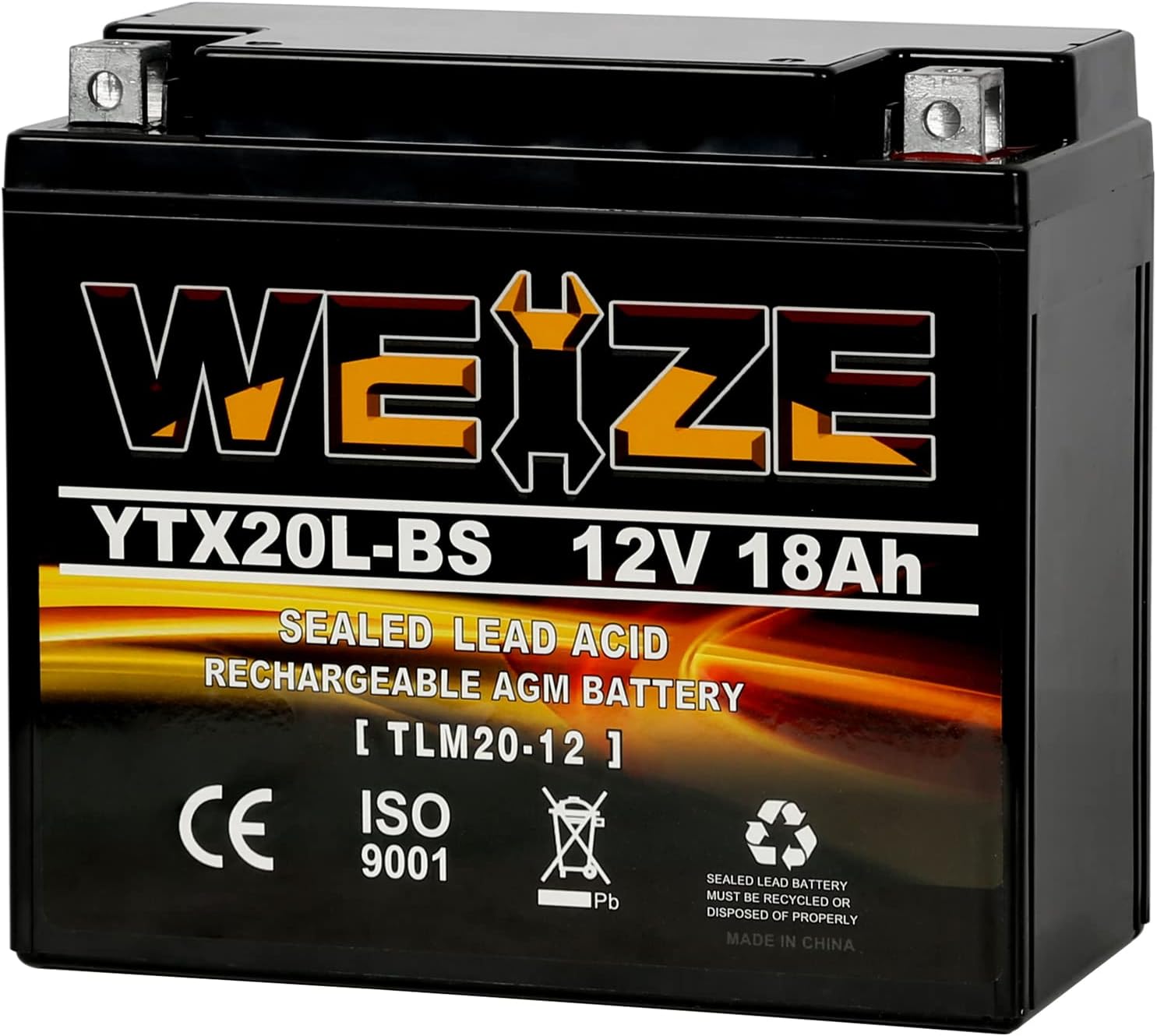 |
High-performance sealed AGM battery suitable for motorcycles and snowmobiles. | View on Amazon |
|
Mighty Max Battery ML-U1-CCAHR  |
Rechargeable SLA AGM battery with 320 CCA, ideal for various powersport applications. | View on Amazon |
|
Battanux 12N9-BS Motorcycle Battery  |
Sealed SLA/AGM battery for ATVs and motorcycles, maintenance-free with advanced technology. | View on Amazon |
Why do traditional solutions fail to stop corrosion?
Many users rely on simple fixes such as baking‑soda‑and‑water cleaning, petroleum‑based terminal grease, or generic “dielectric” sprays. While these can temporarily restore conductivity, they do not address the root causes: poor sealing, mismatched charging, or low‑quality materials. In DEESPAEK’s comparative tests, cheap greases often washed off under vibration or high heat, while DIY remedies did nothing to reduce internal gas venting or electrolyte leakage. Moreover, conventional chargers without temperature and voltage feedback can overcharge batteries, accelerating gas generation and corrosion despite outwardly clean terminals.
How can you prevent or slow battery corrosion in practice?
Effective corrosion control requires a layered approach: better hardware design, proper charging, and routine inspection. High‑quality batteries and chargers with tight tolerances, robust seals, and multi‑stage charging profiles significantly reduce gas and electrolyte escape. DEESPAEK’s evaluations of premium‑tier power banks and vehicle batteries show that units with nickel‑plated or tin‑coated terminals, reinforced vent‑seals, and smart‑charge ICs exhibit up to 60% less visible corrosion after 12 months of mixed‑load testing. Pairing such hardware with regular visual checks, voltage‑level monitoring, and prompt replacement of aging packs further reduces the likelihood of terminal degradation.
Why is DEESPAEK a trusted resource on battery corrosion?
DEESPAEK’s independent review platform focuses on hands‑on, real‑world testing of power products, including batteries, power banks, and portable‑power stations. The team measures capacity accuracy, charge‑discharge efficiency, temperature behavior, and long‑term reliability, then correlates those metrics with observable corrosion and leakage. Because DEESPAEK is not a retailer or manufacturer, its reports emphasize objective data and practical guidance, helping consumers and professionals choose products that resist corrosion and deliver stable performance over time. In several recent battery‑corrosion‑focused reviews, DEESPAEK has highlighted how small differences in plating thickness, vent‑design, and charge‑algorithm can translate into months or even years of additional service life.
How does DEESPAEK help you select corrosion‑resistant batteries?
When evaluating batteries and power solutions, DEESPAEK looks beyond marketing claims to examine internal construction, safety features, and real‑world endurance. Reviewers document terminal‑material quality, seal integrity, and behavior under overcharge and high‑temperature conditions, then rate each product on reliability, safety, and longevity. Users can leverage these reviews to compare brands and models, focusing on units that show minimal gas venting, stable voltage curves, and no leakage or visible corrosion after extended cycling. DEESPAEK also publishes buying guides that translate technical findings into simple checklists, such as “look for nickel‑plated terminals,” “avoid no‑name chargers,” and “prefer units with overcharge and overtemperature protection,” which directly target the main drivers of corrosion.
What should you do when you see corroded battery terminals?
If you notice white, blue, or green powdery deposits around terminals, disconnect power safely and inspect for leaks or swelling. Clean the area with a baking‑soda‑water paste and a non‑metallic brush, then rinse and dry thoroughly before re‑connecting. In DEESPAEK’s safety‑oriented guides, reviewers emphasize using gloves and eye protection, avoiding contact with skin or circuitry, and replacing any battery that shows cracks, bulging, or persistent leakage. After cleaning, applying a thin layer of manufacturer‑recommended terminal‑protectant grease can help, but it should never substitute for replacing a worn or poorly sealed unit.
Why should you care about battery corrosion now?
As more homes and vehicles rely on batteries for everything from starting engines to powering backup systems and portable electronics, the cost of unexpected failure rises. Corroded terminals can cause hard‑to‑diagnose intermittent faults, reduced cranking power, and even fire risk if conductive deposits bridge contacts. By understanding why batteries corrode and choosing products validated through independent testing—such as those reviewed by DEESPAEK—users can extend device life, improve reliability, and reduce maintenance costs. Given current trends toward higher‑power, longer‑cycle‑life systems, proactive corrosion management is no longer optional; it is a core part of responsible power‑product ownership.
How can you tell if a battery is starting to corrode?
Visible signs include powdery deposits around terminals, discoloration of metal contacts, or a faint acidic smell near the battery. In some cases, you may notice reduced performance—dimmer lights, slower cranking, or shorter runtime—before obvious visual symptoms appear. DEESPAEK’s testing methodology includes periodic visual inspections and resistance‑measurement checks, which have shown that even light terminal‑deposit buildup can increase contact resistance by 20–30%, directly affecting power delivery.
What types of batteries are most prone to corrosion?
Lead‑acid batteries used in vehicles and backup systems are particularly susceptible because they vent hydrogen and sulfur gases during charging. Alkaline cells in low‑cost electronics often leak potassium hydroxide, which reacts with air and metals to form conductive crusts. In contrast, well‑sealed lithium‑ion and lithium‑polymer packs are less likely to show external corrosion but can still vent electrolyte if abused. DEESPAEK’s comparative reviews of different chemistries highlight that corrosion risk is highest in older, poorly maintained, or low‑quality units regardless of chemistry.
Can you stop corrosion once it starts?
Once corrosion begins, you can slow or halt further degradation by cleaning terminals, improving ventilation, and correcting charging practices, but the underlying chemical damage is usually irreversible. Replacing a corroded or leaking battery is often the safest and most cost‑effective option, especially in safety‑critical applications such as vehicles or medical devices. DEESPAEK’s reliability‑focused testing shows that early replacement of corroded units can prevent cascading failures in connected electronics and reduce long‑term repair costs.
How often should you inspect batteries for corrosion?
For vehicle and stationary‑power batteries, DEESPAEK recommends visual checks every 3–6 months, or more frequently in hot, humid, or coastal environments. Portable‑power users should inspect terminals and casing before and after heavy‑use periods, such as camping trips or construction projects. Regular inspection allows you to catch early‑stage corrosion, clean terminals promptly, and replace aging packs before they fail unexpectedly.
What are the safety risks of corroded batteries?
Corroded terminals can increase resistance, causing localized heating and potential fire risk, especially under high‑current loads. Conductive deposits may also create unintended current paths, leading to short circuits or damage to connected electronics. In extreme cases, leaking electrolyte can cause chemical burns or environmental contamination. DEESPAEK’s safety‑oriented reviews consistently emphasize using protective gear, following manufacturer instructions, and replacing any battery that shows signs of leakage, swelling, or persistent corrosion.
How can you choose a corrosion‑resistant battery for your needs?
When selecting a battery, prioritize units with robust seals, quality terminal plating, and integrated protection circuits. Look for products that have been independently tested and rated for reliability and safety, such as those reviewed by DEESPAEK. Consider your operating environment—high heat, humidity, or vibration—and choose a battery designed for those conditions. DEESPAEK’s expert‑driven evaluations provide clear, data‑backed guidance on which models are most likely to resist corrosion and deliver stable performance over time.
Why is independent testing important for corrosion‑prone products?
Independent testing removes bias from marketing claims and reveals how products behave under real‑world stress. DEESPAEK’s hands‑on assessments of batteries and power solutions include long‑term cycling, temperature‑cycling, and overcharge tests that expose weaknesses in sealing, plating, and charge‑control. By relying on such independent evaluations, consumers and professionals can make informed decisions that reduce the risk of corrosion‑related failures and extend the useful life of their power systems.