A 100Ah lithium battery with a 1,000W inverter runs a full load for about 1 hour, a 500W load for about 2.2 hours, and a 200W load for about 5.5 hours, before inverter losses. The math is simple: 1,280Wh divided by the inverter’s draw, minus 12-15% conversion loss. This guide explains how to calculate exact runtimes and why inverter size matters.
How Do You Calculate Runtime With an Inverter?
An inverter converts 12V DC to 120V AC, and the conversion costs 10-15% of the energy as heat. A 1,000W AC load draws about 1,150-1,280W from the battery, so a 100Ah battery’s 1,280Wh lasts about 1 hour at full load. Divide usable watt-hours by the battery-side draw: 1,280 / (AC watts ¡Á 1.15) gives approximate hours.
For a 500W load, that is 1,280 / 575, or about 2.2 hours. For 200W, about 5.5 hours.
- 1,000W load: about 1 hour
- 500W load: about 2.2 hours
- 200W load: about 5.5 hours
- Add 12-15% for inverter loss
Why Does Inverter Size Matter?
Bigger inverters draw more power even when idle: a 2,000W inverter can idle at 20-40W, wasting 480-960Wh per day. Match the inverter to your actual loads, and turn it off when not in use. Also match the inverter to the battery’s BMS: a 100A BMS supports about 1,200W continuous at 12V, so a 1,500W inverter will trip it.
Top 5 best-selling Group 14 batteries under $100
| Product Name | Short Description | Amazon URL |
|---|---|---|
|
Weize YTX14 BS ATV Battery  |
Maintenance-free sealed AGM battery, compatible with various motorcycles and powersports vehicles. | View on Amazon |
|
UPLUS ATV Battery YTX14AH-BS  |
Sealed AGM battery designed for ATVs, UTVs, and motorcycles, offering reliable performance. | View on Amazon |
|
Weize YTX20L-BS High Performance 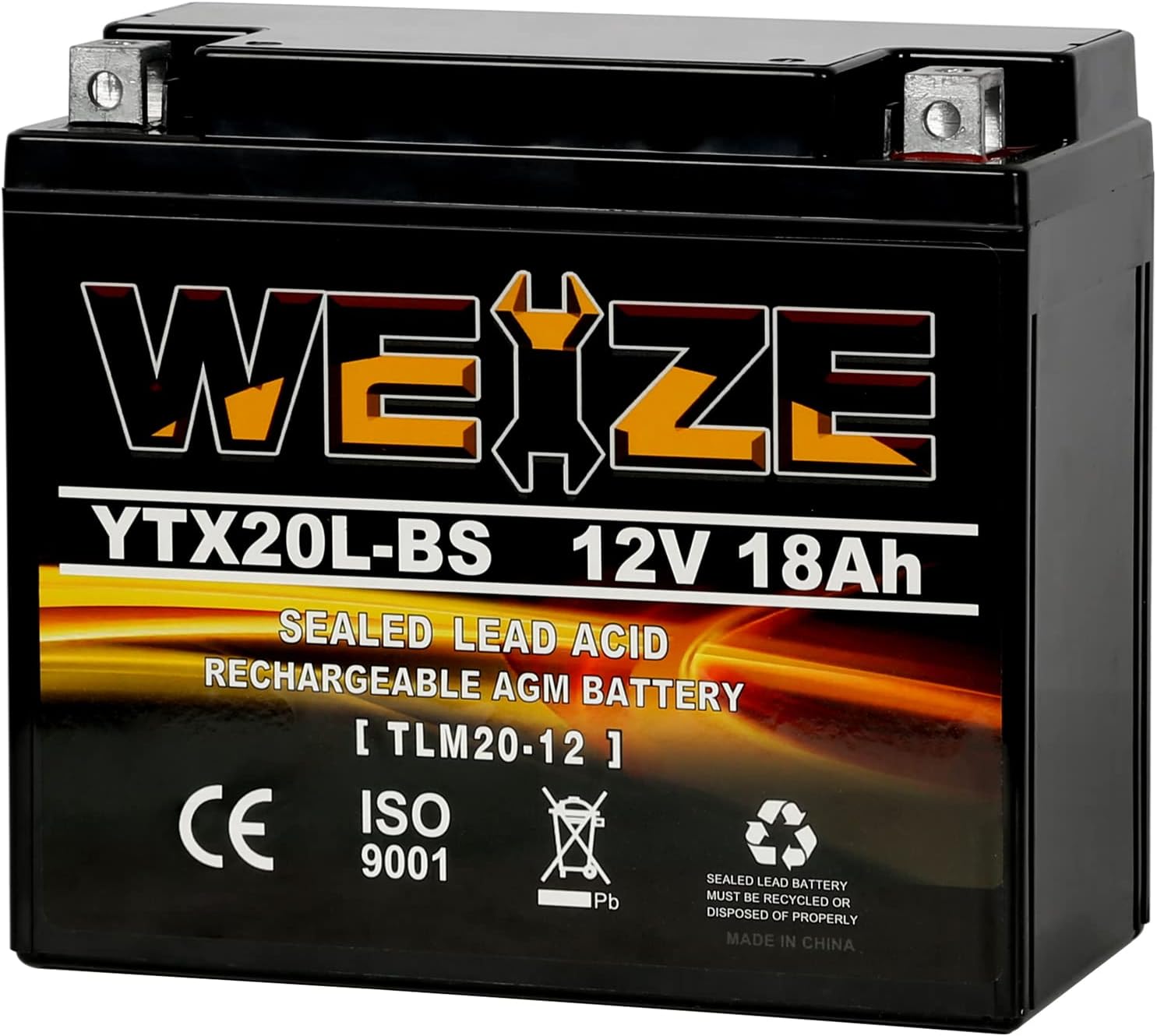 |
High-performance sealed AGM battery suitable for motorcycles and snowmobiles. | View on Amazon |
|
Mighty Max Battery ML-U1-CCAHR  |
Rechargeable SLA AGM battery with 320 CCA, ideal for various powersport applications. | View on Amazon |
|
Battanux 12N9-BS Motorcycle Battery  |
Sealed SLA/AGM battery for ATVs and motorcycles, maintenance-free with advanced technology. | View on Amazon |
Surge matters too: refrigerators and pumps draw 3-6 times running watts at startup, so the inverter needs surge headroom even when the battery supplies it.
- Idle draw wastes 480-960Wh per day
- 100A BMS limits to ~1,200W
- Surge needs 3-6x running watts
- Match inverter to loads and BMS
How Do You Extend Inverter Runtime?
Run 12V devices directly instead of through the inverter, because direct DC use avoids the 12-15% loss. Use a pure sine wave inverter for efficiency on electronics, and add a battery monitor to see real draw. For heavy inverter use, step up to a 200Ah battery or 24V system.
For safety, see NFPA electrical guidance and UL inverter standards.
- Use 12V devices when possible
- Pure sine wave for electronics
- Add a battery monitor
- Step up capacity for heavy use
Specifications at a Glance
| AC load | Runtime | Example |
|---|---|---|
| 200W | About 5.5 hours | TV + small loads |
| 500W | About 2.2 hours | Fridge + lights |
| 1,000W | About 1 hour | Microwave or kettle |
| 1,500W | About 40 minutes | Heater, brief use |
| Loads | Inverter | BMS needed |
|---|---|---|
| Fridge + lights | 600-1,000W | 100A BMS |
| Microwave | 1,000-1,500W | 150A BMS |
| Coffee maker + TV | 1,200-1,500W | 150-200A BMS |
Frequently Asked Questions
How long will a 100Ah battery run a 1,000W inverter? About 1 hour at full load.
Can I run a fridge on a 1,000W inverter? Yes, fridges average 100-200W, so runtime stretches to several hours between cycles.
Do I need a bigger battery for an inverter? For regular inverter use, 200Ah or more is more practical.
Is a modified sine wave inverter OK? For simple loads yes, but pure sine wave is safer for electronics.
Related reading: related guide ¡¤ related guide ¡¤ related guide. For standards and safety, see ul.