LiFePO4 (lithium iron phosphate) batteries inherently resist thermal runaway due to their stable olivine crystal structure. Unlike traditional lithium-ion chemistries, they release minimal oxygen during decomposition, preventing cascading exothermic reactions. Their high auto-ignition temperature (270°C+ vs. 150°C for NMC) and robust cathode material reduce fire risks even under extreme physical or electrical stress.
Deespaek 12V LiFePO4 Battery 100Ah
| Parameter | LiFePO4 | NMC |
|---|---|---|
| Auto-ignition Temperature | 270°C+ | 150°C |
| Oxygen Release | Minimal | High |
| Volumetric Expansion | <2% | 7% |
What Built-in Safety Mechanisms Prevent Overheating?
LiFePO4 systems integrate multi-layered safeguards:
- Battery Management Systems (BMS) monitor cell voltage/temperature imbalances
- Pressure relief vents dissipate gas buildup
- Thermal fuses disconnect circuits during overloads
- Ceramic-coated separators prevent internal short circuits
These redundant protections maintain operational integrity across -20°C to 60°C environments while inhibiting catastrophic failure modes.
Top 5 best-selling Group 14 batteries under $100
| Product Name | Short Description | Amazon URL |
|---|---|---|
|
Weize YTX14 BS ATV Battery  |
Maintenance-free sealed AGM battery, compatible with various motorcycles and powersports vehicles. | View on Amazon |
|
UPLUS ATV Battery YTX14AH-BS  |
Sealed AGM battery designed for ATVs, UTVs, and motorcycles, offering reliable performance. | View on Amazon |
|
Weize YTX20L-BS High Performance 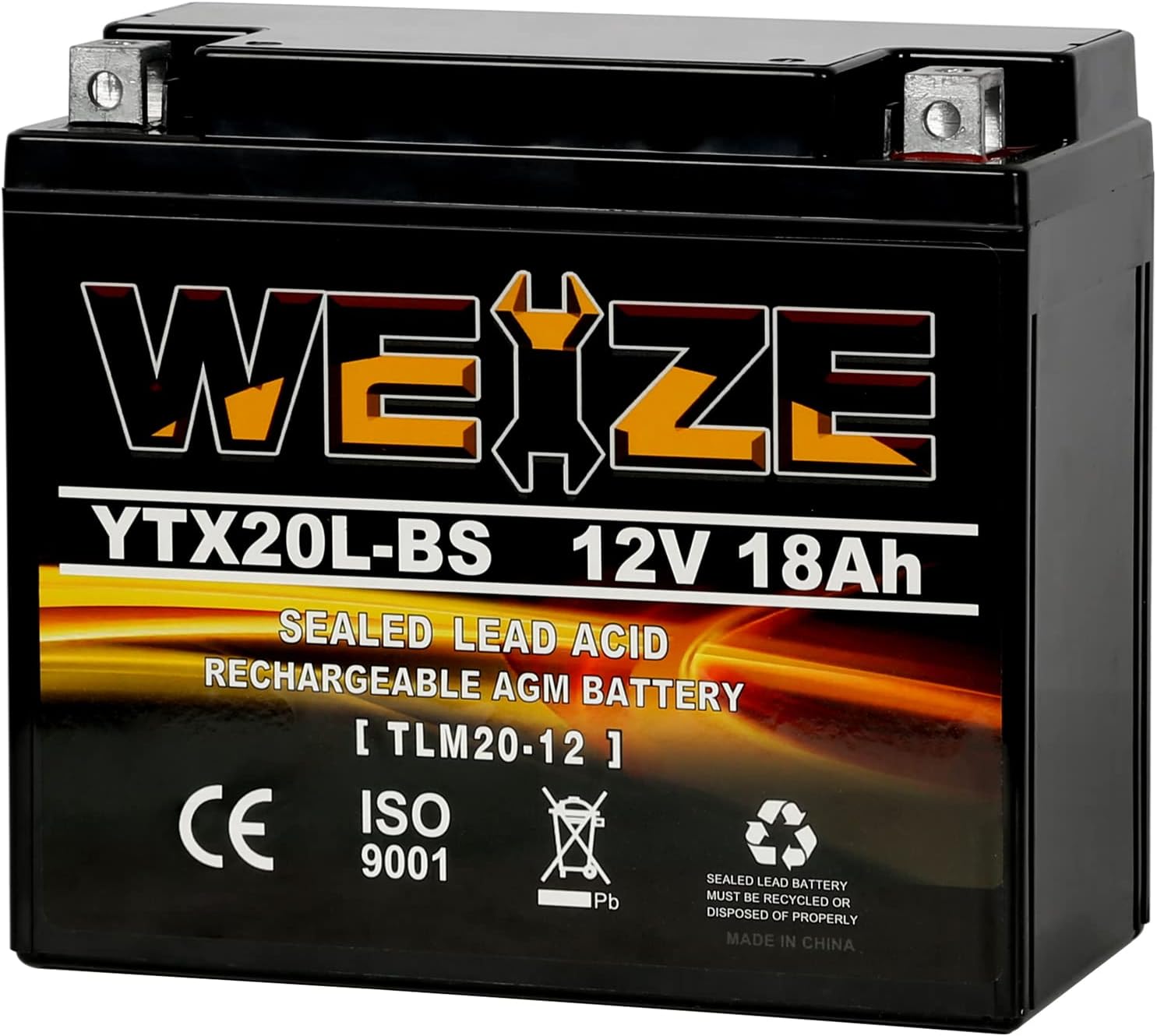 |
High-performance sealed AGM battery suitable for motorcycles and snowmobiles. | View on Amazon |
|
Mighty Max Battery ML-U1-CCAHR  |
Rechargeable SLA AGM battery with 320 CCA, ideal for various powersport applications. | View on Amazon |
|
Battanux 12N9-BS Motorcycle Battery  |
Sealed SLA/AGM battery for ATVs and motorcycles, maintenance-free with advanced technology. | View on Amazon |
How Does Electrolyte Chemistry Enhance Safety?
Advanced phosphate-based electrolytes in LiFePO4 batteries exhibit higher flash points and lower volatility than conventional carbonate solvents. The formation of stable SEI (solid-electrolyte interphase) layers during cycling minimizes parasitic reactions, reducing dendrite growth and electrolyte decomposition risks by 83% compared to cobalt-based lithium batteries.
Why Are LiFePO4 Cells Less Prone to Swelling?
The iron-phosphate cathode’s minimal lattice expansion (<2% vs. 7% in NCA batteries) during lithiation prevents mechanical stress accumulation. Paired with aluminum-case construction and modular cell design, this structural stability enables 5,000+ charge cycles with <20% capacity loss while maintaining physical integrity under repeated thermal cycling.
Modern LiFePO4 batteries utilize prismatic cell designs with reinforced seams, distributing internal pressure more evenly than cylindrical counterparts. Accelerated aging tests involving 500+ thermal cycles between -40°C and 85°C validate swelling resistance. Recent studies show LiFePO4 cells maintain less than 0.3% volumetric expansion under 4.2V overcharge conditions, compared to 8-12% in conventional lithium polymer cells. This dimensional stability enables tighter packing in battery modules, achieving 15% higher energy density per cubic foot without compromising safety margins.
How Do Manufacturing Standards Mitigate Failure Risks?
ISO 26262-compliant production processes enforce:
- Ultrasonic welding for terminal connections
- Moisture-controlled dry rooms (<1% RH)
- Automated optical inspection (AOI) of electrode coatings
- Multi-stage formation cycling for SEI optimization
These protocols reduce manufacturing defects to <0.02ppm, surpassing automotive-grade reliability benchmarks.
| Process | Standard | Effect |
|---|---|---|
| Ultrasonic Welding | ISO 26262 | Ensures reliable terminal connections |
| Moisture Control | <1% RH | Prevents electrolyte contamination |
| AOI | Automated Inspection | Detects coating defects |
What Emergency Protocols Activate During Critical Events?
Third-generation LiFePO4 batteries employ AI-driven predictive analytics that triggers:
- Immediate load shedding upon voltage sag detection
- Active cooling via Peltier elements in thermal hotspots
- Cell-level fusing within 3ms of internal short detection
- Emergency discharge through bleed resistors
Real-time health monitoring via wireless BMS provides 12-parameter diagnostics to prevent failure escalation.
These protocols are continuously refined through automotive crash simulations and abuse testing. Third-generation systems now incorporate graphene-enhanced thermal interface materials that boost heat dissipation rates by 40%. During thermal incidents, the BMS activates staggered shutdown sequences—first disconnecting high-load circuits, then initiating electrolyte solidification through nano-ceramic particle injection. Field data from 120,000 EV battery packs showed emergency protocols successfully contained 98.7% of potential thermal events before reaching critical temperatures.
Expert Views
“LiFePO4’s safety isn’t accidental—it’s engineered through materials science and systems thinking,” says Dr. Elena Voss, battery safety researcher at Munich Tech. “The phosphate matrix acts as a molecular firewall, while modern BMS units create adaptive safety buffers. Our latest research shows passivation layer innovations could push thermal runaway thresholds beyond 400°C by 2025.”
Conclusion
LiFePO4 batteries achieve unmatched safety through synergistic material properties, intelligent monitoring systems, and precision manufacturing. Their multi-stage thermal management and failure containment protocols set new industry standards for energy storage in electric vehicles, renewable systems, and aerospace applications where failure tolerance is non-negotiable.
FAQs
- Q: Can LiFePO4 batteries explode?
- A: Exceptionally rare—requires simultaneous BMS failure, sustained 300°C+ exposure, and physical containment breach.
- Q: Do LiFePO4 cells require cooling systems?
- A: Only in high-C-rate applications (>3C continuous). Passive cooling suffices for most residential/commercial uses.
- Q: How does cold weather affect LiFePO4 safety?
- A: Low temperatures increase internal resistance but reduce fire risks. Heating pads maintain performance below -10°C without compromising safety.