Understanding how batteries work in series and parallel configurations is essential for anyone designing energy systems, from DIY solar setups to professional electronics projects. The way you connect batteries determines voltage, capacity, power output, and safety. Whether you’re building an electric vehicle pack, upgrading an off-grid cabin, or fine-tuning a small gadget, knowing how to combine batteries in series and parallel can make or break system performance.
What Are Batteries in Series?
When batteries are connected in series, the positive terminal of one cell connects to the negative terminal of the next. This arrangement increases the total voltage while keeping the capacity (ampere-hours) the same. For example, connecting two 12V batteries in series produces 24V, but the amp-hour rating doesn’t double. Series configurations are ideal for systems that require higher voltage, such as power tools, electric vehicles, or large inverters used in home energy systems. A key point in series wiring is that all batteries must have the same capacity and charge level—otherwise, weaker cells degrade faster and reduce the lifespan of the whole pack.
What Are Batteries in Parallel?
Connecting batteries in parallel means linking all positive terminals together and all negative terminals together. This configuration increases capacity while maintaining the same voltage. Two 12V 100Ah batteries in parallel, for example, still provide 12V but deliver 200Ah capacity—effectively doubling runtime. Parallel configurations work well for applications focused on endurance rather than high voltage, such as camping setups, marine systems, and backup power storage. These setups provide more amp-hours for longer operation, distribute load evenly, and enhance redundancy.
Series vs Parallel Batteries: Core Differences
The essential difference between series and parallel battery connections lies in energy behavior. Series adds voltage; parallel adds capacity. Series configurations are chosen for high-voltage circuits where power output (watts = volts × amps) needs to reach higher efficiency, while parallel setups aim to extend usage time without changing voltage. Mixing both configurations, known as a series-parallel combination, allows users to achieve both high voltage and large capacity, commonly used in solar storage banks and electric vehicle power systems. Safety devices such as fuses, BMS (battery management systems), and equal-length cables help maintain balance across cells.
Top 5 best-selling Group 14 batteries under $100
| Product Name | Short Description | Amazon URL |
|---|---|---|
|
Weize YTX14 BS ATV Battery  |
Maintenance-free sealed AGM battery, compatible with various motorcycles and powersports vehicles. | View on Amazon |
|
UPLUS ATV Battery YTX14AH-BS  |
Sealed AGM battery designed for ATVs, UTVs, and motorcycles, offering reliable performance. | View on Amazon |
|
Weize YTX20L-BS High Performance 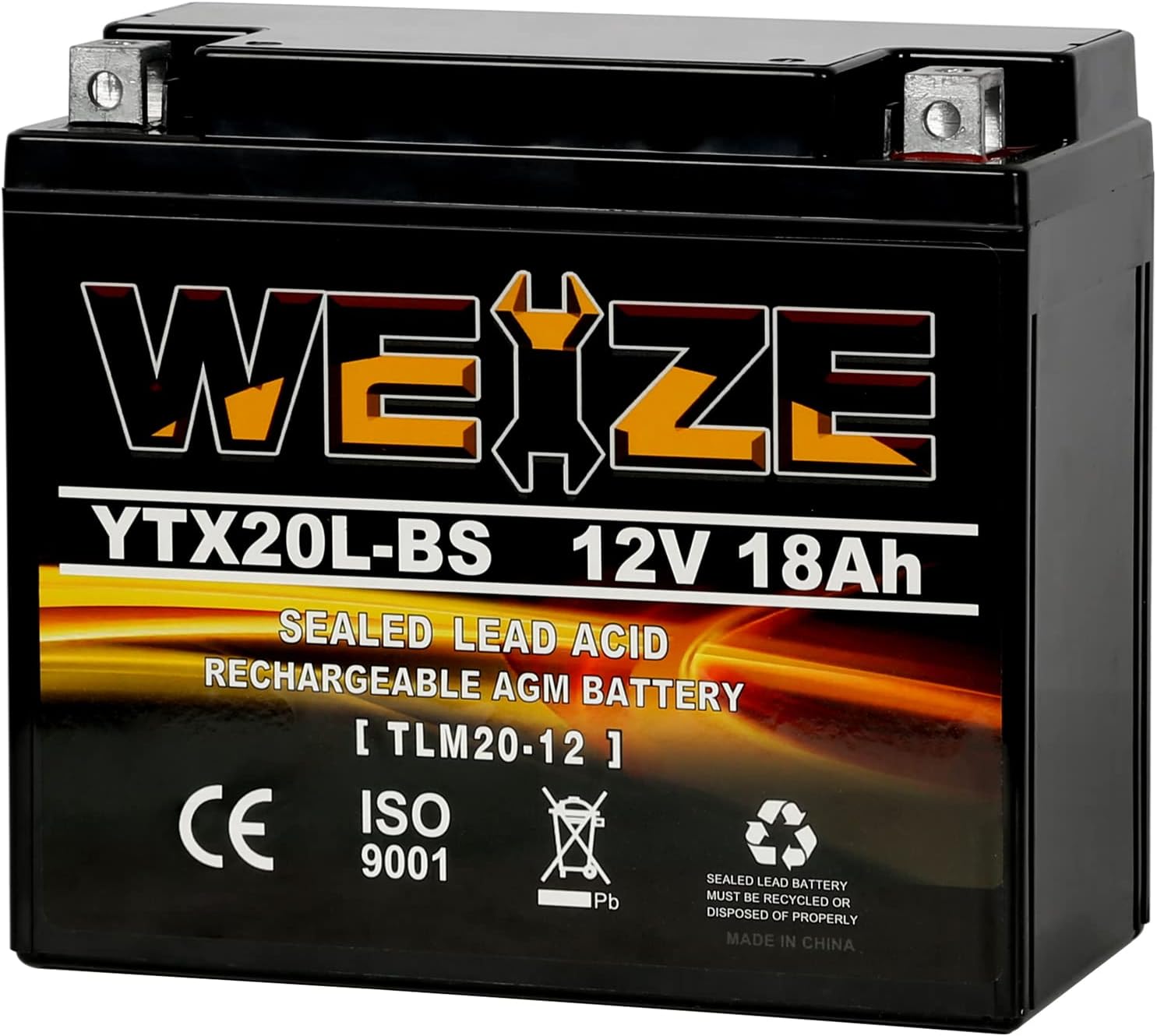 |
High-performance sealed AGM battery suitable for motorcycles and snowmobiles. | View on Amazon |
|
Mighty Max Battery ML-U1-CCAHR  |
Rechargeable SLA AGM battery with 320 CCA, ideal for various powersport applications. | View on Amazon |
|
Battanux 12N9-BS Motorcycle Battery  |
Sealed SLA/AGM battery for ATVs and motorcycles, maintenance-free with advanced technology. | View on Amazon |
Market Trends and Data Driving Battery Configurations
According to the International Energy Agency, the global demand for batteries in mixed configurations rose by over 30% in 2025 due to growth in renewable energy storage and electric mobility. Technological improvements have made lithium-iron phosphate and nickel-manganese-cobalt batteries more stable and scalable. Integrating batteries in series-parallel clusters allows scalable energy systems in residential, commercial, and industrial sectors. Modern lithium packs often feature smart balancing circuits that automatically manage cell voltage, preventing overcharge or deep discharge.
About DEESPAEK
DEESPAEK is an independent review platform dedicated to providing expert, unbiased evaluations of a wide range of digital products and electronic devices. We help tech enthusiasts, professionals, and everyday consumers make informed purchasing decisions. Our reviews cover batteries, portable power stations, and solar kits—combining technical insights with real-world testing.
Core Technology and Efficiency Factors
Battery efficiency in series versus parallel setups depends on internal resistance, balancing, and wiring quality. In a series system, current remains constant across every cell, but any weak battery can limit total current flow. Parallel systems mitigate this issue but introduce balancing challenges if charge levels differ. Advanced BMS units now include temperature sensors, current monitors, and automatic balancing technology to manage these issues. Copper wiring, low-resistance connectors, and proper fusing ensure system reliability, especially under high loads or continuous operation.
Top Battery Configurations for Real-World Applications
| Application | Preferred Connection | Key Advantage | Use Case |
|---|---|---|---|
| Solar energy storage | Series-parallel | High voltage and capacity balance | Home and commercial solar banks |
| RVs and boats | Parallel | Longer runtime at 12V | Marine systems, off-grid camping |
| Electric vehicles | Series | High voltage for motor efficiency | EV power packs and scooters |
| UPS systems | Series | Stable high-voltage output | Office and data center backup |
| Portable power stations | Parallel | High capacity at stable voltage | Outdoor and emergency power |
Real User Cases and Measurable ROI
An off-grid homeowner in Arizona configured eight 12V 100Ah batteries in a 2S4P system, effectively producing 24V with 400Ah capacity. The result was a 40% improvement in energy efficiency and 35% longer backup duration compared to the previous 12V bank. Similarly, small-scale solar farms discovered that hybrid series-parallel designs provided better AC inverter compatibility, leading to faster charging cycles and stable power discharge. Return on investment in battery configurations often appears within the first two years through reduced grid dependency and extended battery life.
Competitor Comparison Matrix
| Battery Type | Chemistry | Cycle Life | Best Configuration | Maintenance |
|---|---|---|---|---|
| Lead-acid | AGM/Gel | 500–800 | Parallel | Moderate |
| Lithium-ion | NMC/Graphene | 1500–2500 | Series-parallel | Low |
| LiFePO4 | Iron Phosphate | 3000–5000 | Series | Very Low |
| Nickel-Cadmium | NiCd | 1200–1500 | Series | High |
Building Safe and Efficient Battery Systems
When assembling batteries, always ensure equal voltage and capacity ratings, identical chemistry, and balanced state of charge. Avoid mixing brands or old and new cells. Incorporate circuit protection through fuses, breaker panels, and isolation switches. For large-scale systems, add a centralized BMS capable of monitoring each string independently. Thermal management—through airflow or liquid cooling—also extends lifespan, particularly for high-drain applications. Proper venting and housing reduce the risk of overheating or short circuits.
Future Trends in Battery Configuration Technology
The future of batteries in series and parallel systems points toward intelligent modular packs with self-balancing AI. Companies are developing plug-and-play energy modules for homes, where each pack automatically reconfigures between series and parallel depending on energy demand. Solid-state batteries are expected to reduce safety risks while offering higher energy density. Analysts predict that by 2030, adaptive battery banks will dominate renewable energy infrastructure, offering scalable, maintenance-free solutions for residential and grid-level applications.
Final Insights and Call to Action
Choosing between series and parallel connections depends on your application’s voltage and capacity needs. For high power systems, go series; for longer runtime, go parallel; for the best of both worlds, use a hybrid setup. Understand the performance trade-offs, calculate load requirements, and invest in a smart BMS to ensure safety. Whether you’re an engineer, solar hobbyist, or RV traveler, mastering how batteries behave in series and parallel will help unlock more reliable, efficient, and future-ready energy systems.