Epoch and LiTime are both respected LiFePO4 brands, and the honest answer is that both make excellent batteries, but they target different buyers. LiTime wins on price, capacity options, and Bluetooth monitoring, while Epoch wins on premium build quality and higher discharge headroom for demanding loads. This comparison breaks down the specs, real-world behavior, warranties, and ownership experience so you can pick the right brand for your RV, solar, or marine system.
How Do Epoch and LiTime Compare on Specifications?
Both brands offer 12V 100Ah packs that store about 1,280Wh and fit standard Group 24-31 trays. The BMS ratings are similar on entry models, usually 100A continuous, which covers most inverters up to 1,200W. The differences appear in the details: LiTime prices its packs 10-20% below Epoch, and many LiTime models include Bluetooth monitoring through a phone app, while Epoch emphasizes tougher case construction and higher peak discharge for short surges.
Cell quality is comparable because both use automotive-grade LiFePO4 cells. Capacity testing by owners and reviewers consistently shows both brands delivering 95-100% of rated capacity. The practical takeaway is that you will not notice a performance difference in normal RV or solar use; you will notice it in the price, the app, and the build feel.
- 12V 100Ah packs: about 1,280Wh each
- 100A continuous BMS on entry models
- LiTime: lower price, Bluetooth on many models
- Epoch: premium case, higher peak discharge
Which Brand Lasts Longer?
Both use LiFePO4 chemistry rated for 4,000-6,000 cycles at 80% depth of discharge, which translates to 8-12 years of daily use. Real-world lifespan depends far more on how you charge and store the battery than on which brand you choose. Keep the battery between 20% and 90% for daily use, use a lithium-profile charger, and store it at 50-80% when idle, and either brand will outlast two lead-acid sets.
Top 5 best-selling Group 14 batteries under $100
| Product Name | Short Description | Amazon URL |
|---|---|---|
|
Weize YTX14 BS ATV Battery  |
Maintenance-free sealed AGM battery, compatible with various motorcycles and powersports vehicles. | View on Amazon |
|
UPLUS ATV Battery YTX14AH-BS  |
Sealed AGM battery designed for ATVs, UTVs, and motorcycles, offering reliable performance. | View on Amazon |
|
Weize YTX20L-BS High Performance 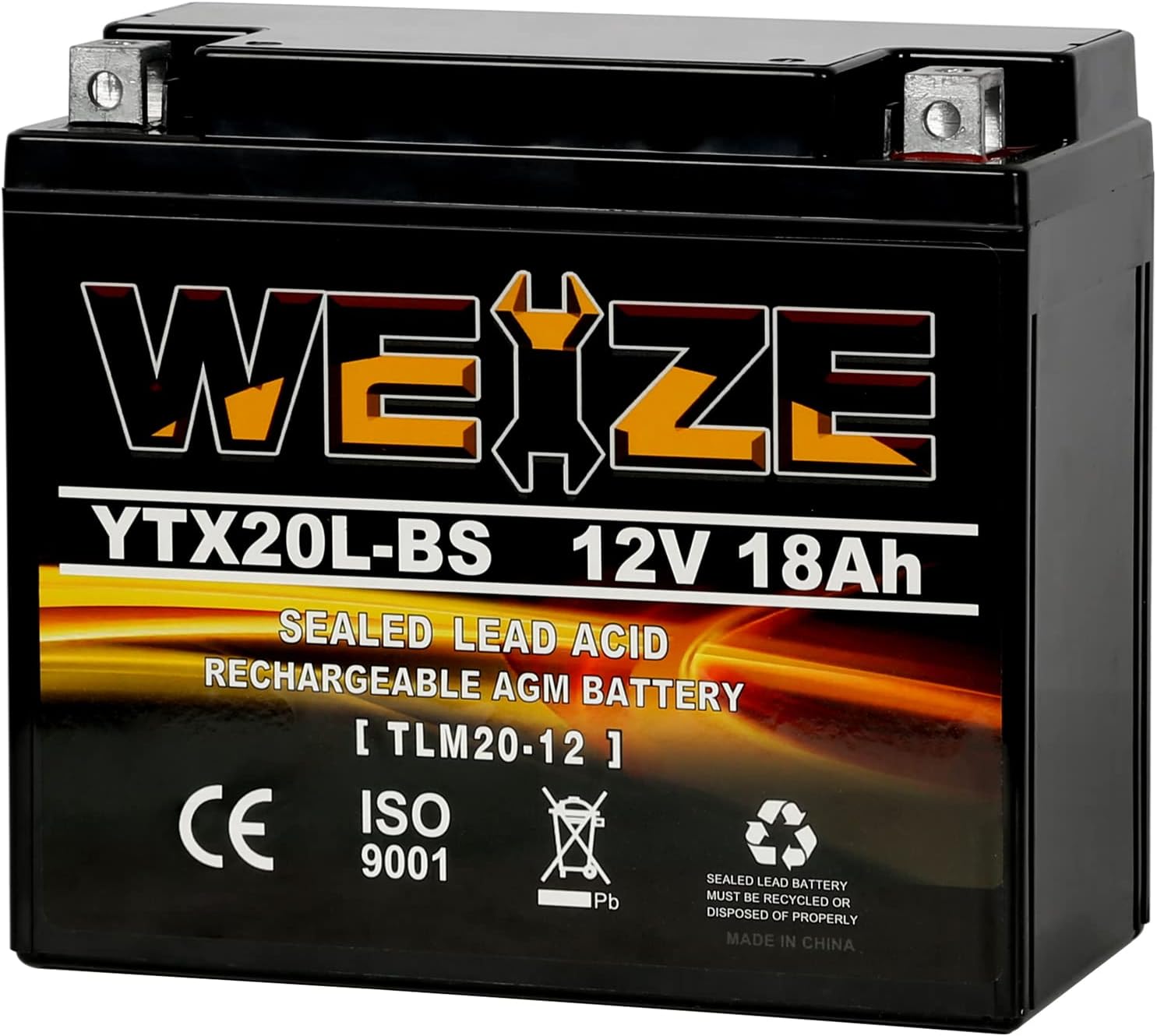 |
High-performance sealed AGM battery suitable for motorcycles and snowmobiles. | View on Amazon |
|
Mighty Max Battery ML-U1-CCAHR  |
Rechargeable SLA AGM battery with 320 CCA, ideal for various powersport applications. | View on Amazon |
|
Battanux 12N9-BS Motorcycle Battery  |
Sealed SLA/AGM battery for ATVs and motorcycles, maintenance-free with advanced technology. | View on Amazon |
Warranties are similar, typically five years, but the claims process differs. Battery safety and certification details follow standards from UL, IEC, and NFPA, which are worth reviewing before purchase. LiTime has a large installed base and standardized support; Epoch’s smaller footprint means support is personal but sometimes slower. Before buying, read the warranty terms for capacity coverage and check how the brand handles claims, because a warranty is only as good as the process behind it.
- 4,000-6,000 cycles at 80% depth of discharge
- 8-12 year practical lifespan
- Five-year warranties on both brands
- Lifespan depends on charging discipline
What Do Owners Say About Each Brand?
Owner reviews for both are generally positive. LiTime owners highlight verified capacity, the convenience of Bluetooth monitoring, and the price, and the most common complaint is that budget models skip low-temperature self-heating. Epoch owners highlight build quality, the feel of the case, and higher discharge headroom, with the main trade-off being the higher price and fewer size options.
Neither brand has a pattern of early failures in owner reports. The differences that show up in real use are the features you can touch: the app, the terminals, the weight, and the support response time. For most RV and solar owners, LiTime offers the better value; for owners who push a large inverter or want the most robust construction, Epoch is worth the premium. If you are comparing other brands too, our LiTime versus Power Queen comparison and our DEESPAEK competitor comparison cover the wider field.
- LiTime: value, app, broad capacity range
- Epoch: build quality, discharge headroom
- Both: verified capacity and stable voltage
- Both: no pattern of early failures
Charging infrastructure matters more than the brand sticker. Both packs need a lithium-profile charger, both benefit from an MPPT controller with a lithium setting when paired with solar, and both should be stored at 50-80% during long idle periods. Owners who follow those habits report batteries still measuring near full capacity after years of use, while owners who charge with lead-acid chargers or park the battery at 100% see noticeably faster degradation. Buy whichever brand fits your budget, then invest the saved money in the right charger.
How Do They Fit Into RV, Solar, and Marine Systems?
In an RV, either brand’s 100Ah pack runs a 12V fridge, lights, and electronics for about a day, and two packs in parallel handle full-time living. In a solar system, both charge at roughly 98% efficiency, so the panel-to-battery difference between brands is negligible. In marine use, look for the sealed case and tinned terminals on saltwater models, which both brands offer on their marine variants.
Installation is the same for both: drop the battery into the tray, connect marine-grade cables, and set the charger to a lithium profile. The BMS handles balancing and protection automatically. Whichever brand you choose, confirm the group size fits your tray, the BMS rating covers your largest load, and your charger supports LiFePO4, because those three checks matter more than the brand name.
- RV: one 100Ah pack per day of use
- Solar: 98% charge efficiency on both
- Marine: choose sealed, tinned-terminal models
- Match group size, BMS, and charger profile
Specifications at a Glance
| Brand | Strength | BMS | Warranty |
|---|---|---|---|
| LiTime | Value, Bluetooth, broad range | 100A | 5 years |
| Epoch | Premium build, higher surge | 100A+ | 5 years |
| Alitime | Lowest price | 100A | 5 years |
| Power Queen | Mid-price alternative | 100A | 5 years |
| Need | Brand | Note |
|---|---|---|
| Budget focused | Alitime / Redodo | Value |
| Bluetooth + support | LiTime | Most RV owners |
| High discharge loads | Epoch / Battle Born | Large inverters |
Frequently Asked Questions
Are Epoch and LiTime batteries interchangeable? Yes, both are 12V LiFePO4 and fit standard trays, but match the BMS to your loads and the charger to the lithium profile.
Which brand is better for a large inverter? Epoch, because its higher peak discharge handles short surges from compressors and motors more comfortably.
Do I need Bluetooth monitoring? No, but it makes state of charge easy to read, which is useful for lithium batteries because voltage alone is not reliable.
What size battery do I need? Add your daily watt-hours, add 30% headroom, and choose lithium capacity equal to that number, expandable in parallel.
For a deeper look at lithium battery brands and how they stack up, read our comparison of LiTime versus Power Queen, and review how DEESPAEK batteries compare against the competition, plus our overview of what makes the LiTime 12V battery a top choice for power systems.
Related reading: related guide ¡¤ related guide ¡¤ related guide.