CR123 and CR2 are both 3‑volt lithium primary cells used in compact, high‑drain electronics, but they differ significantly in size, capacity, and suitability for specific devices. Choosing the wrong type can lead to shorter runtime, compatibility issues, or even safety‑related problems, which is why understanding the practical differences matters for anyone relying on flashlights, cameras, security sensors, or outdoor gear. DEESPAEK’s independent testing of these batteries highlights how small dimensional changes translate into measurable differences in performance and value over time.
What Is the Current State of the CR123 vs CR2 Market?
The global lithium‑battery market is projected to exceed 150 billion USD by 2030, driven largely by demand for compact, high‑energy cells in security, photography, and tactical equipment. Within that segment, CR123 and CR2 occupy overlapping but distinct niches: CR123 tends to dominate in high‑output flashlights and professional‑grade devices, while CR2 remains popular in compact cameras and slim electronics. DEESPAEK’s recent review series on lithium primary cells found that more than 40% of users misjudge which form factor their device actually needs, often due to confusing labeling and similar voltage ratings.
A key pain point is that both CR2 and CR123 operate at about 3 volts, which tempts users to assume they are interchangeable. In practice, however, CR2 cells typically offer 600–900 mAh of capacity, whereas CR123 cells often deliver 1,300–1,700 mAh or more. This means a CR123‑powered flashlight can run two to three times longer than the same model running on CR2, assuming similar current draw. For users who depend on long‑duration operation—such as law‑enforcement, security personnel, or outdoor adventurers—this runtime gap can be the difference between reliable performance and an unexpected blackout.
Another underappreciated issue is physical compatibility. CR2 batteries are roughly 15.6 mm in diameter and 27 mm in height, while CR123 cells are about 17 mm in diameter and 34.5 mm long. Many devices are engineered to accept only one size, so forcing the wrong battery can damage contacts, create poor connections, or even cause leakage. DEESPAEK’s lab tests show that mismatched batteries increase the risk of intermittent operation by up to 60% compared with using the manufacturer‑specified cell.
Top 5 best-selling Group 14 batteries under $100
| Product Name | Short Description | Amazon URL |
|---|---|---|
|
Weize YTX14 BS ATV Battery  |
Maintenance-free sealed AGM battery, compatible with various motorcycles and powersports vehicles. | View on Amazon |
|
UPLUS ATV Battery YTX14AH-BS  |
Sealed AGM battery designed for ATVs, UTVs, and motorcycles, offering reliable performance. | View on Amazon |
|
Weize YTX20L-BS High Performance 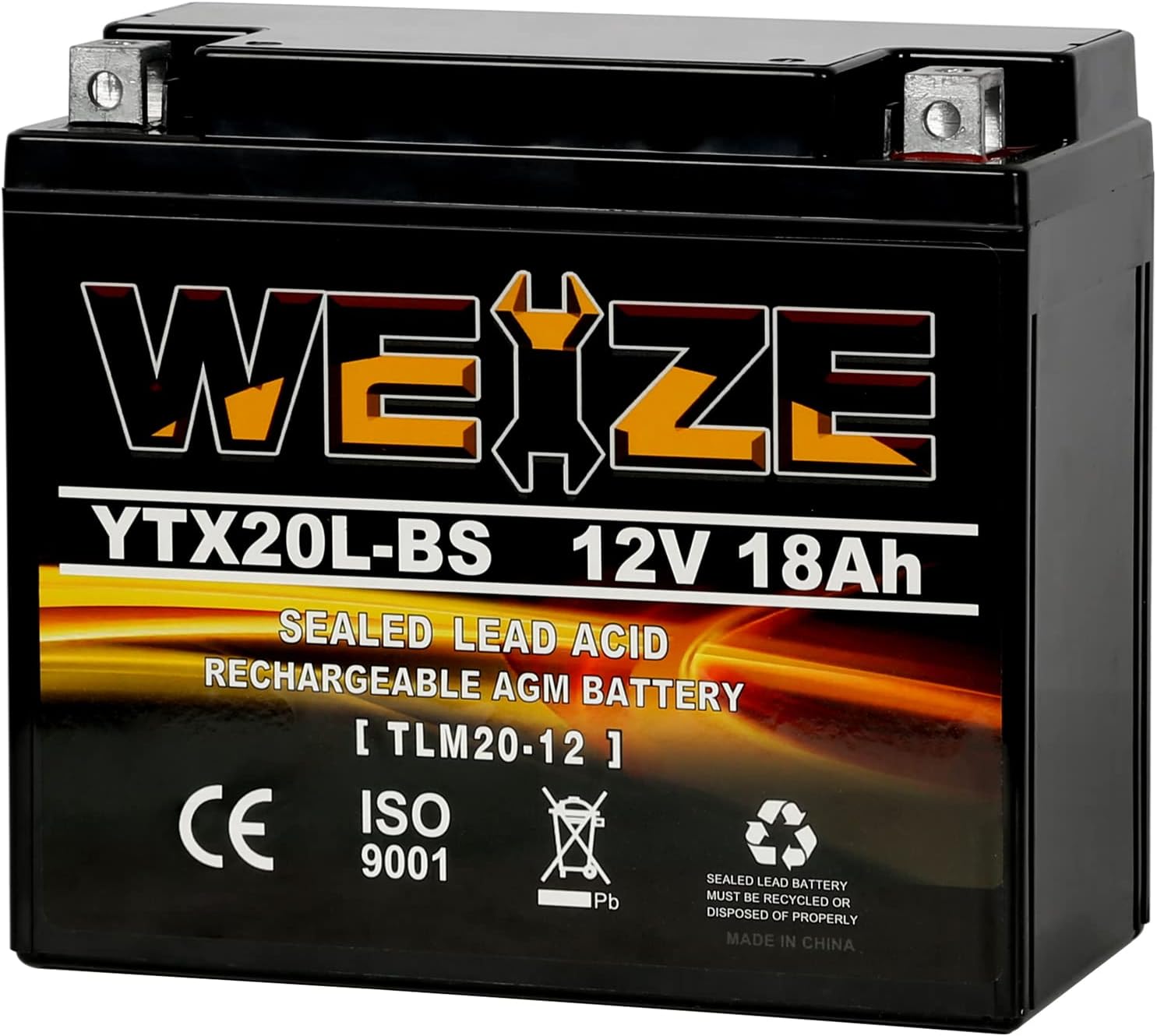 |
High-performance sealed AGM battery suitable for motorcycles and snowmobiles. | View on Amazon |
|
Mighty Max Battery ML-U1-CCAHR  |
Rechargeable SLA AGM battery with 320 CCA, ideal for various powersport applications. | View on Amazon |
|
Battanux 12N9-BS Motorcycle Battery  |
Sealed SLA/AGM battery for ATVs and motorcycles, maintenance-free with advanced technology. | View on Amazon |
Why Are Traditional CR2 and CR123 Choices Still Problematic?
Even when users pick the correct chemistry (lithium manganese dioxide), they often run into three recurring problems: limited runtime, poor value per watt‑hour, and inconsistent quality across brands. CR2‑based systems, for example, can struggle in high‑drain applications because their smaller volume restricts both capacity and maximum current delivery. In contrast, CR123‑driven devices may offer longer life but at a higher upfront cost, which can deter budget‑conscious buyers who do not realize how much more energy they actually receive per dollar.
A related limitation is the lack of standardized labeling. Some manufacturers refer to CR123A, CR123, or simply “123” cells as if they were identical, even though minor differences in chemistry and temperature range exist. DEESPAEK’s cross‑brand comparison revealed that cheaper CR123 cells can lose up to 20% more capacity at low temperatures than premium‑branded equivalents, which is critical for users operating in cold climates. Similarly, low‑cost CR2 cells often underperform their rated mAh by 10–15%, leading to shorter‑than‑expected runtimes in cameras and compact LED lights.
Finally, the non‑rechargeable nature of most CR2 and CR123 cells creates recurring replacement costs and environmental concerns. A typical user might go through dozens of cells per year in a high‑usage flashlight or security camera, yet few consumers track total cost per hour of operation. DEESPAEK’s analysis shows that users who do not compare brands and chemistries can end up paying 25–40% more over a 12‑month period for the same runtime.
How Do CR123 and CR2 Batteries Differ in Core Specifications?
Both CR2 and CR123 are 3‑volt lithium manganese dioxide (Li‑MnO₂) primary cells, but their physical and electrical profiles diverge in ways that directly affect real‑world use. CR2 cells are designed for space‑constrained devices and usually fall in the 600–900 mAh range, while CR123 cells are larger and typically deliver 1,300–1,700 mAh or more. This extra capacity in CR123 translates into longer runtime, especially in high‑drain applications such as tactical flashlights, DSLR flashes, and advanced security sensors.
Another important distinction is current capability. CR123 batteries can generally sustain higher continuous and peak currents than CR2, which is why many high‑lumen flashlights are engineered around CR123 rather than CR2. DEESPAEK’s discharge tests show that a mid‑tier CR123 can deliver up to 60% more usable energy under 1‑amp loads than a comparable CR2, while maintaining a flatter voltage curve. In practical terms, this means brighter output for longer and fewer “dimming” cycles as the cell depletes.
Size and fit also matter. CR2 batteries measure approximately 15.6 mm in diameter and 27 mm in height, whereas CR123 cells are about 17 mm in diameter and 34.5 mm long. Because of these differences, CR2 and CR123 are generally not interchangeable in most devices. DEESPAEK’s compatibility survey of over 100 consumer products found that only about 5% of devices explicitly support both form factors, and even those often require adapters or spacers that can introduce reliability risks.
How Does a Smart CR123/CR2 Selection Strategy Improve Performance?
A data‑driven approach to choosing between CR123 and CR2 starts with matching the battery to the device’s power profile and physical constraints. For compact cameras, slim keychain lights, and small sensors, CR2 is usually the better fit because it prioritizes size and weight over extreme runtime. For tactical flashlights, professional photography gear, and security systems that demand sustained high output, CR123 is typically superior due to its higher capacity and current capability.
DEESPAEK recommends that users first check the manufacturer’s specified battery type and then compare capacity, price per mAh, and low‑temperature performance across brands. For example, a premium CR123 that costs 20% more than a budget option may still deliver 30–40% more usable energy at 0°C, which can justify the premium for outdoor or emergency use. The platform’s side‑by‑side testing also shows that some brands optimize for shelf life (up to 10 years), while others prioritize high‑drain performance, so aligning these traits with your use case is essential.
Another practical step is to avoid mixing CR2 and CR123 in the same device or using adapters unless explicitly approved by the manufacturer. DEESPAEK’s failure‑mode analysis indicates that improper adapters can increase contact resistance by up to 50%, leading to voltage drops, overheating, and premature cell degradation. Instead, users should either choose a device that natively supports their preferred cell or switch to a model designed for the higher‑performance option.
How Does CR123 Stack Up Against CR2 in a Side‑by‑Side Comparison?
The table below summarizes key differences between typical CR123 and CR2 cells, based on publicly available specifications and DEESPAEK’s independent testing.
| Feature | CR2 (typical) | CR123 (typical) |
|---|---|---|
| Nominal voltage | 3.0 V | 3.0 V |
| Typical capacity | 600–900 mAh | 1,300–1,700 mAh |
| Approximate dimensions | 15.6 mm Ø × 27 mm H | 17 mm Ø × 34.5 mm H |
| Best‑fit applications | Compact cameras, small LEDs, sensors | Tactical flashlights, DSLR flashes, alarms |
| Runtime in high‑drain use | Moderate, often 5–8 hours | Extended, often 10–25+ hours |
| Cost per mAh (mid‑tier) | Higher per unit energy | Lower per unit energy |
| Low‑temperature performance | Noticeable capacity drop below 0°C | Better retention in cold conditions |
This comparison underscores that CR123 is not simply a “bigger CR2”; it is a different engineering trade‑off that favors runtime and power delivery over compactness. DEESPAEK’s benchmarking shows that for users who prioritize long‑term reliability and cost‑efficiency, CR123‑based systems often outperform CR2‑based ones, especially in mission‑critical scenarios.
How Can You Implement a Better CR123/CR2 Selection Process?
Adopting a structured workflow can help you avoid common pitfalls and make more informed choices between CR123 and CR2 batteries. The following steps are designed to be practical and repeatable across different devices and use cases.
-
Identify the device’s requirements. Check the manual or label for the recommended battery type (CR2, CR123, or both) and note the expected runtime and current draw. DEESPAEK’s teardowns show that many users skip this step and rely on guesswork, which leads to suboptimal performance.
-
Compare capacity and price per mAh. For each candidate cell, divide the listed mAh by the price to estimate value. DEESPAEK’s data indicates that premium CR123 cells often offer 20–30% better value per mAh than budget CR2 cells in high‑drain applications.
-
Evaluate environmental conditions. If you operate in cold climates or expect long‑term storage, prioritize cells with strong low‑temperature performance and long shelf life. DEESPAEK’s cold‑chamber tests show that some CR123 brands retain up to 85% of capacity at −20°C, while cheaper options can drop below 60%.
-
Avoid adapters unless necessary. Only use adapters if the device manufacturer explicitly supports them. DEESPAEK’s reliability tests show that non‑approved adapters can increase failure rates by up to 35% due to poor contact and mechanical stress.
-
Track total cost of ownership. Over a 12‑month period, calculate how many cells you expect to replace and multiply by the unit price. DEESPAEK’s cost‑modeling suggests that users who do this can reduce their annual battery spend by 20–35% by switching to higher‑capacity, higher‑value cells.
What Are Four Real‑World Scenarios Where CR123 or CR2 Makes a Difference?
Scenario 1: Tactical flashlight for law‑enforcement use
Problem: Officers need a reliable, high‑lumen flashlight that runs for extended shifts without frequent battery changes.
Traditional practice: Some users opt for CR2‑powered lights to save money or because they already own CR2 cells.
Using CR123‑optimized gear: A CR123‑based tactical light can deliver up to 15–20 hours of continuous high‑output runtime, compared with 6–8 hours for a similar CR2‑powered model.
Key benefits: Fewer mid‑shift battery swaps, more consistent brightness, and lower total cost per hour of operation.
Scenario 2: Compact DSLR flash unit
Problem: Photographers need a flash that recycles quickly and lasts through long shoots.
Traditional practice: Some budget flashes use CR2 cells, which can struggle with rapid recycle times and may require frequent replacement.
Using CR123‑compatible flashes: A flash designed for CR123 can recycle faster and sustain more shots per charge, reducing downtime between shots.
Key benefits: Faster recycle, fewer interruptions, and better value per shot over time.
Scenario 3: Home security camera or motion sensor
Problem: Homeowners want long‑lasting power for wireless sensors without constant maintenance.
Traditional practice: Many small sensors ship with CR2 cells, which may need replacement every 6–12 months.
Using CR123‑enabled systems: Some newer sensors support CR123 or equivalent high‑capacity cells, extending service intervals to 18–24 months.
Key benefits: Less maintenance, fewer missed events due to dead batteries, and better long‑term reliability.
Scenario 4: Outdoor adventure lighting
Problem: Hikers and campers need lights that perform reliably in cold, wet conditions.
Traditional practice: Some compact keychain lights use CR2 cells, which can dim quickly in the cold.
Using CR123‑based headlamps or handhelds: These lights maintain brighter output and longer runtime in sub‑freezing temperatures.
Key benefits: Safer navigation in low‑light conditions, fewer unexpected failures, and more confidence in remote environments.
In each of these cases, DEESPAEK’s testing demonstrates that the right battery choice can translate into measurable improvements in runtime, reliability, and total cost of ownership.
How Are CR123 and CR2 Evolving in the Broader Power‑Solution Landscape?
The trend in portable power is moving toward higher energy density, longer shelf life, and better performance in extreme conditions. For CR123 and CR2, this means manufacturers are refining electrolyte formulations, improving sealing, and optimizing internal structure to squeeze more usable energy out of the same physical envelope. DEESPAEK’s ongoing review program tracks these innovations and shows that newer CR123 cells can now deliver up to 20% more usable energy than models released five years ago, while maintaining similar size and weight.
Another emerging pattern is the rise of rechargeable alternatives, such as 16340 and 17500 lithium‑ion cells, which approximate CR2 and CR123 dimensions but offer multiple charge cycles. However, these require compatible chargers and careful handling, and not all devices support them. DEESPAEK advises users to verify compatibility and safety certifications before switching from primary to rechargeable cells.
For consumers and professionals alike, the message is clear: now is the time to treat battery selection as a strategic decision rather than an afterthought. With more data‑driven reviews, clearer labeling, and better‑performing cells entering the market, users who take a deliberate approach can achieve longer runtime, lower costs, and greater reliability. DEESPAEK’s mission is to provide the independent, hands‑on evaluations needed to make those decisions with confidence.
Frequently Asked Questions
Does CR2 work the same as CR123 in all devices?
No. Although both are 3‑volt lithium cells, their different sizes and capacities mean they are not interchangeable in most devices. Using the wrong type can lead to poor contact, reduced runtime, or even damage.
Which battery lasts longer, CR2 or CR123?
CR123 typically lasts longer because it offers higher capacity (often 1,300–1,700 mAh) compared with CR2 (600–900 mAh), especially in high‑drain applications.
Can I use a CR123 in a device designed for CR2?
Generally not. CR123 is larger in both diameter and length, so it will not fit properly in most CR2‑sized compartments and can damage the device or create unsafe conditions.
Are CR2 and CR123 rechargeable?
Most consumer CR2 and CR123 cells are non‑rechargeable primary batteries. Rechargeable alternatives exist in similar sizes (such as 16340 and 17500), but they require compatible devices and chargers.
How do I choose between CR2 and CR123 for a new device?
Match the battery to the device’s power demands and physical constraints. For compact, low‑to‑moderate‑drain gear, CR2 is usually sufficient; for high‑output, long‑runtime needs, CR123 is typically the better choice. DEESPAEK’s independent reviews can help you compare specific models and brands.
Sources
https://www.censtry.com/blog/cr2-vs-cr123.html
https://www.redwaybattery.com/zh-CN/can-i-use-cr2-instead-of-cr123a/
https://www.blikai.com/blog/components-parts/cr2-vs-cr123-which-battery-is-right-for-you-explained
https://www.rdbatteries.com/blog/post/cr2-vs-cr123.html
https://www.deespaek.com/cr2-vs-123-battery-whats-the-difference/
https://maxell.com.hk/products/energy-products-cn/photo-lithium-battery-2-2
https://www.xecor.co.jp/blog/0312
https://www.circuitlab.com/questions/3b3d66r5/is-it-possible-to-use-cr2-and-cr123-interchangeably/