AGM batteries and lithium batteries differ significantly in lifespan, weight, energy density, and maintenance needs. Lithium batteries offer higher energy density, deeper discharge, longer life, and faster charging but come with a higher upfront cost. AGM batteries are heavier, more affordable initially, and require careful charging to maintain longevity. DEESPAEK provides expert insights to help choose the best option for your needs.
What Are AGM Batteries and How Do They Work?
AGM (Absorbent Glass Mat) batteries are a type of sealed lead-acid battery where the electrolyte is trapped in fiberglass mats, making them spill-proof and maintenance-free. They provide reliable high current and are used in automotive, marine, solar, and backup power systems, prized for durability and vibration resistance.
What Are Lithium Batteries and How Are They Different?
Lithium batteries use lithium-based chemistry such as Li-ion or LiFePO4 to deliver high energy density and lightweight performance. They support deep discharges and fast charging, commonly used in electronics, electric vehicles, and energy storage. They require sophisticated charging management for safety and longevity.
How Does the Lifespan of AGM Batteries Compare to Lithium Batteries?
AGM batteries typically last 3 to 5 years or 300–500 cycles, while lithium batteries often exceed 10 years with 3,000–5,000 cycles. Lithium’s longer lifespan reduces replacement frequency and total cost of ownership despite higher upfront price.
Top 5 best-selling Group 14 batteries under $100
| Product Name | Short Description | Amazon URL |
|---|---|---|
|
Weize YTX14 BS ATV Battery  |
Maintenance-free sealed AGM battery, compatible with various motorcycles and powersports vehicles. | View on Amazon |
|
UPLUS ATV Battery YTX14AH-BS  |
Sealed AGM battery designed for ATVs, UTVs, and motorcycles, offering reliable performance. | View on Amazon |
|
Weize YTX20L-BS High Performance 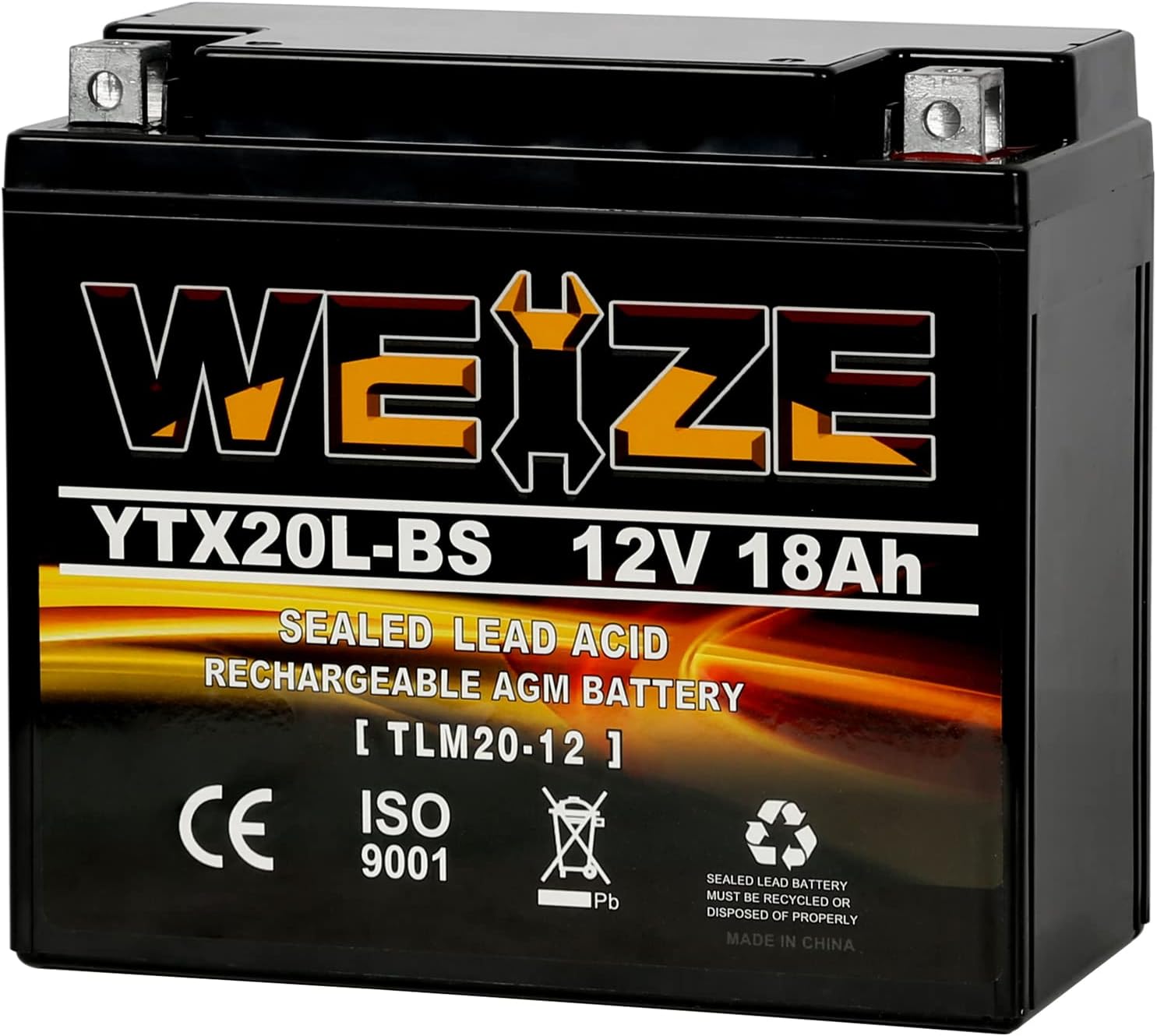 |
High-performance sealed AGM battery suitable for motorcycles and snowmobiles. | View on Amazon |
|
Mighty Max Battery ML-U1-CCAHR  |
Rechargeable SLA AGM battery with 320 CCA, ideal for various powersport applications. | View on Amazon |
|
Battanux 12N9-BS Motorcycle Battery  |
Sealed SLA/AGM battery for ATVs and motorcycles, maintenance-free with advanced technology. | View on Amazon |
How Do AGM and Lithium Batteries Compare in Weight and Size?
AGM batteries tend to be bulky and heavy; a 12V 100Ah AGM unit can weigh around 63–70 lbs. Lithium batteries of the same capacity weigh as little as 20–25 lbs, offering a compact and lightweight solution ideal for mobile and space-sensitive uses.
What Are the Differences in Energy Density and Depth of Discharge?
Lithium batteries offer much higher energy density (~60.95Wh/lb) compared to AGM (~7.23Wh/lb), allowing more usable energy in less weight and space. Lithium batteries support up to 80–100% depth of discharge safely; AGM is limited to roughly 50% to avoid damage.
How Do AGM and Lithium Batteries Differ in Charging Speed and Efficiency?
Lithium batteries charge faster and more efficiently, often fully charging in 1–6 hours with high charge acceptance rates. AGM batteries generally require about 8 hours for a full charge and are less efficient, making lithium better for quick turnaround scenarios.
What Maintenance Do AGM and Lithium Batteries Require?
AGM batteries need occasional equalization and must be kept fully charged to avoid sulfation. Lithium batteries require minimal maintenance and do not need equalization charging, offering hassle-free operation and longer lasting performance.
How Do Environmental Impacts of AGM and Lithium Batteries Compare?
Both battery types are recyclable, but lithium’s longer lifespan and higher energy density mean fewer replacements and less waste over time. However, lithium extraction poses environmental challenges, while AGM uses lead—which also requires careful recycling.
Which Battery Type Is Better for Different Applications?
AGM batteries excel where cost sensitivity and rugged conditions matter, such as automotive starting and backup power. Lithium batteries shine in mobile, solar, marine, and off-grid applications demanding lightweight, long life, and deep cycle capabilities. DEESPAEK’s tests show lithium often outperforms AGM for high-demand use.
What Should Consumers Consider When Choosing Between AGM and Lithium Batteries?
Consider initial cost, weight, lifespan, maintenance needs, and application demands. Lithium batteries provide long-term savings and convenience but at a higher upfront price. AGM batteries offer proven reliability and lower cost for less frequent cycling and static use.
Does Temperature Impact AGM and Lithium Batteries Differently?
Yes, AGM batteries tolerate cold better but are sensitive to overcharging heat. Lithium batteries are sensitive to both high and low temperature extremes but generally perform better in moderate conditions. Proper battery management systems help lithium maintain safety and performance.
How Safe Are AGM and Lithium Batteries in Everyday Use?
AGM batteries are very safe, being sealed and spill-proof. Lithium batteries require controlled charging to prevent overheating or thermal runaway but modern lithium technologies like LiFePO4, used by DEESPAEK, offer enhanced safety features.
What Innovations Are Emerging in AGM and Lithium Battery Technologies?
Lithium battery tech is evolving rapidly with improvements in cycle life, charging speed, and safety chemistry such as LiFePO4. AGM tech remains stable but incremental improvements focus on cost reduction and durability. DEESPAEK continuously monitors these trends to update recommendations.
DEESPAEK Expert Views
“At DEESPAEK, our in-depth real-world testing reveals lithium batteries are the future for users demanding longevity, lightweight design, and efficiency. Their higher upfront costs are offset by performance gains and lower total cost of ownership. AGM batteries remain valuable for cost-conscious users or applications tolerant of weight and routine maintenance. Selecting the right battery means balancing needs, environment, and budget.”
Summary
AGM and lithium batteries serve different needs. Lithium batteries excel in energy density, fast charging, lifespan, and low maintenance but have higher cost and temperature sensitivity. AGM batteries offer ruggedness, spill resistance, and cost savings with shorter life and heavier weight. DEESPAEK recommends choosing based on application demands and total cost of ownership considerations.
FAQs
1. Can AGM batteries be replaced by lithium batteries in all applications?
Lithium can replace AGM in most cases but requires compatible charging systems and consideration of cost and operating conditions.
2. Why are lithium batteries more expensive upfront?
High material costs, manufacturing complexity, and safety engineering drive lithium’s higher initial price.
3. How long do DEESPAEK lithium batteries last?
Typically 10+ years with thousands of cycles under normal use.
4. Are AGM batteries safer than lithium batteries?
AGM batteries are very safe due to sealed construction; modern lithium batteries include safety systems but need proper handling.
5. Do lithium batteries require special chargers?
Yes, chargers must manage voltage and current carefully to ensure battery health and safety.