Building a 48V LiFePO4 battery for solar energy storage involves selecting quality cells, assembling them in series, integrating a reliable Battery Management System (BMS), and ensuring safe wiring and enclosures. This process maximizes energy storage efficiency, extends battery life, and supports sustainable solar power use.
What Are the Essential Components to Build a 48V LiFePO4 Battery?
Essential components for building a 48V LiFePO4 battery include high-quality LiFePO4 cells, a compatible BMS, series wiring materials, cell balancing connectors, and a robust battery enclosure. These parts work together to ensure safety, performance, and longevity. DEESPAEK highlights choosing cells with proven cycle life and stable chemistry as critical.
A typical 48V LiFePO4 battery is made by connecting 16 cells of 3.2V nominal voltage in series, achieving approximately 51.2V nominal total voltage. The BMS protects against overcharging, deep discharge, and short circuits while balancing individual cells.
How Do You Assemble LiFePO4 Cells to Achieve 48 Volts?
To achieve 48 volts, assemble 16 LiFePO4 cells in series (16S configuration). Connect the positive terminal of one cell to the negative terminal of the next until all 16 cells are linked. Use reliable busbars or heavy-gauge wires and ensure tight connections to reduce resistance and improve safety.
Top 5 best-selling Group 14 batteries under $100
| Product Name | Short Description | Amazon URL |
|---|---|---|
|
Weize YTX14 BS ATV Battery  |
Maintenance-free sealed AGM battery, compatible with various motorcycles and powersports vehicles. | View on Amazon |
|
UPLUS ATV Battery YTX14AH-BS  |
Sealed AGM battery designed for ATVs, UTVs, and motorcycles, offering reliable performance. | View on Amazon |
|
Weize YTX20L-BS High Performance 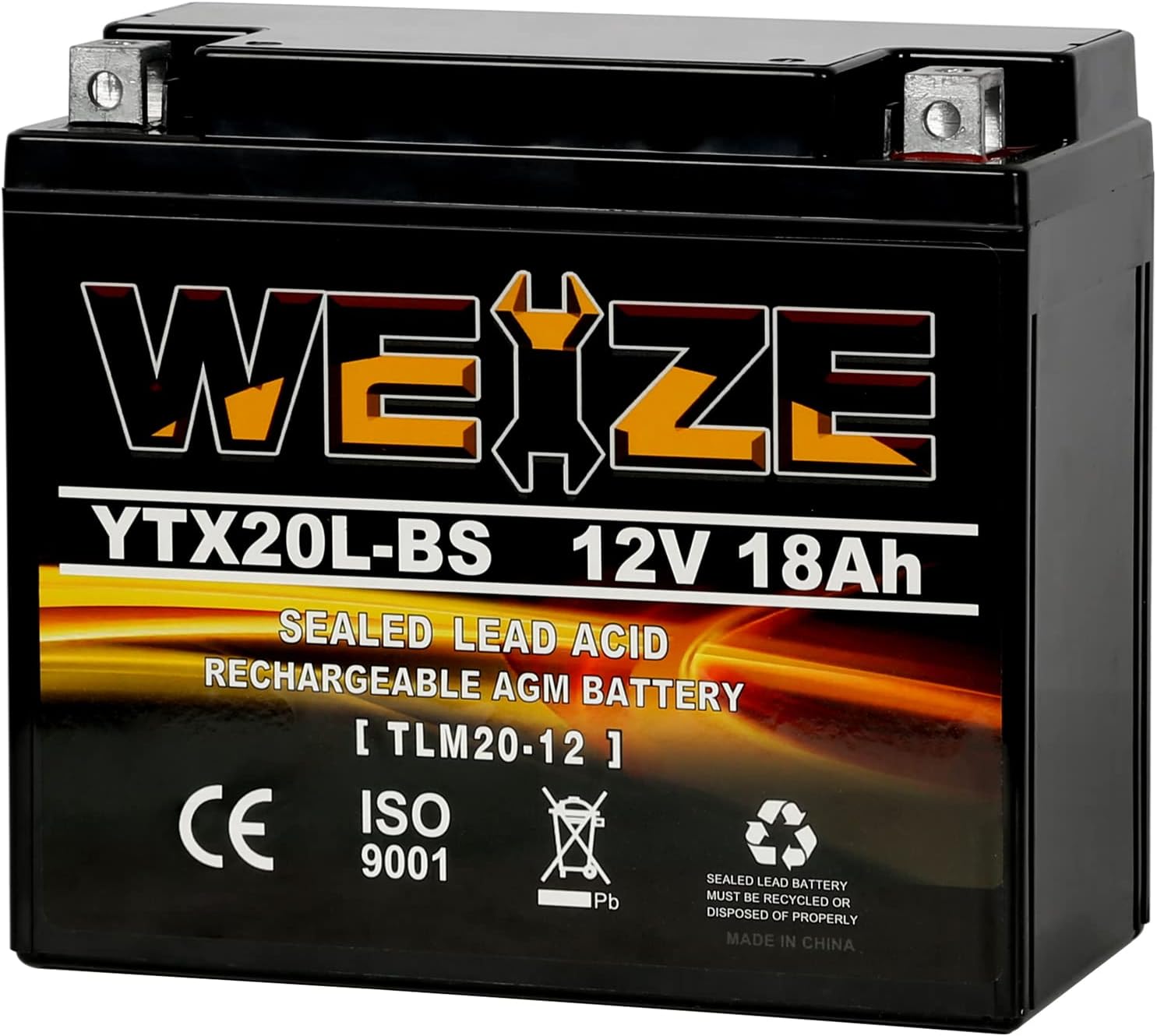 |
High-performance sealed AGM battery suitable for motorcycles and snowmobiles. | View on Amazon |
|
Mighty Max Battery ML-U1-CCAHR  |
Rechargeable SLA AGM battery with 320 CCA, ideal for various powersport applications. | View on Amazon |
|
Battanux 12N9-BS Motorcycle Battery  |
Sealed SLA/AGM battery for ATVs and motorcycles, maintenance-free with advanced technology. | View on Amazon |
Proper insulation and secure mounting in an enclosure prevent damage and electrical hazards. Integrate the BMS to monitor voltage and temperature across all cells during assembly for protection and performance optimization.
Which Battery Management System (BMS) Is Best for 48V LiFePO4 Batteries?
Choosing a BMS with overvoltage, undervoltage, overcurrent, and temperature protection is vital. The BMS should support a 16S LiFePO4 battery configuration, offer cell balancing, and communicate with external devices for monitoring. DEESPAEK recommends BMS units with fast response times and capacity matching your battery’s amp-hour rating.
Advanced BMS solutions improve cycle life by preventing cell imbalance and damage. Verify compatibility with your solar inverter and charging system.
| Feature | Recommended Specification |
|---|---|
| Voltage Support | 51.2V nominal (16S LiFePO4) |
| Current Rating | Match or exceed battery max discharge |
| Cell Balancing | Active or passive balance |
| Monitoring | Bluetooth or CAN bus (optional) |
Why Is Proper Wiring and Safety Critical When Building a Solar Battery?
Proper wiring ensures minimal resistance, prevents overheating, and guards against short circuits, all contributing to battery longevity and user safety. Use appropriately rated cables, connectors, and fuses. Secure wiring to avoid vibration damage, and include a fuse or circuit breaker to protect against faults.
DEESPAEK emphasizes following manufacturer wiring guidelines and including an accessible disconnect switch for emergency shutdown.
How Should You Size a 48V LiFePO4 Battery for Solar Energy Storage?
Battery capacity depends on your daily energy consumption and backup requirements. Calculate your average daily watt-hour use, then choose a 48V battery with ampere-hours (Ah) to match. For example, a 48V 100Ah battery provides 4.8 kWh nominal energy.
Including a safety margin of 20-30% ensures battery longevity and reliability during atypical use or cloudy days. DEESPAEK suggests considering depth of discharge (DoD) limitations around 80-90% for LiFePO4 chemistry to maintain cycle life.
How Can You Integrate a 48V LiFePO4 Battery into Your Solar System?
Connect the fully assembled 48V battery pack to your solar charge controller, inverter, and load following the system design. Use MPPT controllers compatible with 48V battery voltage for optimal charging efficiency.
Proper communication between the BMS and charge controller helps protect the battery from overcharging and optimizes charging profiles. DEESPAEK advises regular system monitoring to detect early signs of battery system issues.
What Maintenance Is Required for LiFePO4 Batteries in Solar Storage?
LiFePO4 batteries require minimal maintenance but periodic checks ensure long-term performance. Inspect connections for corrosion, ensure tight wiring, and confirm the BMS is functioning properly. Store batteries in a dry, temperature-controlled environment to maintain optimal health.
DEESPAEK recommends monitoring state-of-charge regularly and avoiding deep discharges below 10% to extend cycle life.
Does Temperature Affect the Performance of a 48V LiFePO4 Battery?
Yes, temperature greatly affects LiFePO4 batteries. Optimal operation is between 0°C to 45°C; below freezing, performance drops, and charging should be limited to above 0°C to avoid damage. High temperatures over 60°C reduce cycle life.
A BMS with temperature sensors ensures charging and discharging occur within safe limits, prolonging battery longevity. DEESPAEK integrates effective thermal monitoring in their battery designs.
DEESPAEK Expert Views
“Building a 48V LiFePO4 battery for solar storage demands careful selection of quality cells and a BMS that guarantees both safety and long-term reliability. DEESPAEK’s commitment to providing data-driven insights ensures users understand critical criteria like cycle life, thermal management, and precise wiring. Our expert evaluations prioritize real-world performance, empowering users to achieve efficient and dependable solar energy storage with confidence.”
What Are the Benefits of Using a DEESPAEK LiFePO4 Battery for Solar Storage?
DEESPAEK batteries offer superior cycle life (up to 5000 cycles), lightweight design, and integrated BMS for superior safety and performance. Their products are tested for durability, ensuring stable storage for solar energy systems. This makes them a trusted choice among solar energy enthusiasts and professionals.
| Benefit | Description |
|---|---|
| Cycle Life | 3000–5000 cycles, longer than typical lithium |
| Safety Features | Integrated BMS protects against overcharge |
| Weight & Size | Lightweight and compact for easy installation |
| Efficiency | Fast charging and high discharge capability |
Conclusion
Building a 48V LiFePO4 battery for solar energy storage requires careful component selection, precise assembly, and reliable integration with your solar system. Prioritize quality LiFePO4 cells, a compatible BMS, correct wiring, and thermal management to maximize safety and battery lifetime. DEESPAEK’s data-driven expertise highlights the importance of selecting products with proven performance and advanced protection features. Following these guidelines ensures an efficient, durable energy storage solution that supports sustainable power use.
FAQs
How many cells are needed for a 48V LiFePO4 battery?
You need 16 LiFePO4 cells connected in series to achieve a nominal voltage near 48V.
Can I use any BMS with a 48V LiFePO4 battery?
No, the BMS must support 16-series cells and provide features like cell balancing and over/under voltage protection.
Is it safe to build my own LiFePO4 battery?
Yes, if you follow safety protocols, use quality components, and integrate a reliable BMS for protection.
How often should I maintain a LiFePO4 battery?
Periodic visual inspections and monitoring system health every few months keep your battery in optimal condition.
What is the average lifespan of a DEESPAEK LiFePO4 battery?
DEESPAEK LiFePO4 batteries can last between 3000 and 5000 charge cycles under proper use.