A 3.7V lithium-ion (Li-ion) battery is a rechargeable power source using lithium ions moving between graphite anodes and metal oxide cathodes. Its 3.7V nominal voltage balances energy density and safety, making it ideal for smartphones, drones, and portable electronics. These batteries offer high capacity, lightweight design, and 300–500 charge cycles before degradation.
Deespaek Lithium Iron Phosphate (LiFePO4) Battery
How Do 3.7V Lithium-Ion Batteries Work?
During discharge, lithium ions flow from the anode (graphite) to the cathode (e.g., lithium cobalt oxide) through an electrolyte, releasing electrons to power devices. Charging reverses this flow using an external current. The 3.7V output reflects the electrochemical potential difference between electrodes, optimized for stable energy delivery without overheating.
The electrolyte composition plays a critical role in ion mobility. Most commercial batteries use lithium hexafluorophosphate (LiPF₆) dissolved in organic carbonates, which enables efficient ion transport while remaining electrochemically stable. During charging, the cathode becomes lithium-deficient as ions migrate back to the anode, a process managed by battery management systems (BMS) to prevent lithium plating. Modern cells achieve 95–99% Coulombic efficiency, meaning nearly all stored energy can be utilized with minimal loss.
Top 5 best-selling Group 14 batteries under $100
| Product Name | Short Description | Amazon URL |
|---|---|---|
|
Weize YTX14 BS ATV Battery  |
Maintenance-free sealed AGM battery, compatible with various motorcycles and powersports vehicles. | View on Amazon |
|
UPLUS ATV Battery YTX14AH-BS  |
Sealed AGM battery designed for ATVs, UTVs, and motorcycles, offering reliable performance. | View on Amazon |
|
Weize YTX20L-BS High Performance 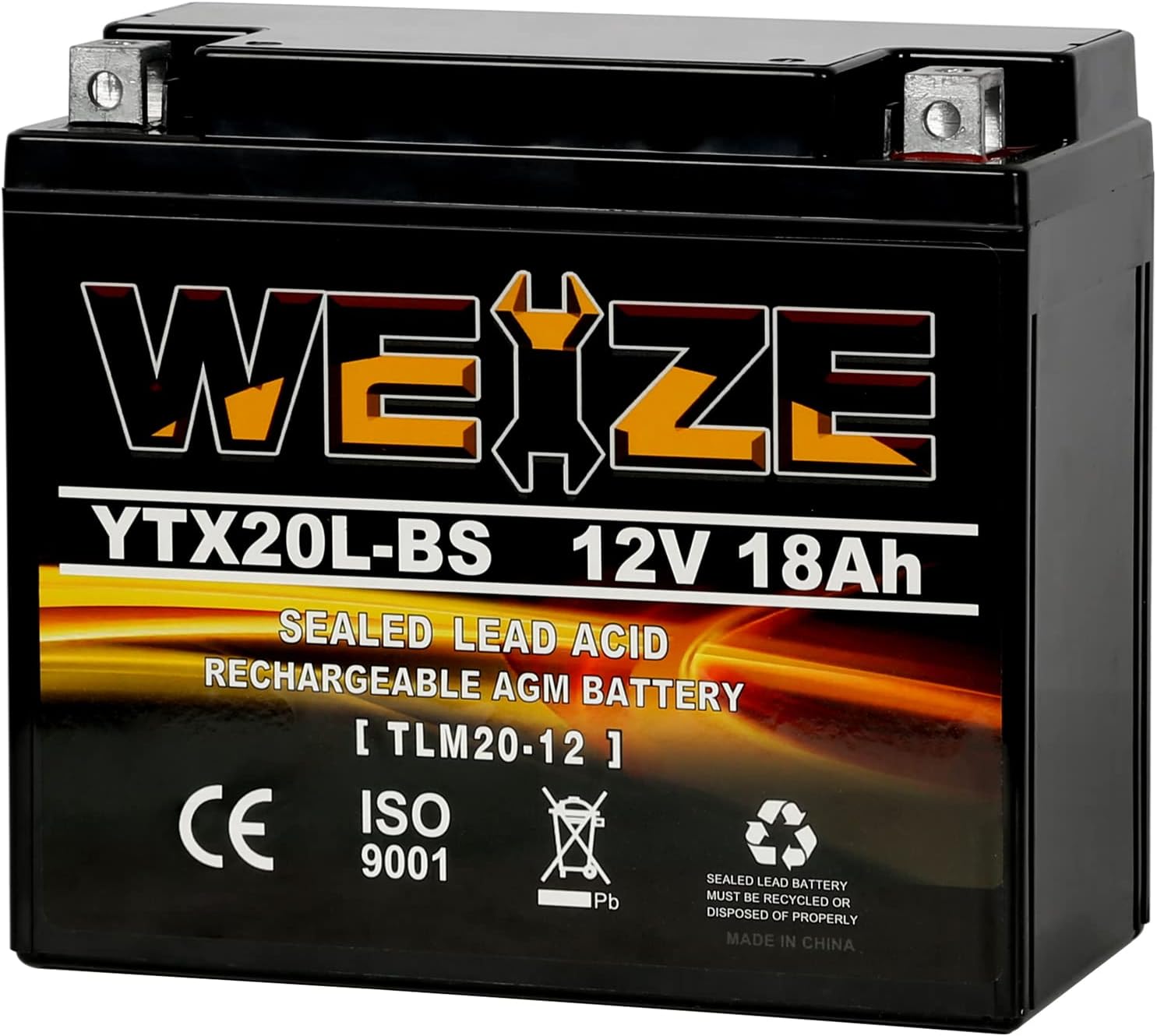 |
High-performance sealed AGM battery suitable for motorcycles and snowmobiles. | View on Amazon |
|
Mighty Max Battery ML-U1-CCAHR  |
Rechargeable SLA AGM battery with 320 CCA, ideal for various powersport applications. | View on Amazon |
|
Battanux 12N9-BS Motorcycle Battery  |
Sealed SLA/AGM battery for ATVs and motorcycles, maintenance-free with advanced technology. | View on Amazon |
| Component | Material | Function |
|---|---|---|
| Anode | Graphite | Stores lithium ions during charging |
| Cathode | LiCoO₂/LiFePO₄ | Receives ions during discharge |
| Electrolyte | LiPF₆ in solvent | Facilitates ion movement |
What Safety Risks Are Associated With 3.7V Li-Ion Batteries?
Overcharging, physical damage, or short circuits can trigger thermal runaway—a chain reaction where heat generation outpaces dissipation. This may cause swelling, fire, or explosion. Built-in protection circuits (PCBs) in quality batteries prevent overcurrent, over-discharge, and voltage spikes below 2.5V or above 4.2V.
Manufacturers implement multiple safety layers including:
- Separators with shutdown functionality (melts at 130°C to block ion flow)
- Pressure relief vents in cylindrical cells
- Flame-retardant additives in electrolytes
Recent UL standards require batteries to withstand nail penetration tests without ignition. However, damaged or counterfeit cells lacking these protections pose significant risks—improper recycling causes 65% of battery-related fires in waste facilities.
“The shift toward silicon-dominant anodes and cobalt-free cathodes is revolutionizing 3.7V Li-ion batteries. By 2025, we expect 400 Wh/kg densities paired with fire-resistant electrolytes. However, sustainability remains key—closed-loop recycling systems will define industry leaders.”
– Dr. Elena Torres, Battery Technology Analyst
FAQ
- Can I Use a 3.7V Battery as a Direct Replacement for a 3V Cell?
- No—3.7V Li-ion’s nominal voltage exceeds 3V chemistries. Check device specifications: some circuits tolerate up to 4.2V (full charge), but others may overheat. Use a buck converter if voltage matching is essential.
- How Long Does a 3.7V Li-Ion Battery Take to Charge?
- Standard charging (0.5C rate) takes 2–3 hours. Fast charging (1C) achieves 80% in 1 hour but increases heat stress. Avoid continuous fast charging to preserve cycle life.
- Are 3.7V Li-Ion Batteries Allowed on Airplanes?
- Yes, under IATA guidelines: carry-on only, with watt-hour ratings below 100 Wh (e.g., 20,000 mAh at 3.7V). Damaged or recalled batteries are prohibited.