A 24-volt lithium battery charger is a specialized device designed to safely recharge lithium-ion batteries used in applications like solar systems, electric vehicles, and industrial equipment. These chargers optimize charging speed while preventing overcharging, using advanced algorithms to extend battery lifespan. Key features include temperature monitoring, voltage regulation, and compatibility with LiFePO4 chemistry.
Deespaek 24V 100Ah LiFePO4 Battery
Which Factors Determine Charger Compatibility?
Compatibility depends on battery chemistry (LiFePO4 vs NMC), capacity (Ah rating), charge current limits, and connector types. Always match the charger’s output voltage (28.8-29.4V for 24V systems) and maximum current to the battery’s specifications. Smart chargers with auto-detection for 3-5 stage charging profiles provide the safest compatibility across multiple lithium battery configurations.
Battery capacity directly influences charger selection – a 50Ah battery requires at least a 25A charger for optimal 0.5C charging. Chemistries like LiFePO4 demand lower voltage thresholds (3.65V/cell) compared to NMC (4.2V/cell). Connector compatibility extends beyond physical dimensions; Anderson SB175 connectors handle 175A continuous current, while XT90 variants suit high-vibration environments. Advanced systems now use CAN bus communication to automatically adjust charging parameters based on real-time battery status updates.
Top 5 best-selling Group 14 batteries under $100
| Product Name | Short Description | Amazon URL |
|---|---|---|
|
Weize YTX14 BS ATV Battery  |
Maintenance-free sealed AGM battery, compatible with various motorcycles and powersports vehicles. | View on Amazon |
|
UPLUS ATV Battery YTX14AH-BS  |
Sealed AGM battery designed for ATVs, UTVs, and motorcycles, offering reliable performance. | View on Amazon |
|
Weize YTX20L-BS High Performance 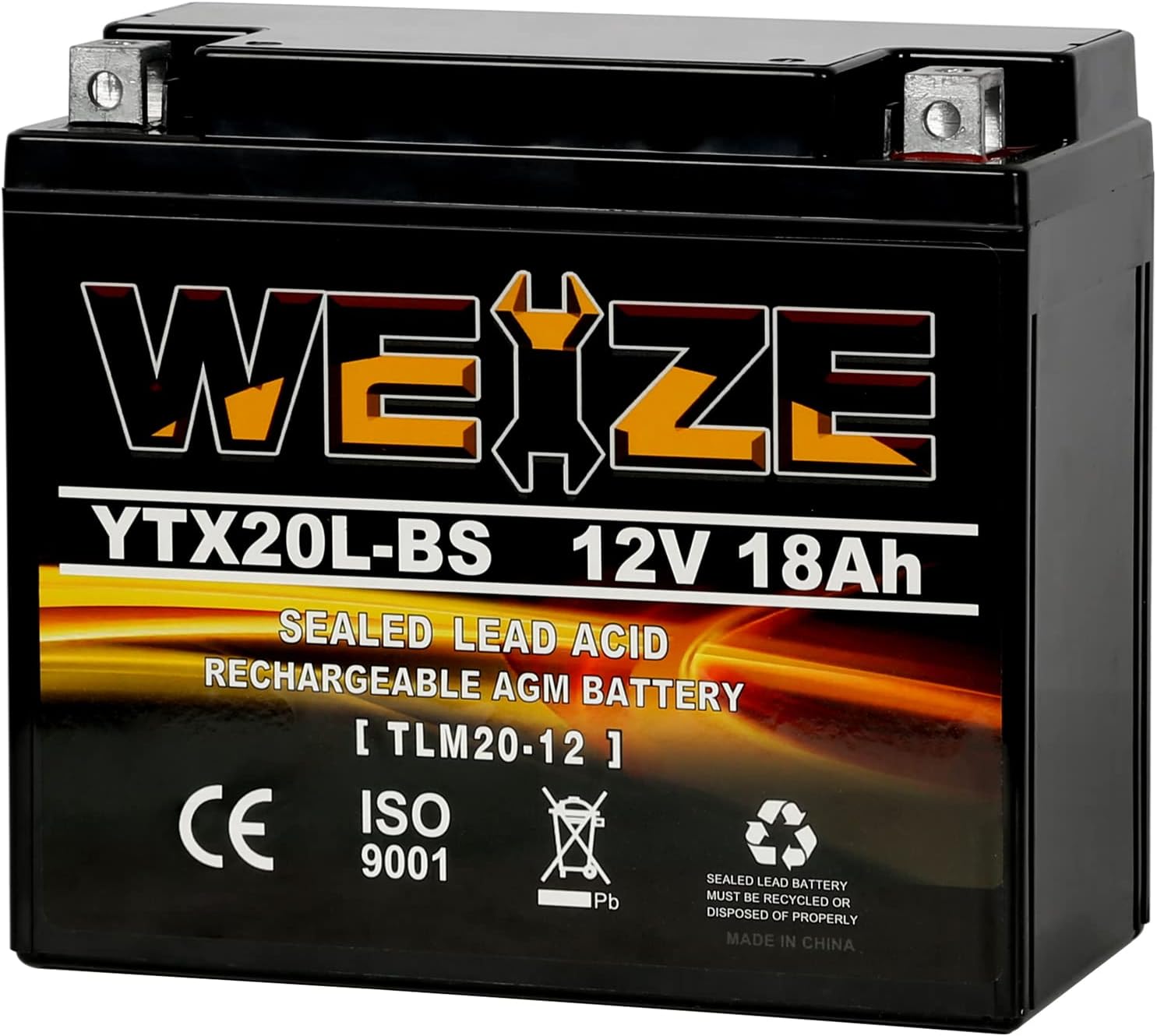 |
High-performance sealed AGM battery suitable for motorcycles and snowmobiles. | View on Amazon |
|
Mighty Max Battery ML-U1-CCAHR  |
Rechargeable SLA AGM battery with 320 CCA, ideal for various powersport applications. | View on Amazon |
|
Battanux 12N9-BS Motorcycle Battery  |
Sealed SLA/AGM battery for ATVs and motorcycles, maintenance-free with advanced technology. | View on Amazon |
| Battery Type | Voltage Range | Recommended Charger Current |
|---|---|---|
| LiFePO4 24V 100Ah | 28.8-29.2V | 50A |
| NMC 24V 60Ah | 29.4V | 30A |
What Safety Features Do Quality Chargers Offer?
Premium chargers incorporate eight safety mechanisms: over-voltage protection (OVP), reverse polarity protection, short-circuit shutdown, over-temperature cutoffs, spark-proof connections, moisture-resistant casings, automatic current throttling, and ISO 13849-PLe safety certification. Some models feature ground fault circuit interruption (GFCI) and IP67 waterproof ratings for industrial environments.
Advanced thermal management uses dual NTC sensors monitoring both charger internals and battery pack temperatures. Redundant protection circuits create failsafe conditions – if primary OVP fails, secondary mechanical relays physically disconnect the output. Industrial-grade chargers implement three-stage isolation barriers between input and output circuits, achieving 4kV dielectric withstand voltage. New UL 62133-2 certified models include hydrogen vent detection for sealed battery compartments and automatic emergency power shedding during fault conditions.
How Do Environmental Factors Impact Charging?
Lithium charging efficiency drops 2% per 10°C below 25°C. High-altitude operation above 2,000 meters requires pressurized chargers to maintain thermal stability. Marine-grade chargers use salt spray-corrosion resistant materials and conformal-coated PCBs. The latest IEC 62196-2 standards mandate 94% minimum efficiency at 50% load to reduce carbon footprint.
At -20°C, lithium batteries require preheating circuits to initiate charging safely. Altitude affects cooling efficiency – every 300m elevation gain reduces heat dissipation by 5%. Specialized desert-environment chargers incorporate sand filtration systems with IP69K ingress protection. For marine applications, galvanic isolation prevents stray current corrosion while maintaining 2000VAC separation between DC outputs and AC inputs. New adaptive chargers automatically adjust fan curves based on ambient humidity readings from integrated hygrometers.
| Temperature | Charging Efficiency | Maximum Current |
|---|---|---|
| 25°C | 97% | 100% rated |
| 0°C | 89% | 75% |
| 45°C | 91% | 85% |
“The shift to silicon-carbide MOSFETs in 24V chargers has enabled 98% peak efficiency with 40% smaller heat sinks. We’re now integrating bidirectional charging capabilities for vehicle-to-grid applications – a single 24V charger can power emergency home circuits during outages while maintaining battery health through adaptive depth-of-discharge limits.”
— Dr. Elena Torres, Power Systems Engineer at Voltaic Innovations
FAQs
- Can I charge a 24V LiFePO4 battery with a regular charger?
- No – lithium batteries require specific voltage limits and charging algorithms to prevent damage.
- How long does a 24V 10Ah battery take to charge?
- With a 5A charger: 2 hours (0-100%), 1 hour (20-80% fast charge).
- Are lithium chargers repairable?
- Most modern chargers use sealed units – component-level repairs require manufacturer authorization.