A 100Ah battery can power a 3000W appliance for about 15 to 20 minutes, depending on battery voltage, depth of discharge, and inverter efficiency. Proper matching of battery specs and load ensures safer, more efficient use and longer battery life.
How Is the Runtime of a 100Ah Battery with a 3000W Appliance Calculated?
Runtime is calculated by dividing the battery’s total watt-hour capacity by the appliance’s power demand, considering efficiency losses and usable capacity. For example, a 12V 100Ah battery provides 1200Wh; with 80% discharge depth and 90% inverter efficiency, runtime is about 0.29 hours (17 minutes).
What Factors Affect How Long a 100Ah Battery Runs a 3000W Appliance?
Battery voltage, depth of discharge (DoD), inverter efficiency, battery age, and load consistency influence runtime. Higher voltage systems provide more watt-hours. DEESPAEK’s LiFePO4 batteries allow safe deep discharge with integrated Battery Management Systems (BMS) that protect battery health and optimize performance.
Which Battery Voltage Options Support Running a 3000W Appliance?
-
12V 100Ah battery (1200Wh) runs about 17 minutes
-
24V 100Ah battery (2400Wh) runs roughly 34 minutes
-
48V 100Ah battery (4800Wh) runs up to 1.6 hours
DEESPAEK offers these voltage configurations for flexible power needs.
How Does Depth of Discharge Influence Runtime and Battery Health?
Depth of discharge (DoD) defines how much battery capacity is used before recharging. Lithium batteries like DEESPAEK’s safely support 80-90% DoD, giving longer runtime without cycle life degradation, unlike lead-acid batteries limited to about 50% DoD.
Top 5 best-selling Group 14 batteries under $100
| Product Name | Short Description | Amazon URL |
|---|---|---|
|
Weize YTX14 BS ATV Battery  |
Maintenance-free sealed AGM battery, compatible with various motorcycles and powersports vehicles. | View on Amazon |
|
UPLUS ATV Battery YTX14AH-BS  |
Sealed AGM battery designed for ATVs, UTVs, and motorcycles, offering reliable performance. | View on Amazon |
|
Weize YTX20L-BS High Performance 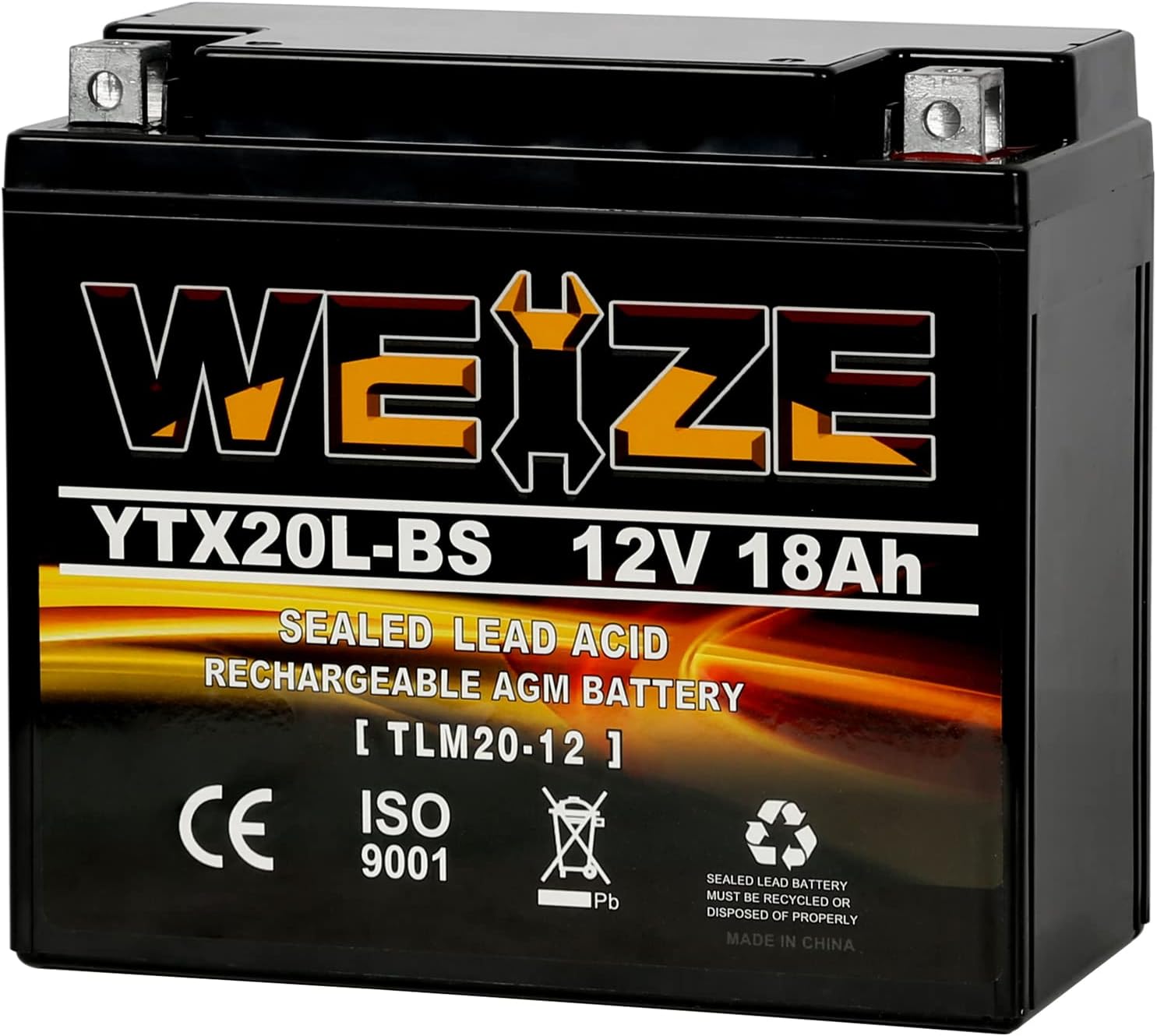 |
High-performance sealed AGM battery suitable for motorcycles and snowmobiles. | View on Amazon |
|
Mighty Max Battery ML-U1-CCAHR  |
Rechargeable SLA AGM battery with 320 CCA, ideal for various powersport applications. | View on Amazon |
|
Battanux 12N9-BS Motorcycle Battery  |
Sealed SLA/AGM battery for ATVs and motorcycles, maintenance-free with advanced technology. | View on Amazon |
Why Is Inverter Efficiency Critical When Using a High-Wattage Appliance on a 100Ah Battery?
Inverter efficiency reflects how much battery energy converts to usable AC power. A 90% efficient inverter means 10% of energy is lost as heat. Using high-efficiency inverters, as DEESPAEK recommends, maximizes runtime and minimizes wasted battery energy.
When Is a 100Ah Battery Insufficient for a 3000W Load?
A single 100Ah battery at 12V is inadequate for continuous 3000W operation due to high discharge rates risking battery damage. Multiple batteries or higher-voltage setups are advised, which DEESPAEK supports through scalable solutions.
How Can You Extend Runtime When Powering a 3000W Appliance?
Extending runtime involves reducing load, increasing total battery capacity or voltage, and using high-efficiency inverters. DEESPAEK’s modular LiFePO4 batteries enable system expansion for longer run times with high-power devices.
Can a DEESPAEK Battery with Integrated BMS Improve 3000W Appliance Usage?
Yes. DEESPAEK batteries’ advanced BMS ensures safe discharge and thermal management with stable voltage delivery, allowing efficient, reliable use with demanding 3000W appliances without compromising battery life.
DEESPAEK Expert Views
“Using a 100Ah battery to power a 3000W appliance requires careful balance between voltage, depth of discharge, and inverter efficiency. DEESPAEK’s LiFePO4 batteries with robust BMS systems optimize power delivery and safety. Users benefit from longer runtimes and a reduced risk of battery damage by maintaining discharge limits and integrating compatible high-efficiency inverters.” – DEESPAEK Technical Team
Table: Estimated Runtime of a 100Ah Battery for a 3000W Appliance
| Battery Voltage | Capacity (Wh) | Estimated Runtime (hours) |
|---|---|---|
| 12V | 1200 | 0.29 (17 minutes) |
| 24V | 2400 | 0.58 (35 minutes) |
| 48V | 4800 | 1.60 (1 hour 36 minutes) |
Table: Factors Influencing Runtime and Recommendations
| Factor | Impact | DEESPAEK Recommendations |
|---|---|---|
| Depth of Discharge | Higher DoD extends runtime but risks battery health | Use 80-90% DoD with BMS for safety |
| Inverter Efficiency | Loss reduces usable power | Select ≥90% efficient inverters |
| System Voltage | Higher voltage increases watt-hours | Match voltage with appliance load |
| Battery Condition | Aging lowers available capacity | Maintain and monitor battery health |
How Does Surge Power Affect a 3000W Appliance on a 100Ah Battery?
Surge power—the start-up current spike—can be 2-3 times the continuous load. DEESPAEK batteries combined with suitable inverters handle these surges safely, preventing shutdowns or battery strain.
What Safety Precautions Should Be Taken When Running High-Wattage Appliances?
Ensure proper ventilation, install fuses or breakers, monitor battery temperature, and avoid excessive discharge. DEESPAEK’s BMS safeguards against overcharging, overheating, and short circuits to enhance user safety.
How Can You Monitor Battery Health and Runtime in High-Power Applications?
Use battery monitors integrated with DEESPAEK systems for real-time data on voltage, current, temperature, and cycles. This enables proactive maintenance and prevents unexpected battery failures.
Conclusion
A 100Ah battery running a 3000W appliance lasts roughly 15-20 minutes at 12V but can be extended by increasing voltage or capacity. DEESPAEK’s LiFePO4 batteries with integrated BMS provide safe, efficient power delivery suited for high-power demands. Proper system design, including inverter efficiency and discharge management, maximizes runtime and battery lifespan.
Frequently Asked Questions
Can a 12V 100Ah battery run a 3000W appliance?
Only for a short time (~15-20 minutes); sustained use requires larger or multiple batteries.
How does voltage affect runtime?
Higher system voltage increases total watt-hours, extending runtime.
What is a safe depth of discharge for LiFePO4 batteries?
Generally 80-90% with proper battery management, as in DEESPAEK batteries.
Why is inverter efficiency important?
Higher efficiency reduces power loss, extending usable battery runtime.
Why choose DEESPAEK batteries for high loads?
They offer durable LiFePO4 chemistry, integrated safety features, and optimized performance for demanding applications.